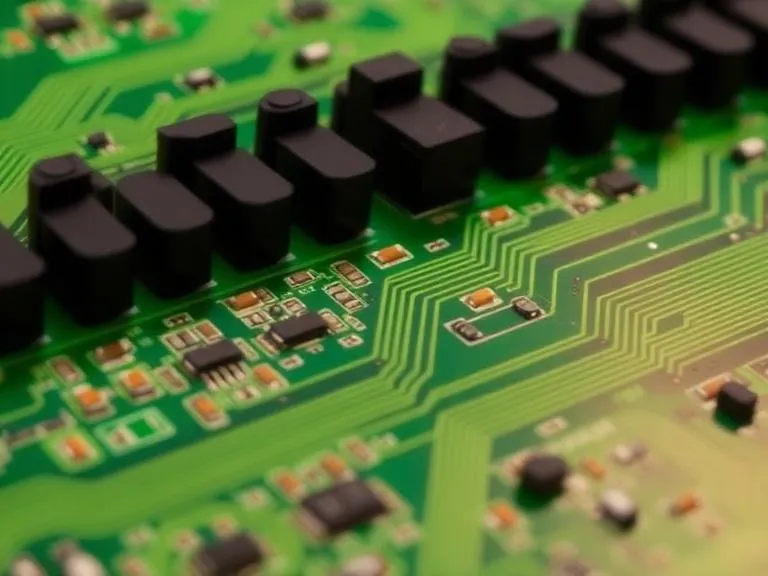
The global electronics manufacturing supply chain is obsessed with volume. If you approach a standard tier-one contract manufacturer with a purchase order for five thousand highly complex, multi-layered circuit boards requiring specialized testing, they will likely decline your business or push you to the back of a six-month queue. Their business model relies on setting up a Surface Mount Technology (SMT) line once and running it for a million identical units. However, innovation does not happen in million-unit batches. It happens in the trenches of iterative design, specialized niches, and mission-critical hardware.

From our experience at 365PCB, treating all manufacturing facilities as interchangeable is a catastrophic commercial mistake. If you are developing advanced aerospace controls, bespoke medical telemetry, or next-generation industrial robotics, you do not need a factory that prints identical boards at lightning speed. You need a facility built from the ground up for agility. Understanding exactly how High-Mix Manufacturing Supports Complex Electronics Products is the fundamental difference between launching a reliable, certified product on schedule and bleeding capital through endless production delays and quality failures. In this guide, we will strip away the marketing jargon and explain why a High-Mix, Low-Volume (HMLV) strategy is the only viable path for complex electronic engineering.
Quick Answer: The Role of High-Mix Manufacturing
If you are wondering how High-Mix Manufacturing Supports Complex Electronics Products, the answer lies in its structural agility and focus on engineering precision over raw output speed. Here is the operational reality:
Unmatched Agility: High-mix lines are designed for rapid changeovers. They can build an automotive sensor board in the morning and transition to a surgical device board by the afternoon without incurring massive downtime penalties.
Stringent Quality Control: Because the batch sizes are smaller and the designs are more complex, high-mix facilities invest heavily in comprehensive testing, including advanced PCB X-Ray Inspection Service for hidden BGA solder joints.
Lifecycle Management: It supports products with long lifecycles but low annual sales volumes, preventing you from having to purchase millions of dollars of excess inventory just to meet a factory's minimum order requirement.
We recommend commercial users bypass traditional High-Volume, Low-Mix (HVLM) factories entirely if their Bill of Materials (BOM) contains more than 300 unique line items or requires stringent regulatory certifications.
What It Is: Defining the High-Mix Environment
High-Mix, Low-Volume (HMLV) manufacturing is an operational methodology where a facility produces a large variety of different products (high mix) but in relatively small quantities (low volume). This is the exact opposite of the traditional consumer electronics model, which produces millions of identical smartphones or televisions. In the context of printed circuit board assembly (PCBA), a high-mix environment means the factory floor is highly dynamic. The operators and engineers are constantly interpreting new schematics, programming pick-and-place machines for new component reels, and calibrating reflow ovens for different thermal profiles.
When we state that High-Mix Manufacturing Supports Complex Electronics Products, we are referring to the fact that complex products inherently lack mass-market volume. For example, a specialized Medical PCB used in an MRI machine might only sell 500 units a year globally. A high-mix facility is the only ecosystem economically structured to build those 500 units profitably without sacrificing the intense regulatory compliance required by the FDA or CE.
How It Works: The Mechanics of Agility
How it works on the factory floor is a masterclass in process engineering. In a high-volume factory, setting up a production line can take days, but it is justified because that line will run uninterrupted for months. In a high-mix facility, setting up the line must be reduced to minutes or hours. This is achieved through modular feeder systems on the SMT machines, offline programming software, and highly cross-trained technicians.
Furthermore, complex electronics require complex validation. A high-mix facility does not rely solely on statistical sampling (where 1 in every 100 boards is checked). Instead, they integrate 100% inspection protocols. Every single board passes through PCB Actual Board Area (AOI) to verify component placement, and advanced PCB Electrical Testing Service ensures impedance matching and signal integrity. The operational workflow prioritizes verification over velocity.
Commercial and Engineering Benefits
The benefits of aligning your procurement strategy with a high-mix partner are profound. The primary commercial advantage is the mitigation of inventory risk. If you are developing a Telecommunication PCB for 5G infrastructure, the technology evolves every six months. If a high-volume factory forces you to order 50,000 boards to get a favorable price, you risk having 40,000 obsolete boards sitting in a warehouse when the 5G standards update. High-mix allows you to order exactly what you need for the next quarter, preserving cash flow and enabling rapid design iterations.
Additionally, high-mix environments inherently understand bespoke materials. Whether your project requires heavy copper for an EV PCB or rigid-flex substrates for a military wearable, these factories have the supply chain relationships to source exotic laminates that standard consumer fabs simply do not stock.
Limitations and Cost Realities
We must apply practical judgment: agility is not free. The primary limitation of high-mix manufacturing is the unit cost. Because the factory is absorbing the labor costs of frequent line changeovers, stencil printing setups, and custom testing jigs for small batches, the Non-Recurring Engineering (NRE) costs and the individual board costs will be noticeably higher than a high-volume quote. If your product competes purely on having the lowest retail price on Amazon, a high-mix strategy will destroy your margins.
Who Should Use It vs. Who Does Not Need It
Who Should Use It: We recommend high-mix manufacturing for B2B enterprises, defense contractors, and specialized OEMs. If you are building a proprietary Aerospace PCB where failure means a catastrophic loss of life, or a complex Industrial Control PCB where downtime costs a factory millions per hour, you must use a high-mix partner who can dedicate engineering resources to your specific failure-mode analysis.
Who Does Not Need It: If you are manufacturing generic, disposable Consumer Electronics PCB assemblies—like cheap Bluetooth speakers or basic smart home light switches—you do not need high-mix manufacturing. You need a massive, high-volume factory in Asia that can shave pennies off the BOM through sheer economies of scale.
Common Mistakes in Factory Selection
In most professional situations, the most devastating mistake a hardware startup makes is falling for the "we can do it all" sales pitch. Many high-volume factories will accept a low-volume, high-mix order during their slow season just to keep the machines running. However, the moment they secure a massive contract from a tech giant, your complex 500-unit Military PCB order will be pushed back indefinitely. You must partner with a facility whose entire business model is structurally designed around high-mix operations.
Another common mistake is supplying incomplete documentation. In a high-mix environment, engineers are seeing your design for the very first time. If your Bill of Materials (BOM) lacks specific manufacturer part numbers, or your pick-and-place files are corrupted, the rapid changeover process grinds to a halt. Flawless data packages are mandatory.
B2B Buying Considerations
When evaluating an Electronic Manufacturing Services (EMS) provider, scrutinize their New Product Introduction (NPI) process. A true high-mix partner will not just print your board blindly; they will assign a dedicated engineer to conduct a Design for Manufacturability (DFM) review. Furthermore, audit their supply chain resilience. Complex products often use obscure, single-source silicon chips. Does the manufacturer have a global procurement network capable of hunting down allocated parts to keep your line running?
Comparison Table: High-Mix vs. High-Volume Manufacturing
| Operational Metric | High-Mix, Low-Volume (HMLV) | High-Volume, Low-Mix (HVLM) |
|---|
| Target Markets | Medical, Aerospace, Industrial, Military, EV | Smartphones, Basic IoT, Consumer Goods |
| Product Complexity | Extremely High (Multi-layer, Rigid-flex, BGA) | Low to Moderate (Standard FR4, simple SMT) |
| Line Changeovers | Multiple times per day/week | Rarely (Lines run for months) |
| Cost per Unit | Higher (Amortized setup and NRE costs) | Lowest possible (Economies of scale) |
| Design Iteration | Highly flexible, supports frequent revisions | Rigid, revisions cause massive delays and costs |
Pros and Cons of High-Mix Manufacturing
| Pros | Cons |
|---|
| Allows for rapid prototyping and seamless transition into NPI and small-batch production. | Significantly higher per-board cost compared to mass manufacturing lines. |
| Prevents the accumulation of dead inventory by aligning production strictly with actual market demand. | Requires intense, ongoing communication and impeccable technical documentation from your engineering team. |
| Ensures superior quality control with 100% AOI, X-Ray, and functional testing protocols standard. | Vulnerable to supply chain shocks if complex, obscure components become globally allocated. |
| Expertise in handling complex substrates like Solar PCB and LED Lighting PCB thermal requirements. | Not suitable for scaling products into the millions of units for mass consumer retail. |
Expert Recommendation & Solutions
From our extensive industry experience, deciding whether it is actually worth using a high-mix partner comes down to your risk tolerance and the complexity of your intellectual property. If your product requires dense component placement, blind and buried vias, and absolute zero-failure reliability, attempting to source it from a budget, high-volume factory is a dangerous gamble. We recommend establishing a relationship with a dedicated high-mix partner long before you finalize your gerber files.
365PCB PCB Design Support Services
China 365PCB specializes in providing expert PCB design support to ensure your electronic products are optimized, reliable, and ready for mass production within our high-mix environment.
Design from Scratch: Full PCB design including schematic and layout creation.
Simulation and Verification: Electromagnetic field analysis, signal integrity checks, and thermal management optimization.
Manufacturing Support: Design optimization aligned with manufacturing requirements to ensure smooth production readiness and quality consistency.
Design for Assembly: Component placement and footprint optimization for automated SMT assembly, ensuring high yield and assembly reliability.
Industrial Safety Compliance: Adherence to rigorous industry standards like RoHS and Halogen-Free PCB Design (HFPC).
Explore Design Support ServicesFrequently Asked Questions
Exactly how High-Mix Manufacturing Supports Complex Electronics Products?
It supports complex products by providing the engineering agility required to run small batches of highly intricate designs. Complex electronics often undergo frequent revisions and require exhaustive testing (AOI, X-Ray, Flying Probe). High-mix facilities build their entire operational workflow around accommodating these exact requirements, rather than optimizing purely for speed and volume.
Is High-Mix Manufacturing more expensive?
Yes, on a per-unit basis. The cost of labor for frequent machine changeovers, custom stencil creation, and comprehensive testing is amortized over a smaller number of boards. However, it is far more cost-effective than being forced to order 10,000 units of a complex board from a volume manufacturer when you only need 500, thereby saving you massive inventory costs.
What is NPI in electronics manufacturing?
NPI stands for New Product Introduction. It is the critical bridge between the engineering design phase and mass production. A high-mix manufacturer excels at NPI by taking a raw prototype, conducting a DFM review, optimizing the component footprint for SMT machines, and producing the first golden validation run.
Can a High-Mix facility transition my product to High-Volume later?
In most professional situations, yes. Many premier EMS providers operate high-mix lines for NPI and initial market rollout, and possess dedicated high-volume lines to seamlessly scale your product once market demand requires tens of thousands of units per month.
Industry References & Quality Standards
To ensure our manufacturing assessments and engineering recommendations meet the highest levels of E-E-A-T, we strictly adhere to the guidelines set by the following authoritative bodies:
IPC (Association Connecting Electronics Industries): The definitive global authority establishing standards for PCB design, acceptability, and complex assembly processes (e.g., IPC-A-610 Class 3 for mission-critical hardware). Review IPC Manufacturing Standards
International Organization for Standardization (ISO): Defining the quality management systems required for high-mix facilities, including ISO 9001 and the stringent ISO 13485 for medical device manufacturing. Review ISO Quality Management Systems
Surface Mount Technology Association (SMTA): Providing peer-reviewed research and industry consensus on advanced SMT processes, component placement, and inspection methodologies in high-mix environments. Review SMTA Engineering Resources
 English