01 — Start With Product Value, Not Component Price
Every product contains functions that customers value differently.
Some functions are essential.
Some differentiate the product.
Some support reliability.
Some exist because of historical design decisions.
Others may add complexity without creating meaningful customer value.
Value engineering therefore begins by asking:
What Must the Product Do?
What Performance Must It Achieve?
Which Functions Create Customer Value?
Which Requirements Are Mandatory?
Which Requirements Are Over-Specified?
Which Costs Are Necessary?
Which Costs Exist Because of Inefficient Architecture?
The objective is not to arbitrarily reduce specifications. It is to understand: Where Does Cost Create Value — and Where Does It Not?
02 — Design-to-Cost Engineering
Cost Should Be an Engineering Requirement
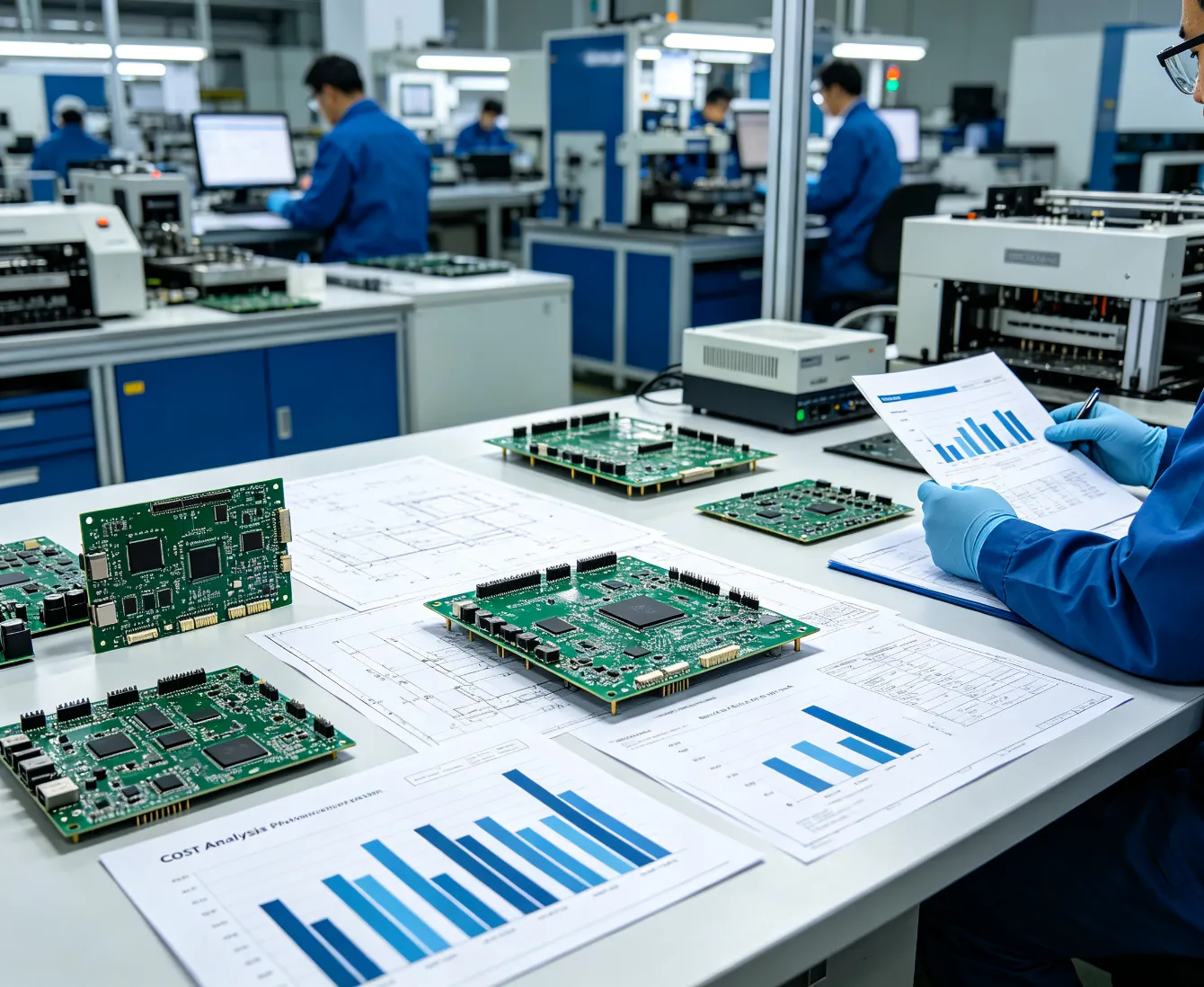
In many product programs, cost is evaluated too late. The product is designed. The prototype works. The BOM is calculated. And then the team discovers that the product is too expensive.
A stronger approach is: Design to Cost.
The target product cost is established early and treated as an engineering constraint alongside: Performance, Power, Size, Thermal, Reliability, Schedule, Compliance, and Manufacturability.
A target cost can be decomposed into engineering budgets: Target Product Cost → Electronics, PCB, PCBA, Mechanical Parts, Cable Assemblies, Display, Battery, Programming, Testing, Final Assembly, Packaging.
By allocating cost early, architecture decisions can be evaluated before they become locked into the product.
03 — Cost Architecture
Just as a product has Power Architecture and Compute Architecture, it also has a Cost Architecture. Every architectural decision consumes part of the product's cost budget.
Higher-Performance Processor may increase: processor cost, memory cost, PMIC complexity, PCB layer count, thermal management, software complexity.
Larger Battery may increase: battery cost, enclosure size, shipping weight, charging requirements, safety considerations.
Custom Wireless Design may reduce module cost at high volume but increase: RF engineering, antenna work, certification, development risk.
Additional PCB may simplify layout and modularity but add: connectors, assembly, testing, interconnect cost.
Value engineering evaluates these system-level interactions. One Cost Decision Can Create Five More Costs Somewhere Else.
04 — Architecture Optimization
The greatest cost-reduction opportunities often occur before detailed design. Once the PCB, firmware, enclosure, certification, and tooling are complete, many architectural decisions become expensive to change.
365PCB can evaluate alternative architectures such as:
One MCU vs Multiple MCUs
MCU vs MPU
MCU vs FPGA
Custom Circuit vs Integrated SoC
Discrete Power vs PMIC
Wireless Module vs Chip-Down RF
Single PCB vs Multi-Board
Custom Interface vs Standard Interface
Local Processing vs Cloud Processing
Large Battery vs Lower-Power Architecture
The question is not: Which architecture has the cheapest BOM? The more useful question is: Which Architecture Produces the Lowest Total Cost While Still Meeting Product Requirements?
05 — Function-to-Cost Analysis
A mature value-engineering process can connect individual product functions with their cost.
| Product Function | Main Cost Drivers |
|---|
| Wireless connectivity | Radio IC, antenna, RF components, certification |
| High-performance computing | Processor, memory, power, thermal design |
| Precision measurement | Sensor, ADC, reference, analog front end, calibration |
| Touch display | Display module, touch controller, mechanical integration |
| Battery operation | Cells, BMS, charger, power conversion |
| Ruggedization | Enclosure, seals, connectors, coating, testing |
| High reliability | Component grade, validation, traceability, testing |
This helps engineering teams determine whether cost is aligned with actual product value.
06 — BOM Cost Optimization
BOM optimization should not begin with random substitutions. It should begin with understanding the function of each component.
Potential opportunities include:
Removing redundant components
Integrating functions
Selecting more appropriate component classes
Consolidating part values
Standardizing components
Identifying qualified alternatives
Reducing unnecessary specification margin
Optimizing package selection
Improving sourcing options
But every change should be evaluated against: Electrical Performance, Thermal Performance, EMC, Firmware, Manufacturing, Reliability, Lifecycle, Supply Risk.
A Cheaper Part Is Not a Cost Saving If It Creates a More Expensive Product.
07 — Functional Integration
Modern ICs increasingly combine multiple functions. A system that once required: MCU, External ADC, Security IC, Wireless Controller, Power Management — may sometimes be simplified using a more integrated platform.
Potential benefits include: fewer components, smaller PCB area, fewer interconnects, reduced assembly complexity, reduced inventory, lower test complexity.
But integration can also increase: single-source dependency, redesign impact, thermal density, software dependence.
Therefore: Integration Is Valuable Only When Total System Value Improves.
08 — Discrete vs Integrated Solutions
Integrated does not always mean cheaper. For some functions, discrete architectures can offer: better cost at volume, greater sourcing flexibility, easier replacement, lower lifecycle risk.
For others, integrated solutions can reduce: PCB area, external components, firmware complexity, assembly cost.
The correct choice depends on: Volume, Product Lifetime, Performance, PCB Area, Engineering Resources, Supply Risk, Cost Target.
Value engineering compares complete implementation cost rather than component price alone.
09 — Component Specification Optimization
Over-specification is a common hidden cost. Examples can include:
precision far beyond actual system needs
excessive voltage rating
unnecessary processor performance
temperature grade beyond the product environment
connector cycle ratings beyond expected use
excessive memory capacity
unnecessarily high RF performance
But specification reduction must be based on engineering analysis. The correct process is: Requirement → Margin → Worst-Case Analysis → Real Need → Optimized Specification. Not: "Use a cheaper part and hope."
Remove Unnecessary Margin — Never Necessary Reliability.
10 — Processor Cost Optimization
The processor is often one of the most influential component choices in modern electronic products. Optimization can examine:
A more expensive processor may sometimes reduce overall product cost by integrating: more memory, wireless, security, ADC, communication interfaces, power management.
Conversely, a powerful processor selected too early may create unnecessary: BOM Cost + Power + Thermal + PCB Complexity.
Processor Selection Should Optimize the System — Not the Datasheet.
11 — Memory Cost Optimization
Memory architecture can significantly affect cost. Engineering can evaluate:
Important considerations include: capacity, speed, firmware growth, endurance, data retention, package, PCB complexity, sourcing, future expansion.
Memory should have enough margin for the product lifecycle without being unnecessarily oversized.
12 — Power Architecture Cost Optimization
Power architectures often contain hidden opportunities. Engineering may compare:
Discrete Regulators vs Integrated PMIC
LDO vs Switching Regulator
Centralized vs Distributed Power Conversion
Optimization must consider more than IC cost. The full cost includes: Inductors, Capacitors, MOSFETs, PCB Area, Thermal Management, EMI Filtering, Assembly, and Efficiency.
A 20-cent difference in regulator cost may be irrelevant if the lower-efficiency solution requires a larger heat sink and enclosure.
13 — PCB Cost Engineering
PCB cost is strongly influenced by design architecture. Important cost drivers can include:
board dimensions
layer count
material system
copper weight
HDI
microvias
blind / buried vias
via-in-pad
sequential lamination
controlled impedance
line width / spacing
surface finish
panel utilization
rigid-flex construction
365PCB can evaluate whether the PCB technology is appropriately matched to product requirements.
For example: Could routing optimization reduce an 8-layer design to 6 layers? Could a different component placement improve panelization? Could unnecessary sequential lamination be eliminated? Could a package choice reduce HDI requirements?
But: PCB Cost Should Never Be Reduced by Consuming Critical SI, PI, Thermal, or Reliability Margin.
14 — PCB Area Optimization
Board area affects: PCB Cost, Enclosure Size, Product Weight, Panel Utilization, Assembly.
But aggressive miniaturization can create new costs: HDI, finer pitch, more layers, more difficult assembly, thermal concentration, rework difficulty.
Therefore the best board is not automatically the smallest board. Optimize PCB Area for Total Product Cost — Not Minimum Geometry.
15 — Layer-Count Optimization
PCB layer count can strongly influence cost. But reducing layers without understanding: Signal Integrity, Power Integrity, EMC, Routing Density, Return Paths — can create a much worse product.
A professional layer-count optimization asks:
What signal classes exist?
What reference planes are required?
How much routing density is needed?
What impedance structures are required?
What power-distribution strategy is needed?
The goal is: The Minimum Layer Count That Still Produces a Robust Electrical Architecture. Not simply the minimum possible number.
16 — HDI & Via Cost Optimization
Microvias and sequential lamination can enable powerful designs. They also increase manufacturing complexity and cost.
Engineering can assess:
whether HDI is truly necessary
where microvias are needed
stacked vs staggered structures
via-in-pad requirements
BGA escape strategy
sequential lamination count
Sometimes a component-package change can significantly simplify PCB construction. This is another example of: Component Selection and PCB Cost Engineering Being One Problem.
17 — Panelization & Material Utilization
PCB cost is not determined only by individual board area. How the board fits into a manufacturing panel can also matter.
Engineering can improve: panel utilization, array layout, tooling borders, board orientation, breakaway structures, routing clearance.
A minor change in board dimensions can sometimes increase the number of units per panel. That can reduce material cost without changing electrical performance.
Manufacturing Geometry Can Become Cost Engineering.
18 — Assembly Cost Engineering
PCBA cost is influenced by: component count, unique component count, package type, SMT placements, THT components, manual operations, double-sided assembly, reflow cycles, special handling, inspection, cleaning, coating, rework.
Value engineering can identify opportunities to reduce unnecessary assembly complexity.
For example: Five Manual Operations may cost more over a product lifecycle than: One Slightly More Expensive Integrated Component.
19 — Design for Assembly — DFA
A product can be electrically excellent and still be expensive to assemble. DFA engineering evaluates:
part count
assembly sequence
orientation
access
connectors
screws
cables
adhesives
manual insertion
fastening
alignment
The objective is to reduce: Assembly Time, Assembly Error, Tooling Complexity, and Labor Dependency — while maintaining product reliability and serviceability.
Every Unnecessary Assembly Step Is a Cost and a Failure Opportunity.
20 — Mechanical Cost Engineering
Enclosures and mechanical parts can represent a significant part of total product cost. Optimization may evaluate:
A design requiring extreme mechanical tolerances everywhere may be unnecessarily expensive. Engineering can determine: Which Tolerances Actually Matter? and relax those that do not affect product function.
21 — Tolerance Cost Engineering
Manufacturing cost rises rapidly as tolerances tighten. Therefore engineering should distinguish:
Critical Tolerances — Required for electrical, optical, mechanical, thermal, or alignment performance.
from:
Non-Critical Tolerances — Dimensions that can safely accept more manufacturing variation.
This principle applies to: CNC, plastic parts, PCB, connectors, cable assemblies, mechanical assembly.
Tight Tolerance Should Be Purchased Only Where Tight Tolerance Creates Value.
22 — Thermal Cost Optimization
Thermal problems often create hidden mechanical cost. A product may require: Heat Sink, Fan, Thermal Pad, Metal Enclosure, Vapor Chamber — because of an inefficient electronics architecture.
Sometimes greater system-level savings can come from: selecting a more efficient processor, improving power conversion, reducing switching loss, lowering standby power, spreading thermal load — rather than simply adding more cooling hardware.
The Cheapest Heat Sink Is Sometimes Better Electronics.
23 — Cable & Harness Cost Engineering
Cable assemblies can become expensive because of: conductor count, connector type, shielding, custom overmolding, length, manual assembly, labeling, branching, testing.
Optimization can evaluate: interface consolidation, connector standardization, harness simplification, board-to-board interconnect, cable-length reduction.
However, changes must still preserve: Signal Integrity, Current Capacity, EMC, Mechanical Reliability.
24 — Firmware as a Cost-Reduction Tool
Not every function needs additional hardware. Firmware can sometimes replace hardware functions such as: calibration, filtering, diagnostics, state control, soft timing, fault monitoring, feature configuration.
A product family can sometimes share common electronics and create differentiation through firmware. This can reduce: hardware variants, inventory, qualification, tooling, manufacturing complexity.
But moving too much into firmware can increase: CPU Load, Development Complexity, Latency, Verification Work.
Therefore hardware/software partitioning should be economically engineered.
25 — Product Platform Engineering
One of the strongest long-term value-engineering strategies is building a product platform rather than isolated products.
A common platform can share: Core Processor, Power, Memory, Firmware, PCB Architecture, Connectors, Testing — while product variants change only: Sensor, Wireless, Display, I/O, or other modules.
This can reduce: engineering cost, tooling, firmware development, component count, qualification work, supply-chain complexity.
Optimize the Product Family — Not Only the First SKU.
26 — Modular Architecture Optimization
Modularity can reduce development and lifecycle cost when used appropriately. Examples include:
Common Main Board + Optional Wireless Module
Common Controller + Different Sensor Boards
Common Power Board + Different Interface Boards
Benefits may include: faster variant development, easier service, regional customization, simplified upgrades.
But excessive modularity can add: connectors, PCB cost, mechanical space, reliability interfaces.
Therefore: Modularity Should Be Driven by Lifecycle Value — Not Architectural Fashion.
27 — Testing Cost Engineering
Testing can represent a significant production cost. The correct objective is not: Test less. It is: Test More Intelligently.
A test strategy may combine: SPI, AOI, X-Ray, ICT, Boundary Scan, Programming Verification, Functional Test, Self-Test — depending on product risk.
Value engineering can optimize: test coverage, test time, fixture complexity, parallel testing, automation, diagnostic depth.
The ideal test catches meaningful failures efficiently without creating unnecessary production time.
28 — Design for Test — DFT
The cheapest production test is often the one the product was designed to support. DFT can include:
accessible test points
programming headers
debug interfaces
loopback modes
built-in self-test
diagnostic firmware
controllable outputs
measurable rails
serial-number management
A product that ignores DFT may require complicated fixtures and long manual testing.
Test Cost Is Often Determined During Design.
29 — Calibration Cost Optimization
Precision products may require calibration. Calibration can become expensive when it involves: manual adjustment, long settling times, complex equipment, individual operator interaction.
Engineering may reduce cost through: digital calibration, factory calibration constants, automated procedures, self-calibration, improved sensor selection.
The goal is not to eliminate necessary calibration. It is to: Engineer Calibration Into the Product and Production Process.
30 — Supply-Chain Cost Optimization
Purchase price is only one part of supply-chain cost. Other factors include:
MOQ
lead time
inventory
shipping
allocation
lifecycle
single-source risk
exchange rate exposure
qualification cost
A slightly more expensive component available from multiple reliable suppliers may create lower lifecycle cost than a cheaper single-source component.
Supply Resilience Has Economic Value.
31 — Strategic Second Sourcing
For high-volume or long-life products, qualified second sources can improve both: Supply Resilience and Commercial Negotiating Power.
However, alternate sourcing should be engineered from the beginning when possible. This can include designing footprints, firmware and electrical architecture that tolerate qualified alternatives.
Designing for Alternatives Is Cheaper Than Redesigning During a Shortage.
32 — Should-Cost Analysis
For important subsystems, engineering can construct a should-cost model. Rather than accepting a product cost as a single number, the cost is decomposed into underlying drivers.
For a PCBA, this may include: PCB Material, PCB Processing, Components, SMT Placement, THT Assembly, Inspection, Testing, Yield, Overhead.
For mechanical parts: Material, Machining Time, Tooling, Finishing, Tolerance, Volume.
This helps identify whether cost is driven by: material, complexity, process, or commercial structure.
33 — Volume-Based Cost Engineering
The best architecture can change with volume. A solution appropriate for 100 units/year may not be optimal at 100,000 units/year.
Low-volume products may benefit from: modules, standard enclosures, off-the-shelf assemblies, limited tooling.
Higher volume may justify: custom RF, custom injection molding, component integration, automated testing, optimized manufacturing tooling.
Value engineering should therefore understand: Product Volume Changes the Economics of Engineering Decisions.
34 — NRE vs Unit Cost
Product development contains two major cost categories:
NRE — Non-recurring engineering, tooling, certification, fixture development.
Recurring Cost — The cost of each manufactured unit.
A design decision may increase NRE but reduce unit cost. The break-even point depends on: Production Volume.
For example: Custom injection tooling may be expensive initially. But at sufficient volume, it can become much less expensive per unit than CNC machining.
Cost Engineering Requires Understanding the Production Horizon.
35 — Yield Engineering
Yield is one of the most powerful manufacturing cost variables. If 100 units enter production and only 95 pass first time, the missing 5% creates: Rework, Inspection, Troubleshooting, Scrap, Schedule Loss, Engineering Cost.
Therefore one of the best ways to reduce product cost can be: Improve First-Pass Yield.
This may come from: better PCB design, better footprints, better component selection, better process windows, better testability, clearer manufacturing documentation.
Cost optimization and quality improvement can therefore support each other.
36 — Cost of Poor Quality
A BOM may look inexpensive while poor quality creates much greater downstream cost. The real cost can include: Scrap, Rework, Returns, Warranty, Engineering Investigation, Logistics, Production Downtime, Customer Dissatisfaction.
This is particularly important for the kind of complex, high-value electronics 365PCB is positioned to manufacture.
When Failure Costs More Than the PCB, Quality Becomes Cost Engineering.
37 — Reliability vs Cost Optimization
Reliability and cost are not always opposites. Sometimes improving reliability also lowers total cost.
Examples: reducing connector count, eliminating unnecessary manual assembly, simplifying power architecture, improving thermal efficiency, increasing first-pass yield, selecting sustainable components.
The objective is therefore not: spend more for reliability or spend less and accept risk. The better objective is: Find the Architecture With the Best Reliability-to-Cost Ratio.
38 — Lifecycle Cost Engineering
The cost of a product continues after it leaves the factory. Depending on the product, lifecycle cost can include: field failure, warranty, firmware updates, product service, spare parts, obsolescence, redesign, certification updates, returns, logistics.
A component that saves $0.50 today but creates a redesign three years later may not be economically optimal.
Optimize the Product Lifetime — Not Just the Purchase Order.
39 — Design Change Cost
Changes become more expensive as product development advances.
Concept change: Low Cost
Architecture change: Moderate Cost
PCB redesign after EVT: Higher Cost
Change after tooling and certification: Much Higher Cost
Change after mass production: Potentially Very High Cost
Therefore: The Earlier Value Engineering Happens, the More Powerful It Becomes.
This is why 365PCB prefers to integrate cost engineering during product architecture and component selection, not only after a customer asks for a cheaper quotation.
40 — Value Engineering Through EVT / DVT / PVT
Cost optimization should continue throughout development.
Concept / Architecture: Identify the largest structural cost opportunities.
EVT: Validate whether the architecture achieves its performance and cost assumptions.
DVT: Optimize the mature design without destabilizing validated performance.
PVT: Optimize manufacturing: cycle time, test, yield, fixtures, labor, material flow.
Mass Production: Use production data to identify further continuous-improvement opportunities.
Cost Engineering Evolves With Product Maturity.
41 — Engineering Change Control
A cost reduction is not complete simply because a cheaper alternative has been identified. The change should be evaluated for impact on: Electrical Performance, Firmware, PCB, Thermal, EMC, Mechanical, Compliance, Reliability, Test, Manufacturing.
The process may require: Engineering Review → Prototype / Sample → Validation → Approval → ECO / ECN → Controlled Production Release.
Cost Savings Must Be Verified Like Any Other Engineering Change.
42 — Data-Driven Cost Optimization
As production matures, actual manufacturing data becomes extremely valuable. Cost optimization can increasingly use data from: yield, defects, rework, test time, cycle time, scrap, component price, material usage, equipment utilization, field returns.
This allows engineering to distinguish between: theoretical cost and actual cost.
The long-term direction is a digital cost model connected to: BOM + Design + Process + Yield + Supply Chain + Quality.
43 — AI-Assisted Engineering Cost Analysis
Modern engineering systems increasingly use automation and AI to help analyze large design and supply-chain datasets. Potential applications can include:
But automated recommendations should remain subject to engineering verification.
AI Can Accelerate Analysis. Engineering Must Still Own the Decision.
44 — What World-Class Value Engineering Looks Like
At the highest level, value engineering is not: Find Cheaper Parts. It is:
Product Requirements → Customer Value → Target Cost → System Architecture → Cost Allocation → Component Engineering → PCB Optimization → Mechanical Optimization → Software / Hardware Partitioning → DFM / DFA / DFT → Supply-Chain Strategy → Should-Cost Analysis → Prototype Validation → Yield Optimization → Lifecycle Cost → Maximum Product Value at Sustainable Cost
That is a fundamentally different discipline from simple purchasing negotiation.
45 — The 365PCB Value Engineering Philosophy
365PCB connects cost engineering directly with the real manufacturing system. We can evaluate cost across: Product Architecture, Electronic Components, PCB, PCBA, Firmware, Cable Assemblies, Mechanical Parts, Testing, Box Build, Production.
This creates an important advantage. We can ask not only: How much does this component cost? but also: How much does this design decision cost after it reaches the factory?
A Design Decision Is Not Truly Optimized Until Manufacturing Is Included.
Reduce Cost Without Reducing Confidence
For 365PCB, value engineering should follow four principles:
Remove Unnecessary Complexity.
Protect Critical Performance.
Preserve Reliability Margin.
Optimize the Complete Product Cost.
We do not believe in making products cheaper simply by moving risk somewhere else. A cost reduction that creates: lower yield, more failures, shorter lifecycle, supply instability, or greater customer risk — is not real value engineering.
The Best Cost Reduction Is the Cost the Product Never Needed.
Typical Value Engineering Deliverables
Depending on project scope, deliverables may include:
Product Cost Target Analysis
Design-to-Cost Plan
Cost Architecture
Cost Breakdown Structure
Function-to-Cost Analysis
BOM Cost Analysis
Component Cost Optimization
Semiconductor Architecture Comparison
Alternate Part Analysis
PCB Cost Review
Layer-Count Optimization Review
HDI / Via Cost Review
PCB Panelization Review
Mechanical Cost Review
Cable & Harness Cost Review
Assembly Cost Analysis
DFM / DFA / DFT Review
Manufacturing Process Cost Review
Test Cost Analysis
Calibration Cost Analysis
Should-Cost Model
Volume Cost Model
NRE vs Recurring Cost Analysis
Yield Cost Analysis
Supply-Chain Cost Analysis
Second-Source Strategy
Lifecycle Cost Review
Cost / Reliability Trade Study
Cost Reduction Risk Assessment
Cost Optimization Validation Plan
Engineering Change Recommendation
Production Cost Improvement Plan
The depth of engineering should match the product's complexity, target volume, lifecycle, and commercial objectives.
What Can You Send Us?
365PCB can begin a value-engineering review from:
Existing BOM
Schematics
PCB Files
Gerber / ODB++
Product Requirements
Mechanical Drawings
Existing Product
Prototype
Manufacturing Cost
Target Cost
Production Forecast
or simply: Tell Us Where the Product Is Too Expensive.
We can help determine whether the real cost driver comes from: Architecture, Components, PCB, Mechanical Design, Manufacturing, Testing, Supply Chain, or Lifecycle Risk.
Reduce Cost at the Architecture.
Reduce Complexity in the Design.
Reduce Waste in Manufacturing.
Never Reduce Reliability by Accident.
365PCB Value Engineering & Cost Optimization connects: Product Value + Engineering + Manufacturing + Supply Chain + Lifecycle — to create products that are not only technically successful — But Commercially Sustainable.
 English