Scaling a hardware product is a brutal test of capital efficiency. In the early stages of development, hand-assembling prototypes or running small batches in a local facility makes perfect sense. However, when market demand spikes, attempting to scale an internal manufacturing floor is financial suicide for most companies. The overhead of purchasing automated Pick-and-Place machines, managing complex global component supply chains, and maintaining strict quality control will rapidly bleed your runway dry. To survive and scale, you must actively Transition Electronics Production to a specialized Electronic Manufacturing Services (EMS) provider.
From our experience engineering and executing high-volume assembly transitions at 365PCB, the shift from in-house builds to an outsourced EMS model is rarely seamless. It requires meticulous documentation, ruthless component sourcing strategies, and a fundamental shift in how your engineering team operates. In most professional situations, a poorly managed transition results in catastrophic yield drops, counterfeit components creeping into your Bill of Materials (BOM), and blown launch deadlines. In this definitive guide, we will strip away the marketing fluff, detail the exact mechanical steps required to safely Transition Electronics Production, and provide you with the commercial and practical judgment necessary to choose the right manufacturing partner.
Quick Answer: How to Transition Successfully
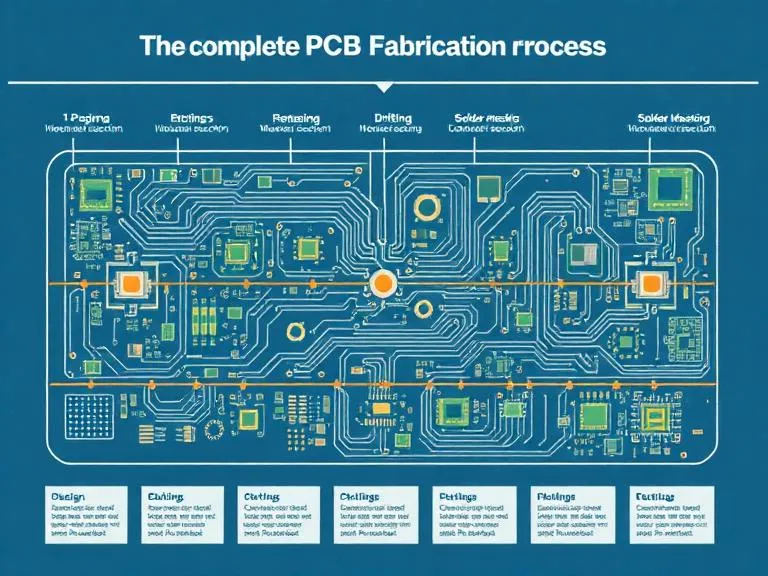
To successfully Transition Electronics Production to an EMS provider, you must execute a strict four-phase methodology: 1) Documentation Handoff (providing flawless Gerber files, strict Approved Vendor Lists, and comprehensive assembly drawings); 2) Design for Manufacturing (DFM) Review (allowing the EMS to optimize your board for high-yield automated assembly); 3) New Product Introduction (NPI) Prototyping (running a small batch to validate the factory's tooling and testing fixtures); and 4) Mass Production Scaling. You must decide between a Consignment model (you buy the parts) or a Turnkey model (the EMS buys the parts). We recommend the full Turnkey model utilizing a certified partner like 365PCB to eliminate supply chain friction and consolidate accountability.
Direct Answer: Is the Transition Worth It?
Yes, choosing to Transition Electronics Production to an EMS is absolutely worth the effort, provided your monthly volume exceeds 500 to 1,000 units. Attempting to match the efficiency, component purchasing power, and quality control infrastructure of a dedicated EMS facility internally is mathematically impossible for a mid-market hardware brand. An EMS provider amortizes the cost of multi-million dollar SMT lines across dozens of clients. By transitioning, you convert fixed manufacturing liabilities into variable costs, freeing your capital to focus on what actually drives revenue: product development, software engineering, and sales.
What It Is: Defining the EMS Transition
To Transition Electronics Production means systematically migrating the responsibility of building your hardware from your internal team (or a fragmented group of low-volume local shops) to a vertically integrated manufacturing partner. An EMS provider does not just solder parts onto a board. A tier-one EMS handles bare board fabrication, global component sourcing, Surface Mount Technology (SMT) and Through-Hole assembly, Automated Optical Inspection (AOI), functional testing, conformal coating, and final box-build packaging.
This transition often involves rethinking your base technology. For instance, a prototype built in-house might utilize a simple Double Sided PCB. However, when you transition to an EMS for a complex IoT device, their engineers might recommend upgrading to a Multilayer PCB utilizing Blind Via PCB technology to drastically reduce the board's physical footprint and improve signal integrity.
How It Works: The Phased Migration Process
In our testing and operational experience, a successful transition cannot happen overnight. It is a highly structured, phased process that demands engineering discipline.
Phase 1: The Data Package Handoff
Your EMS partner is blind without perfect data. You must supply a comprehensive manufacturing package. This includes native CAD files, Gerber or ODB++ files, precise Pick-and-Place (centroid) data, and a scrubbed Bill of Materials (BOM). Your BOM must include Manufacturer Part Numbers (MPNs) and designate acceptable alternate components to prevent supply chain bottlenecks.
Phase 2: Component Sourcing and Procurement
This is where the transition often breaks down. If your design relies on legacy parts requiring a Through-Hole PCB assembly process, sourcing can be difficult. You must rely on your EMS partner's purchasing power to secure authentic components. Turnkey EMS providers have direct lines to authorized distributors, shielding you from the gray market.
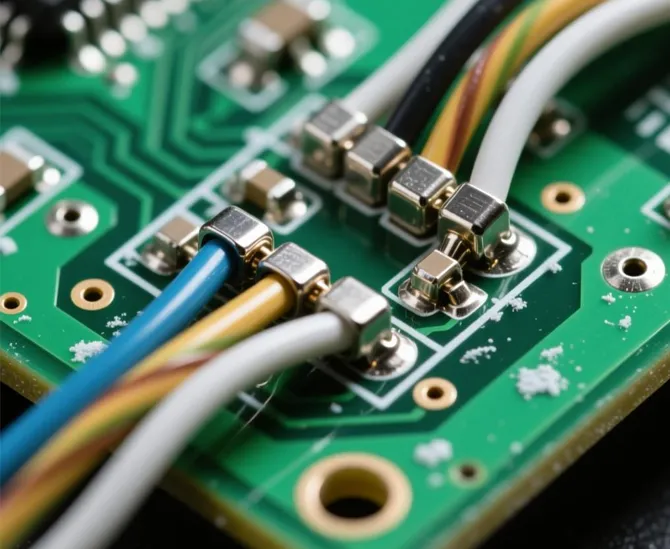
365PCB Electronic Components Sourcing Service
Power your production with 365PCB's Electronic Components Sourcing Service. We bridge the gap between complex designs and market-ready products by securing 100% genuine components through our global authorized network.
Expert BOM scrubbing to identify obsolete parts before production begins.
Cost-saving alternative analysis without sacrificing circuit reliability.
Elimination of counterfeit risks through strict, traceable procurement channels.
Minimum lead times utilizing our established global distributor networks.
Streamline Your Sourcing TodayPhase 3: Design for Manufacturing (DFM) and NPI
Before mass production, the EMS runs a New Product Introduction (NPI) batch. Their engineers will analyze your layout. They might suggest altering the surface finish to an OSP (Organic Solderability Preservative) PCB for better lead-free solderability, or adjusting pad geometries to prevent tombstoning. The NPI run validates the assembly line program and testing fixtures.
Phase 4: Volume Scaling and Continuous Improvement
Once the NPI batch passes your functional approval, the EMS unlocks mass production. As volumes increase, a competent EMS will actively seek cost-down opportunities, suggesting minor layout changes or alternative passive components to drive unit costs down over consecutive quarters.
The Commercial Benefits
When you Transition Electronics Production successfully, the commercial benefits are profound. First, your capital expenditure (CapEx) plummets. You no longer need to buy reflow ovens or hire specialized SMT operators. Second, your supply chain becomes significantly more resilient. Top-tier EMS providers buy millions of components annually; they get priority allocation during global chip shortages that small, independent companies cannot access. Third, you gain immediate access to advanced manufacturing technologies—such as utilizing a highly thermal-conductive Ceramic PCB for high-power LED applications—that are too expensive to implement in-house.
Limitations and Hidden Risks
We must use commercial and practical judgment: transitioning is not without risk. The primary limitation is the loss of direct physical control over your production line. You cannot simply walk onto the floor to tweak a component placement. Communication latency can become a significant issue if your documentation is poor. Furthermore, there is an inherent risk to Intellectual Property (IP). You are handing over your complete design schematics and source code (if they are flashing firmware). You must ensure tight Non-Disclosure Agreements (NDAs) and partner with legally compliant, reputable facilities.
Who Should Use an EMS Provider
For commercial users scaling beyond 1,000 units per month, transitioning is mandatory. Hardware startups that have secured Series A funding, established mid-market industrial manufacturers, and consumer electronics brands must utilize EMS providers. If your core competency is software, brand marketing, or mechanical engineering, you should not be running a PCB assembly line. Let the experts handle the soldering.
Who Does Not Need to Transition
For beginners, hobbyists, or engineering firms building extreme low-volume, highly bespoke prototypes (under 50 units), transitioning to a full-scale EMS is overkill. The NPI setup fees and tooling costs will outweigh the unit cost savings. You are better off using rapid prototyping services or assembling by hand until product-market fit is achieved and true volume is required.
Common Mistakes During Transition
From our experience, the most catastrophic mistake companies make is treating the EMS like a black box. Throwing an incomplete BOM over the wall and expecting perfect boards in return guarantees failure. If you fail to specify exact tolerances, voltage ratings, or acceptable alternate footprints, the EMS assembly lines will halt. Another profound error is ignoring testing parameters. You must supply the EMS with a comprehensive testing protocol and physical testing jigs. If you do not tell them how to test the board, you will receive assembled boards that power on but fail in the field.
Strict Buying Considerations
When selecting an EMS to Transition Electronics Production, you must audit their facility capabilities. Do they hold the necessary quality certifications (ISO 9001, ISO 13485 for medical, or AS9100 for aerospace)? Do they have advanced Automated Optical Inspection (AOI) and 3D X-Ray (AXI) for inspecting hidden BGA joints? We recommend demanding a full Turnkey service model. If you attempt a Consignment model (where you buy the parts and ship them to the EMS), you accept all the liability for counterfeit parts, shipping delays, and inventory shrinkage. Turnkey forces the EMS to own the entire supply chain liability.
Expert Recommendation
We strongly recommend that any serious hardware company looking to Transition Electronics Production does so with a partner capable of full-scale Turnkey manufacturing. You must consolidate accountability. At 365PCB, we act as an extension of your engineering team. From robust BOM scrubbing to advanced bare board fabrication and high-yield SMT assembly, we eliminate the friction of scaling. Stop managing disparate vendors and let 365PCB handle your entire production lifecycle, ensuring your product reaches the market on time, on budget, and fully tested.
Summary and Comparison Tables
Quick Summary Table: The Transition Phases| Phase | Action Required | Critical Deliverable |
|---|
| 1. Documentation | Compile all engineering data for handoff. | Scrubbed BOM, Native CAD, Gerbers, P&P Data. |
| 2. Sourcing | Procure all raw materials and components. | Secured supply chain, locked-in lead times. |
| 3. DFM & NPI | Review layout for manufacturability; run small batch. | Physical prototype, optimized machine programming. |
| 4. Mass Production | Scale up assembly volume. | High-yield, tested, commercial-ready product. |
Comparison Table: In-House Production vs. EMS Provider| Metric | In-House Production | EMS Provider (Turnkey) |
|---|
| Capital Expenditure | Extremely High (Machinery, Facility) | Low (Tooling/NPI fees only) |
| Scalability | Slow and rigid | Rapid and highly elastic |
| Component Sourcing Power | Low (Retail/Low-tier distribution) | High (Direct manufacturer allocation) |
| Control over Daily Process | Absolute | Requires structured communication |
Pros and Cons Table: Utilizing a Full Turnkey EMS Model| Pros (Advantages) | Cons (Limitations) |
|---|
| Single point of accountability; if a board fails, the EMS is responsible for the fix. | Higher upfront quoted unit cost compared to consignment (due to EMS handling margins). |
| Frees up internal engineering teams to focus purely on R&D and product iteration. | Requires relinquishing direct control over specific component vendor relationships. |
| Protects against counterfeit components through established, authorized distribution networks. | Transitioning requires significant upfront work to perfect the documentation package. |
| Access to state-of-the-art testing equipment (X-Ray, Flying Probe) without buying it. | Potential IP risks if partnering with unverified or uncertified offshore facilities. |
Frequently Asked Questions
How long does it take to Transition Electronics Production to an EMS?
In most professional situations, a complete transition from initial documentation handoff to the delivery of the first New Product Introduction (NPI) batch takes between 4 to 8 weeks. This timeline is heavily dependent on the current global lead times for the specific active components on your Bill of Materials.
What is the difference between Turnkey and Consignment manufacturing?
In a Consignment model, you are responsible for purchasing all the components, managing the inventory, and shipping them to the EMS facility for assembly. In a Full Turnkey model, the EMS provider uses your Bill of Materials to source and purchase all components, fabricate the bare boards, and execute the assembly. We recommend Full Turnkey to eliminate logistical liabilities on your end.
How do I protect my IP when using an EMS provider?
Protecting Intellectual Property requires a multi-layered approach. First, execute robust Non-Disclosure, Non-Use, and Non-Circumvention (NNN) agreements. Second, only partner with EMS facilities that hold recognized certifications like ISO 9001. For extreme security, some companies choose to program proprietary firmware in-house after receiving the assembled, un-flashed boards from the EMS.
Authoritative Industry References
To ensure engineering and operational accuracy, the transition protocols detailed in this guide align with the standards set by the following authoritative industry bodies:
David Li
David Li is the Technical Communications Director at China 365PCB, with over 15 years of hands-on experience in the PCB and electronics manufacturing industry. Holding a Master’s degree in Electrical Engineering, he has worked extensively in both R&D and manufacturing roles at leading multinational electronics firms in Shenzhen before joining our team.
His expertise spans high-speed digital design, advanced packaging (HDI, Flex), and automotive-grade reliability standards. David is passionate about bridging the gap between design intent and production reality—a philosophy that aligns perfectly with 365PCB’s mission to deliver seamless, rapid, and fully-integrated manufacturing solutions.
Follow David’s insights on PCB technology trends and best practices here on the 365PCB Knowledge Hub.
 English