






Service Hotline: +86-13612997580 (wechat/whatsapp)
Email: sales@365pcb.com
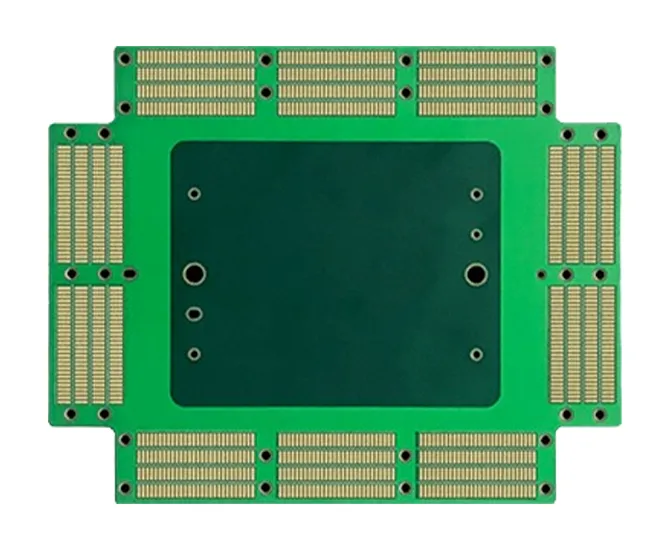
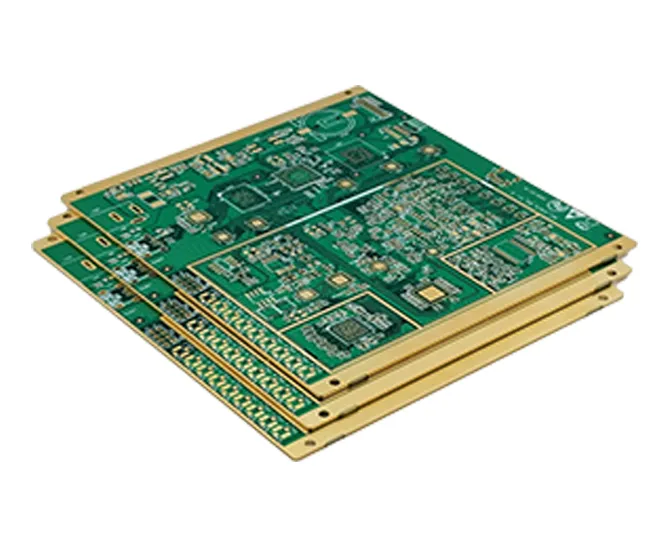
The Interposer PCB is a critical high-density interconnect component within the probe card assembly, acting as the electrical and physical interface between the probe card’s wiring and the fine-pitch probes of the test head. It performs essential signal routing, impedance matching, and electrical conversion, ensuring test signals are transmitted with high fidelity from the Automated Test Equipment (ATE) to the microscopic pads of the semiconductor die during wafer-level testing.
High-Density Signal Redistribution: Translates the relatively coarser pitch of the probe card’s output to the ultra-fine pitch required by the probe head’s contact elements (e.g., MEMS or vertical probes), enabling reliable connection to advanced, high-pin-count devices.
Enhanced Signal Integrity: Engineered with precise impedance control, minimized crosstalk, and optimized signal paths to maintain signal quality for high-speed digital, RF, and mixed-signal testing at the wafer level.
Electrical Parameter Optimization: Can incorporate passive components or specific trace geometries to fine-tune electrical performance, improving matching between the ATE channel and the Device Under Test (DUT).
Mechanical Precision & Stability: Provides a robust and stable platform for mounting the probe head, ensuring precise alignment and consistent contact force across thousands of test cycles.
Critical for Advanced Packaging Test: Enables the testing of devices with complex pad layouts, such as those using micro-bumps or fine-pitch ball grids, which is essential for 2.5D/3D IC and advanced packaging development.
Materials: High-frequency laminates (e.g., Rogers), specialized ceramics, or advanced composites for optimal electrical and thermal performance.
Interconnection Technology: Supports micro-bumps, solder balls, or spring contacts for interfacing with the probe head and probe card.
Feature Density: Capable of ultra-fine line/space and micro-via technology to achieve the necessary routing density.
Electrical Performance: Designed for high-bandwidth applications with controlled impedance channels.
Integration: Acts as the central interface layer within a multi-component probe card assembly.
Advanced Wafer Probing: Integral part of probe cards for testing high-I/O, fine-pitch devices like processors, ASICs, and high-bandwidth memory.
MEMS & Vertical Probe Card Integration: Serves as the essential substrate for mounting and connecting micro-fabricated probe arrays.
Engineering Characterization & Failure Analysis: Facilitates precise electrical access to individual die bumps or pads for detailed device validation.

