The global electronics market is no longer dominated solely by monolithic consumer devices stamped out by the millions. The rise of specialized medical devices, aerospace avionics, and complex industrial robotics has fundamentally fractured the manufacturing landscape. If your hardware startup or enterprise engineering team attempts to take a highly complex, 500-unit production run to a massive Tier-1 consumer EMS (Electronic Manufacturing Services) provider, you will be ignored, deprioritized, or financially penalized into submission. From our experience at China 365PCB, engineering complex assemblies requires a completely different factory mindset. This is where High-Mix Low-Volume Electronics Manufacturing (HMLV) becomes not just an option, but a vital strategic necessity.
In most professional situations, procuring printed circuit board assemblies (PCBA) for niche markets requires profound agility. You are not building one million identical smartphones; you are building fifty ventilator control boards, followed by two hundred satellite communication modules, followed by a quick-turn prototype for a defense contractor. If you want to survive hardware development without bleeding capital on unusable inventory, you must exercise commercial and practical judgment. You must partner with a facility specifically architected for rapid changeovers and stringent quality control. In this definitive guide, we will dissect the mechanics of High-Mix Low-Volume Electronics Manufacturing, explain exactly what to look for in a factory partner, and dictate whether this production model is actually worth utilizing for your product lifecycle.
Quick Answer: Understanding HMLV
High-Mix Low-Volume Electronics Manufacturing (HMLV) is a specialized production model where an assembly facility produces a high variety of complex electronic products (High-Mix) in small to medium batch quantities (Low-Volume), typically ranging from 10 to 5,000 units.
The Core Advantage: Ultimate flexibility. It allows OEMs to rapidly iterate designs, manage complex Bills of Materials (BOM), and service niche markets without committing to massive, capital-draining inventory runs.
The Factory Reality: Unlike mass production lines that run the same product for months, an HMLV SMT (Surface Mount Technology) line might be torn down, reprogrammed, and set up for three entirely different products in a single day.
Best For: Medical devices, military and aerospace technology, industrial controls, and advanced prototyping.
We recommend entirely bypassing traditional High-Volume Low-Mix (HVLM) factories if your annual demand is under 10,000 units. Partnering with a dedicated HMLV facility ensures your project receives the engineering support and Custom PCB attention it actually requires.
What It Is: Defining High-Mix Low-Volume Electronics Manufacturing
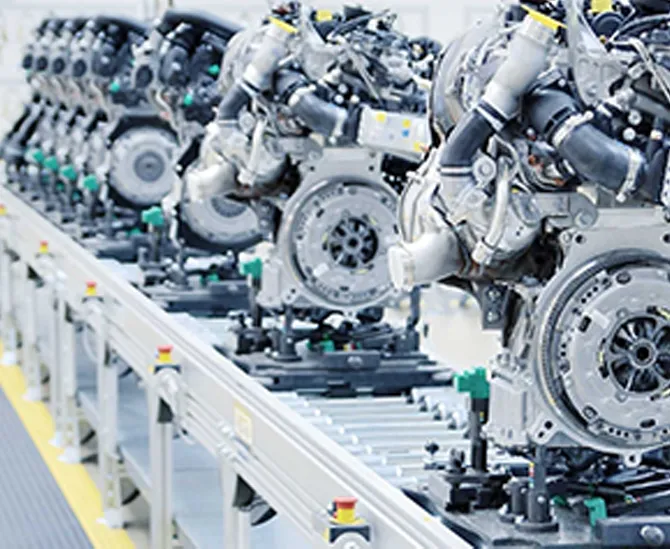
To understand High-Mix Low-Volume Electronics Manufacturing, you must understand its inverse: High-Volume Low-Mix (HVLM). A facility producing consumer Wi-Fi routers operates on HVLM. They load reels of standard capacitors and microprocessors into an SMT machine and let it run 24/7 for six months. It is highly efficient, but completely rigid.
HMLV is the antithesis of rigidity. "High-Mix" refers to the massive variance in the types of PCBAs being built. One day the factory is assembling a 12-layer Blind Via PCB for a medical imaging device; the next day, they are assembling a robust Through-Hole PCB for an industrial motor controller. "Low-Volume" means these batches are small—often just enough to satisfy a month of specialized market demand or a specific beta-testing phase. This requires a facility to operate as a high-tech job shop, prioritizing engineering intelligence and agile logistics over sheer output speed.
How It Works: The Factory Floor Mechanics
How it works in practice is a logistical ballet. In a standard factory, downtime is the enemy. In an HMLV facility, downtime for line changeovers is a built-in necessity. When a new batch is initiated, the process relies heavily on front-end engineering.
First, comprehensive PCB Design Support Services scrub the Bill of Materials (BOM). In HMLV, you are managing thousands of unique component SKUs across dozens of customers. If a specific microprocessor is out of stock globally, the engineering team must rapidly identify a cross-reference alternative.
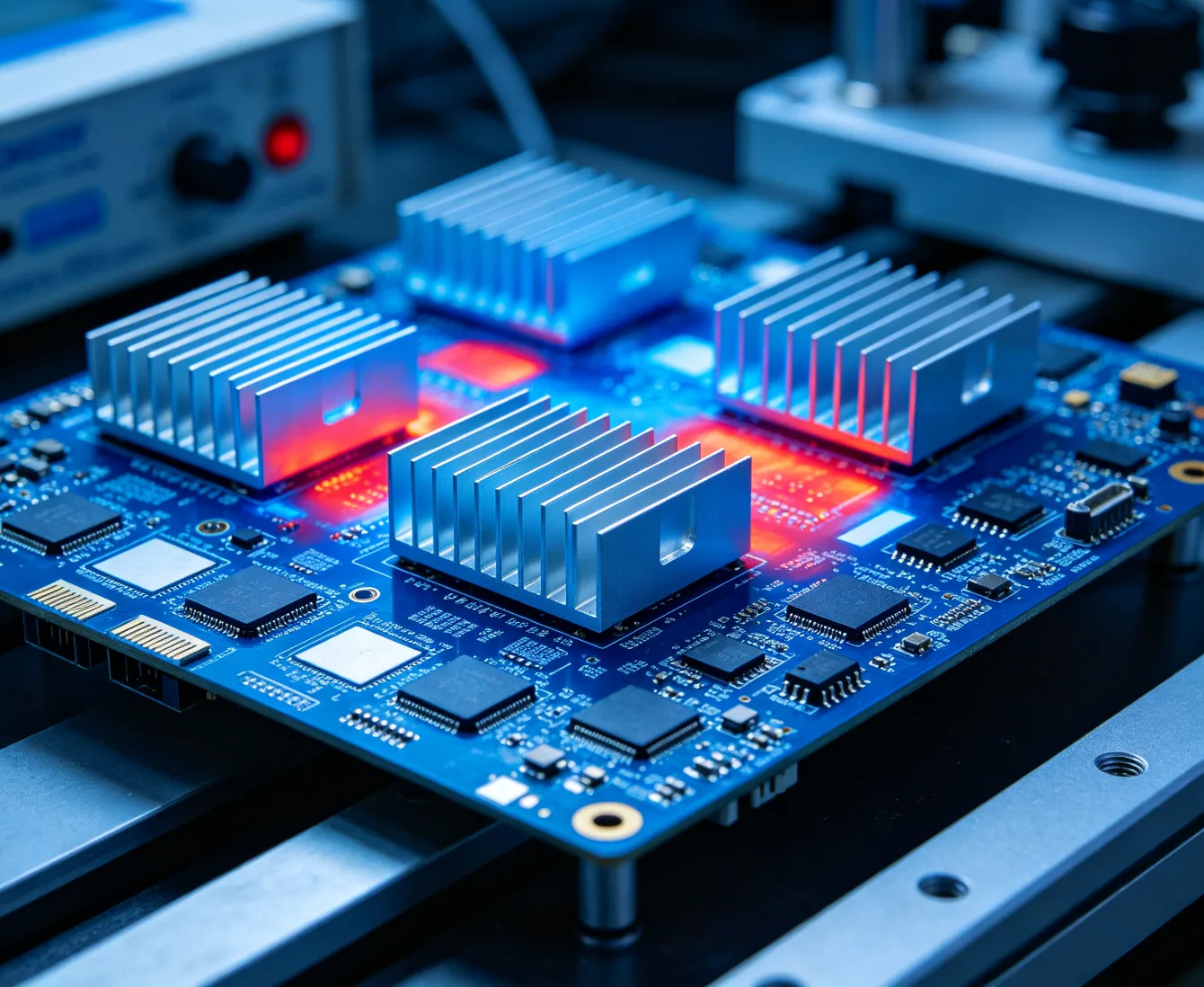
Once on the SMT line, the solder paste stencils are swapped, pick-and-place machines are reprogrammed, and new component reels are loaded. Because the volume is low, testing cannot rely on expensive, custom-built "bed of nails" fixtures. Instead, HMLV relies on highly programmable PCB Actual Board Area (AOI) and Flying Probe testing to verify solder joints and electrical continuity without the massive tooling costs associated with mass production.
Commercial Benefits of HMLV
The primary benefit of High-Mix Low-Volume Electronics Manufacturing is risk mitigation. Holding $500,000 in finished inventory for a niche industrial product is a massive liability. HMLV allows you to build strictly to order (Just-In-Time manufacturing), freeing up your cash flow.
Furthermore, it enables rapid iteration. If field testing reveals that your Quick Turn PCB prototype requires a layout change to reduce EMI noise, an HMLV partner can seamlessly update the gerber files and push the revision into the next 50-unit batch. In a mass-production facility, a mid-run engineering change order (ECO) is a logistical nightmare.
Limitations and Cost Realities
We must apply commercial and practical judgment: HMLV is not cheap per unit. Every time an SMT line stops to change over to a new product, that lost time is factored into the manufacturing cost. Non-Recurring Engineering (NRE) fees, stencil creation, and setup charges are amortized over 100 boards instead of 100,000 boards. If you are extremely price-sensitive and your product has low margins, the HMLV model will brutally compress your profitability.
Who Should Use This Model
For Commercial Users in Niche Sectors: Aerospace, defense, medical technology, robotics, and high-end audio equipment manufacturers live in the HMLV space. These industries demand extreme reliability, strict traceability, and complex board architectures—often utilizing exotic materials and specialized finishes like HASL(Lead-Free HASL)PCB or ENIG. If your product failure results in millions of dollars in damages or loss of life, you need the intense quality control focus of an HMLV provider.
Who Does Not Need HMLV
If you are building disposable vape pens, cheap Bluetooth speakers, or basic smart home light switches intended for big-box retail shelves, you do not need HMLV. You need a facility optimized for High-Volume Production PCB manufacturing, where the entire goal is to shave fractions of a cent off a massive run of identical units.
Common Procurement Mistakes
From our experience, the most catastrophic mistake hardware startups make is "factory mismatch." They take a complex, low-volume prototype to a massive Tier-1 manufacturer hoping for the lowest possible per-unit quote. The Tier-1 factory takes the job, but places it at the absolute bottom of their priority list. The startup experiences massive delays, terrible communication, and ultimately receives defective boards because the massive factory's NPI (New Product Introduction) team is busy servicing their Fortune 500 clients. You must align your volume requirements with a factory scaled to care about your business.
Expert Buying Considerations
When selecting a partner for High-Mix Low-Volume Electronics Manufacturing, evaluate their testing infrastructure. Do they offer comprehensive PCB Electrical Testing Service tailored for small batches? Can they handle complex box builds?
Ask about their component sourcing network. A true HMLV provider has robust ERP systems and relationships with trusted distributors to combat counterfeit parts—a massive risk when buying small quantities of rare silicon on the spot market. Finally, ensure they have the capability to scale with you if your niche product suddenly achieves mass-market adoption.
Summary and Comparison Tables
Comparison Table: HMLV vs. HVLM Manufacturing
| Manufacturing Metric | High-Mix Low-Volume (HMLV) | High-Volume Low-Mix (HVLM) |
|---|
| Product Variety (SKUs) | Very High (Dozens to hundreds) | Very Low (One to three) |
| Batch Size | 10 to 5,000 units | 100,000+ units |
| Setup & Changeover Frequency | High (Multiple times per day/week) | Low (Runs continuously for weeks) |
| Per Unit Cost | Higher (Setup costs amortized over fewer units) | Lowest (Economies of scale achieved) |
| Target Industries | Medical, Aerospace, Industrial, Prototyping | Consumer Electronics, Telecom, Automotive |
Pros and Cons of HMLV Manufacturing
| Pros | Cons |
|---|
| Enables rapid design iterations and Engineering Change Orders (ECOs). | Significantly higher assembly cost per unit. |
| Requires minimal capital tied up in warehousing finished goods. | Intense BOM management required due to frequent component shortages. |
| Perfect for highly complex, mission-critical PCBA architectures. | Machine utilization is lower due to frequent teardowns and setups. |
| Provides a clear path from initial prototype to early-stage production. | Requires a highly skilled engineering team to manage constant NPIs. |
Expert Recommendation & Integrated Solutions
Is it actually worth using High-Mix Low-Volume Electronics Manufacturing? Yes. If you are operating outside of the mass-market consumer electronics sphere, it is the only viable path to market. We strongly recommend that commercial users view their HMLV EMS provider not as a vendor, but as an extension of their own engineering team. A high-quality assembly partner will catch layout flaws, suggest component alternatives, and ultimately save your product launch from disastrous delays.
Electronic Assembly Service at China 365PCB
Professional electronic assembly services including PCB assembly, cable harness, and box build. Fast, reliable solutions for diverse industries.
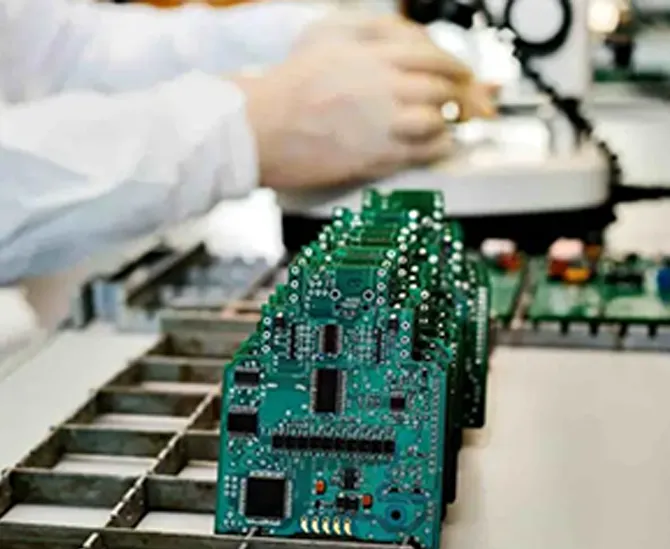
China 365PCB offers comprehensive electronic assembly services, combining expertise in PCB assembly, cable harness manufacturing, and final product assembly. Our skilled technicians deliver high-quality surface mount technology (SMT), through-hole assembly (THT), and box build solutions specifically tailored for prototypes and full production runs in HMLV environments. We are committed to precise, cost-effective electronic assembly tailored to your exacting product requirements.
Explore Assembly ServicesFrequently Asked Questions
Why is High-Mix Low-Volume manufacturing more expensive per unit?
High-Mix Low-Volume Electronics Manufacturing incurs higher costs per unit because Non-Recurring Engineering (NRE) costs, SMT machine programming, stencil creation, and physical line setup times are amortized over a much smaller number of boards compared to mass production.
Can an HMLV manufacturer transition my product to mass production later?
Yes. A specialized EMS provider like China 365PCB can seamlessly scale your product from a low-volume run into High-Volume Production PCB manufacturing once market demand is validated, ensuring no engineering knowledge or testing protocols are lost during the transition.
What industries rely most on HMLV manufacturing?
Industries requiring highly complex, mission-critical assemblies in smaller batches—such as aerospace, defense contractors, medical device manufacturers, robotics, and high-end industrial controls—rely almost exclusively on High-Mix Low-Volume Electronics Manufacturing.
How do HMLV factories handle PCBA testing for small batches?
Because building custom "bed-of-nails" ICT fixtures is too expensive for small runs, HMLV facilities heavily utilize Automated Optical Inspection (AOI) to verify component placement, combined with Flying Probe testing to verify electrical continuity without needing custom hard tooling.
Industry References & Authoritative Guidelines
To ensure our manufacturing methodologies align with global standards, China 365PCB adheres to the engineering protocols established by the following electronics authorities:
IPC (Association Connecting Electronics Industries): The global trade association establishing the standards for the assembly, inspection, and acceptability of electronic assemblies (IPC-A-610), which is critical for HMLV quality control. Review IPC Standards
SMTA (Surface Mount Technology Association): A professional network providing peer-reviewed research and best practices for optimizing SMT changeovers and managing complex electronics supply chains. Review SMTA Technical Resources
ISO (International Organization for Standardization): The governing body for ISO 9001 and ISO 13485 (Medical Devices), ensuring that HMLV factories maintain rigorous, auditable quality management systems regardless of batch size. Review ISO Manufacturing Protocols
David Li
David Li is the Technical Communications Director at China 365PCB, with over 15 years of hands-on experience in the PCB and electronics manufacturing industry. Holding a Master’s degree in Electrical Engineering, he has worked extensively in both R&D and manufacturing roles at leading multinational electronics firms in Shenzhen before joining our team.
His expertise spans high-speed digital design, advanced packaging (HDI, Flex), and automotive-grade reliability standards. David is passionate about bridging the gap between design intent and production reality—a philosophy that aligns perfectly with 365PCB’s mission to deliver seamless, rapid, and fully-integrated manufacturing solutions.
Follow David’s insights on PCB technology trends and best practices here on the 365PCB Knowledge Hub.
 English