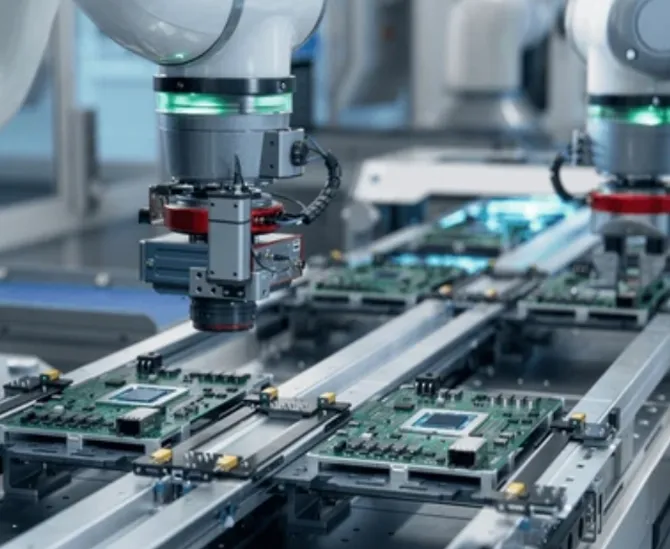
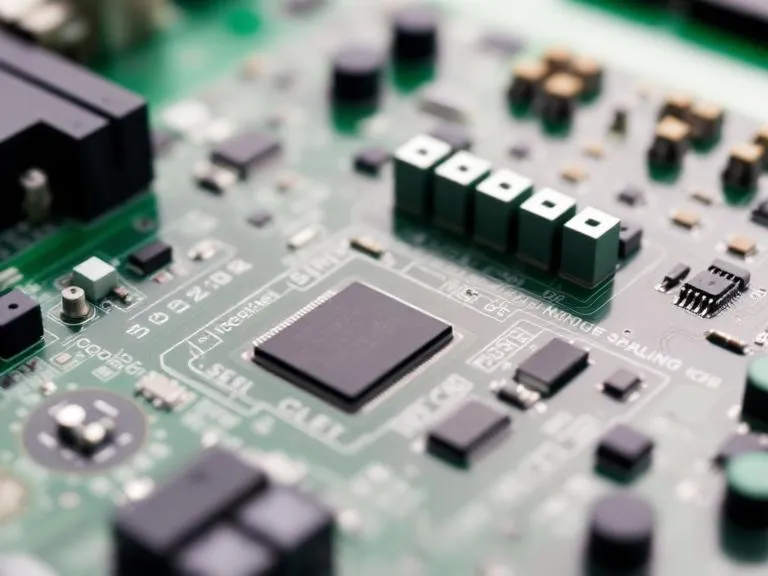
In electronics manufacturing, long-term competitiveness is not determined by equipment alone, but by the maturity of manufacturing processes.
Process improvements represent the continuous effort to reduce variability, increase predictability, and transform experience into repeatable execution.
This update outlines how China 365PCB, an OEM PCB manufacturer, is advancing its manufacturing processes to better support complex products, scalable production, and high-reliability requirements.
Our focus is not incremental efficiency gains, but system-level process control and engineering discipline.
Process Improvement as a System, Not a Single Action
Effective process improvement is not a one-time adjustment.
It is a closed-loop system that connects engineering, manufacturing, quality, and feedback from real production data.
Recent improvements are guided by three core objectives:
· Reduce process variation
· Improve first-pass yield
· Increase execution predictability across volumes
Every process change is evaluated based on its impact on risk reduction, not just throughput.
Strengthening Engineering–Manufacturing Alignment
Many manufacturing issues originate from gaps between design intent and production reality.
Process improvements focus on:
· Earlier and deeper DFM / DFA / DFT integration
· Clear translation of engineering requirements into work instructions
· Consistent interpretation of specifications across teams
By tightening this alignment, potential issues are addressed before production begins, not after defects appear.
Process Standardization and Repeatability
As product complexity increases, informal or experience-based processes no longer scale.
Key improvements include:
· Standardized process definitions across PCB fabrication and assembly
· Clear control points for critical operations
· Reduction of operator-dependent variability
Standardization ensures that results remain consistent regardless of volume or product mix.
Yield-Focused Process Optimization
Yield is one of the most sensitive indicators of process health.
Recent efforts emphasize:
· Early identification of yield loss mechanisms
· Root cause analysis based on real production data
· Preventive actions instead of reactive rework
Improving yield reduces cost, shortens lead time, and minimizes latent reliability risk.
In-Process Control and Early Detection
Defects are most cost-effective to address at the earliest possible stage.
Process improvements strengthen:
· In-process inspection and verification
· Clear criteria for deviation detection
· Immediate feedback loops between inspection and process adjustment
Early detection prevents defect propagation and downstream rework. This is particularly important in processes such as testing and reliability for cable and harness assemblies, where verification helps identify issues before final production.
Change Management Discipline
Uncontrolled changes are a major source of instability.
Improved process governance includes:
· Structured evaluation of process changes
· Impact analysis on quality, cost, and lead time
· Controlled implementation and verification
This discipline ensures that improvements do not introduce new risks.
Process Intelligence and Data Utilization
Modern process improvement relies on data, not assumptions.
Enhancements focus on:
· Collection of meaningful process metrics
· Trend analysis and pattern recognition
· Data-driven decision-making
Process intelligence enables continuous refinement rather than episodic correction.
Supporting Scalability and Long-Term Programs
Improved processes are designed to support:
· Smooth transition from prototype to volume production
· Stable execution during production ramp-up
· Long-lifecycle and repeat-order programs
Scalability is treated as a process requirement, not an afterthought.
Learn About Scaling Engineering Control in Manufacturing: Scalability from Prototype to Production: Engineering Control for Reliable Manufacturing Growth.
What These Process Improvements Mean for Customers
For customers, these improvements translate into:
· More predictable quality and delivery
· Lower risk during scale-up and design changes
· Reduced dependency on manual intervention
· Greater confidence in long-term manufacturing stability
Process maturity directly impacts customer experience—even when it is not immediately visible.
Continuous Improvement as a Long-Term Commitment
Process improvement is an ongoing journey.
Future efforts will continue to focus on:
· Deeper integration of engineering feedback
· Higher process robustness for complex products
· Stronger prevention-oriented quality systems
Sustainable manufacturing excellence is built through disciplined, continuous process improvement.
David Li
David Li is the Technical Communications Director at China 365PCB, with over 15 years of hands-on experience in the PCB and electronics manufacturing industry. Holding a Master’s degree in Electrical Engineering, he has worked extensively in both R&D and manufacturing roles at leading multinational electronics firms in Shenzhen before joining our team.
His expertise spans high-speed digital design, advanced packaging (HDI, Flex), and automotive-grade reliability standards. David is passionate about bridging the gap between design intent and production reality—a philosophy that aligns perfectly with 365PCB’s mission to deliver seamless, rapid, and fully-integrated manufacturing solutions.
Follow David’s insights on PCB technology trends and best practices here on the 365PCB Knowledge Hub.
 English