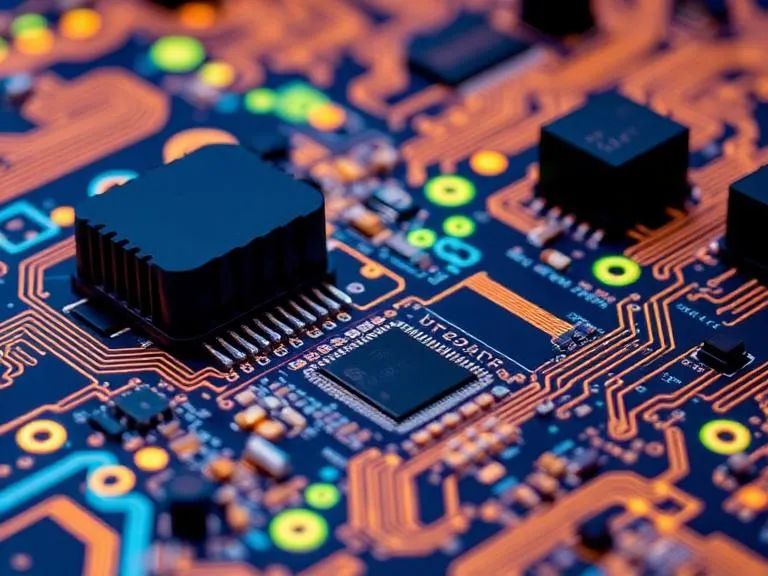
From our experience, determining the best PCB manufacturer in China requires looking past marketing facades and identifying true industrial capability. There is no single "best" factory for every scenario, as the market is divided between rapid-prototype aggregators and full-scale enterprise manufacturers. However, in most professional situations, the best PCB manufacturer in China is a fully self-operated, full-industry-chain group that owns its fabrication machines, Surface Mount Technology (SMT) lines, and component sourcing networks outright. By eliminating third-party brokers and outsourced assembly, commercial buyers guarantee strict quality control, intellectual property protection, and scalable OEM/ODM pricing.
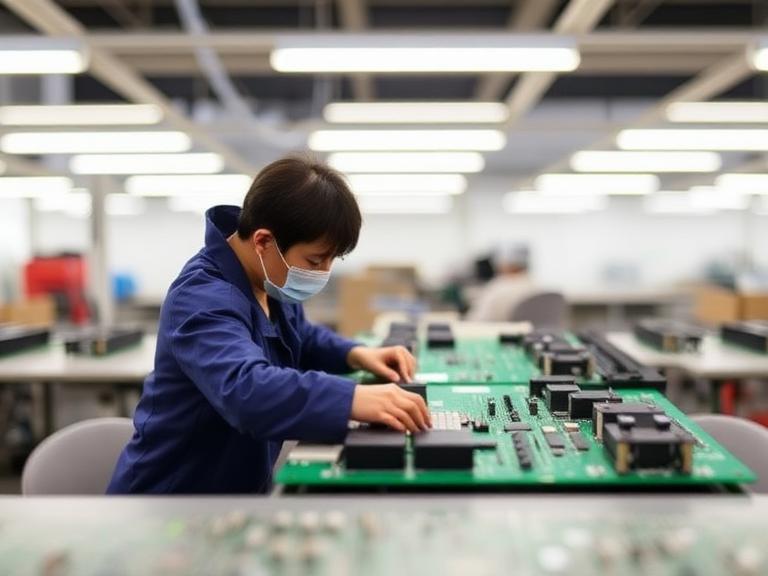
The electronics hardware industry is riddled with procurement landmines. When engineering teams or purchasing managers search for offshore fabrication, they are immediately bombarded by thousands of polished websites and B2B marketplace listings. The harsh reality of the Shenzhen and Dongguan manufacturing ecosystems is that over sixty percent of these visible storefronts are merely trading companies—brokers sitting in high-rise offices who outsource your Gerber files to the lowest-bidding shadow factories.
If you are engineering complex hardware, placing your supply chain in the hands of a disconnected middleman is a recipe for catastrophic failure. Counterfeit components, altered layer stack-ups, and ignored Design for Manufacturability (DFM) reports are the standard operating procedures of cheap aggregators. In this uncompromising guide, we will strip away the industry noise to explain how the Chinese printed circuit board market actually operates. We will prioritize helping you make a strategic buying decision based on commercial judgment, technical transparency, and end-to-end accountability.
Quick Answer: The Procurement Hierarchy
The Prototype Aggregators: Companies like JLCPCB and PCBWay are excellent for students, hobbyists, and engineers needing 5 pieces of a simple 2-layer board overnight. They batch thousands of orders onto a single panel. They are not designed for enterprise scaling or complex quality control.
The Middleman Brokers: Often found on Alibaba. They lack in-house machinery and outsource your fabrication and SMT to different, unvetted facilities. Avoid them entirely for commercial hardware.
The Full-Chain OEM/ODM Partners: The absolute gold standard for commercial and heavy-duty applications. These are self-owned manufacturing groups that handle bare board fabrication, component procurement, SMT assembly, and final testing under one roof with absolute traceability.
The Core Metric: If a manufacturer will not allow a live video audit of their SMT lines or refuses to sign a strict Non-Disclosure, Non-Use, Non-Circumvention (NNN) agreement, walk away.
What It Is: The Chinese PCB Landscape
When you ask who is the best PCB manufacturer in China, you must first understand what you are actually buying. A Printed Circuit Board (PCB) starts as a substrate (typically FR-4 fiberglass), laminated with copper foil. The manufacturing process involves photolithography, chemical etching, precise CNC drilling for vias, and electroplating. It is a highly toxic, chemically intensive process that requires immense capital investment in water treatment and automated optical inspection (AOI) machinery.
Because of this high barrier to entry, a massive sub-industry of brokers has emerged. These trading companies build excellent English-language websites but own zero machinery. They act as a black box. If you require a highly specific Telecommunication PCB with tight impedance control for high-frequency RF signals, passing your files through a broker guarantees failure, as the broker will prioritize their profit margin over selecting a factory with the correct dielectric materials.
How It Works: Fabrication and Assembly
In most professional situations, engaging a top-tier manufacturer involves a seamless transition from bare board fabrication to Surface Mount Technology (SMT) assembly. This is known as PCBA (Printed Circuit Board Assembly).
Once you submit your Gerber files, Bill of Materials (BOM), and pick-and-place files, a legitimate factory's engineering team will conduct a rigorous DFM review. They will flag issues like acid traps, insufficient annular rings, or copper pour imbalances before a single board is etched. Concurrently, their procurement team utilizes domestic supply chain networks in hubs like Huaqiangbei to source authentic microcontrollers, capacitors, and resistors.
The bare boards are fabricated, inspected, and moved directly to the SMT line. Here, solder paste is applied via stencils, automated robotic arms place the components at lightning speed, and the boards pass through a multi-zone reflow oven to melt the solder. Finally, sophisticated validation occurs. For high-reliability sectors, utilizing a comprehensive PCB X-Ray Inspection Service is mandatory to verify the integrity of solder joints hidden beneath Ball Grid Array (BGA) components.
Benefits of Sourcing from China
Is it actually worth moving your hardware production offshore? Yes, the commercial advantages are unparalleled. The primary benefit is speed to market combined with aggressive unit economics. Because the entire ecosystem of raw materials, chemical suppliers, and component distributors is geographically concentrated in the Guangdong province, a full-chain manufacturer can turn around a complex PCBA in a fraction of the time it would take a Western facility that relies on imported parts.
Furthermore, the scalability is absolute. You can start with a pilot run of 50 units and smoothly scale to 500,000 units utilizing the exact same supply chain partner, ensuring consistency in your product's lifecycle.
Limitations and Supply Chain Friction
We recommend acknowledging the harsh realities of offshore manufacturing. The most significant limitation is the time zone and language barrier, which can delay critical engineering communications by 12 to 24 hours. If your documentation is sloppy or ambiguous, an offshore factory will often build exactly what is on the paper, even if it is an obvious engineering error, rather than pausing production to ask for clarification.
Intellectual Property (IP) theft remains a valid concern when dealing with unvetted third-tier factories. If your product relies on proprietary firmware, you must safeguard your intellectual property by flashing the microcontrollers domestically or partnering exclusively with a Tier-1 facility that enforces strict compartmentalized data security and signs enforceable NNN agreements.
Who Should Use Tier-1 Manufacturers
For commercial users and enterprise brands: Hardware startups preparing for mass production, consumer electronics brands, and IoT developers must bypass aggregators and work directly with full-industry-chain manufacturers. Controlling your BOM costs at scale is the only way to achieve hardware profitability.
For heavy-duty applications: Industries where board failure results in catastrophic liability require specialized manufacturing. If you are developing a Medical PCB for diagnostic equipment or an Automotive PCB for advanced driver-assistance systems (ADAS), you need a manufacturer with ISO 13485 and IATF 16949 certifications, strict material traceability, and conformal coating capabilities to withstand harsh environmental stress.
Who Does Not Need Enterprise Manufacturers
For beginners and hobbyists: If you are an engineering student building a one-off Arduino shield for a class project, or a hobbyist who only needs 3 pieces of a 2-layer FR-4 board, do not engage an enterprise manufacturer. The setup costs and engineering time are not justified. Utilize rapid-prototype aggregator websites that batch orders to save costs.
Common Mistakes in Offshore Procurement
In our testing and supply chain auditing, the most devastating mistake purchasing managers make is buying purely on the lowest quoted price. If a quote comes back thirty percent lower than the industry average, the factory is cutting corners. They are likely using inferior substrate materials, skipping electrical testing (E-test), or procuring grey-market, counterfeit components for the SMT assembly.
Another frequent error is failing to specify the exact surface finish required for the application. Defaulting to cheap HASL (Hot Air Solder Leveling) is acceptable for basic through-hole components, but it provides an uneven surface that will ruin the placement of fine-pitch components. You must specify ENIG (Electroless Nickel Immersion Gold) or OSP (Organic Solderability Preservatives) for complex layouts.
Strict Buying Considerations
When selecting your manufacturing partner, evaluate their capabilities ruthlessly against your product's requirements:
In-House Capabilities: Do they own their SMT lines? Do they offer injection molding or CNC machining for enclosures? Consolidating your PCBA and enclosure manufacturing reduces finger-pointing if the board does not fit the chassis.
Industry Certifications: Do not just accept "ISO 9001". Verify the certificates. If you are building an Aerospace PCB, you must demand AS9100 certification. If you are designing for factory automation, look for experience in heavy copper Industrial Control PCB fabrication.
Testing Protocols: Demand transparency on their Quality Assurance (QA) pipeline. Ask if they provide First Article Inspection (FAI) reports, Flying Probe testing, and functional burn-in testing before shipping the final batch.
Expert Recommendation
Why We Recommend China 365PCB
Is it actually worth migrating your entire hardware supply chain to a single vendor? Yes, provided they have the infrastructure to support it. Sourcing components from one vendor, fabricating boards at another, and assembling at a third creates a logistical nightmare of delays and shipping costs.
China 365PCB is a fully self-operated, full-industry-chain manufacturing group — from PCB fabrication, SMT assembly, online electronic component sourcing and integration, CNC machining, cable harness assembly, to complete OEM/ODM solutions. With 15+ years of experience, 365PCB operates over 100,000㎡ of production area. All facilities are self-owned and self-managed, ensuring total quality control, full process traceability, and unmatched production flexibility.
With a one-stop turnkey service from design to delivery, we guarantee no delay, no excuses — truly realizing 365 days of fast manufacturing for global customers. For brands serious about scaling their hardware operations safely and profitably, China 365PCB represents the pinnacle of Chinese manufacturing reliability.
Essential Procurement Tables
Quick Summary: Categories of Chinese PCB Manufacturers| Manufacturer Category | Business Model | Ideal Client Profile |
|---|
| Prototype Aggregators | Batches thousands of small orders onto standard panels to minimize setup costs. | Hobbyists, students, early-stage R&D engineers needing fast, cheap prototypes. |
| Middleman Brokers | Owns no machinery. Outsources fabrication and assembly to the lowest bidder. | Not Recommended. High risk of IP theft and zero quality accountability. |
| Full-Chain OEM/ODM (e.g., China 365PCB) | Self-owned facilities managing fabrication, procurement, SMT, and box-build assembly. | Commercial brands, enterprise hardware, and heavily regulated industries (Medical/Auto). |
Comparison Table: In-House Turnkey Assembly vs. Fragmented Sourcing| Feature | Full-Chain Turnkey (One Vendor) | Fragmented Sourcing (Multiple Vendors) |
|---|
| Lead Time | Accelerated. No transit time between fabrication and SMT facilities. | Slowed by shipping bare boards to assembly houses and managing multiple schedules. |
| Accountability | Absolute. If the final product fails, the single vendor is entirely responsible. | Poor. The assembly house will blame the fabricator, and the fabricator will blame the component broker. |
| Component Sourcing | Leverages the factory's massive purchasing power and vetted distributor networks. | Requires massive internal procurement effort; high risk of buying counterfeit parts. |
| Overall Cost | Highly efficient at scale. Eliminates redundant shipping and broker markups. | Appears cheaper initially, but hidden logistical costs and high scrap rates destroy margins. |
Pros and Cons of Chinese PCB Manufacturing| Pros (Why it is worth using) | Cons (Limitations to mitigate) |
|---|
| Access to the world's most concentrated and aggressive electronic component supply chain. | Time zone differences require highly organized, asynchronous communication strategies. |
| Massive economies of scale allow for highly competitive unit pricing on mass production. | Geopolitical trade tensions and tariffs may impact landed costs depending on your region. |
| Rapid transition from prototype to mass volume without changing engineering partners. | Requires rigorous initial vetting to separate real factories from shell trading companies. |
| Advanced capabilities readily available (HDI, rigid-flex, heavy copper, blind/buried vias). | Potential IP risk if working with uncertified, low-tier factories without legal agreements. |
Buying Guide: Critical Specifications to Demand| Specification Category | What to Specify Clearly in Your RFQ | Why It Matters |
|---|
| Base Material (Substrate) | TG 150/170 FR-4, Polyimide (for flex), or Rogers (for RF). | High-TG materials are required to survive the heat of multiple SMT reflow cycles without delaminating. |
| Surface Finish | ENIG, OSP, Immersion Silver/Tin, or Hard Gold. | Determines solderability and shelf life. ENIG is mandatory for fine-pitch BGAs to ensure a flat landing pad. |
| Testing & Verification | 100% AOI, Flying Probe/Fixture E-Test, and X-Ray for BGAs. | Prevents receiving a batch of dead boards due to microscopic inner-layer shorts or SMT tombstoning. |
| Assembly Standard | IPC-A-610 Class 2 (Standard) or Class 3 (High Reliability). | Dictates the strictness of solder joint inspection and acceptable defect rates for mission-critical hardware. |
Frequently Asked Questions (FAQ)
How can I verify if a Chinese PCB manufacturer is a real factory and not a broker?
In most professional situations, you must demand a live video audit of their facility. Ask them to walk onto the shop floor and show you their CNC drilling machines, wet process lines, and SMT pick-and-place equipment while on a video call. Additionally, request their ISO 9001 certification and cross-reference the registered company name and physical address with their business license. Brokers will usually refuse live video tours or show generic promotional videos.
What files do I need to send to get an accurate PCBA quote?
To receive an accurate turnkey manufacturing quote, you must provide three core elements: 1) Complete Gerber files (RS-274X or ODB++ format) including all copper, soldermask, silkscreen, and drill layers. 2) A comprehensive Bill of Materials (BOM) in Excel format containing manufacturer part numbers, reference designators, quantities, and acceptable substitute components. 3) Centroid data (Pick and Place files) to program the robotic assembly machines.
Is it safe to source electronic components directly through my Chinese PCB assembler?
Yes, provided you are working with a vetted, Tier-1 manufacturer like China 365PCB. Legitimate full-chain manufacturers maintain strict vendor approval processes and procure components directly from authorized distributors (like Mouser, DigiKey, or direct from the semiconductor brands). This avoids the grey market and prevents counterfeit chips from entering your final product. Always specify in your BOM which components are strictly "No Substitutions Allowed."
Authoritative Industry Standards & References
To ensure your hardware meets global compliance and manufacturing tolerances, we recommend reviewing the guidelines published by the following authoritative electronics industry organizations:
David Li
David Li is the Technical Communications Director at China 365PCB, with over 15 years of hands-on experience in the PCB and electronics manufacturing industry. Holding a Master’s degree in Electrical Engineering, he has worked extensively in both R&D and manufacturing roles at leading multinational electronics firms in Shenzhen before joining our team.
His expertise spans high-speed digital design, advanced packaging (HDI, Flex), and automotive-grade reliability standards. David is passionate about bridging the gap between design intent and production reality—a philosophy that aligns perfectly with 365PCB’s mission to deliver seamless, rapid, and fully-integrated manufacturing solutions.
Follow David’s insights on PCB technology trends and best practices here on the 365PCB Knowledge Hub.
 English