We see the confusion happen constantly, even among seasoned procurement managers and junior hardware engineers: the terms "PCB" and "PCBA" are thrown around interchangeably as if they mean the exact same thing. From our experience, this fundamental misunderstanding leads to disastrous supply chain delays, misquoted manufacturing contracts, and costly product redesigns. To set the record straight immediately: a bare circuit board is completely useless on its own. It is merely a meticulously engineered piece of fiberglass and copper. It does not perform a single computational task until it undergoes the rigorous, highly controlled manufacturing process required to transform it into a printed circuit assembly.
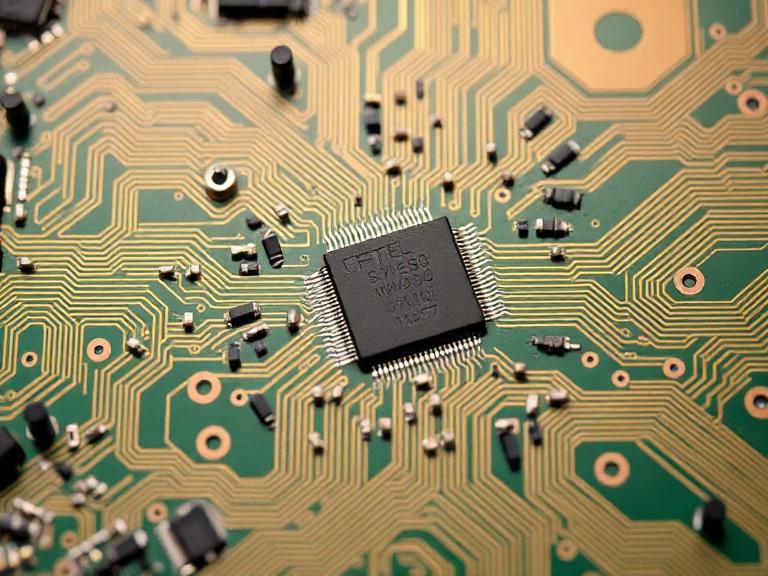
A printed circuit assembly represents the physical manifestation of your engineering schematics. It is the culmination of raw substrate fabrication, precise solder paste deposition, automated component placement, and intense thermal profiling. When you hold a functioning motherboard, a motor controller, or a high-frequency communications module in your hands, you are holding a printed circuit assembly. In this comprehensive technical guide, we will aggressively dissect exactly what a printed circuit assembly is, how it is manufactured, and why choosing the correct foundational materials and assembly partner dictates the success or catastrophic failure of your electronic hardware.
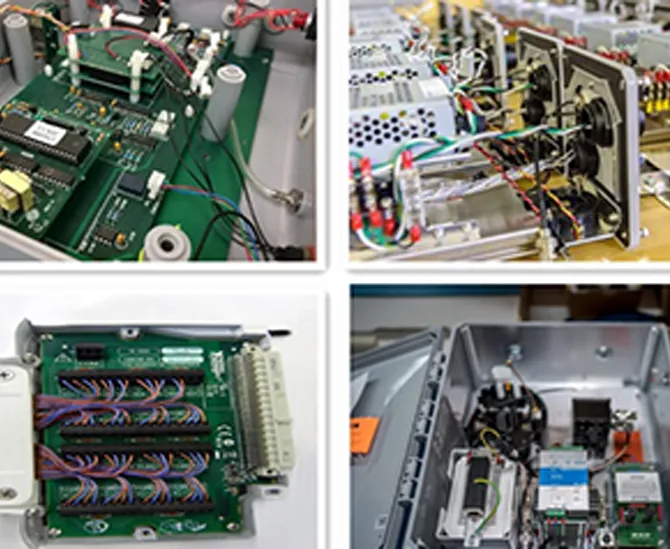
China 365PCB is a fully self-operated, full-industry-chain manufacturing group — from PCB fabrication, SMT assembly, online electronic component sourcing and integration, CNC machining, cable harness assembly, to complete OEM/ODM solutions.
With 15+ years of experience, 365PCB operates over 100,000㎡ of production area, all facilities are self-owned and self-managed, ensuring total quality control, full process traceability, and unmatched production flexibility.
With a one-stop turnkey service from design to delivery, we guarantee no delay, no excuses — truly realizing 365 days of fast manufacturing for global customers.
The Core Definition: What is a Printed Circuit Assembly?
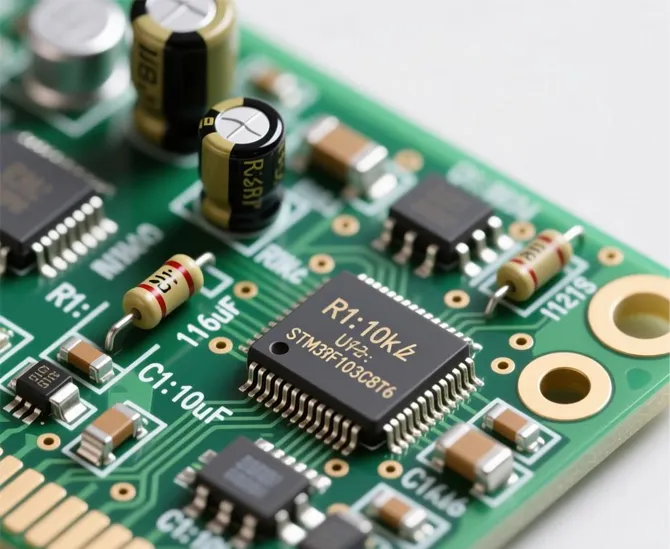
A printed circuit assembly (often abbreviated as PCBA) is a bare printed circuit board that has been fully populated with all necessary electronic components—such as resistors, capacitors, integrated circuits (ICs), microprocessors, and connectors—and mechanically secured using electrical solder. The bare board provides the conductive copper pathways (traces) that route electricity, but it is the successful marriage of these pathways with active and passive components that creates a functional printed circuit assembly capable of directing power and processing data.
We emphatically recommend that engineers treat the transition from a bare board to a printed circuit assembly as the most critical phase of the product lifecycle. A flaw in the bare board fabrication might cause a localized short, but a flaw in the printed circuit assembly process—such as a cold solder joint, a misaligned BGA (Ball Grid Array), or an incorrect reflow temperature—will instantly brick a multi-thousand-dollar piece of equipment. Understanding the nuances of this transformation is non-negotiable for anyone involved in electronics manufacturing.
The Manufacturing Process: How a Printed Circuit Assembly is Built
Creating a high-yield printed circuit assembly requires a heavily automated, multi-stage production line. From our experience running state-of-the-art manufacturing floors, cutting corners at any of these stages inevitably leads to field failures. The two primary methodologies used to build a printed circuit assembly are Surface Mount Technology (SMT) and Through-Hole Technology (THT).
Surface Mount Technology (SMT)
The vast majority of modern electronics rely on Surface Mount Technology. In this process, components are mounted directly onto the surface of the printed circuit assembly. The process begins with solder paste printing, where a stainless steel stencil is used to apply a precise volume of solder paste onto the copper pads of the board. We utilize 3D Solder Paste Inspection (SPI) machines to verify this deposition, because 70% of all printed circuit assembly defects originate from improper solder paste application.
Next, high-speed pick-and-place machines shoot the surface-mount devices (SMDs) onto the wet solder paste at staggering speeds. The populated board is then conveyed through a massive reflow oven. The oven is programmed with a meticulously calculated thermal profile that preheats the board, activates the flux, melts the solder alloy to form a perfect intermetallic bond, and safely cools the board down. The result is a highly reliable printed circuit assembly.
Through-Hole Technology (THT)
While SMT dominates high-density designs, Through-Hole Technology remains absolutely essential for components that endure severe mechanical stress, such as massive industrial connectors, heavy capacitors, and power relays. In THT, the component leads are physically inserted through plated holes drilled into the board. The printed circuit assembly is then run over a wave soldering machine—a literal tidal wave of molten solder that washes over the bottom of the board, wicking up into the holes and locking the components permanently in place. We recommend utilizing a mixed-technology approach for robust industrial designs, combining the miniaturization of SMT with the mechanical strength of THT.
Substrate Selection: The Foundation of Reliability
You cannot build an elite printed circuit assembly on a weak foundation. The substrate you choose dictates the thermal management, mechanical rigidity, and high-frequency performance of the final device. Most standard commercial electronics utilize a standard FR4 PCB, which is a flame-retardant fiberglass epoxy laminate. It is cost-effective and highly reliable for basic consumer goods.
However, when operating in harsh environments like automotive under-hood applications or aerospace telemetry, standard FR4 will delaminate and warp. For these applications, we strictly recommend upgrading to a High TG PCB. Specifically, deploying a 170TG PCB or a robust 180TG PCB ensures that the glass transition temperature of the substrate is high enough to withstand intense, continuous thermal cycling without the printed circuit assembly suffering from structural failure.
Furthermore, for applications pushing massive amounts of power—such as LED lighting arrays or heavy-duty motor controllers—heat dissipation is the primary engineering constraint. In these scenarios, a traditional fiberglass board will trap heat and destroy your components. The only viable solution for this type of printed circuit assembly is to utilize an Aluminum PCB, which acts as a massive thermal sink to pull destructive heat away from the sensitive active components.
Advanced Technologies in Printed Circuit Assembly
The relentless demand for miniaturization in consumer devices and medical wearables has pushed printed circuit assembly manufacturing to the absolute limits of physics. To accommodate hundreds of connections in a space smaller than a postage stamp, we employ HDI PCB (High Density Interconnect) technology. HDI relies on microscopic blind and buried vias, which are only achievable by utilizing a Laser Drilled PCB manufacturing process. These ultra-fine connections allow for a printed circuit assembly that is incredibly compact without sacrificing routing complexity.
Beyond miniaturization, mechanical flexibility is reshaping the industry. We are heavily involved in manufacturing flexible electronics. A standard rigid board cannot conform to the curved housing of a smart watch or the folding mechanism of an aerospace satellite array. Utilizing a Bendable PCB or a highly complex Rigid Flex PCB allows the printed circuit assembly to bend dynamically or fold statically into extremely tight, three-dimensional enclosures. The hybrid Flex-Rigid Board is particularly remarkable, as it combines the structural mounting stability of rigid FR4 with the wiring-elimination benefits of flexible polyimide, creating a highly resilient printed circuit assembly.
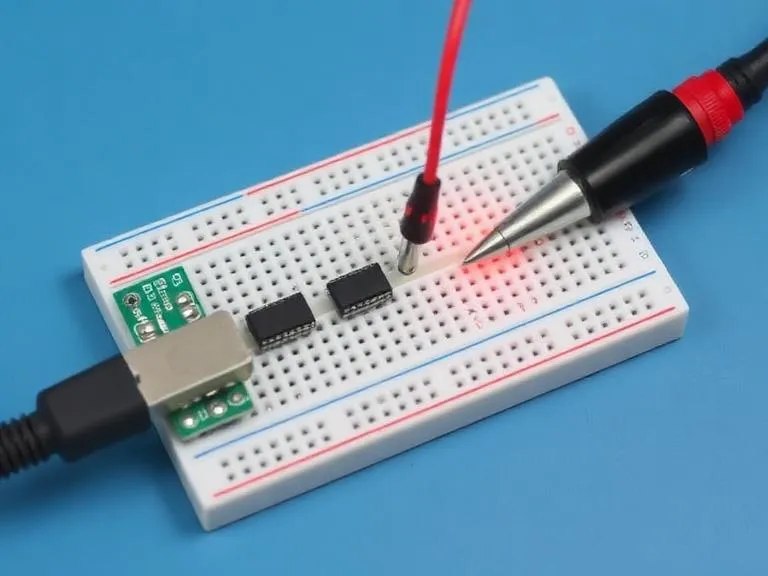
Before committing thousands of dollars to mass production of these advanced technologies, we aggressively recommend utilizing a rapid PCB Prototype Service. A prototype printed circuit assembly allows your engineering team to validate firmware, test thermal constraints, and verify component footprints before engaging in a high-volume manufacturing run.
Quality Control and Inspection Protocols
From our experience, a printed circuit assembly is only as reliable as the testing protocols used to validate it. Visual inspection by human eyes is completely inadequate for modern hardware. We employ Automated Optical Inspection (AOI) to scan the printed circuit assembly for missing components, skewed placements, and insufficient solder fillets. For complex components where the solder joints are hidden entirely beneath the chip—such as BGAs and QFNs—we mandate 3D X-Ray Inspection (AXI) to peer through the silicon and guarantee that the intermetallic bond is flawless and completely devoid of voids.
Summary Table: Bare PCB vs. Printed Circuit Assembly
| Characteristic | Bare PCB (Printed Circuit Board) | PCBA (Printed Circuit Assembly) |
|---|
| Definition | The raw, unpopulated fiberglass and copper board. | The fully populated, soldered, and functional board. |
| Functionality | Does not perform any electrical functions on its own. | Fully operational; executes logic, routes power, processes data. |
| Key Manufacturing Steps | Lamination, Drilling, Copper Plating, Solder Mask, Silkscreen. | Solder Paste Printing, Pick-and-Place, Reflow Soldering, AOI/X-Ray. |
| Primary Materials | FR4, Copper foil, Prepreg, Liquid Photoimageable Solder Mask. | Bare PCB, Solder Alloy, Flux, ICs, Resistors, Capacitors, Connectors. |
| Cost Profile | Relatively low cost; represents the foundation. | High cost; encompasses expensive silicon chips and assembly labor. |
Frequently Asked Questions (FAQs)
What is the difference between SMT and THT in a printed circuit assembly?
Surface Mount Technology (SMT) involves mounting components directly onto the flat surface pads of the board, allowing for extreme miniaturization and high-speed automated placement. Through-Hole Technology (THT) requires the component leads to be inserted through drilled holes in the board and soldered from the bottom. THT is bulkier and slower to assemble but provides significantly stronger mechanical bonds for heavy connectors and relays.
Why does a printed circuit assembly need conformal coating?
From our experience, if a printed circuit assembly will be deployed in an environment with high humidity, chemical exposure, or extreme dust (such as marine or industrial applications), conformal coating is mandatory. It is a thin polymeric film applied over the finished board that protects the delicate solder joints and components from corrosion, electrical shorting, and moisture ingress.
What causes a printed circuit assembly to fail during manufacturing?
The vast majority of failures are tied to poor thermal profiling during reflow soldering, leading to cold solder joints or tombstoning (where a component stands up vertically). Other major causes include inaccurate solder paste deposition, poor substrate material selection, and inadequate Design for Manufacturing (DFM) checks before assembly begins.
Industry References
To ensure your engineering team is designing and procuring hardware that meets the highest global reliability standards, we strongly recommend consulting the authoritative technical guidelines established by the premier electronics organizations.
IPC - Association Connecting Electronics Industries: The global trade association that develops the universally accepted acceptability standards for printed circuit assembly and electronic hardware.
IEEE Xplore Digital Library: The premier academic and industrial database for peer-reviewed research regarding printed circuit assembly reliability, thermal management, and advanced semiconductor packaging.
David Li
David Li is the Technical Communications Director at China 365PCB, with over 15 years of hands-on experience in the PCB and electronics manufacturing industry. Holding a Master’s degree in Electrical Engineering, he has worked extensively in both R&D and manufacturing roles at leading multinational electronics firms in Shenzhen before joining our team.
His expertise spans high-speed digital design, advanced packaging (HDI, Flex), and automotive-grade reliability standards. David is passionate about bridging the gap between design intent and production reality—a philosophy that aligns perfectly with 365PCB’s mission to deliver seamless, rapid, and fully-integrated manufacturing solutions.
Follow David’s insights on PCB technology trends and best practices here on the 365PCB Knowledge Hub.
 English