Finding legitimate Custom pcb boards manufacturers requires bypassing middlemen and targeting source factories directly. The six best places to find them are: direct Tier-1 factory integrations (like China 365PCB), vetted global B2B marketplaces (with strict factory audits), specialized electronics trade shows (such as Electronica or IPC APEX), digital PCB aggregator platforms, hardware engineering forums (like EEVblog), and local domestic assembly brokers. For scalable, high-margin production, integrating directly with a self-operated manufacturing group in Shenzhen remains the undisputed best commercial strategy.
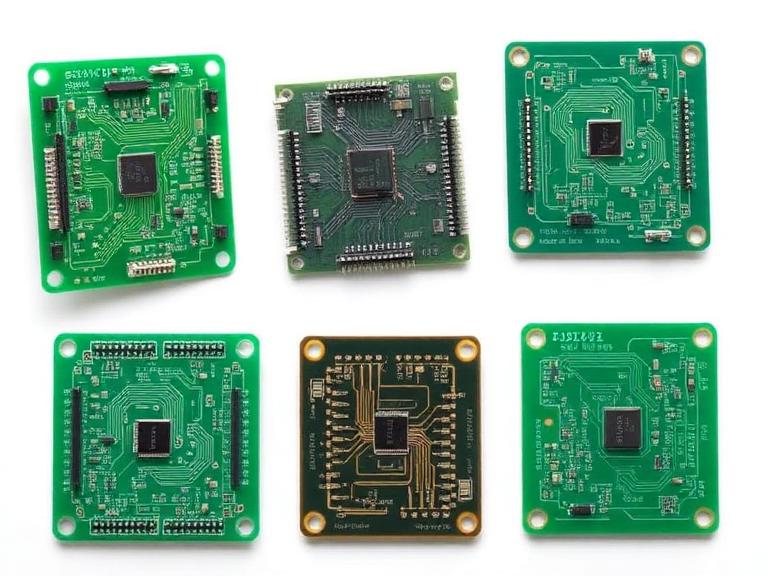
Quick Answer: The 6 Sourcing Channels
1. Direct Tier-1 Manufacturing Groups: Best for scaling. Full control over IP, costs, and quality.
2. B2B Marketplaces (Alibaba/Global Sources): Highly populated, but a minefield of brokers posing as factories. Requires intense vetting.
3. Electronics Trade Shows: Excellent for establishing face-to-face relationships and auditing physical samples.
4. PCB Aggregator Engines: Good for instant quoting on simple boards, but lacks deep engineering support.
5. Engineering Communities (Reddit/EEVblog): The best place for unfiltered, brutally honest reviews of fabricators.
6. Local Turnkey Brokers: High cost, but offers domestic legal protection and localized communication.
What It Is: The Custom PCB Manufacturing Landscape
A bare printed circuit board is entirely useless until it is engineered to your exact product specifications. When you search for Custom pcb boards manufacturers, you are looking for industrial fabricators capable of transforming your digital CAD designs (Gerber files or ODB++) into physical, multi-layered FR4, Rogers, or metal-core boards. The industry is broadly split between rapid prototyping facilities that run low-mix/high-volume jobs, and specialized fabricators that handle complex, high-density interconnect (HDI) boards.
From our experience, the distinction between a "manufacturer" and a "broker" is the most critical concept to grasp. A true manufacturer owns the drilling machines, the electroplating baths, and the SMT assembly lines. A broker simply takes your files, adds a 30% margin, and sends them to a hidden factory. If you want true accountability and the ability to dictate a Custom PCB build stack, you must deal directly with the factory floor.
How It Works: From Gerber to Fabrication
The operational workflow of procuring custom boards is unforgiving. It begins with your engineering team finalizing the schematics and submitting them for a Design for Manufacturability (DFM) check. Elite manufacturers do not just print what you send; they provide rigorous PCB Design Support Services to identify trace width violations, drill hits that are too close to copper planes, or thermal relief issues before a single sheet of fiberglass is cut.
Once approved, the board undergoes photolithography, etching, drilling, and plating. Depending on your component density, the manufacturer will apply solder mask and your chosen surface finish. Finally, the board must pass an automated optical inspection. Verifying the PCB Actual Board Area (AOI) ensures there are no microscopic shorts or opens that would cause your product to fail in the field.
The 6 Places to Find Custom PCB Boards Manufacturers
1. Direct Tier-1 Manufacturing Groups
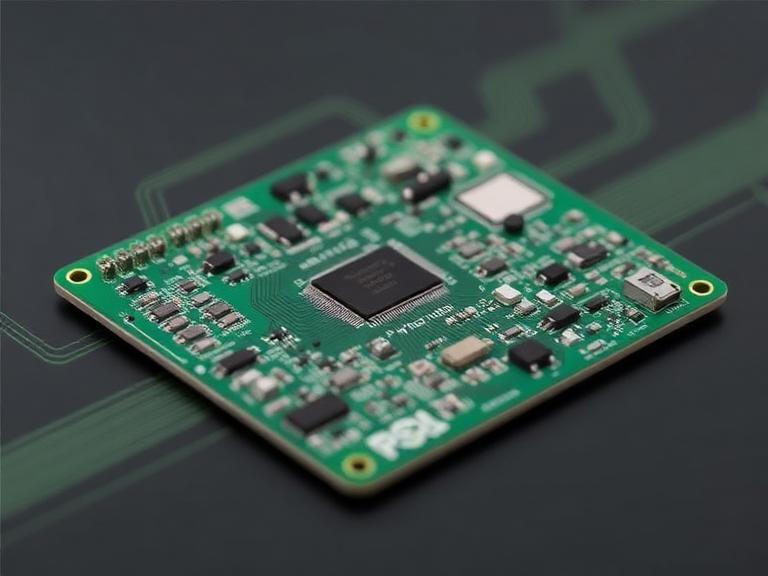
In most professional situations, bypassing platforms and going straight to self-operated, integrated manufacturing groups is the optimal strategy. Companies based in global hardware hubs like Shenzhen that own their entire supply chain—from bare board fabrication to SMT assembly and cable harnessing—offer the best unit economics and IP protection. This is the holy grail for commercial users looking to scale.
2. Global B2B Marketplaces (Alibaba, Global Sources)
These platforms host tens of thousands of suppliers. While you can certainly find Custom pcb boards manufacturers here, it is a highly treacherous landscape. The platform algorithms favor marketing budget over engineering capability. You will encounter trading companies posing as factories. If you use this route, you must demand live video tours of the factory floor and verify ISO 9001 and IPC Class 2/3 certifications independently.
3. Electronics Trade Shows
Events like Electronica (Munich), IPC APEX EXPO (USA), and the Hong Kong Electronics Fair allow you to meet factory representatives face-to-face. For heavy-duty applications where you need to physically inspect cross-section samples of complex multi-layer boards, trade shows remain an invaluable sourcing channel.
4. PCB Aggregator Engines
Digital platforms that provide instant algorithmic quotes are excellent for hobbyists or rapid prototyping. However, these companies often batch your designs with dozens of others onto a single panel. While this allows for a cheap Quick Turn PCB, it severely limits your ability to specify custom layer stack-ups, controlled impedance, or exotic substrates.
5. Engineering Forums & Communities
Never underestimate the sourcing intelligence found on platforms like the EEVblog forums, Reddit's /r/PrintedCircuitBoard, or specialized hardware Discord channels. Engineers are ruthlessly honest about their vendor experiences. If a manufacturer regularly botches via-in-pad plating or has terrible solder mask registration, these communities will loudly expose them.
6. Local Domestic Brokers & Turnkey Assemblers
If your company has strict governmental compliance requirements (like ITAR in the US), you may be forced to use local domestic manufacturers. Alternatively, you can use local brokers who manage offshore manufacturing for you. The benefit is localized legal recourse and native communication; the extreme limitation is that you will pay a 40% to 200% premium for the privilege.
Benefits of Finding the Right Partner
Securing a direct relationship with a highly capable manufacturer unlocks massive operational advantages. The primary benefit is cost scaling. A partner equipped for High-Volume Production PCB runs can drop your unit costs by 60% compared to prototype houses. Furthermore, a consolidated manufacturer handles component sourcing, meaning you are no longer burdened with the nightmare of tracking down obscure microcontrollers from secondary distributors.
Limitations and Supply Chain Realities
We must apply commercial and practical judgment: offshore manufacturing is not without friction. Language barriers can lead to catastrophic engineering misunderstandings if your gerber files are not perfectly documented. Shipping delays, geopolitical tariffs, and time-zone differences require your procurement team to be highly organized. If you demand a 24-hour turnaround on a complex 8-layer board, an offshore factory will struggle with the logistics of international air freight, no matter how fast their machines run.
Who Should Use It & Who Does Not Need It
For commercial users: Hardware startups, consumer electronics brands, industrial automation companies, and medical device engineers must actively source and vet Custom pcb boards manufacturers. Controlling your supply chain is the only way to protect your profit margins.
Who does not need it: Students building a one-off Arduino project or software engineers hacking together a breadboard prototype do not need to negotiate with Tier-1 fabricators. Simple, domestic aggregator services are more than sufficient for these non-critical tasks.
Common Mistakes in PCB Sourcing
In our testing and industry auditing, the most devastating mistake companies make is selecting the wrong surface finish for their application purely based on cost. Defaulting to a standard HASL(Lead-Free HASL)PCB finish is fine for basic through-hole components, but it provides an uneven surface topography that will ruin the soldering of fine-pitch BGA components. Furthermore, failing to mandate proper testing—such as a comprehensive PCB Electrical Testing Service utilizing flying probes—guarantees that dead boards will make it into your final assembly line.
Crucial Buying Considerations
When evaluating a new manufacturing partner, you must look beyond the quoted price per square inch. Ask the hard questions about their technological capabilities. Can they handle tight-tolerance impedance control? If you are building high-speed RF devices, do they offer an OSP (Organic Solderability Preservative) PCB finish or an Immersion Silver PCB finish to ensure maximum signal integrity? If you require highly robust edge connectors, can they execute a proper bevel on a Hard Gold PCB?
Expert Recommendation
Why We Recommend China 365PCB
Is it actually worth upgrading from a patchwork supply chain of brokers to a unified factory partner? Absolutely. Fragmented supply chains lead to finger-pointing when a product fails. You need a single point of accountability.
China 365PCB is a self-operated electronics manufacturing group integrating PCB fabrication, SMT assembly, electronic component sourcing, CNC and 3D printing, cable harness assembly, and OEM/ODM production support. By keeping all processes under one roof, they eliminate broker markups, drastically reduce lead times, and ensure that every board passing through their automated optical inspection meets uncompromising global standards. We highly recommend them for commercial users who are serious about scaling their hardware operations.
Essential Sourcing Tables
Quick Summary Table: Top Sourcing Channels for PCBs| Sourcing Channel | Best For | Risk Level |
|---|
| Direct Tier-1 Factory (e.g., China 365PCB) | Volume production, turnkey assembly, custom stack-ups | Low (Direct accountability) |
| B2B Marketplaces (Alibaba) | Finding cheap generic suppliers | High (Many hidden brokers) |
| Aggregator Platforms | Instant quotes, simple 2-layer prototypes | Medium (No direct factory communication) |
| Local Domestic Brokers | ITAR compliance, rapid domestic legal recourse | Low Risk / High Cost |
Comparison Table: Direct Factory vs. Broker vs. Aggregator| Feature | Direct Manufacturer | PCB Broker | Digital Aggregator |
|---|
| Unit Cost (High Volume) | Lowest | High (Adds 30%+ markup) | Moderate to High |
| Engineering DFM Support | Deep / Direct communication | Poor / Lost in translation | Automated script only |
| Lead Time Control | Excellent (They control the machines) | Poor (At the mercy of their partners) | Moderate (Batched scheduling) |
Pros and Cons Table: Offshore Custom PCB Manufacturing| Pros | Cons |
|---|
| Massive reduction in fabrication and component assembly costs. | Shipping logistics and customs clearance require management. |
| Access to the world's most concentrated electronics supply chain. | Time zone differences can delay engineering clarifications. |
| Turnkey services (Fab, SMT, Enclosure CNC) under one roof. | Requires rigorous initial vetting to avoid substandard trading companies. |
Buying Guide Table: Selecting the Right Surface Finish| Surface Finish | Primary Benefit | Ideal Application |
|---|
| ENIG (Electroless Nickel Immersion Gold) | Excellent flat surface, long shelf life, oxidation resistant. | High-density BGA, fine pitch components, premium boards. |
| HASL (Lead-Free) | Highly cost-effective, excellent solderability. | Through-hole components, larger SMT, budget projects. |
| OSP (Organic Solderability Preservative) | Flat surface, environmentally friendly, cheap. | High-frequency RF boards, single-pass soldering. |
| Hard Gold | Extreme durability against mechanical wear. | Edge connectors, PCIe fingers, membrane switches. |
Frequently Asked Questions (FAQ)
How do I verify if a Custom pcb boards manufacturer is actually a factory and not a broker?
In most professional situations, you should demand a live video tour of their facility. Ask them to show you specific machines like their CNC drilling arrays or SMT pick-and-place lines. Additionally, check their ISO certifications; a true manufacturer will have certificates issued under their exact factory address, whereas a broker will often have mismatched documentation.
What files do I need to send to a PCB manufacturer to get a quote?
To receive an accurate quote, you must provide industry-standard Gerber files (RS-274X or X2) or an ODB++ file, along with a ReadMe document detailing your required layer count, board thickness, copper weight, solder mask color, and surface finish. If you require turnkey assembly, you must also provide a precise Bill of Materials (BOM) in Excel format and pick-and-place coordinate data.
Is it safe to share my proprietary circuit designs with offshore PCB manufacturers?
Yes, provided you execute proper due diligence. Reputable Tier-1 manufacturers prioritize long-term B2B relationships over stealing IP. You should always require the manufacturer to sign a Non-Disclosure Agreement (NDA) or NNN (Non-Disclosure, Non-Use, Non-Circumvention) agreement before sharing your gerber files or proprietary schematics.
Authoritative References & Industry Standards
IPC - Association Connecting Electronics Industries: The global trade association dedicated to the competitive excellence and financial success of its members representing all facets of the electronics industry, including design, printed board manufacturing, electronics assembly and test.
IEEE (Institute of Electrical and Electronics Engineers): The world's largest technical professional organization dedicated to advancing technology for the benefit of humanity, providing authoritative research on high-frequency PCB design and signal integrity.
Electronics Weekly: A leading industry publication providing market intelligence, supply chain analysis, and technological updates regarding global semiconductor and PCB manufacturing trends.
David Li
David Li is the Technical Communications Director at China 365PCB, with over 15 years of hands-on experience in the PCB and electronics manufacturing industry. Holding a Master’s degree in Electrical Engineering, he has worked extensively in both R&D and manufacturing roles at leading multinational electronics firms in Shenzhen before joining our team.
His expertise spans high-speed digital design, advanced packaging (HDI, Flex), and automotive-grade reliability standards. David is passionate about bridging the gap between design intent and production reality—a philosophy that aligns perfectly with 365PCB’s mission to deliver seamless, rapid, and fully-integrated manufacturing solutions.
Follow David’s insights on PCB technology trends and best practices here on the 365PCB Knowledge Hub.
 English