English
Choosing a PCB assembly partner in the United States is not simply a matter of finding a factory with SMT machines. The right provider must match your production volume, board complexity, quality requirements, engineering support needs, component sourcing strategy, and delivery expectations. A prototype specialist may be excellent for a ten-board engineering build but unsuitable for a regulated production program. A global electronics manufacturer may have the capacity you need but impose onboarding and minimum-volume requirements that make it impractical for a startup.
Direct answer: The 14 U.S. PCB assembly service providers worth evaluating are Sierra Circuits, AdvancedPCB, Summit Interconnect, ACDi, Calpak USA, Nextek, Screaming Circuits, PNC Inc., BSU Inc., Sanmina, Jabil, Benchmark Electronics, Plexus, and CapTron Corporation. They are not ranked from best to worst. Each serves a different type of buyer, from quick-turn prototypes and low-volume builds to advanced, high-reliability, and large-scale electronics manufacturing. Your best choice depends on the actual production requirement, not a company’s size or marketing claims.
For fast engineering prototypes and smaller builds, start by comparing Sierra Circuits, Screaming Circuits, and AdvancedPCB. For advanced PCB technology and demanding assembly requirements, evaluate Summit Interconnect, Nextek, and ACDi. For integrated electronics manufacturing and larger programs, consider Sanmina, Jabil, Benchmark, and Plexus. If you need a U.S.-based single-source fabrication and assembly option, include PNC Inc. and Calpak USA in your RFQ process. Always verify the specific factory location, certifications, capacity, and production scope before awarding a program.
What Are U.S. PCB Assembly Service Providers?
U.S. PCB assembly service providers are contract manufacturers and electronics manufacturing services (EMS) companies that populate printed circuit boards with electronic components and deliver assembled boards or more complete electronic products. Their services commonly include surface-mount technology (SMT), through-hole technology (THT), mixed-technology assembly, component procurement, soldering, inspection, testing, and sometimes enclosure integration or complete box build.
The phrase “U.S. PCB assembly” needs careful interpretation. A company may be headquartered in the United States but manufacture some products overseas. Another provider may have multiple U.S. production facilities alongside international operations. If domestic manufacturing is a contractual requirement, confirm the actual production address for your specific order. A U.S. sales office or corporate headquarters does not prove that the board will be assembled in the United States.
How PCB assembly works
In a typical SMT process, solder paste is applied to the PCB through a stencil. Automated placement equipment positions components on the paste, and the board passes through a controlled reflow process to form solder joints. Through-hole components are inserted into plated holes and soldered using methods such as wave soldering, selective soldering, or manual processes. Mixed-technology boards combine these methods.
After assembly, the manufacturer may perform automated optical inspection (AOI), X-ray inspection for hidden solder joints, electrical testing, in-circuit testing (ICT), or functional testing. The correct inspection plan depends on package types, product risk, customer requirements, and the failure modes the test is intended to detect. A quotation that simply says “inspection included” is not detailed enough for a serious procurement decision.
Benefits and limitations of choosing a U.S. assembler
Domestic assembly can provide closer engineering communication, shorter shipping routes within the United States, easier factory visits, and a more straightforward path for customers with domestic sourcing, traceability, or contractual requirements. It can also simplify coordination during prototype changes and engineering builds.
However, domestic production is not automatically faster or less expensive. Component availability, factory loading, board complexity, test requirements, and material lead times can dominate the schedule. U.S. assembly may carry higher direct labor or overhead costs than some offshore alternatives. For a product with high material content and stable design files, the total cost difference may be smaller or larger than expected. Request comparable turnkey quotations rather than assuming a location determines the final price.
Quick Summary: 14 U.S. PCB Assembly Service Providers
| Provider | U.S. location / presence | Publicly described strengths | Best starting point for |
|---|---|---|---|
| Sierra Circuits | Sunnyvale, California | PCB fabrication, turnkey assembly, advanced boards, quick-turn options | Prototype to mid-volume and complex PCB builds |
| AdvancedPCB | U.S.-based operation | Turnkey fabrication, component sourcing, assembly, inspection and testing | Prototype and low-volume programs |
| Summit Interconnect | Multiple U.S. facilities | Advanced PCB technology and turnkey assembly | Complex, fine-pitch, BGA and demanding builds |
| ACDi | Multiple U.S. facilities | SMT, through-hole, box build, test and cable integration | Low-to-medium volume, high-mix programs |
| Calpak USA | Hawthorne, California | Prototype through high-volume assembly, wire harness and integration | Prototype-to-production continuity |
| Nextek | Madison, Alabama | High-reliability, high-mix, low-to-mid-volume assembly | Complex industrial and specialized electronics |
| Screaming Circuits | U.S. quick-turn service | Online quoting, prototypes and short-run assembly | Engineering prototypes and small runs |
| PNC Inc. | U.S. operations | PCB fabrication, assembly and turnkey services | Single-source board and assembly procurement |
| BSU Inc. | Austin, Texas | PCB assemblies, cables, harnesses and box builds | Aerospace, defense and industrial programs |
| Sanmina | Multiple U.S. and global facilities | Advanced SMT, BGA, RF, inspection and test | Complex assemblies and scaled production |
| Jabil | Global network including U.S. manufacturing | PCBA, engineering, test and system integration | Large, complex product programs |
| Benchmark Electronics | Multiple U.S. manufacturing sites | PCBA, system integration, engineering and test | High-reliability and complex OEM programs |
| Plexus | U.S. manufacturing presence | Integrated engineering, manufacturing, inspection and logistics | Complex product realization programs |
| CapTron Corporation | Gaithersburg, Maryland | Turnkey PCB assembly, sourcing, box assembly and testing | Small-to-large volume turnkey builds |
This is a curated shortlist, not a certified industry ranking. Company capabilities, locations, certifications, capacity, and accepted project sizes can change. Confirm current details directly with each provider. A company’s U.S. presence does not mean every process or every order is performed domestically.
Top 14 U.S. PCB Assembly Service Providers
1. Sierra Circuits
Best fit: quick-turn prototypes, turnkey builds, and technically demanding PCB projects.
Sierra Circuits is a strong first company to evaluate when your project needs PCB fabrication and assembly coordinated through one supplier. Its published assembly capabilities include SMT, BGA, through-hole, mixed-technology, and rigid-flex assembly. The company also describes turnkey and consigned assembly options, component sourcing, inspection, testing, and engineering support.
What makes this model useful is the integration between board fabrication, component procurement, and assembly. If a prototype has a fabrication issue or a component-footprint concern, fewer supplier handoffs can simplify the correction process. We recommend including Sierra Circuits when engineering turnaround and technical support matter more than simply finding the lowest assembly labor rate.
Before committing, confirm the production route, exact turnaround for your board stack-up, component sourcing responsibility, and whether your required volume fits the quoted service.
2. AdvancedPCB
Best fit: prototype through low-volume turnkey assembly.
AdvancedPCB presents a U.S.-based turnkey model combining PCB fabrication, component procurement, SMT and through-hole assembly, inspection, and testing. This is attractive for engineering teams that want one supplier accountable for the bare board and populated assembly rather than managing separate fabrication and assembly vendors.
For low-volume projects, the main buying question is how well the provider supports engineering changes between prototype revisions. Ask how it handles partial turnkey procurement, customer-supplied components, substitutions, and BOM updates. If your design is still changing, these details can matter more than a small difference in the initial unit quote.
3. Summit Interconnect
Best fit: advanced PCB assemblies, fine-pitch components, BGA and demanding process requirements.
Summit Interconnect combines advanced PCB manufacturing capabilities with assembly services. Its published assembly information covers SMT, through-hole, fine-pitch, BGA and microelectronics-related processes, as well as options such as conformal coating, underfill, staking, box build, and inspection. The company also describes rapid-turn prototype and turnkey assembly options.
Summit is worth evaluating when your board is not a routine low-complexity design. For dense layouts, unusual interconnect requirements, or more demanding inspection needs, ask the engineering team to review the actual stack-up, package mix, and assembly drawings before you compare pricing. Also confirm which specific facility will handle the work and which certifications apply there.
4. ACDi
Best fit: low-to-medium volume, high-mix manufacturing and integrated assemblies.
ACDi describes a broad electronics manufacturing operation with multiple U.S. facilities, SMT lines, selective and wave soldering, through-hole assembly, box builds, mechanical assembly, cables, harnesses, and testing. Its published quality information includes ISO 9001, AS9100, IPC Class 2 and 3, and ESD-related controls.
This combination makes ACDi relevant for OEMs that need more than board population. If the finished product includes interconnects, a chassis, or a larger electro-mechanical assembly, ask whether those operations can be consolidated into the same production plan. The benefit is fewer handoffs and a clearer quality responsibility chain.
5. Calpak USA
Best fit: prototype-to-production programs requiring assembly and related manufacturing services.
Calpak USA describes electronic assembly from its Hawthorne, California facility, including prototype assembly, SMT, through-hole, mixed technology, wire harness fabrication, turnkey procurement, and higher-volume production. Its public service information also references IPC Class 2 and Class 3 workmanship under an AS9100 quality system.
Calpak deserves consideration when you want a supplier that can support an early engineering build and potentially continue into recurring production. Ask for the precise capacity and schedule available for your product family. Published maximum volume capability should not be mistaken for guaranteed capacity on your required dates.
6. Nextek
Best fit: high-mix, low-to-mid-volume and high-reliability assemblies.
Nextek, based in Madison, Alabama, describes PCB assembly lot sizes from one to 10,000 and services covering SMT, plated through-hole, mixed technology, box build, and system integration. Its published capabilities include BGA and micro-BGA, rigid-flex and flex assembly, AOI, X-ray inspection, selective and wave soldering, conformal coating, and ionic cleanliness verification.
For industrial or specialized electronics, Nextek is worth shortlisting when engineering support and process control are important. Ask how it handles traceability, inspection records, engineering changes, and test development for your specific product. Do not assume that a published capability automatically applies to every facility, volume, or product classification.
7. Screaming Circuits
Best fit: fast prototypes, short runs and online quoting.
Screaming Circuits focuses on quick-turn prototype and small-to-mid-volume PCB assembly. Its online quote process supports turnkey, partial turnkey, and customer-supplied material options. The company also describes prototype troubleshooting and post-build feedback, which can be useful when an engineering team is still validating a design.
One important distinction: Screaming Circuits states that bare-board fabrication is not performed in-house and is available through a partner. That arrangement may be perfectly suitable for a prototype, but buyers seeking one factory to fabricate and assemble every board should compare the full supply chain rather than assuming the service is vertically integrated.
For a one-off engineering build, its ordering model can be convenient. For recurring volume, ask how the handoff to its parent company’s broader manufacturing operation is managed.
8. PNC Inc.
Best fit: customers seeking PCB fabrication and assembly from a single-source supplier.
PNC Inc. describes PCB fabrication and assembly services for defense, aerospace, RF, medical, and commercial applications. Its published capabilities include prototype boards, multilayer PCBs, flex and rigid-flex, and turnkey fabrication-and-assembly options. The company also lists quality and industry credentials on its website.
PNC is a sensible company to include when your procurement team wants to coordinate bare-board manufacturing and assembly through one supplier. Confirm the specific board technologies and certifications available for your design, particularly if your product requires controlled impedance, specialized materials, or a formal qualification process.
9. BSU Inc.
Best fit: aerospace, defense, semiconductor equipment, robotics and industrial electronics.
BSU Inc. is an Austin, Texas electronics contract manufacturer that describes PCB assemblies, cable and wire harnesses, and box builds. Its public company information identifies ITAR registration, ISO 9001 certification, four SMT lines, and IPC Class 3 build capability.
For buyers with sensitive or high-reliability programs, BSU is worth considering because the service scope extends beyond board-level assembly. Confirm the applicable quality clauses, data-handling expectations, facility controls, and whether the requested program is within the provider’s current approved scope.
10. Sanmina
Best fit: complex PCB assembly and programs that may scale across multiple production stages.
Sanmina provides PCB assembly and SMT services across facilities in the Americas, Europe, and Asia. Its published capabilities include fine-pitch components, high-count BGAs, package-on-package, chip-on-board, RF microelectronics, through-hole processes, conformal coating, AOI, X-ray, flying probe, ICT, functional testing, and burn-in testing.
Sanmina is more naturally suited to complex or established OEM programs than to every small prototype request. If you are evaluating the company, clarify the proposed manufacturing site, minimum program expectations, engineering engagement model, and whether the project volume justifies a large EMS relationship.
11. Jabil
Best fit: large, complex electronics programs requiring broad manufacturing and engineering resources.
Jabil is a global electronics manufacturing services provider with PCBA, box build, system integration, test development, and engineering capabilities. Its published PCBA technologies include rigid, flexible, rigid-flex, high-current, ultra-thin, and high-density assemblies. It also describes AOI, X-ray, ICT, boundary scan, functional testing, burn-in, and design-for-excellence support.
For a product with demanding supply-chain, engineering, and production requirements, Jabil may offer the breadth needed to manage more of the product lifecycle. The trade-off is that a large EMS structure may not be the most efficient fit for a small, one-time assembly order. Confirm the U.S. site, project ownership, onboarding process, and expected annual business volume.
12. Benchmark Electronics
Best fit: complex OEM programs, high-reliability markets and integrated manufacturing.
Benchmark describes manufacturing services that include printed circuit board assemblies, subsystem and full-system integration, precision machining, electro-mechanical assembly, test, and fulfillment. The company operates manufacturing sites in the United States and other regions, so the location assigned to a particular program should be confirmed.
Benchmark is worth evaluating when the product requires engineering support and integration beyond the populated PCB. For buyers in regulated or technically demanding markets, request details about the quality system, product traceability, test development, and the specific factory proposed for the program.
13. Plexus
Best fit: complex product development and integrated manufacturing programs.
Plexus provides end-to-end manufacturing services supported by engineering, test and inspection, fulfillment, and logistics capabilities. Its public manufacturing information emphasizes tailored production solutions and integrated support across the product lifecycle.
Plexus is a candidate for OEMs whose requirements extend from design transfer and manufacturing engineering through production and aftermarket support. It is not necessarily the first company to approach for a simple, low-cost PCB prototype. Ask for the relevant U.S. manufacturing location, PCBA process scope, program-size expectations, and how the team manages new product introduction.
14. CapTron Corporation
Best fit: turnkey PCB assembly from prototypes to larger production runs.
CapTron Corporation, based in Gaithersburg, Maryland, describes turnkey electronics manufacturing covering PCB design and layout, board fabrication, SMT and through-hole assembly, wire harnesses, box assembly, parts procurement, and functional testing. Its published service model covers both low-volume and larger-volume requirements.
CapTron is worth including when you want a single supplier to coordinate component sourcing and several manufacturing steps. Ask how it manages component traceability, approved distributors, obsolete parts, test fixtures, and production scheduling. These details will determine whether the turnkey model provides meaningful value for your product.
Comparison: Which U.S. PCB Assembly Provider Should You Contact?
The most useful comparison is by production fit rather than a universal ranking. A prototype specialist and a high-volume EMS company are solving different problems. Use this table to narrow the RFQ list before sending technical files.
| Your requirement | Providers to evaluate first | Why this shortlist makes sense | What to verify |
|---|---|---|---|
| One-off prototype or very small build | Screaming Circuits, Sierra Circuits, AdvancedPCB | Publicly described quick-turn and prototype-oriented services | Minimum order, lead time, engineering review, component availability |
| Prototype through low-volume production | AdvancedPCB, Sierra Circuits, Calpak USA, PNC Inc. | Combination of fabrication, sourcing, and assembly options | Revision control, repeat-order pricing, turnkey scope |
| High-mix and complex assemblies | ACDi, Nextek, Summit Interconnect | Broader assembly processes and inspection capabilities | Package limits, process qualifications, test coverage |
| Advanced PCB technology | Summit Interconnect, Sierra Circuits, Sanmina | Published support for advanced board and assembly technologies | Stack-up, fine-pitch/BGA capability, material sourcing, X-ray |
| Defense or high-reliability requirements | BSU Inc., ACDi, Sanmina, Benchmark | Relevant public quality-system or high-reliability manufacturing information | Facility-specific certifications, ITAR scope, IPC class, traceability |
| Large-scale global manufacturing | Jabil, Sanmina, Plexus, Benchmark | Broad EMS resources and multi-site manufacturing networks | Program volume, U.S. production allocation, onboarding and ownership |
| PCB fabrication plus assembly under one supplier | Sierra Circuits, AdvancedPCB, PNC Inc., Calpak USA | Integrated or coordinated fabrication and assembly offerings | Which processes are in-house versus partner-sourced |
| Board plus cables, harnesses or box build | ACDi, Calpak USA, BSU Inc., CapTron | Published cable, harness, electro-mechanical or box-build services | Final assembly scope, test responsibility, packaging and shipping |
Pros and Cons of Using U.S. PCB Assembly Services
| Pros | Cons and trade-offs |
|---|---|
| Closer communication with U.S.-based engineering and procurement teams. | Labor and operating costs may be higher than some offshore alternatives. |
| Domestic manufacturing can support customer, contractual, or sourcing requirements. | A U.S. corporate address does not guarantee U.S. production for your order. |
| Factory visits and direct engineering collaboration may be easier to arrange. | Specialized components may still depend on international supply chains. |
| Can simplify domestic logistics and reduce cross-border shipping steps. | Factory capacity and component lead times can still delay delivery. |
| Some providers combine fabrication, assembly, testing and box build. | Integrated services may cost more than purchasing each operation separately. |
For most professional buyers, the right decision is based on total landed cost and production risk. Include board fabrication, component procurement, assembly, testing, freight, duties where applicable, engineering support, inventory exposure, and the cost of quality problems. A lower assembly line-item price does not necessarily produce a lower delivered-product cost.
How to Choose the Right U.S. PCB Assembly Manufacturer
1. Match the provider to your production volume
Start by stating whether the project is a prototype, engineering validation build, pilot run, recurring low-volume production, or high-volume program. A supplier optimized for fast prototypes may not have the procurement structure or capacity for a long-term production ramp. Conversely, a large EMS provider may not prioritize a small engineering order.
Ask for the minimum and maximum practical batch size, typical lead times, capacity allocation process, and how pricing changes between prototype, pilot, and repeat production.
2. Confirm the exact assembly technologies required
Do not ask only whether a supplier offers SMT. List the actual package types and processes on your BOM: fine-pitch QFP, BGA, QFN, 01005 or 0201 passives, press-fit connectors, through-hole parts, flex or rigid-flex boards, selective soldering, underfill, conformal coating, or cleaning. Ask the supplier to confirm capability against your specific design files.
For RF or high-speed products, fabrication capability and assembly capability must be considered together. A supplier may be able to assemble a board but may not be the best match for your material, impedance, stack-up, or handling requirements. Review the relevant high-speed PCB and RF PCB design requirements before requesting quotations.
3. Check certifications at the facility level
Certifications should be relevant to the product and the actual manufacturing location. Ask for current certificates, their scope, expiry dates, and the facility address they cover. If your project requires IPC Class 3, AS9100, ISO 13485, ITAR registration, or other controls, verify that the specific operation proposed for your order meets the requirement.
IPC-A-610 addresses acceptability criteria for electronic assemblies, while IPC J-STD-001 covers requirements for soldered electrical and electronic assemblies. They are related but not interchangeable. Specify the required revision, class, and any customer-specific addenda in the purchase documentation rather than relying on a general statement that a supplier is “IPC compliant.”
4. Evaluate inspection and testing, not just soldering equipment
AOI is useful for detecting visible assembly issues, but it does not replace X-ray inspection for hidden joints or functional testing for product behavior. Ask which inspection methods are used, when they are applied, how defects are documented, and what test records are delivered with the order.
For BGA and other hidden-joint packages, confirm whether X-ray is available and whether it is included in the quoted inspection plan. For products with firmware or application-specific behavior, ask whether the manufacturer can run your functional test procedure or support fixture development.
5. Understand turnkey, partial turnkey and consignment models
In a turnkey arrangement, the assembler manages procurement and assembly, and may also manage bare-board fabrication. This reduces purchasing coordination but means you need clear rules for approved sources, substitutions, traceability, and excess material.
In partial turnkey, you supply selected components while the assembler sources the remainder. This can be useful when you have controlled or customer-nominated parts. In consignment, you supply the PCB and components, while the assembler performs the agreed manufacturing operations. Consignment gives you more purchasing control but transfers inventory coordination and shortage risk to your team.
What Should You Include in a PCB Assembly RFQ?
A detailed request for quotation reduces back-and-forth and makes supplier comparisons more meaningful. Send the same controlled package to every candidate and ask them to identify assumptions and exclusions.
Gerber, ODB++ or IPC-2581 fabrication data, plus drill files where applicable.
Complete BOM with manufacturer part numbers, quantities, approved alternates, and lifecycle notes.
Pick-and-place or centroid files and assembly drawings for each side of the board.
PCB specifications, including layer count, material, thickness, copper weight, finish, impedance requirements, and special tolerances.
Expected quantities for prototype, pilot, and annual production.
Required assembly processes, including SMT, through-hole, selective soldering, coating, cleaning, or mechanical integration.
Inspection and testing requirements, including AOI, X-ray, ICT, flying probe, and functional test.
Required workmanship class, certifications, traceability, and regulatory or customer-specific requirements.
Target delivery date, shipping destination, packaging needs, and any domestic manufacturing requirement.
Expected quotation breakdown: fabrication, components, assembly, tooling, stencil, testing, NRE, freight, and recurring costs.
For projects involving specialized semiconductor test boards, the fabrication requirements can be as important as the assembly process. Review your design-specific needs for probe card PCBs, load board PCBs, or semiconductor test PCBs before choosing a supplier.
U.S. PCB Assembly vs. Offshore PCB Assembly: Which Is Better?
There is no universal winner. U.S. assembly can be the right choice when domestic production is required, engineering collaboration is frequent, product changes are expected, or local logistics and accountability carry significant value. Offshore assembly can be attractive when the product is stable, the supply chain is well controlled, and the cost structure supports production outside the United States.
For commercial users, we recommend comparing at least two qualified domestic suppliers and one qualified offshore alternative when regulations and customer contracts permit. Use identical BOM revisions, board specifications, test requirements, order quantities, and delivery assumptions. Otherwise, you are comparing different scopes rather than different manufacturers.
| Decision factor | U.S. assembly may be preferable when... | Offshore assembly may be preferable when... |
|---|---|---|
| Compliance and sourcing | Domestic manufacturing, customer flow-downs, or specific sourcing controls are mandatory. | There are no domestic sourcing restrictions and the supplier meets all applicable compliance requirements. |
| Engineering changes | Frequent collaboration, rapid engineering response, or factory visits are important. | The design is stable and communication processes are already proven. |
| Cost structure | Lower logistics exposure, local support, or reduced coordination costs offset the manufacturing price. | Production volume and material sourcing create a meaningful total-cost advantage. |
| Lead time | Domestic transport and local coordination reduce the overall schedule. | The offshore factory has available capacity and a reliable component supply chain. |
| Production scale | Prototype, pilot, or specialized domestic capacity fits the program. | Large recurring volumes can be supported with predictable quality and logistics. |
Where 365PCB Fits: An Offshore PCB Fabrication and Assembly Alternative
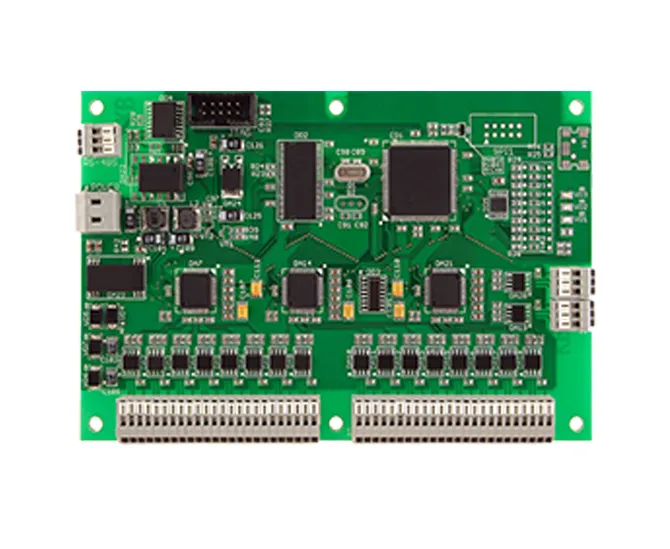
365PCB Printed Circuit Board Assembly Services
365PCB is a China-based PCB manufacturing and assembly provider, not a U.S.-based domestic assembler. That distinction matters when your procurement specification requires boards to be physically assembled in the United States. However, for buyers who can consider qualified offshore manufacturing, 365PCB offers another option to compare on technical capability, total cost, and delivery requirements.
Its published service scope includes SMT, through-hole, and mixed-technology PCB assembly, with support from prototype quantities to mass production. The company also describes PCB fabrication, component sourcing, and turnkey solutions.
Explore 365PCB printed circuit board assembly services to review the service scope. For projects involving flexible circuits, see its flexible PCB capabilities.
We recommend considering 365PCB when domestic assembly is not a mandatory requirement and the project team is prepared to evaluate overseas production using the same qualification process applied to U.S. suppliers. Request sample builds, process documentation, inspection records, component traceability information, and a clear shipping plan. For high-reliability or regulated products, complete supplier qualification and customer approval before production release.
The correct comparison is not “U.S. versus China” in isolation. It is a comparison of qualified factories, manufacturing processes, material sourcing, inspection, testing, logistics, and total landed cost. A supplier should win the program because it meets the product requirements—not because its location sounds cheaper or more convenient.
Cost-Benefit Analysis: When Is a U.S. PCB Assembler Worth the Premium?
Paying more for domestic assembly can be justified when the value of shorter logistics, direct engineering access, domestic sourcing compliance, or reduced supply-chain risk exceeds the price difference. It is harder to justify when the board is stable, the assembly process is routine, and the primary objective is minimizing unit cost.
Evaluate the full program cost using this framework:
Total landed PCBA cost = PCB fabrication + components + assembly + inspection and testing + tooling and NRE + logistics + duties and fees + expected rework or quality costs.
Then assess the commercial impact of lead time, inventory commitments, engineering changes, and supplier responsiveness. For a prototype, fast feedback may be worth more than a small unit-price saving. For a mature product shipping in large quantities, component procurement and repeatable yield may dominate the decision.
Do not compare only the headline price per assembled board. Ask each provider to separate non-recurring engineering, stencil, fixture, programming, testing, and material costs from recurring unit pricing. This makes it easier to identify whether a supplier is genuinely more competitive or simply quoting a narrower scope.
Common Mistakes When Selecting a PCB Assembly Provider
Choosing a supplier based only on the lowest quote
A low quote may exclude component procurement, X-ray, functional testing, programming, cleaning, or packaging. Compare the full scope and make exclusions visible before making a decision.
Assuming a U.S. headquarters means U.S. manufacturing
Ask for the production facility address in writing. If domestic assembly is required, include the country and facility requirement in the purchase order and supplier quality agreement.
Ignoring component sourcing and traceability
Ask where components will be purchased, how counterfeit risk is controlled, whether authorized distribution is required, and how substitutions are approved. For critical components, insist on traceable lot information and documented change control.
Failing to verify inspection and test coverage
AOI, X-ray, ICT, and functional testing identify different types of problems. Specify which methods are required and what records must be delivered. Do not assume that “100% inspection” means every electrical function has been tested.
Sending incomplete or inconsistent production files
Use one revision-controlled release package. Ensure the BOM, centroid file, assembly drawing, and PCB data match. File mismatches can create delays even when the factory has strong equipment and experienced operators.
Frequently Asked Questions About U.S. PCB Assembly Service Providers
What are the best U.S. PCB assembly service providers?
There is no single best provider for every project. Sierra Circuits, Screaming Circuits, and AdvancedPCB are worth evaluating for prototype-oriented work. Summit Interconnect, ACDi, and Nextek are relevant for more complex or high-mix assemblies. Sanmina, Jabil, Benchmark, and Plexus are candidates for larger and more integrated manufacturing programs. Match the supplier to your board technology, production volume, quality requirements, and budget.
Which U.S. PCB assembly companies offer quick-turn prototypes?
Sierra Circuits and Screaming Circuits publicly describe quick-turn prototype assembly services. AdvancedPCB also offers prototype-to-low-volume turnkey assembly. Actual lead times depend on the BOM, board complexity, component availability, and current factory capacity, so request a project-specific schedule.
What is the difference between turnkey and consignment PCB assembly?
In turnkey assembly, the provider manages component procurement and assembly, and may also manage PCB fabrication. In consignment assembly, the customer supplies the PCB and components while the assembler performs the agreed assembly operations. Partial turnkey combines customer-supplied and manufacturer-sourced materials.
Are all U.S. PCB assembly providers manufacturing in the United States?
No. Some companies have U.S. headquarters and global manufacturing networks. Others operate domestic production facilities but may use international suppliers for components or certain processes. If U.S. assembly is a requirement, obtain written confirmation of the facility that will manufacture your order.
What certifications should a PCB assembly manufacturer have?
The required certifications depend on the end market and customer contract. Common requirements may include ISO 9001, ISO 13485, AS9100, ITAR registration, ESD controls, and compliance with applicable IPC standards. Verify current certificates and their scope at the specific facility rather than relying on a company-wide marketing statement.
How do I compare PCB assembly quotes fairly?
Send the same Gerber or fabrication data, BOM, assembly drawings, quantities, test requirements, quality clauses, and delivery assumptions to every supplier. Compare fabrication, components, assembly, tooling, testing, NRE, logistics, and exclusions separately. A quote is only comparable when the scope is equivalent.
Is U.S. PCB assembly more expensive than China PCB assembly?
It can have a higher direct manufacturing price, but the final difference depends on board complexity, component sourcing, order quantity, logistics, tariffs, quality costs, and schedule. Compare total landed cost and supplier qualification rather than assuming that one country is always cheaper.
Can 365PCB be considered alongside U.S. PCB assembly providers?
Yes, when the buyer is open to offshore manufacturing and domestic assembly is not a contractual or regulatory requirement. 365PCB is a China-based PCB fabrication and assembly provider offering SMT, through-hole, and mixed-technology assembly. Qualify its factory, documentation, inspection, testing, logistics, and compliance against the same criteria used for domestic suppliers.
References
IPC / Global Electronics Association – IPC Standards Revision Table. Official revision information for electronics assembly standards, including IPC J-STD-001 and IPC-A-610.
U.S. Defense Logistics Agency – IPC-A-610 Document Details. Government standards database record for the Acceptability of Electronic Assemblies standard and its adoption information.
National Institute of Standards and Technology – Manufacturing Extension Partnership. U.S. Department of Commerce program supporting domestic manufacturers and manufacturing improvement.
Provider capabilities in this guide are based on publicly described company services. This article is an independent buyer-oriented shortlist, not a paid ranking, certification audit, or guarantee of current capacity. Verify all specifications, certifications, facility locations, lead times, and commercial terms directly with the provider before placing an order.