English
Our recommendation is to use company size as a first filter, then qualify each supplier by product category, manufacturing location, engineering support, quality system, and willingness to support your forecast. The companies in this guide include mainland China-headquartered manufacturers and major global EMS groups with substantial manufacturing operations in China. This distinction matters: some major players are headquartered in Taiwan or elsewhere, even though China is an important part of their manufacturing footprint.
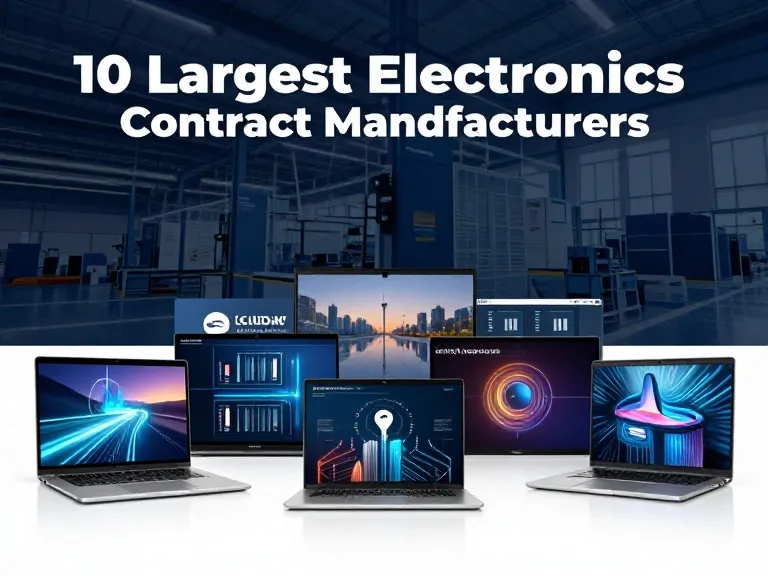
Quick Answer: Which Are the Largest Electronics Contract Manufacturers?
For a broad, revenue-based view of the EMS and ODM market, the leading names with significant manufacturing operations in China include Foxconn (Hon Hai), Wistron, Quanta Computer, Luxshare Precision, Pegatron, Jabil, Flex, BYD Electronics, Compal Electronics, and Huaqin Technology. Goertek is also an important China-based electronics manufacturing and components group, particularly in smart audio and wearable-related products.
What they are: Electronics manufacturing services (EMS) and original design manufacturing (ODM) companies that produce electronic products, assemblies, components, or complete systems for brand owners and OEM customers.
How they work: Customers provide product specifications, designs, forecasts, and quality requirements. The manufacturer may handle engineering, component sourcing, PCB assembly, system integration, testing, packaging, and delivery.
Main benefits: large production capacity, established supplier networks, manufacturing engineering, purchasing leverage, and the ability to scale programs across multiple product categories.
Main limitations: large suppliers may prioritize high-volume customers, require long qualification cycles, or offer less flexibility for low-volume and frequently changing designs. Their global revenue also does not prove that a particular product will be manufactured at a specific China facility.
Who should use this list: OEMs, electronics brands, procurement teams, startups preparing to scale, and established companies evaluating outsourced manufacturing in China.
Who may not need a mega-EMS provider: companies building a small number of prototypes, low-volume specialty products, or designs that require intensive founder-level engineering collaboration. A focused contract manufacturer may be more responsive and commercially suitable.
Our recommendation: shortlist two or three large providers for capacity benchmarking, but include at least one specialist EMS partner. Compare equivalent production scopes—not just corporate revenue or advertised factory size.
| Company | Headquarters | Typical manufacturing strengths | Best-fit sourcing scenario |
|---|---|---|---|
| Foxconn (Hon Hai) | Taiwan | Consumer electronics, computing, servers, components, automotive | Very large global production programs |
| Wistron | Taiwan | Computing, servers, networking, smart devices | Large computing and infrastructure programs |
| Quanta Computer | Taiwan | Notebooks, servers, cloud and networking hardware | Computing and data-center hardware |
| Luxshare Precision | Mainland China | Consumer electronics, connectors, precision components, assemblies | Integrated consumer-electronics programs |
| Pegatron | Taiwan | Computers, communication devices, consumer electronics | Large OEM electronics programs |
| Jabil | United States | Industrial, healthcare, automotive, consumer and infrastructure products | Multi-industry global manufacturing |
| Flex | United States | Automotive, industrial, healthcare, cloud and consumer products | Complex global supply chains |
| BYD Electronics | Mainland China | Mobile devices, intelligent products, automotive electronics, components | Integrated product and component manufacturing |
| Compal Electronics | Taiwan | Notebooks, computing devices, smart products and displays | PC and computing-related programs |
| Huaqin Technology | Mainland China | Smartphones, tablets, laptops, smart hardware and IoT | Consumer and smart-device ODM projects |
How We Define the Largest Electronics Contract Manufacturers in China
There is no single public ranking that perfectly measures the size of every electronics contract manufacturer operating in China. Some companies report consolidated group revenue, some report EMS or ODM revenue separately, and others combine manufacturing with components, tooling, design, and proprietary products. A company's total revenue should therefore be treated as a scale indicator—not as a direct measure of its China factory capacity or its suitability for your project.
This article uses the latest available 2025 EMS and ODM revenue ranking published by EMSNow in collaboration with in4ma as a comparative starting point. It includes global companies with significant China manufacturing operations, not only companies legally headquartered in mainland China. That broader scope reflects how the real sourcing market works: many OEMs choose a manufacturing group based on its China production network, even when its corporate headquarters are elsewhere.
We also consider product focus. A supplier that specializes in notebooks or smartphones should not automatically be treated as the best partner for medical electronics, industrial controls, automotive systems, or complex PCB assemblies. The best manufacturer is the one whose production system matches your product's technical and commercial requirements.
Top 10 Largest Electronics Contract Manufacturers with China Operations
1. Foxconn (Hon Hai Precision Industry)
Foxconn, formally Hon Hai Precision Industry, is the scale leader in the global EMS industry. Its manufacturing ecosystem spans consumer electronics, computing hardware, servers, networking equipment, components, and automotive-related technologies. Its China manufacturing footprint has historically been central to global electronics supply chains, although the company also operates a broad international network.
Why buyers evaluate Foxconn: it has the resources, supplier relationships, engineering systems, and production infrastructure to support programs that require enormous output and coordinated sourcing. For a global brand launching a product in very high volumes, that scale can be difficult for smaller manufacturers to match.
What to verify: ask which site will manufacture your product, what capacity is available, and whether the supplier is willing to support your expected order size. Also confirm tooling ownership, engineering-change procedures, component sourcing responsibilities, and the commercial terms for ramp-up and end-of-life inventory.
2. Wistron
Wistron is a major electronics manufacturing and design-services group with experience in computing products, servers, networking equipment, and related systems. Its manufacturing footprint extends beyond one country, making factory-level verification essential for buyers specifically seeking China production.
Why buyers evaluate Wistron: it is relevant to companies building complex computing products and infrastructure hardware, where system integration, thermal design, supply-chain coordination, and production quality are important.
What to verify: confirm whether your product category is supported at the intended China facility, whether the supplier handles board assembly and system-level integration, and how it manages component allocation during periods of tight supply.
3. Quanta Computer
Quanta Computer is a large ODM and electronics manufacturing group known for notebook computers, servers, and computing infrastructure. Its position in the global supply chain makes it especially relevant to buyers developing computing and data-center products.
Why buyers evaluate Quanta: its computing specialization is valuable when the product involves complex boards, high-speed interfaces, thermal constraints, mechanical integration, and coordinated system validation. For data-center equipment, manufacturing experience in servers and related platforms can be more important than a broad but shallow product portfolio.
What to verify: ask about the relevant product business unit, China factory capacity, engineering support, system-level test capabilities, and the supplier's approach to component lifecycle management.
4. Luxshare Precision
Luxshare Precision is one of the largest mainland China-headquartered companies in the EMS and precision manufacturing sector. Its business includes consumer electronics, communication interconnect products, precision components, connectors, and assemblies. Its 2024 annual report shows the importance of consumer electronics within its business mix, while also reporting activity in automotive and communications-related components.
Why buyers evaluate Luxshare: the combination of precision components, interconnect products, and electronics assembly can be useful for products where mechanical and electrical integration are closely linked. This is particularly relevant to compact consumer devices and products with demanding connector or component requirements.
What to verify: determine whether the supplier's core business unit has experience with your product category. Review engineering ownership, tooling charges, yield expectations, quality documentation, and the level of design access you will retain as the OEM.
5. Pegatron
Pegatron is a major ODM and EMS provider serving consumer electronics, computing, and communication-device markets. Its experience with large OEM programs makes it a relevant name for buyers who need mature production systems and a global manufacturing network.
Why buyers evaluate Pegatron: it can be relevant when a product requires high-volume assembly, coordinated component sourcing, manufacturing engineering, and established quality processes. Its experience in consumer devices is particularly useful for brands with complex launch schedules.
What to verify: ask about the specific China facility, current capacity, product-category experience, and the production ramp schedule. For programs with frequent engineering revisions, examine the supplier's change-control and pilot-build process carefully.
6. Jabil
Jabil is a global manufacturing solutions provider serving industries that include healthcare, automotive, industrial equipment, packaging, and connected devices. It has a substantial international manufacturing network, including operations in China.
Why buyers evaluate Jabil: its breadth is useful for OEMs that need more than a basic PCBA supplier. Depending on the site and program, manufacturing services can include product design support, component sourcing, electronics assembly, testing, and broader supply-chain management.
What to verify: identify the relevant China site and service scope. Confirm whether the proposed facility supports your product's regulatory requirements, testing needs, and expected annual volume. A global Jabil capability should not be assumed to exist at every location.
7. Flex
Flex is a global manufacturing and supply-chain partner with services covering product design, engineering, electronics manufacturing, and integrated supply-chain solutions. Its China operations form part of a broader international manufacturing network.
Why buyers evaluate Flex: it is relevant to OEMs seeking a partner that can coordinate electronics production with manufacturing engineering, procurement, testing, and logistics. Its multi-industry presence can be useful for products that need a mature quality system or a multi-region production strategy.
What to verify: ask which Flex site will produce your order and whether the facility has experience in the exact product segment. Clarify component sourcing, testing coverage, approved subcontractors, and the process for transferring production between regions.
8. BYD Electronics
BYD Electronics is a major China-based electronics manufacturing group with capabilities across mobile devices, intelligent products, components, and automotive-related electronics. Its relationship to the broader BYD industrial ecosystem gives it exposure to manufacturing areas where electronics, precision components, and vehicle systems intersect.
Why buyers evaluate BYD Electronics: it can be relevant for programs that need a combination of product assembly, structural components, precision manufacturing, and electronics integration. Its scale and China manufacturing base are attractive to companies seeking a domestic production ecosystem.
What to verify: distinguish BYD Electronics' capabilities from those of other BYD business units. Confirm the actual manufacturing entity, product ownership, factory location, and whether your project fits the supplier's target customer and volume profile.
9. Compal Electronics
Compal Electronics is an established ODM and manufacturing group with strong exposure to notebook computers and other computing-related products. It is relevant to OEMs seeking an experienced partner for complex computing devices and related systems.
Why buyers evaluate Compal: notebook and computing manufacturing requires coordinated work across PCB assemblies, displays, batteries, thermal systems, enclosures, firmware, and final product testing. A supplier with experience in these product architectures can help manage the interaction between subsystems.
What to verify: confirm that your product category aligns with the facility's capabilities. Ask about board-level testing, final system testing, component lifecycle planning, and how the supplier handles engineering changes during production.
10. Huaqin Technology
Huaqin Technology is a major mainland China ODM focused on smart devices and computing products. Its portfolio includes mobile terminals, tablets, laptops, and connected hardware. This makes it especially relevant to brands that want a partner with product-development and manufacturing experience in consumer devices.
Why buyers evaluate Huaqin: ODM capabilities can shorten the path from product concept to a manufacturable design when the customer needs engineering participation as well as production. For smart devices, integration across PCB, display, battery, antenna, enclosure, and software requirements is a major part of the challenge.
What to verify: clarify the division between your own design ownership and the ODM's engineering responsibilities. Review tooling ownership, firmware and software access, component sourcing, IP protection, and the process for approving design changes.
Comparison Table: Which China EMS Manufacturer Fits Your Project?
Use the following table as a first-stage shortlist. It is a practical sourcing comparison, not a verified ranking of factory capacity in mainland China. Each company operates multiple sites and business units, and the exact capabilities available to your project must be confirmed directly.
| Manufacturer | Core product fit | Manufacturing model | What to prioritize during qualification |
|---|---|---|---|
| Foxconn | Consumer devices, servers, computing | Massive-scale EMS and integrated manufacturing | Capacity allocation, site selection, program access |
| Wistron | Computing, servers, networking | ODM and EMS | Product engineering and China-site capabilities |
| Quanta | Notebooks, servers, cloud hardware | ODM and EMS | System validation and production ramp |
| Luxshare | Consumer electronics, connectors, precision components | Integrated components and assembly | Mechanical-electrical integration and quality controls |
| Pegatron | Consumer electronics and computing | ODM and EMS | Product fit, factory capacity, change management |
| Jabil | Industrial, healthcare, automotive, consumer | Global EMS and manufacturing solutions | Site-specific certifications and supply-chain scope |
| Flex | Industrial, automotive, healthcare, cloud | Global manufacturing and supply chain | Regional production strategy and test coverage |
| BYD Electronics | Mobile, intelligent products, automotive electronics | Integrated product and component manufacturing | Business-unit responsibility and assembly experience |
| Compal | Notebooks and computing products | ODM and EMS | System integration and component lifecycle management |
| Huaqin | Smartphones, tablets, laptops, IoT | ODM and product manufacturing | Design ownership, IP, and engineering scope |
Pros and Cons of Working with the Largest Electronics Contract Manufacturers
Large EMS providers bring scale, but scale has a cost. The right question is not whether a company is large enough; it is whether its operating model gives your product the attention, flexibility, and production control it needs.
| Advantages | Potential disadvantages |
|---|---|
| Large purchasing networks can support component sourcing and supplier coordination. | Smaller customers may receive less commercial priority than major global accounts. |
| Established production systems can support high output and repeatability. | Qualification, onboarding, and engineering-change procedures can be demanding. |
| Broader capabilities may combine PCB assembly, testing, system integration, and box build. | Not every service is available at every site; work may be split across locations or subcontractors. |
| Experience across industries can help manage complex manufacturing requirements. | Large organizations can have more layers of communication and slower decision paths. |
| Global networks can support regional production and supply-chain resilience. | Production transfers may introduce qualification work, logistics complexity, and cost. |
Our position: use a mega-EMS provider when volume, supply-chain complexity, or multi-region production justifies the relationship. If your product is still changing every few weeks, a more agile manufacturing partner may reduce friction and engineering cost.
What Services Should an Electronics Contract Manufacturer Provide?
Electronics contract manufacturing is broader than placing components on a printed circuit board. Depending on your product and sourcing strategy, an EMS or ODM partner may provide design support, PCB fabrication coordination, component procurement, SMT assembly, through-hole assembly, testing, conformal coating, mechanical integration, and final box build.
PCB design support and DFM review
A capable manufacturing partner should identify design issues before they become production defects. That includes component availability, footprint compatibility, thermal constraints, test access, panelization, soldering requirements, and manufacturability. For projects that need engineering input, consider dedicated PCB design support services before releasing production data.
PCB assembly and component sourcing
SMT and through-hole assembly quality depends on more than equipment. Ask how the supplier manages approved vendors, component traceability, moisture-sensitive devices, counterfeit risk, obsolescence, and substitutions. If your product relies on specific active electronic components or passive electronic components, define acceptable manufacturers and part numbers in the BOM.
Inspection and electrical testing
For commercial production, inspection must be linked to a documented acceptance plan. AOI can identify visible assembly defects, while X-ray inspection is useful for hidden solder joints such as certain BGA connections. Neither method replaces functional testing or electrical testing. Ask for the inspection coverage, sampling rules, defect criteria, and record-retention policy.
For additional quality checks, review the scope of PCB electrical testing, PCB AOI inspection, and PCB X-ray inspection.
Box build and final product assembly
When the supplier assembles the complete product, the scope may include wiring, enclosure installation, displays, batteries, antennas, connectors, firmware loading, calibration, labeling, and packaging. Confirm who owns the final test specification and whether the supplier can provide traceability from PCB serial number through finished unit.
How to Choose the Right Electronics Contract Manufacturer in China
1. Start with your product category
Do not send the same RFQ to every company on a generic top-ten list. Identify whether your product is a consumer device, industrial controller, automotive module, medical instrument, IoT product, or computing system. Then shortlist suppliers with direct experience in that category.
For example, a consumer product may depend heavily on display, battery, antenna, and enclosure integration. An automotive controller has different requirements for temperature, vibration, lifecycle, and traceability. A medical electronic product may require a quality system and validation process suited to its intended regulatory classification. See the relevant consumer electronics PCB, automotive PCB, and medical PCB considerations when defining your board and assembly requirements.
2. Verify the actual factory and production process
Ask for the legal entity, factory address, process flow, equipment list, and the operations performed in-house. A supplier's headquarters, sales office, and production site may be in different locations. If the supplier uses approved subcontractors, identify which processes are outsourced and how those suppliers are controlled.
3. Review quality certifications and customer-specific requirements
Request current certificates and check the scope, legal entity, site address, and expiry date. Depending on your industry, requirements may include ISO 9001, IATF 16949, ISO 13485, or other customer and regulatory approvals. Do not assume that a corporate certificate automatically covers every factory or product line.
For PCB assemblies, define the applicable IPC workmanship criteria, inspection plan, functional test requirements, and defect classification. For automotive, medical, aerospace, or other regulated applications, align the supplier's quality system with your product's actual obligations.
4. Test the supplier's engineering responsiveness
Send a real technical question during the quotation stage. Ask about an unclear footprint, thermal concern, component alternative, test point, or manufacturing tolerance. The quality of the response can reveal whether you are speaking with an engineering-led partner or only a sales intermediary.
For beginners, this is a useful qualification step because it costs little and can expose communication problems before a production commitment.
5. Confirm capacity and production ramp-up
Ask the supplier to quote your initial order and annual forecast separately. Confirm standard lead time, peak capacity, material lead times, line allocation, planned maintenance, and the escalation process for schedule risks. For heavy-duty applications or products with long service lives, also discuss component lifecycle management and long-term product support.
6. Protect intellectual property and product data
Before sharing full design files, confirm confidentiality terms, data access controls, tooling ownership, software and firmware rights, and restrictions on unauthorized production. Define who may access the BOM, Gerber files, test fixtures, source code, and customer-specific drawings.
Cost-Benefit Analysis: Is a Large EMS Provider Worth the Cost?
A large electronics contract manufacturer may quote a higher unit price than a smaller factory, but the unit price alone does not show the full economics. A mega-EMS provider may reduce component procurement risk, coordinate multiple manufacturing stages, support higher production volumes, and provide stronger program management. Those advantages are valuable only when your project needs them.
Consider an OEM launching an electronic control unit with an annual forecast of 100,000 units. A large EMS provider may be able to coordinate component procurement, PCB assembly, enclosure integration, functional testing, and regional distribution. If the OEM instead buys bare PCB assembly from one supplier, components from another, and box build from a third, the apparent unit-price saving may be offset by extra logistics, incoming inspection, engineering coordination, and responsibility gaps.
Now consider a startup building 1,000 units with frequent design revisions. A large provider's onboarding requirements, minimum order quantities, and engineering-change process may add unnecessary cost. A smaller, technically capable EMS partner may provide a better development-to-production path.
Compare the following cost categories before making a decision:
Unit manufacturing price: PCB assembly, components, mechanical parts, labor, and testing.
Non-recurring engineering: DFM, fixtures, programming, test development, tooling, and validation.
Inventory exposure: minimum order quantities, component buys, safety stock, and excess inventory liability.
Quality cost: inspection, scrap, rework, returns, warranty claims, and field failures.
Program management: engineering communication, supplier coordination, documentation, and change control.
Logistics: freight, customs, packaging, insurance, and delivery to the final assembly location.
For commercial users, we recommend requesting at least three volume tiers and a separate quotation for prototype, pilot, and mass-production phases. Make sure all suppliers quote the same BOM revision, test requirements, packaging, delivery terms, and annual forecast.
Where 365PCB Fits in the Electronics Manufacturing Supply Chain
The largest EMS groups are not the only option for outsourcing electronics manufacturing. If your project needs a coordinated route for PCB assembly, turnkey manufacturing, and box build, a focused manufacturing partner may be a better fit—particularly when engineering communication, production flexibility, and clear project ownership matter.
365PCB provides outsourced contract electronic manufacturing services from China. Its service scope includes PCB assembly, turnkey solutions, and box build assembly for OEM customers. The practical value of this model is the ability to coordinate multiple manufacturing stages through one partner rather than managing every supplier interface independently.
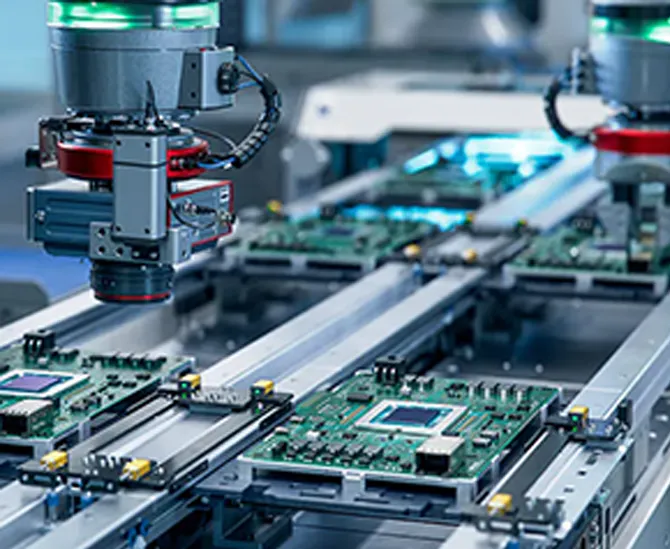
When to consider 365PCB: when you need outsourced PCB assembly, turnkey manufacturing, or box build support and want to evaluate a China-based partner alongside the largest global EMS providers. It may be particularly relevant for OEMs that need manufacturing coordination without necessarily operating at the scale required by a mega-EMS group.
What to confirm during qualification: request the factory capability list, production location, relevant certifications, assembly process details, component sourcing policy, inspection and testing coverage, sample build plan, and references for products similar to yours. Confirm which operations are performed directly and which may be subcontracted.
For projects that require a particular board construction, start by reviewing the custom PCB manufacturing options and confirm the exact board specifications before requesting assembly pricing.
Common Mistakes When Selecting a Large Electronics Contract Manufacturer
Assuming revenue equals manufacturing capability
Consolidated group revenue includes different businesses, regions, and product categories. It does not prove that a specific factory can build your product. Ask for site-level evidence and a capacity plan.
Choosing a supplier before defining the service scope
PCB assembly, turnkey manufacturing, and box build are different scopes. If one supplier quotes bare-board assembly and another quotes a complete finished product, their prices are not comparable. Define the deliverables first.
Ignoring component sourcing risk
Component availability can determine whether a production plan is realistic. Review approved manufacturers, authorized distribution channels, counterfeit prevention, lifecycle status, and substitution approval procedures. Include critical electronic connectors, displays, and batteries in the sourcing review where applicable.
Failing to qualify inspection and testing
AOI, X-ray, in-circuit testing, functional testing, and final inspection serve different purposes. Ask which tests are included, what defects they are designed to detect, and what records you will receive with each lot.
Overlooking production ownership and change control
Large manufacturing groups may use multiple plants, business units, or approved subcontractors. Make sure your agreement identifies the approved production location, revision-control process, deviation approval, and responsibility for nonconforming product.
Committing to mass production before a controlled pilot
We recommend a staged process: engineering review, prototype, pilot run, production qualification, and volume ramp. Validate assembly yield, test coverage, packaging, and delivery performance before releasing a large order.
Frequently Asked Questions About the Largest Electronics Contract Manufacturers
1. Who is the largest electronics contract manufacturer in the world with operations in China?
Foxconn, formally Hon Hai Precision Industry, is the largest company in the global EMS and ODM revenue rankings referenced in this guide. It has a major manufacturing presence in China as well as operations in other countries. Its global scale does not mean every product or order is manufactured at a China facility.
2. Which large electronics contract manufacturers are headquartered in mainland China?
Luxshare Precision, BYD Electronics, and Huaqin Technology are examples of major mainland China-headquartered electronics manufacturing or ODM groups. Other China-based manufacturers, including Goertek, are also important in specific product segments.
3. Are Foxconn, Wistron, Quanta, and Pegatron Chinese companies?
These companies are headquartered in Taiwan, not mainland China. They are included because they have significant manufacturing operations and supply-chain activity in mainland China. Buyers should distinguish corporate headquarters from the actual factory location.
4. What is the difference between EMS and ODM?
An EMS provider primarily manufactures products or assemblies based on the customer's design and specifications. An ODM provider generally contributes more product design and engineering, and may offer a platform or complete product solution. Many large manufacturers provide both types of service.
5. Are the largest EMS companies suitable for small businesses?
Not always. Large EMS companies may have high onboarding requirements, minimum order quantities, and customer-priority structures designed around major programs. Small businesses should compare specialist contract manufacturers that can support prototypes, pilot builds, and lower-volume production.
6. What services should I expect from an electronics contract manufacturer?
Depending on the supplier, services may include engineering support, PCB assembly, component procurement, SMT and through-hole assembly, inspection, electrical and functional testing, mechanical integration, box build, packaging, and logistics. Define the required scope in your RFQ.
7. How do I verify that an EMS company manufactures in China?
Request the exact factory address, legal manufacturing entity, process flow, site certifications, and country-of-origin documentation. Confirm which processes are performed at the site and whether any production stages are subcontracted or transferred to another location.
8. How can I compare EMS manufacturing quotations accurately?
Send the same BOM revision, Gerber files, assembly drawings, test requirements, packaging specification, annual forecast, and delivery schedule to every supplier. Compare unit price, engineering fees, component sourcing, tooling, quality controls, logistics, and inventory liability.
9. Should I choose a large EMS provider or a specialist PCB assembly company?
Choose a large EMS provider when your project needs substantial capacity, broad supply-chain management, or multi-region manufacturing. Choose a specialist when engineering access, flexibility, lower-volume support, or a focused PCB assembly service is more important. Qualify both against the same production requirements.
10. What should be included in an EMS supplier RFQ?
Include product specifications, Gerber or ODB++ files, BOM, assembly drawings, approved vendor list, firmware requirements, test procedures, quality standards, forecast volumes, prototype quantity, delivery schedule, packaging, and required certifications. State your expectations for tooling ownership, IP protection, and production location.
References
These sources provide the ranking methodology and company-reported operating information used to frame this supplier overview. Revenue should be interpreted as consolidated company revenue unless the source explicitly identifies EMS-only revenue.
EMSNow and in4ma – The EMS & ODM Global 100. Industry ranking presenting 2025 revenue data, headquarters, and the relative scale of major EMS and ODM companies.
Luxshare Precision Industry Co., Ltd. – 2024 Annual Report. Company-reported operating revenue and business-segment information, including consumer electronics and communication interconnect products.
Goertek Inc. – 2024 Annual Report. Company-reported revenue composition and product categories, including smart audio devices, smart hardware, and precision components.