English
Setting up or expanding a printed circuit board fabrication plant requires capital investments running into millions of dollars. For decades, plant managers defaulted to German laminators, Swiss mechanical drills, and Japanese optical inspection systems. Today, that purchasing assumption is obsolete. The global electronics supply chain now depends on automated Chinese capital equipment across every critical wet and dry process. However, navigating the landscape of PCB machine manufacturers in China is fraught with engineering hazards. Buying from an unvetted vendor risks sub-par mechanical dampening, drifting laser calibration, corrosive fluid leaks on wet lines, and inaccessible firmware that grinds assembly shifts to a halt.
Quick Answer: Who Are the Major Players in Chinese PCB Machinery?
The top tier of Chinese PCB equipment manufacturers is led by specialized publicly listed giants: Han's CNC (drilling, routing, and laser processing), Advanthink / CFMEE (direct imaging and exposure systems), Universal PCB Equipment (UCE Group) (horizontal chemical wet process lines), Zhengye Technology (X-ray inspection and testing), and Orbita / V-Tech (high-precision routing and V-cutting). For SMT assembly and downstream surface mounting, Autotronik, GKG, and Huawei Guochuang dominate domestic placements. If your goal is to build an internal fabrication facility, these manufacturers offer competitive price-to-performance ratios. However, if your business requires finished, high-reliability boards without multimillion-dollar capital expenditure and environmental licensing hurdles, outsourcing directly to fully integrated turnkey manufacturers like China 365PCB remains the smart commercial decision.
Article Directory
The Technical Evolution of Chinese PCB Fabrication Machinery
In-Depth Review: 9 Leading Chinese PCB Machine Manufacturers
Turnkey Alternative Spotlight: China 365PCB Full-Chain Services
Pros and Cons of Procuring Chinese PCB Manufacturing Machinery
Build vs. Outsource: Who Needs Machines vs. Turnkey Fabrication
The Technical Evolution of Chinese PCB Fabrication Machinery
Printed circuit board fabrication requires multi-stage physical, chemical, and optical precision. A single panel passes through mechanical drilling, desmear, electroless copper plating, photoresist lamination, Direct Imaging (LDI), chemical etching, solder mask application, surface finishing, and electrical continuity testing. In high-density interconnect (HDI) fabrication, trace widths dip below 50 microns ($2\text{ mil}$), and laser micro-vias must register with positional tolerances under 12 microns.
Historically, Chinese machinery builders focused on low-end secondary processes: basic brush machines, manual screen printers, and entry-level offline routing. Over the past decade, massive domestic capital investments and vertical integration have transformed the sector. Chinese equipment builders now manufacture ultra-high-speed air-bearing spindle drillers running at 300,000 RPM, digital exposure units with sub-micron linear motor encoders, and horizontal chemical lines engineered from solid titanium and PVDF polymers to resist aggressive acid copper baths.
From our experience on modern fabrication lines, Chinese machines match European output across mainstream 4-layer to 24-layer standard FR-4 production. The differentiation today lies in how reliably these machines maintain operational tolerances when fabricating advanced high-frequency substrates such as PTFE PCB arrays, flexible Polyimide PCB circuits, and dense Sequential Lamination PCB stack-ups.
Quick Summary: The 9 Major Chinese PCB Equipment Builders
| Manufacturer | Primary Headquarters | Core Machine Specialization | Target Processing Phase | Best Industrial Application |
|---|---|---|---|---|
| Han's CNC (Han's Laser Group) | Shenzhen, Guangdong | Mechanical & CO2 UV Laser Drilling, Routing | Hole Formation, Panel Profiling | High-volume HDI and multilayer rigid-flex drilling |
| Universal PCB Equipment (UCE) | Dongguan, Guangdong | Horizontal Etching, Desmear, Chemical Plating Lines | Wet Chemical Processing | Continuous copper etching and chemical surface preparation |
| Advanthink (CFMEE) | Hefei, Anhui | Laser Direct Imaging (LDI), Photolithography Steppers | Dry Film / Solder Mask Exposure | Sub-30-micron trace patterning and advanced IC substrates |
| Zhengye Technology | Dongguan, Guangdong | X-Ray Inspection, Hole Checkers, Laser Cutting | Quality Assurance, Layer Registration | Inner-layer target drilling and multi-layer X-ray verification |
| Dongguan Orbita (V-Tech) | Dongguan, Guangdong | High-Precision CNC V-Scoring & Routing Machines | Depaneling, Mechanical Finishing | Automated V-groove scoring and final profile routing |
| GKG Precision Machine | Dongguan, Guangdong | High-Precision Solder Paste Printers | SMT Assembly & Board Finishing | High-speed stencil printing for surface mount lines |
| Joint Stars (Zhonghe) | Kunshan, Jiangsu | Horizontal Desmear, PTH, Chemical Nickel Gold | Wet Chemistry Plating Lines | Mid-to-large panel chemical metal deposition |
| Kinsun Automated Equipment | Shenzhen, Guangdong | Automatic Screen Printers, Solder Mask Coaters | Liquid Photoimageable Masking | High-throughput solder mask application and plug-via lines |
| Mass Precision Machinery | Shenzhen, Guangdong | Multi-Layer Vacuum Laminators, Hot/Cold Presses | Core Lamination & Bonding | Multilayer PCB pressing and prepreg resin curing |
In-Depth Review: 9 Leading Chinese PCB Machine Manufacturers
1. Han's CNC (Subsidiary of Han's Laser)
Han's CNC is an undisputed pillar of Chinese electronics manufacturing machinery. Born from Han's Laser, this publicly traded unit focuses entirely on mechanical hole formation, routing, and advanced laser processing. Their multi-spindle mechanical drilling machines feature German air-bearing spindles reaching up to 300,000 RPM, paired with linear motors and granite machine beds that dampen vibrations during high-acceleration micro-drilling.
In our technical assessments, their UV and CO2 laser drilling platforms are strong performers when micro-machining blind vias in Micro Via PCB architectures and rigid-flex laminates. Han's CNC machines integrate closed-loop vision systems that compensate dynamically for panel thermal expansion. While their capital investment is at the top of the domestic price tier, their reliability across 24/7 continuous production runs makes them a dependable choice for industrial operations.
2. Universal PCB Equipment Co., Ltd. (UCE Group)
Wet processing is the most unforgiving phase of PCB fabrication. Horizontal etching, chemical cleaning, and pattern plating lines run aggressive chemical solutions, including cupric chloride, nitric acid, and sodium persulfate, at elevated temperatures. Universal PCB Equipment (UCE), operating out of Dongguan, holds the largest domestic market share for continuous horizontal wet processing machinery.
UCE's vacuum etching lines are widely recognized across Asian fabrication yards. Their fluid delivery systems feature oscillating spray manifolds and fluid-knife squeegee systems that minimize the "puddle effect," ensuring consistent copper etching across wide-format panels. If your factory processes fine-line copper weights, UCE delivers solid process uniformity, though buyers should specify PVDF piping upgrades over baseline PVC to ensure long chemical service life.
3. Advanthink (CFMEE / Hefei Core Laser)
Photoresist exposure used to require vacuum mylar artwork frames and high-maintenance mercury lamps, which suffered from artwork distortion and layer-to-layer misregistration. Laser Direct Imaging (LDI) replaced this by scanning circuit patterns directly onto dry-film photoresist using ultraviolet laser diodes. Advanthink (CFMEE) is China's premier manufacturer of advanced lithography and LDI equipment.
Their platforms achieve resolution thresholds below 25 microns ($1\text{ mil}$ line and space), which is essential for multi-layer Blind Via PCB designs and complex flip-chip substrates. Utilizing high-resolution optical projection technology and magnetic levitation stage positioning, Advanthink allows domestic PCB producers to bypass expensive Western exposure equipment without sacrificing yields on high-density circuits.
4. Zhengye Technology
Quality inspection and layer registration equipment must catch internal defects before boards move down the line. Guangdong Zhengye Technology specializes in non-destructive testing, automated optical inspection (AOI), and X-ray inspection equipment for multi-layer inner layer alignment.
Their industrial X-ray drilling machines automatically detect copper fiducials on inner cores, calculating panel centroid offsets caused by thermal press shrinkage before drilling registration tooling holes. This guarantees that through-hole drills hit target pads accurately on complex Buried Via PCB stack-ups. Zhengye also manufactures automatic hole checkers and ionic contamination testers that verify boards meet IPC Class 3 cleanliness requirements.
5. Dongguan Orbita Technology (V-Tech)
Mechanical finishing—specifically accurate V-scoring and contour profiling—is critical for structural integrity during downstream SMT handling. Dongguan Orbita (marketed globally as V-Tech) is an engineering benchmark for automated CNC V-cutting machinery.
V-scoring requires maintaining an exact remaining web thickness across the entire panel length. Orbita's machines utilize jump-scoring capabilities, optical thickness measurement probes, and dynamic cutter depth compensation. In our field observations, their jump-scoring accuracy prevents structural panel sagging during automatic surface mounting, which is particularly valuable for thin, cost-sensitive laminates like the CEM Series PCB family.
6. GKG Precision Machine Co., Ltd.
While PCB fabrication plants focus on bare boards, modern manufacturing lines increasingly demand integrated, in-house SMT assembly capabilities. GKG Precision Machine is China's dominant supplier of fully automatic vision solder paste printers.
GKG printers feature rigid gantry frames, dual squeegee pressure balancing, and high-speed optical alignment algorithms that reliably align solder stencils with sub-0.3mm BGA and 01005 component pads. For electronics manufacturers building turnkey SMT lines, GKG balances high cycle speeds with lower hardware costs compared to legacy Japanese equipment.
7. Joint Stars Machinery (Zhonghe)
Based in the manufacturing corridor of Kunshan, Jiangsu, Joint Stars builds horizontal and vertical chemical processing equipment. They specialize in horizontal desmear, electroless copper (PTH), and automated wet chemistry surface finishing lines.
Their horizontal plating systems ensure balanced chemical replenishment through panel holes, which is vital when manufacturing reliable through-hole connections on Through-Hole PCB platforms. Joint Stars builds lines configured for lead-free surface finishes, including Immersion Silver PCB and Immersion Tin PCB plating runs, delivering dependable chemistry management for commercial shops.
8. Kinsun Automated Equipment
Liquid Photoimageable (LPI) solder mask application is often a bottleneck in board fabrication. Traditional manual hand-screening introduces pinholes, uneven mask thickness, and partially filled vias. Kinsun Automated Equipment engineers automated double-sided solder mask screen printers and vertical roller coaters.
Kinsun's machines feature automated panel flipping, precise squeegee angle control, and CCD camera alignment. This level of automation prevents mask entrapment in via barrels and ensures flat, uniform coating around fine-pitch surface-mount lands, providing the exact surface profile needed for chemical finishes like OSP PCB and selective Hard Gold PCB edge fingers.
9. Mass Precision Machinery
Multi-layer board manufacturing relies entirely on vacuum lamination. If the temperature ramp rates, hydraulic pressures, and vacuum levels are uneven across the press platen, the finished panels will suffer from warpage, delamination, and resin starved areas. Shenzhen Mass Precision Machinery builds high-capacity multi-opening hot and cold vacuum press systems.
Their laminators utilize thermal oil heating circuits that distribute temperatures uniformly across the platens ($\pm 1.5^\circ\text{C}$). This thermal control is mandatory when processing demanding prepreg bonding cycles on high-reliability multilayer assemblies. Mass Precision machines provide the thermal stability needed to build complex commercial panels without delamination risk.
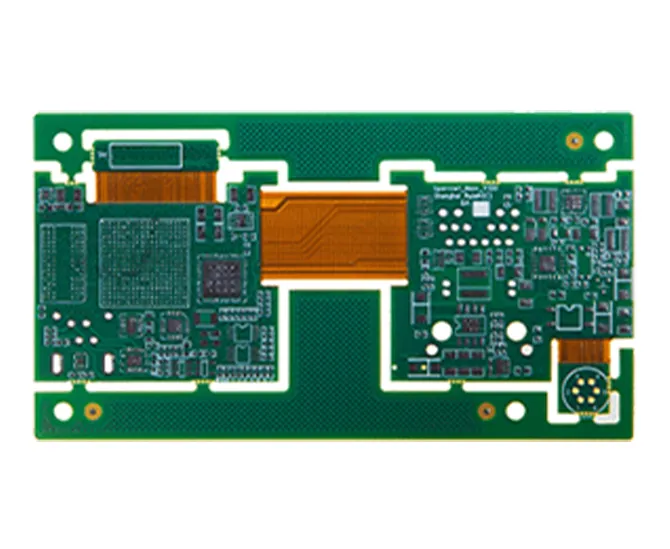
The Smarter Sourcing Alternative: China 365PCB
Investing in individual capital equipment requires massive factory footprints, skilled machine technicians, toxic waste chemical treatment permits, and constant maintenance. Unless you are processing millions of square meters annually, sourcing hardware directly from machine builders is a costly path to manufacturing electronics.
China 365PCB provides an integrated alternative: a fully self-operated, full-industry-chain manufacturing group spanning over 100,000 m² of self-owned production area. Operating with over 15 years of industrial experience, China 365PCB runs advanced, automated fabrication machinery under direct management—delivering end-to-end turnkey execution from PCB Design Support Services, rapid prototyping via Quick Turn PCB lines, through to High-Volume Production PCB runs with complete SMT assembly and box-build integration.
Commercial Verdict: When component failure costs more than the board itself, skip the multimillion-dollar machine capital expenditure. Partner with China 365PCB for reliable, fast-turnaround Custom PCB manufacturing backed by full process traceability and certified IPC Class 3 quality controls.
Direct Technical & Machine Capability Comparison Table
| Manufacturer | Core Machine Line | Key Technical Metric | Maintenance & Spares Availability | Capital Cost Profile | Best Procurement Match |
|---|---|---|---|---|---|
| Han's CNC | Multi-Spindle Drill / Laser | Spindle speeds up to 300k RPM; sub-15um laser beam | High; extensive Asian network | High (Domestic Premium) | Large-scale multilayer & HDI plants |
| UCE Group | Horizontal Etch & Strip | Vacuum-assisted etching; uniform etch factor > 3.5 | High; widespread parts availability | Moderate | High-volume continuous panel etching |
| Advanthink | Laser Direct Imaging | Sub-25um line/space resolution; multi-wavelength | Moderate; factory-direct support | High | Fine-pitch HDI and IC substrate patterning |
| Zhengye Tech | X-Ray Registration & AOI | Target offset detection < 8 microns | High; modular replacement parts | Moderate | Multi-layer inner-layer registration checking |
| Dongguan Orbita | Automatic CNC V-Scorer | Remaining thickness tolerance $\pm 0.05\text{ mm}$ | High; non-proprietary wear parts | Economical to Moderate | Medium-to-large depaneling departments |
| GKG Precision | Automatic Solder Printer | Repeatability $\pm 10\text{ microns}$ at 6 Sigma | High; global distributor support | Moderate | SMT assembly lines and box-build shops |
| Mass Precision | Vacuum Hot/Cold Press | Platen thermal uniformity $\pm 1.5^\circ\text{C}$ | Moderate; long hydraulic seal life | Moderate to High | Rigid multilayer and polyimide bonding |
Pros and Cons of Procuring Chinese PCB Manufacturing Machinery
| Procurement Strategy | Commercial & Operational Pros | Engineering Risks & Drawbacks |
|---|---|---|
| Direct Chinese Machine Procurement (Han's CNC, UCE, Advanthink, etc.) |
|
|
| Contracting a Full Turnkey Partner (e.g., China 365PCB Full Manufacturing) |
|
|
Build vs. Outsource: Who Needs Machines vs. Turnkey Fabrication
Every year, engineering firms and hardware startups make the mistake of attempting to bring PCB fabrication in-house. They buy a desktop mechanical mill or a small chemical plating tank, only to find that internal yields are terrible and maintenance costs are out of control. Knowing where your business sits on the production spectrum saves significant capital.
Who Should Buy Industrial PCB Machinery:
Commercial PCB Fabricators: Established contract board houses looking to expand plant capacity, replace aging Japanese exposure systems, or add dedicated HDI drilling bays.
Mega-Volume Consumer Electronics Conglomerates: Companies that produce millions of identical smart appliances, power supplies, or automotive modules each month, where vertical equipment ownership directly cuts fractions of a cent from unit costs.
Who Should Outsource to Turnkey Fabricators (China 365PCB):
Industrial, Medical, and Aerospace OEMs: Companies manufacturing mission-critical electronics where board failure leads to system shutdowns. These programs demand certified IPC Class 3 quality, complete cross-sectioning validation, and comprehensive lot traceability that only dedicated turnkey plants can provide.
High-Mix, Low-to-Medium Volume Producers: If your catalog requires diverse materials—such as high-speed PTFE substrates, heavy copper layers, and mixed surface finishes like Immersion Tin and Hard Gold—owning individual machines is completely cost-inefficient.
Hardware Startups & Product Design Houses: Teams that must focus their engineering hours on circuit layout, firmware, and customer validation, rather than troubleshooting chemical bath specific gravities or spindle runout.
Costly Machinery Procurement Mistakes Plant Engineers Make
Factory Floor Warning: The costliest mistake in machinery sourcing is approving equipment payments based on dry-cycle video tests. A drilling spindle running with no load or an etching spray manifold running tap water tells you nothing about thermal expansion, fluid drag, or dynamic accuracy under real manufacturing conditions.
Ignoring Machine Base Dampening and Granite Quality: High-speed drilling and optical imaging platforms accelerate at multiple Gs. If the machine builder cuts costs using low-density synthetic cast iron instead of aged Jinan black granite, internal vibrations will cause trace wobbles, drill wander, and premature spindle bearing failure.
Overlooking Chemical Compatibility on Wet Lines: Sourcing horizontal chemical lines with standard 304 stainless steel hardware or generic PVC pipes results in acid corrosion within six months of handling cupric chloride etching chemistries. Demand titanium heating coils, PVDF spray nozzles, and magnetic-drive seal-less pumps.
Neglecting Optical Registration Compensation Algorithms: Raw laminate panels shrink and expand unpredictably during thermal bonding. If an LDI or mechanical drill uses fixed scaling coordinates rather than multi-point dynamic fiducial alignment, hole-to-pad breakout defects will ruin your multilayer yields.
Skipping Factory Acceptance Testing (FAT) with Real Production Panels: Never accept machinery without sending your own multilayer test coupons directly to the builder's factory floor in China. Run full 100-panel validation tests and verify trace geometry with micro-sectioning and optical metrology before approving container loading.
Essential Factory Sourcing & FAT Evaluation Steps
When issuing a formal Request for Quotation (RFQ) to Chinese equipment builders, integrate these four technical evaluation steps into your procurement process:
1. Audit the Motion Control and Drive Ecosystem
Inquire whether the builder uses proprietary, unbranded servo drives or industry-standard platforms (such as Panasonic, Mitsubishi, Yaskawa, or Siemens). Standardized motion controllers ensure your local electrical technicians can diagnose alarms, tune servo loops, and source replacement parts without waiting for overseas engineering visits.
2. Verify Spindle and Laser Source Provenance
For drilling machinery, confirm spindle runout specifications (dynamic runout must measure under 5 microns at full RPM). Verify the operating life and warranty of the laser sources—whether UV solid-state or CO2 pulsed lasers. Demand written guarantees specifying minimum operating hours before diode degradation occurs.
3. Review Environmental Exhaust and Waste Mitigation Systems
PCB fabrication equipment generates corrosive fumes, airborne copper particulates, and wastewater. Ensure the machinery includes integrated exhaust hoods, vacuum particulate collection ports, and waste fluid isolation valves that meet local environmental and OSHA safety regulations.
4. Structure Safe Milestone Contracts
Structure your commercial purchase contracts with disciplined milestones: 30% advance deposit upon contract signing, 40% upon passing comprehensive Factory Acceptance Testing (FAT) on the supplier's floor, 20% upon delivery and site commissioning (Site Acceptance Testing - SAT), and the final 10% held as a retention warranty balance payable after 90 days of continuous, trouble-free operation.
Frequently Asked Questions
Chinese equipment builders have closed the technical gap with Japanese and German machinery in mechanical stability, linear motor accuracy, and optical resolution, while delivering a 40% to 60% capital cost advantage and significantly faster replacement parts turnaround.
The single greatest risk is insufficient post-installation field engineering support and software localization. Sourcing from vendors without dedicated English technical documentation, standardized PLC controls, and readily available spare part channels can leave production lines idle for weeks during unexpected breakdowns.
Unless an electronics OEM runs massive, predictable production volumes exceeding tens of thousands of panels monthly, investing in multimillion-dollar PCB fabrication lines is capital-inefficient. Partnering with vertically integrated turnkey manufacturers like China 365PCB eliminates capital risk, maintenance overhead, and environmental compliance liabilities.
Advanthink (CFMEE) and Han's CNC lead Chinese domestic production in Laser Direct Imaging (LDI), providing sub-25-micron line/space resolution suitable for complex multi-layer HDI and sequential lamination boards.