By China 365PCB
The foundation of all modern electronic hardware relies entirely on the precise execution of the printed circuit board manufacturing cycle. Understanding the Pcb fabrication process step by step is not merely an academic exercise for electrical engineers; it is a critical prerequisite for designing manufacturable, reliable, and cost-effective electronic systems. A flawless transition from digital computer-aided design to a physical FR4 or polyimide substrate dictates the signal integrity, thermal performance, and ultimate lifespan of the end product.
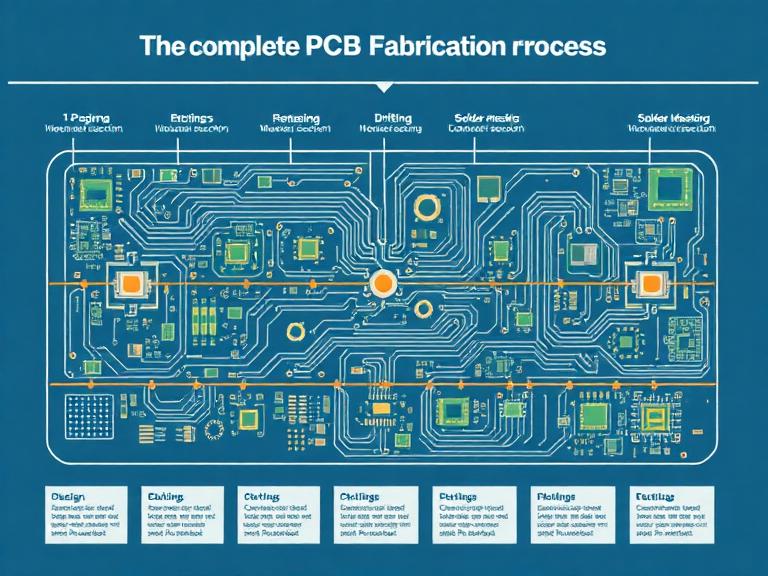
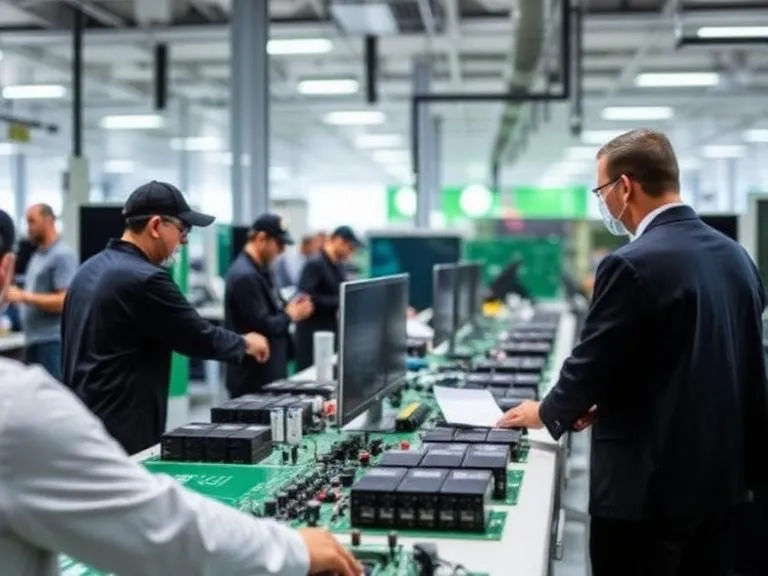
China 365PCB is a fully self-operated, full-industry-chain manufacturing group covering everything from bare board fabrication and SMT assembly to online electronic component sourcing, CNC machining, cable harness assembly, and complete OEM/ODM solutions. With 15+ years of experience, China 365PCB operates over 100,000 square meters of production area. All our facilities are self-owned and self-managed, ensuring total quality control, full process traceability, and unmatched production flexibility. From our experience, supply chain fragmentation is the leading cause of board failure and project delays. Because we never outsource and never compromise, we can execute the Pcb fabrication process step by step with absolute precision. In this comprehensive technical guide, we will analyze the exact chemical, mechanical, and optical procedures required to transform raw copper-clad laminates into complex, multi-layered electronic interconnects.
1. Engineering Data Prep and DFM Analysis
The initial stage of the Pcb fabrication process step by step occurs entirely within the digital realm. Once a hardware engineer generates Gerber files, ODB++ files, or IPC-2581 data, our Computer-Aided Manufacturing (CAM) engineers conduct a rigorous Design for Manufacturability (DFM) analysis. We recommend never skipping this phase, as identifying trace width violations, insufficient annular rings, or thermal relief errors before manufacturing saves significant capital and time.
During this stage, our team applies necessary compensations for etching tolerances. Because chemical etching removes copper not just vertically but laterally, our CAM software artificially thickens the traces on the film tools to ensure the final etched trace matches the original design specifications. When initiating your next development cycle, we recommend utilizing our PCB Instant Quote system. This portal connects directly to our engineering rules engine, providing immediate feedback and accurate cost modeling before the physical Pcb fabrication process step by step begins.
2. Inner Layer Imaging and Core Etching
For multi-layer boards, the physical Pcb fabrication process step by step begins with the core material, typically a fiberglass-epoxy resin laminate clad with copper foil on both sides. The core is thoroughly cleaned and coated with a layer of photosensitive film called photoresist. Using a high-precision Laser Direct Imaging (LDI) machine, the exact circuit pattern is drawn onto the photoresist using ultraviolet light. The UV light polymerizes the photoresist, hardening it over the areas where copper traces need to remain.
The core is then submerged in a developer solution, which washes away the unhardened, unexposed photoresist, exposing the unwanted copper underneath. Next, the board enters an alkaline etching bath. The chemical etchant dissolves the exposed copper, leaving behind the protected copper circuitry. Finally, a stripper solution removes the hardened photoresist, revealing the pristine copper traces. For dense geometries found in an IC Substrate PCB or an Interposer PCB, this inner layer imaging must be executed in absolute cleanroom environments to prevent microscopic dust from causing short circuits.
3. Automated Optical Inspection and Oxide Treatment

Once the inner layers are etched, any defects are permanently buried within the board after lamination. Therefore, a critical checkpoint in the Pcb fabrication process step by step is the Automated Optical Inspection (AOI). A specialized high-resolution camera scans the inner layers, comparing the physical etched copper pattern against the original digital design files. The AOI detects trace neck-downs, micro-shorts, and opens that human inspection would miss.
Following AOI validation, the inner layers undergo a chemical process known as brown oxide or black oxide treatment. Copper is naturally a smooth surface, which presents a challenge for resin adhesion. The oxide treatment creates a microscopic crystalline roughness on the copper traces. From our experience, failing to properly execute the oxide treatment drastically increases the risk of delamination when the board is subjected to the thermal stress of reflow soldering later in the assembly line.
4. The Lamination Cycle
The lamination phase unites the individual inner cores into a single, cohesive multi-layer board. This is a highly controlled stage of the Pcb fabrication process step by step. The stack-up consists of alternating layers of the etched inner cores and sheets of prepreg (fiberglass fabric pre-impregnated with partially cured epoxy resin), capped on the top and bottom with continuous sheets of solid copper foil.
This "book" of materials is loaded into a massive hydraulic lamination press. Under strict vacuum conditions to eliminate air voids, the press applies intense heat and pressure over a span of several hours. The heat melts the epoxy resin within the prepreg, allowing it to flow and fill the gaps between the copper traces on the inner layers. As the cycle cools, the resin fully cures, creating a solid, inseparable substrate. When manufacturing a High-speed PCB, the precise control of pressure and temperature during lamination is critical to maintaining uniform dielectric thickness, which directly impacts the controlled impedance of high-frequency transmission lines.
5. Mechanical and Laser Drilling
To establish electrical connections between the isolated layers, holes must be drilled through the laminated board. This stage of the Pcb fabrication process step by step requires extraordinary mechanical precision. CNC drilling machines, equipped with air-bearing spindles rotating up to 150,000 RPM, drill the through-holes, mounting holes, and tooling holes according to the NC drill file.
For high-density interconnect (HDI) designs, standard mechanical drill bits cannot achieve the required microvia diameters. In these instances, we utilize precision CO2 or UV laser drilling systems. Laser ablation vaporizes the resin and copper with extreme accuracy. Drilling accuracy defines the functional reliability of advanced packaging boards such as a FC-CSP PCB and a SiP PCB, where pad sizes and via diameters approach microscopic thresholds.
6. Electroless Copper and Through-Hole Plating
After drilling, the holes have non-conductive fiberglass and epoxy resin walls. To allow signals to pass from layer to layer, these walls must be metalized. The Pcb fabrication process step by step addresses this via an electroless copper deposition process. After a rigorous desmear process to remove melted resin from the inner copper interconnects, the panels are bathed in a palladium catalyst. A chemical bath then deposits a molecularly thin layer of pure copper across the entire surface of the panel and completely down the walls of every drilled hole.
Because the electroless copper layer is incredibly thin and fragile, it is immediately followed by electrolytic copper plating. The panel is clamped as a cathode in a plating bath containing copper sulfate and sulfuric acid. Direct current forces copper ions from a sacrificial anode to bond to the panel, building the copper thickness in the holes and on the surface to the required specification, typically 1 mil (25.4 microns) for standard through-hole vias.
7. Outer Layer Imaging and Etching
The outer layer imaging in the Pcb fabrication process step by step is structurally opposite to the inner layer process. A photoresist is applied, but this time, the laser direct imaging exposes the areas where we do not want copper. The unexposed photoresist covering the desired circuitry is washed away. The board is then electroplated with additional copper, followed immediately by a protective electroplating of tin. The tin serves as a metallic etch resist covering only the pads, traces, and through-holes.
The remaining hardened photoresist is stripped away, exposing the base copper beneath. The board enters an ammoniacal etching solution that dissolves the exposed copper. The tin plating protects the vital circuitry from the etchant. Finally, a chemical stripper removes the tin plating, leaving behind the precisely formed outer copper circuitry, ready for protection and finishing.
8. Solder Mask and Silkscreen Application
To protect the copper traces from environmental oxidation and prevent solder bridges during the assembly phase, Liquid Photo-Imageable (LPI) solder mask is applied across the entire panel. Following application, the Pcb fabrication process step by step once again utilizes UV imaging to harden the mask everywhere except over the component pads and vias intended for soldering. The unhardened mask over the pads is developed away, and the board is baked to fully cure the remaining mask, resulting in the familiar green (or custom colored) finish.
Subsequently, the silkscreen nomenclature is applied. This includes component reference designators, polarity marks, logos, and pin 1 indicators. Modern manufacturing relies on direct legend printing using specialized inkjet technology, which fires UV-curable epoxy ink directly onto the board surface, ensuring high legibility even on the smallest component outlines.
9. Surface Finish, Routing, and Profiling
The exposed copper pads must be coated to prevent immediate oxidation and to provide a coplanar surface for component mounting. The selection of surface finish is highly dependent on the board's end application. Electroless Nickel Immersion Gold (ENIG) is the industry standard for flat, highly reliable solderability. Other options include Organic Solderability Preservatives (OSP), Immersion Silver, Immersion Tin, or Hot Air Solder Leveling (HASL).
Surface finishes are especially critical for intensive testing apparatus like a Burn in Board PCB, Probe Card PCB, Load Board PCB, or Semiconductor Test PCB, where thousands of insertion cycles or high-temperature environments demand superior metallurgical stability. Once finished, the panels move to CNC routing or V-scoring, where the individual boards are physically separated from the manufacturing panel. For a Flexible PCB or FPC PCB, this profiling stage often involves specialized laser cutting to prevent mechanical stress on the delicate polyimide base material.
10. Electrical Testing and Quality Assurance
The final phase of the Pcb fabrication process step by step is exhaustive electrical testing and final quality control. We do not rely on visual inspection alone to guarantee circuit continuity. Every multi-layer board undergoes either a bed-of-nails fixture test (for mass production) or a flying probe test (for prototypes and low volume). These machines inject voltage into specific nets, verifying that all intended connections are continuous and that no unintended shorts exist between isolated nets.
At China 365PCB, our commitment means that every board undergoes these stringent checks within our own 100,000 square meter facility. With a one-stop turnkey service from design to delivery, we guarantee no delay, no excuses. We never outsource, never compromise. From PCB to OEM integration, every board, every circuit, every connection is made within our own facilities, ensuring you always get faster delivery, higher quality, and absolute reliability.
11. Summary Table: Pcb fabrication process step by step
For rapid reference, we recommend reviewing the following summary table detailing the critical phases of the bare board manufacturing lifecycle.
| Manufacturing Stage | Technical Process | Primary Engineering Objective |
|---|
| DFM Engineering | Gerber/ODB++ Data Analysis and Tooling generation. | Identify and correct design flaws before committing raw materials. |
| Inner Layer Imaging | LDI Exposure and Chemical Etching. | Define copper interconnects on internal core laminates. |
| Lamination | Application of heat, vacuum, and pressure to Prepreg and Cores. | Fuse individual layers into a solid, multi-layer composite board. |
| Mechanical/Laser Drilling | CNC drilling and Laser ablation. | Create via structures for inter-layer connectivity. |
| Copper Plating | Electroless copper deposition followed by electrolytic plating. | Metallize the non-conductive hole walls to establish electrical paths. |
| Outer Layer Etching | Tin plating resist and ammoniacal etching. | Define the external surface component pads and routing traces. |
| Solder Mask | LPI coating, UV exposure, and thermal curing. | Prevent solder bridging and protect against environmental oxidation. |
| Surface Finish | ENIG, HASL, OSP, or Immersion Silver application. | Ensure flat, highly solderable, and oxidation-resistant component pads. |
| Electrical Testing | Flying Probe or Bed-of-Nails continuity testing. | Guarantee 100% electrical functionality by detecting opens and shorts. |
12. Frequently Asked Questions (FAQs)
Why is the Pcb fabrication process step by step strictly controlled regarding humidity and dust?
Particulate contamination during the inner and outer layer imaging phases can block ultraviolet light, leaving unwanted copper that causes fatal short circuits. High humidity can cause prepreg materials to absorb moisture, leading to catastrophic delamination during the high-heat lamination cycle or the final wave soldering process. From our experience, cleanroom environments are non-negotiable.
What is the difference between mechanical drilling and laser drilling?
Mechanical drilling uses physical tungsten carbide drill bits and is limited by the physical size of the bit (typically bottoming out around 0.15mm to 0.20mm). Laser drilling uses focused optics to vaporize material, allowing for microvias as small as 0.05mm, which is essential for high-density interconnects (HDI) on SiP and FC-CSP boards.
Does China 365PCB manage all of these steps in-house?
Yes. We believe true manufacturing excellence lies in speed, precision, and responsibility. Across our 100,000 square meters of production area, all facilities are self-owned and self-managed. We execute the entire Pcb fabrication process step by step internally, meaning we never outsource the critical steps of your hardware development.
How do you ensure the correct impedance on a high-speed board?
Controlled impedance relies on three variables: trace width, copper thickness, and the dielectric thickness of the surrounding resin. Our CAM engineers adjust the trace width to compensate for etch factor, and we strictly control the lamination press parameters to ensure the prepreg cures to the exact calculated thickness required to maintain the target impedance.
13. References
 English