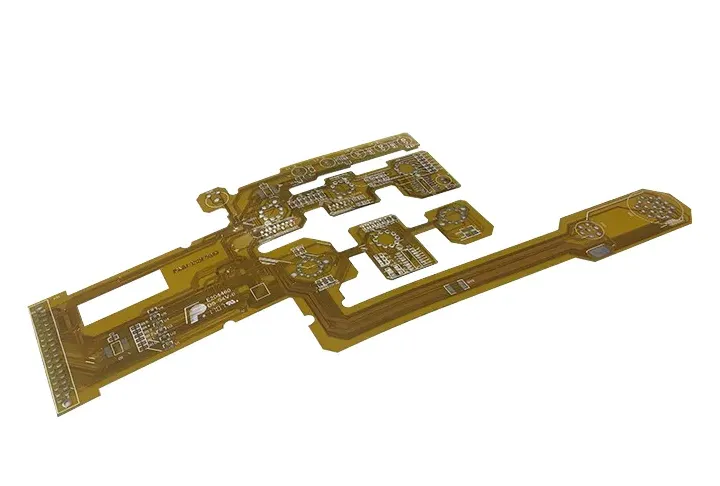
Obtaining an accurate PCB and PCBA quotation is one of the most critical steps in electronics manufacturing.
For buyers, unclear or incomplete quotation inputs often lead to price discrepancies, schedule delays, and unexpected cost increases later in the project.
This guide explains how PCB and PCBA pricing is structured, what information manufacturers need, and how buyers can avoid common quotation pitfalls.
Why PCB and PCBA Quotes Vary So Widely
Many buyers are surprised by large price differences between suppliers.
Common reasons include:
· Different assumptions about materials and specifications
· Varying manufacturing processes and quality levels
· Incomplete or ambiguous input data
· Different interpretations of risk and yield
Without standardized inputs, quotes are not directly comparable.
PCB Quotation: Key Technical Factors That Drive Cost
2.1 PCB Stack-Up and Material
PCB board cost is heavily influenced by:
· Number of layers
· Base material type (FR-4, high-Tg, Rogers, metal-core)
· Core and prepreg thickness
· Copper weight (inner and outer layers)
Material choice directly affects performance, yield, and cost.
2.2 Board Size, Panelization, and Quantity
Key cost drivers:
· Finished board dimensions
· Panel utilization efficiency
· Order quantity and repeatability
Large or irregular board shapes reduce panel efficiency and increase cost.
2.3 Design Complexity and Manufacturing Tolerances
Design factors affecting price:
· Minimum trace width and spacing
· Via types (through, blind, buried, microvia)
· Aspect ratio and drill tolerances
· Controlled impedance requirements
Tighter tolerances require higher process control and inspection.
Further reading: PCB Stackup Design The Structural Foundation of Signal Integrity, EMI Control, and Manufacturing Reliability
2.4 Surface Finish and Special Processes
Surface finish impacts both cost and assembly yield.
Common options:
· HASL / Lead-free HASL
· ENIG / ENEPIG
· OSP / Immersion Silver
Additional processes such as edge plating or carbon ink increase cost.
PCBA Quotation: Understanding Assembly Cost Structure
3.1 Component Count and Assembly Density
Assembly pricing depends on:
· Number of SMT and THT components
· Fine-pitch, BGA, or QFN devices
· Placement density and complexity
Higher density increases placement time and inspection requirements.
3.2 BOM and Component Sourcing Model
PCBA cost varies based on sourcing method:
· Turnkey (manufacturer sources components)
· Consigned (customer supplies components)
· Partial turnkey
Component availability, lifecycle, and risk all influence pricing.
3.3 Assembly Process and Technology Mix
Key factors include:
· SMT only vs. mixed SMT/THT
· Reflow, wave, or selective soldering
· Double-sided assembly
Each additional process step adds cost and lead time.
3.4 Testing and Quality Requirements
Testing significantly affects PCBA cost.
Options include:
· AOI and X-ray inspection
· In-circuit testing (ICT)
· Functional and system-level testing
Higher test coverage improves reliability but increases upfront cost.
Quotation Inputs Buyers Must Provide
To receive an accurate PCB & PCBA quote, buyers should prepare:
PCB Data
· Gerber or ODB++ files
· Stack-up requirements
· Finished board size and quantity
· Surface finish and special requirements
PCBA Data
· BOM with manufacturer part numbers
· Pick-and-place (XY) file
· Assembly drawings and notes
· Testing requirements
Incomplete data almost always leads to inaccurate pricing.
Common Quotation Pitfalls Buyers Should Avoid
Typical mistakes include:
· Requesting quotes without finalized design data
· Comparing quotes with different assumptions
· Focusing only on unit price, not total cost
· Ignoring lead time and yield risk
Low initial quotes often result in higher total cost later.
How to Compare PCB and PCBA Quotes Correctly
Buyers should compare:
· Scope of work included
· Material and process assumptions
· Test and inspection coverage
· Lead time commitment and risk handling
A slightly higher quote may offer significantly lower execution risk.
Lead Time Considerations in Quotation
Quoted lead time depends on:
· PCB fabrication cycle
· Component availability
· Assembly complexity and test
Buyers should confirm whether lead time is:
· Calendar days or working days
· Based on material availability
· Guaranteed or estimated
Predictable delivery is often more valuable than the shortest lead time.
Related reading: Lead Time Management: How Predictable Delivery Is Achieved in Electronics Manufacturing
Engineering Support and Risk Disclosure
Reliable manufacturers highlight risks during quotation.
Indicators of a mature supplier:
· DFM feedback included with the quote
· BOM risk and availability notes
· Clear assumptions and exclusions
Transparent communication builds trust and prevents surprises.
PCB and PCBA Quotation at China 365PCB
At China 365PCB, a primer OEM PCB manufacturer, PCB and PCBA quotations are supported by:
· Engineering-driven DFM/DFA review
· Clear cost and process assumptions
· BOM risk and sourcing analysis
· Transparent lead time evaluation
· Scalable pricing from prototype to production
We help customers receive accurate, comparable, and execution-ready quotations, not just numbers.
Final Buyer Checklist
Before approving a PCB or PCBA quote, confirm:
· All technical requirements are clearly defined
· Scope and assumptions are transparent
· Testing and quality levels match product needs
· Lead time and risk are understood
· The quote supports future scalability
A good quotation is the foundation of a successful manufacturing program.
Further reading: Checklist for OEM Buyers: A Practical Guide to Selecting and Managing Electronics Manufacturing Partners
PCB vs PCBA Cost Breakdown Example: Understanding Where the Cost Really Comes From
When comparing PCB and PCBA pricing, many buyers are surprised by the large difference between the two.
This often leads to confusion, unrealistic budgeting, or incorrect supplier comparisons.
This example-based guide explains how costs are structured, why PCB assembly price is fundamentally different from PCB pricing, and how buyers should interpret quotations correctly.
1. What PCB Cost Includes (Bare Board Only)
A PCB quotation covers only the fabrication of the bare printed circuit board—no components, no assembly.
Typical PCB Cost Elements
Cost Element | Description |
Raw Materials | Laminate, prepreg, copper foil |
Layer Count | Single, multilayer, HDI, etc. |
Board Size | Finished dimensions and panel utilization |
Manufacturing Processes | Drilling, plating, imaging, etching |
Surface Finish | HASL, ENIG, OSP, etc. |
Electrical Test | Open/short testing |
Yield & Scrap | Fabrication loss included |
PCB Cost Characteristics
· Cost scales mainly with board complexity and quantity
· Labor content is relatively low
· Cost structure is predictable once specs are fixed
PCB cost = material + fabrication process
2. What PCBA Cost Includes (Board + Assembly)
PCBA includes everything in PCB fabrication plus component sourcing, assembly, inspection, testing, and risk management.
This is where most cost differences arise.
3. Example Scenario: Same Board, Two Cost Views
Assume the following product:
· 6-layer PCB
· Board size: 160 × 120 mm
· Quantity: 100 pcs
· Mixed SMT + THT assembly
· ~180 components per board
· Includes BGA and fine-pitch ICs
4. Example PCB Cost Breakdown (Illustrative)
Cost Category | Approx. Share |
Materials (laminate, copper) | 35% |
Fabrication Processes | 40% |
Surface Finish & Testing | 15% |
Yield & Overhead | 10% |
PCB cost is dominated by fabrication process and materials
5. Example PCBA Cost Breakdown (Illustrative)
Cost Category | Approx. Share |
Electronic Components | 55–70% |
Assembly Labor & Machine Time | 10–15% |
Solder Paste & Consumables | 3–5% |
Inspection (AOI, X-ray) | 5–8% |
Testing (Functional / ICT) | 5–10% |
Yield, Rework & Risk | 5–8% |
Components dominate PCBA cost, not assembly labor.
6. Why PCBA Costs Vary Much More Than PCB Costs
6.1 Component Market Volatility
· IC pricing and availability fluctuate
· Allocation and lead-time risk increases cost buffers
6.2 Assembly Complexity
· Fine-pitch and BGA increase inspection and rework cost
· Mixed SMT/THT requires multiple processes
6.3 Yield and Rework Risk
· Assembly defects cost far more than PCB defects
· Rework on dense boards is time-consuming and risky
6.4 Testing Requirements
· Functional and system testing add real cost
· Manual testing becomes a bottleneck at scale
7. Common Buyer Misunderstanding
Misconception:
“Assembly should be cheap—the machine just places parts.”
Reality:
· Machines require setup, programming, and validation
· Inspection, testing, and yield protection dominate effort
· The true cost is risk control, not placement speed
8. PCB vs PCBA: Cost Risk Comparison
Aspect | PCB | PCBA |
Cost Variability | Low | High |
Supply Chain Risk | Minimal | Significant |
Yield Sensitivity | Low | High |
Testing Impact | Limited | Major |
Schedule Risk | Low | Medium–High |
PCBA pricing reflects technical and supply-chain risk, not just labor.
9. How Buyers Should Use This Cost Breakdown
When reviewing quotes, buyers should:
· Separate PCB cost and PCBA cost
· Ask how component pricing is sourced and validated
· Understand what inspection and testing are included
· Compare scope and risk coverage, not just unit price
A higher PCBA quote may indicate better risk management, not inefficiency.
PCB & PCBA Cost Transparency at China 365PCB
At China 365PCB, PCB and PCBA quotations are structured to:
· Clearly separate fabrication and assembly cost drivers
· Highlight component sourcing assumptions
· Explain inspection, testing, and yield protection scope
· Support scalability from prototype to production
We help customers understand where the cost comes from—and what risks it covers.
Key Takeaway for Buyers
· PCB cost is mainly a manufacturing process cost
· PCBA cost is largely a component and risk-management cost
· The lowest PCBA quote often hides the highest execution risk
Understanding the cost breakdown leads to better decisions and smoother projects.
David Li
David Li is the Technical Communications Director at China 365PCB, with over 15 years of hands-on experience in the PCB and electronics manufacturing industry. Holding a Master’s degree in Electrical Engineering, he has worked extensively in both R&D and manufacturing roles at leading multinational electronics firms in Shenzhen before joining our team.
His expertise spans high-speed digital design, advanced packaging (HDI, Flex), and automotive-grade reliability standards. David is passionate about bridging the gap between design intent and production reality—a philosophy that aligns perfectly with 365PCB’s mission to deliver seamless, rapid, and fully-integrated manufacturing solutions.
Follow David’s insights on PCB technology trends and best practices here on the 365PCB Knowledge Hub.
 English