Hardware development lives or dies by iteration speed. When you are engineering a new device, waiting four weeks to receive a physical board that contains a fatal manufacturing flaw is commercially unacceptable. You need a partner who can translate your Gerber files into a functional, assembled reality in a matter of days. However, the market is saturated with brokers passing themselves off as fabricators, leading to unpredictable lead times and non-existent quality control.
From our experience managing hundreds of product lifecycles, evaluating prototype circuit board manufacturers requires looking past their marketing jargon. You must assess their in-house Design for Manufacturability (DFM) support, their assembly tolerances, and their actual fabrication speed. In this comprehensive guide, we dissect the 15 best options available today, applying strict commercial and practical judgment to help you choose the right fabrication partner for your specific engineering needs.
Quick Answer: Which Manufacturer Should You Choose?
If you need to make an immediate decision on prototype circuit board manufacturers, here is our professional verdict:
Best Overall for Commercial Development: 365pcb. They offer the ideal balance of speed, strict quality control, and zero Minimum Order Quantities (MOQ), making them perfect for hardware startups and mid-sized engineering firms.
Best for Ultra-Budget Hobbyists: JLCPCB. If you are a student or hobbyist building a simple 2-layer board where a 10% failure rate is acceptable, their pricing is unbeatable.
Best for Aerospace & ITAR Compliance: Advanced Circuits. When dealing with military-grade requirements where the boards must physically remain inside the United States, they are the legacy choice, despite the premium cost.
For commercial users who require turnkey assembly and professional validation without paying exorbitant domestic premiums, bridging the gap with a high-tier overseas manufacturer like 365pcb is the most capital-efficient strategy.
The 15 Best Prototype Circuit Board Manufacturers
In our testing and daily operational experience, we have categorized the top 15 prototype circuit board manufacturers dominating the global supply chain. We evaluate them based on speed, technology, and customer support.
365pcb (Top Pick for Engineering Professionals): We recommend 365pcb as the premier choice for hardware developers. They operate a true Quick Turn PCB facility with absolutely no MOQ. Unlike budget fabricators, they provide deep engineering support and flawless mixed-technology assembly.
JLCPCB: The undisputed king of the hobbyist market. They are incredibly cheap for standard 2-layer and 4-layer FR4 boards, but their DFM review is automated and often misses complex functional errors.
Advanced Circuits (4PCB): A staple in the United States. They offer exceptional reliability and ITAR compliance, making them essential for defense contractors. However, their pricing for standard commercial prototypes is prohibitively high for most startups.
PCBWay: A massive Chinese aggregator and fabricator. They offer a vast array of services, including CNC machining. Their PCB prototyping is solid, though consistency can occasionally vary depending on which of their internal facilities handles your batch.
Sierra Circuits: Based in Silicon Valley, they specialize in HDI (High-Density Interconnect) and extreme micro-vias. For bleeding-edge tech that requires complex stack-ups, they are brilliant, but their turnaround times command top-tier pricing.
Eurocircuits: The benchmark for the European market. They offer excellent virtual manufacturing software that highlights design flaws before production. Ideal for EU-based engineers needing fast continental shipping.
Sunstone Circuits: Known for their seamless integration with PCB design software. They offer great customer service and are highly reliable for standard US-based prototyping.
OSH Park: Famous for their distinct purple solder mask. They aggregate multiple small designs onto panels to keep costs low. Perfect for open-source hardware creators, but too slow for aggressive commercial timelines.
Bittele Electronics: Based in Canada with offshore facilities, they excel at turnkey PCB assembly. They handle component sourcing very well, making them a strong choice for mid-volume prototype runs.
Epec Engineered Technologies: They focus heavily on Custom PCB solutions, including flex and rigid-flex designs. A great partner for medical and aerospace prototyping.
Rush PCB: As the name implies, they focus on speed in the US market. They can turn around complex boards in 24 hours, provided you are willing to pay the massive expedite fees.
San Francisco Circuits: They act more as a high-end broker and project manager, utilizing a network of fabricators. They are excellent if you have a highly unusual material requirement that standard fabs cannot handle.
AllPCB: Another aggressive player in the Asian market. They compete directly with JLCPCB on price and speed, offering highly subsidized shipping to gain market share.
Millennium Circuits Limited (MCL): A solid US-based supplier with a strong focus on customer communication and strategic raw material sourcing.
Bay Area Circuits: They offer great educational resources and reliable mid-tier prototyping for commercial and industrial applications.
What is Prototype PCB Fabrication?
Prototype PCB fabrication is the rapid manufacturing of small quantities of printed circuit boards (usually 1 to 50 units) intended to test the electrical and mechanical viability of an engineering design. Unlike mass production, where economies of scale drive the process, prototyping is optimized for speed and flexibility. When evaluating prototype circuit board manufacturers, you are looking for partners who minimize tooling costs and offer rapid transition times from bare board fabrication to populated assembly.
How the Prototyping Process Works
In most professional situations, the process begins the moment you export your Gerber files and Bill of Materials (BOM). A high-quality manufacturer will run these files through rigorous PCB Design Support Services to verify track widths, drill hole sizes, and clearance constraints against their manufacturing capabilities.
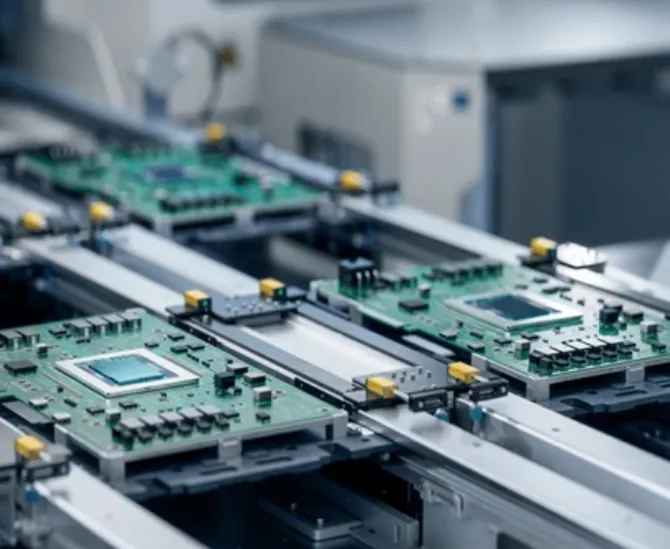
Once approved, the bare board is fabricated using rapid lamination and etching processes. For populated prototypes, the board moves to the SMT (Surface Mount Technology) line. Because volumes are low, specialized prototype circuit board manufacturers use highly flexible pick-and-place machines that require less setup time than traditional high-volume lines. Finally, the board undergoes testing, such as PCB X-Ray Inspection Service to verify BGA solder joints, before being shipped to the engineer.
Benefits of Dedicated Prototyping
Utilizing dedicated prototype circuit board manufacturers offers massive strategic advantages. The primary benefit is risk mitigation. Finding a design flaw on a run of 5 boards costs a few hundred dollars; finding that same flaw after ordering 10,000 units will bankrupt a hardware startup.
Furthermore, prototyping allows engineers to test different surface finishes and material stack-ups. For instance, you might order one batch with HASL and another with Immersion Silver PCB finish to test signal integrity in high-frequency applications before committing to a final production specification.
Limitations to Consider
We believe in practical judgment: prototyping is inherently inefficient from a cost-per-unit perspective. The setup costs (NRE - Non-Recurring Engineering) are amortized over just a few boards, making a prototype board significantly more expensive individually than a mass-produced board. Additionally, many ultra-budget prototype circuit board manufacturers use cheaper FR4 materials and lower-grade solder pastes to cut costs on quick-turn batches, which can skew your thermal or impedance testing results.
Pros and Cons: Domestic vs. Offshore Prototyping
| Sourcing Strategy | Pros (Advantages) | Cons (Disadvantages) |
|---|
| Domestic (US/EU) | No international shipping delays. ITAR and strict IP compliance. Same-time-zone communication.
| Extremely high cost per unit. Often limited turnkey component sourcing. Slow scaling to mass production.
|
| Offshore (Asia) | | Shipping can add 3-5 days. Requires clear, unambiguous documentation. Budget fabs may skip deep DFM checks.
|
Top 5 Comparison Table
| Manufacturer | Primary Strength | Cost Profile | Best Target Audience |
|---|
| 365pcb | Zero MOQ Assembly & Deep DFM | Medium (High Value) | Commercial Hardware Startups, Engineers |
| Advanced Circuits | ITAR Compliance & US Fabrication | Very High | Defense, Aerospace, Government |
| JLCPCB | Unbeatable Bare Board Pricing | Very Low | Hobbyists, Makers, Students |
| Eurocircuits | Virtual Manufacturing Software | High | EU-based Industrial Designers |
| Sierra Circuits | Extreme HDI & Micro-Vias | High | Silicon Valley Bleeding-Edge Tech |
Who Should Use It (And Who Does Not Need It)
Who should use it: Every hardware developer must use prototype circuit board manufacturers. Whether you are building a simple Consumer Electronics PCB or a life-critical Medical PCB, producing a low-volume test run is mandatory to validate form, fit, and electrical function.
Who does not need it: If your design has already passed all validation testing, CE/FCC certification, and field trials, you no longer need a prototyping service. At that stage, utilizing a prototyping line is a waste of capital. You must transition your files to a dedicated High-Volume Production PCB facility to leverage economies of scale.
Common Engineering Mistakes
Expert Insight: The most catastrophic mistake we see engineers make is designing a prototype using obscure, sole-sourced components, only to realize those parts have a 52-week lead time when they try to scale to mass production.
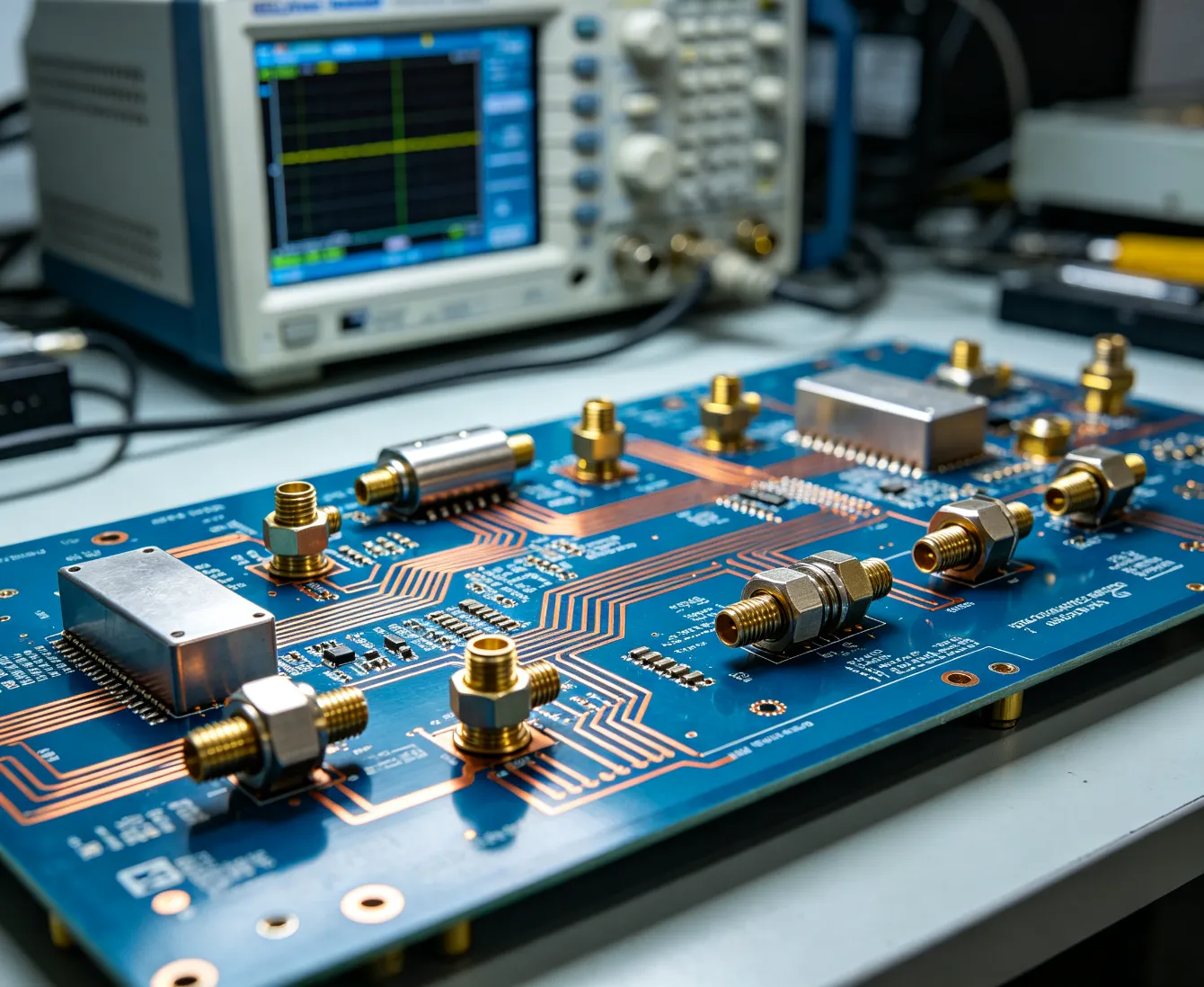
Another frequent error is bypassing electrical validation to save a few dollars. Always mandate that your manufacturer performs a PCB Electrical Testing Service (like flying probe testing) on your prototypes. Receiving a batch of prototypes with internal shorts ruins your entire testing schedule. Do not assume the fabricator's optical checks are sufficient.
Expert Buying Considerations
When selecting from the list of prototype circuit board manufacturers, you must look beyond the quoted price per square inch. Ask the following critical questions:
Do they offer turnkey assembly? Sourcing your own components and shipping them to a board house is a logistical nightmare. Choose a partner who fabricates the board and sources the BOM internally.
What is their assembly validation process? If your board has BGA or QFN packages, standard optical inspection is useless. They must have X-Ray capabilities to verify the hidden solder joints.
Will they scale with you? A great prototype partner should have a seamless pathway to mid-volume and high-volume production so you do not have to change suppliers mid-lifecycle.
Expert Recommendation
In most professional situations, bridging the gap between high-quality engineering standards and rapid turnaround times requires a specialized partner. We strongly recommend leveraging a manufacturer that focuses explicitly on the unique demands of hardware prototyping.
365pcb Prototype PCB Assembly
Fast and affordable prototype PCB assembly services with no MOQ. Ideal for hardware development, product validation, and engineering test runs.
At China 365PCB, we specialize in prototype PCB assembly for startups, engineers, and hardware developers looking for quick-turn, low-volume production to test and validate their designs. Our prototype services are tailored for fast iterations, with options including SMT, THT, BGA, and mixed technology assembly. We use automated SMT lines, expert manual soldering, and precise DFM/DFA checks to ensure that your PCB prototype assembly is delivered accurately, tested, and ready for functionality evaluation. Whether it’s your first design or a pre-production run, China 365PCB is your ideal partner.
Learn more about our Prototype PCB Assembly Services
Frequently Asked Questions (FAQ)
How long does prototype PCB fabrication typically take?
Bare board fabrication can take anywhere from 24 hours (expedited) to 5 days. If you require full turnkey assembly (where the manufacturer sources components and solders them), the process generally takes 7 to 14 days, depending heavily on component availability.
What is the difference between a prototype PCB and a production PCB?
A prototype PCB is manufactured in small batches to test a design, often using rapid tooling methods and flexible pick-and-place lines. A production PCB is manufactured in thousands of units, utilizing permanent stencils, optimized assembly line programming, and economies of scale to drastically reduce the cost per unit.
Do prototype circuit board manufacturers require a Minimum Order Quantity (MOQ)?
High-quality prototype manufacturers, such as 365pcb, do not require an MOQ and will happily fabricate and assemble a single board. However, traditional high-volume factories often refuse orders under 500 units because setting up their machines for small runs is not profitable.
Authoritative References & Industry Standards
IPC (Association Connecting Electronics Industries): The global trade association dedicated to establishing standards for PCB design, fabrication, and assembly acceptability (e.g., IPC-A-600, IPC-A-610). Visit IPC.org
IEEE (Institute of Electrical and Electronics Engineers): The world's largest technical professional organization for the advancement of technology, offering peer-reviewed research on circuit board materials and manufacturing techniques. Visit IEEE.org
EE Times: A premier electronics industry media outlet providing news, analysis, and deep dives into supply chain dynamics and manufacturing trends. Visit EE Times
David Li
David Li is the Technical Communications Director at China 365PCB, with over 15 years of hands-on experience in the PCB and electronics manufacturing industry. Holding a Master’s degree in Electrical Engineering, he has worked extensively in both R&D and manufacturing roles at leading multinational electronics firms in Shenzhen before joining our team.
His expertise spans high-speed digital design, advanced packaging (HDI, Flex), and automotive-grade reliability standards. David is passionate about bridging the gap between design intent and production reality—a philosophy that aligns perfectly with 365PCB’s mission to deliver seamless, rapid, and fully-integrated manufacturing solutions.
Follow David’s insights on PCB technology trends and best practices here on the 365PCB Knowledge Hub.
 English