In the highly competitive electronics hardware sector, the facility that builds your product is just as critical to your success as the engineers who designed it. Deciding to outsource your printed circuit board assembly (PCBA) and box build is standard practice, but executing the selection process is fraught with catastrophic risks. We witness original equipment manufacturers (OEMs) and hardware startups continually making the exact same error: they Compare EMS Providers based strictly on the lowest quoted unit price. This amateur approach virtually guarantees supply chain bottlenecks, substandard solder joints, counterfeit components, and ultimately, a destroyed brand reputation when units fail in the field.
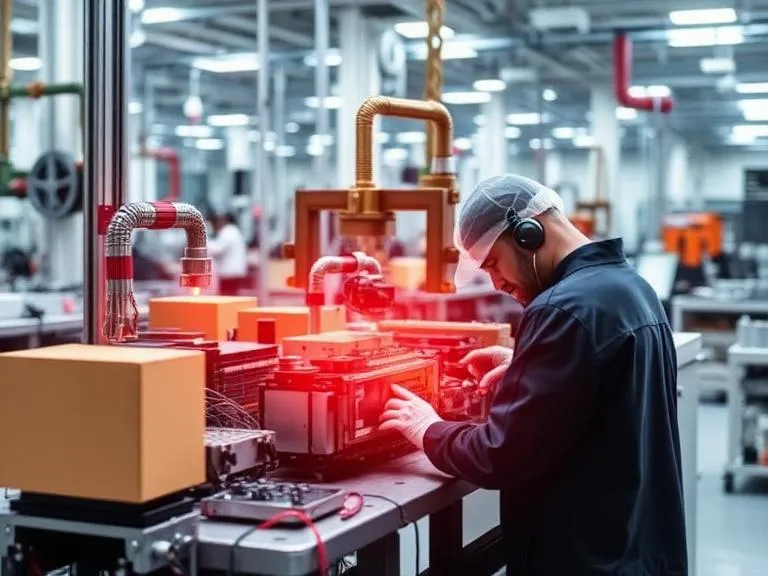
From our experience engineering advanced manufacturing protocols at China 365PCB, a successful electronic manufacturing services (EMS) partnership requires ruthless due diligence. You must strip away the marketing jargon and audit the factory floor. The true cost of a product is not the assembly invoice; it is the total cost of ownership, which includes yield rates, rework labor, and warranty returns. In this comprehensive practitioner's guide, we will brutally dissect the metrics you must use to audit prospective manufacturing partners, explain exactly how to validate their capabilities, and provide the commercial judgment required to secure a highly profitable, scalable hardware launch.
Quick Answer: The Core Audit Framework
To successfully Compare EMS Providers, you must evaluate them across four non-negotiable pillars. First, verify their New Product Introduction (NPI) process to ensure they provide rigorous Design for Manufacturing (DFM) feedback before production. Second, audit their Automated Inspection Infrastructure; demand in-line 3D SPI (Solder Paste Inspection), AOI, and X-ray capabilities for BGA components. Third, assess their Supply Chain Integrity by verifying their counterfeit mitigation protocols and authorized distributor networks. Finally, confirm their Scalability—the ideal partner must be able to execute low-volume prototyping and seamlessly transition the same engineering data into a massive high-volume production run without requiring you to switch facilities.
What It Means to Compare EMS Providers
Electronic Manufacturing Services (EMS) is a broad term encompassing companies that design, manufacture, test, distribute, and provide return/repair services for electronic assemblies. Comparing them is not a simple vendor selection process; it is a structural marriage of your intellectual property with their physical assets.
A low-tier broker might simply take your Gerber files and offshore the "board stuffing" to the cheapest available sweatshop. A tier-one EMS provider acts as your external operations department. They review your Bill of Materials (BOM), flag soon-to-be obsolete components, offer PCB Design Support Services to optimize panelization, and guarantee that the final product complies with strict international standards such as IPC-A-610 Class 2 or Class 3.
How It Works: Auditing Manufacturing Capabilities
In most professional situations, your audit must focus on the machinery, the quality control gates, and the material handling procedures. If a facility cannot provide definitive proof of these capabilities, you must eliminate them from consideration.
1. SMT Line Precision and Capacity
Surface Mount Technology (SMT) is the heartbeat of PCBA. You must ask about their placement equipment. Are they running modern Yamaha, Panasonic, or Juki pick-and-place machines? What is their minimum component size capability? If your design utilizes ultra-miniature 01005 passives or fine-pitch micro-BGAs, the EMS must have high-speed, high-accuracy mounters with advanced vision alignment systems to prevent placement skew.
2. Solder Paste and Reflow Profiling
Solder joint failure is the leading cause of hardware death. Ask if the provider uses 3D Solder Paste Inspection (SPI) directly after the stencil printer to catch insufficient volume or bridging before the components are even placed. Furthermore, verify that they utilize multi-zone (10+ zones) reflow ovens to create precise thermal profiles tailored specifically to your board's thermal mass.
3. Automated Optical and X-Ray Inspection
Human visual inspection is obsolete for modern, high-density boards. An EMS must integrate PCB Actual Board Area (AOI) machines at the end of every SMT line to detect missing, tombstoned, or polarity-reversed components instantly. If your board features Bottom Terminated Components (BTCs) like BGAs or QFNs, the solder joints are hidden beneath the chip. Therefore, PCB X-Ray Inspection Service is mandatory to identify voids, short circuits, and insufficient wetting hidden from optical cameras.
4. In-Circuit and Functional Testing
Never accept an unverified board. The EMS must offer comprehensive PCB Electrical Testing Service. For low-volume runs, Flying Probe testing is adequate. For high volume, they should possess the engineering capability to build custom "Bed of Nails" In-Circuit Test (ICT) fixtures. Additionally, they should be able to flash your firmware and run customized Functional Circuit Testing (FCT) to ensure the board operates exactly as designed under load.
Benefits of Thorough EMS Vetting
The primary benefit of aggressively comparing providers is yield protection. When you select an EMS that operates with rigorous NPI (New Product Introduction) protocols, you catch layout errors before they scale. This drastically reduces your scrap rate and eliminates the horrific expense of manual rework.
Furthermore, a sophisticated EMS provides immense supply chain leverage. By utilizing their global purchasing volume, you gain access to tier-one component pricing and priority allocation during semiconductor shortages, shielding your product margins from spot-market price gouging.
Limitations of the EMS Model
We must apply commercial and practical judgment: outsourcing manufacturing means you surrender absolute micro-control over the daily schedule. If you partner with a massive, multi-national EMS, your mid-sized project may be treated as low-priority compared to their Fortune 500 clients, resulting in frustrating delays. This is why right-sizing your partner is critical; you need an EMS large enough to leverage economies of scale, but agile enough to treat your account with urgency.
Who Should Use a Tier-1 EMS (And Who Doesn't Need To)
For commercial users and heavy-duty applications: If you are launching complex IoT devices, or operating in highly regulated sectors, you absolutely must partner with a certified, tier-one EMS. For instance, if you require an Automotive PCB, the EMS must hold IATF 16949 certification. If you are developing an Aerospace PCB, AS9100 compliance is a legal necessity.
Who does not need it: For beginners, university engineering teams, or hobbyists building a 5-board proof of concept, subjecting a massive EMS to a rigorous audit is a waste of time. Utilize basic, ultra-cheap prototype pooling services until the product proves market viability and requires commercial scaling.
Common Mistakes When Sourcing an EMS
In our testing and market observation, the most devastating mistake is segmenting the manufacturing process to "save money." Having one factory fabricate the bare board, buying the components yourself from online distributors, and shipping everything to a third factory for assembly is a logistical nightmare. If the boards fail testing, the bare board fab blames the assembler, the assembler blames the component broker, and you are left holding worthless inventory. Always choose a turnkey EMS that takes full liability for the entire process.
Another profound error is ignoring surface finish capabilities. Depending on the end-use environment, standard HASL might oxidize too quickly. If a buyer fails to verify that the EMS can execute advanced plating—such as an Immersion Tin PCB for fine-pitch SMT or a Hard Gold PCB for high-wear edge connectors—the product will suffer premature field failure.
Strategic Buying Considerations
When you Compare EMS Providers, evaluate their scalability. A partner who excels at a Quick Turn PCB run of 50 units must also possess the automated infrastructure to transition seamlessly into a High-Volume Production PCB run of 50,000 units. If they cannot, you will be forced to transfer engineering data to a new factory, incurring massive delays and re-tooling fees.
Essential Comparison Tables
Quick Summary Table: EMS Audit Checklist| Evaluation Category | Sub-Standard Provider | Elite EMS Provider |
|---|
| Design Support | Build-to-print only; no feedback. | Rigorous pre-production DFM and DFA reporting. |
| Quality Inspection | Manual visual inspection. | In-line 3D SPI, automated AOI, and 3D X-Ray. |
| Component Sourcing | Relies on unverified gray-market brokers. | Authorized distributors with strict counterfeit mitigation. |
| Testing Capabilities | Ships without functional verification. | Custom ICT fixtures and firmware-driven FCT testing. |
Comparison Table: Turnkey EMS vs. Consignment Assembly| Metric | Full Turnkey (EMS manages all) | Consignment (You buy & ship parts) |
|---|
| Administrative Burden | Zero. You manage one vendor. | Extremely high. You track dozens of shipments. |
| Component Pricing | Low (Leverages EMS bulk buying power). | High (You pay retail distribution prices). |
| Scrap/Attrition Liability | EMS absorbs component loss during setup. | You must over-order by 5-10% to cover SMT waste. |
| Lead Time | Fast (Parallel procurement and bare board fab). | Slow (Assembly halted if one resistor is delayed). |
Pros and Cons of Partnering with an Offshore EMS| The Pros (Advantages) | The Cons (Disadvantages) |
|---|
| Massive reduction in labor overhead and final unit cost. | Longer freight transit times and customs clearance delays. |
| Immediate geographic access to the global component supply chain. | Time zone differences require structured communication protocols. |
| Unmatched scalability for consumer electronics volumes. | Requires rigorous upfront auditing to ensure IP protection. |
Expert Recommendation from China 365PCB
In most professional situations, your hardware's profitability is dictated before the first component is ever placed on a board. To scale successfully, we strongly recommend abandoning the fragmented consignment model and partnering exclusively with a vertically integrated, turnkey EMS provider that prioritizes engineering integrity over a race to the bottom on price.
If you are developing complex hardware, you require a partner who engineers risk out of the equation.
China 365PCB Electronic Manufacturing Services (EMS)
Elevate your product journey with 365PCB's Electronic Manufacturing Services (EMS). We offer comprehensive, end-to-end solutions—from global component sourcing and precision SMT assembly to final box build and rigorous testing.
Whether scaling a prototype or managing high-volume production, our state-of-the-art facilities and expert engineering team ensure superior quality, optimized costs, and a faster time-to-market for your electronic innovations. We do not cut corners; every board is subjected to stringent AOI and functional testing to guarantee compliance with global IPC standards.
Discover Our EMS CapabilitiesBy engaging with China 365PCB, you secure a manufacturing partner that actively protects your brand reputation through unrelenting quality control and supply chain transparency.
Frequently Asked Questions (FAQ)
How do I evaluate the component sourcing capabilities of an EMS?
You must verify their incoming quality control (IQC) protocols. Ask if they purchase exclusively from franchised distributors or directly from component manufacturers. If they utilize the gray market for obsolete parts, demand to see their in-house counterfeit detection equipment, such as decapsulation tools and X-ray systems.
Why is transition management from prototype to volume production so critical?
Many facilities specialize only in low-volume prototyping and lack the automated infrastructure for scale. If an EMS cannot transition your product to mass volume internally, you will be forced to transfer engineering data to a new factory, resulting in massive delays, re-tooling fees, and potential quality deviations.
What quality certifications should a top-tier EMS provider possess?
At a minimum, they must hold ISO 9001. Depending on your sector, you should also look for ISO 13485 for medical devices, IATF 16949 for automotive electronics, and AS9100 for aerospace applications. Additionally, their assembly technicians must be certified to IPC-A-610 standards.
Authoritative Industry References
To ensure your manufacturing audits align with global engineering and quality standards, we advise consulting the following organizations:
David Li
David Li is the Technical Communications Director at China 365PCB, with over 15 years of hands-on experience in the PCB and electronics manufacturing industry. Holding a Master’s degree in Electrical Engineering, he has worked extensively in both R&D and manufacturing roles at leading multinational electronics firms in Shenzhen before joining our team.
His expertise spans high-speed digital design, advanced packaging (HDI, Flex), and automotive-grade reliability standards. David is passionate about bridging the gap between design intent and production reality—a philosophy that aligns perfectly with 365PCB’s mission to deliver seamless, rapid, and fully-integrated manufacturing solutions.
Follow David’s insights on PCB technology trends and best practices here on the 365PCB Knowledge Hub.
 English