English
Selecting an electronics manufacturing partner is one of the most critical decisions a hardware company will ever make. Whether you are engineering high-speed telecommunications hardware, industrial automation controllers, automotive safety sub-assemblies, or medical diagnostics, your printed circuit board determines signal integrity, thermal dissipation, and long-term field reliability. Sourcing a custom pcb in europe brings distinct trade-offs: on one hand, you gain geographic proximity, common trade zone legal protections, and strict environmental compliance; on the other hand, you face steep unit costs, restricted high-volume domestic capacity, and longer lead times for specialized materials. In our testing of global fabrication workflows, choosing the right production partner requires looking past marketing claims to evaluate real technical tolerances, panel yields, and supply chain scalability.
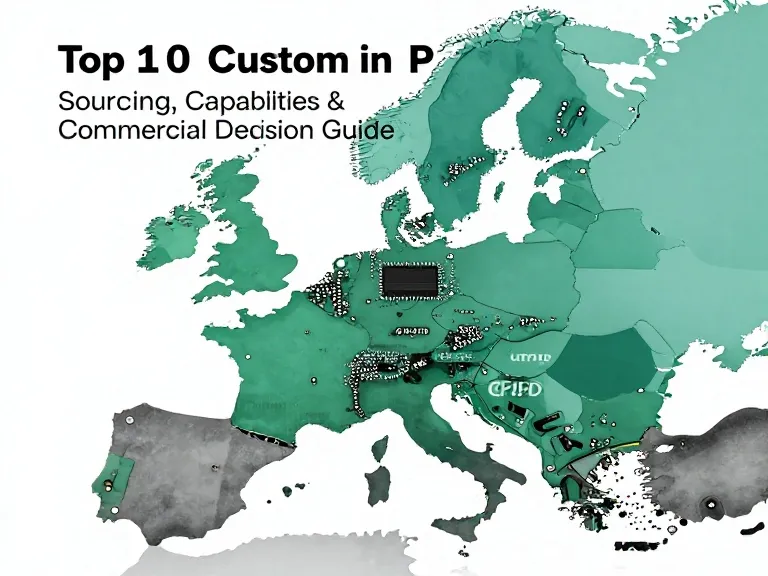
Quick Answer: The Reality of Custom PCB in Europe
For low-volume prototypes, aerospace compliance, and rapid 24-hour to 48-hour turns within Schengen borders, established domestic European manufacturers like Eurocircuits, Würth Elektronik, AT&S, and NCAB Group represent the benchmark for quality and regulatory compliance. However, for complex builds exceeding 16 layers, specialized substrates, high-volume commercial scaling, or advanced semiconductor validation hardware, local European quotes often run 300% to 500% higher than offshore facilities. In most professional situations, modern hardware enterprises adopt a hybrid sourcing framework: execute rapid design iteration and initial board spin verification locally, then transition directly to high-capacity, specialized manufacturing partners like 365Pcb to protect product profit margins without compromising technical quality.
Article Directory
The European PCB Landscape: Technical Capacities & Market Dynamics
The manufacturing sector for custom pcb in europe has undergone dramatic consolidation over the past two decades. Environmental regulations under EU RoHS, REACH, and strict wastewater handling directives have reshaped chemical processing plants across the continent. At the same time, shifting global supply chains have forced European board houses to move away from low-margin, high-volume consumer boards and concentrate on high-mix, low-volume (HMLV) specialized products.
Today, European fabrication centers on three pillars: automotive electronics, industrial robotics, and aerospace and defense. When sourcing a custom pcb in europe, you are primarily purchasing engineering oversight, comprehensive traceability, and compliance with European quality standards (IPC Class 3 and ISO 13485). The engineering workforce is highly skilled, and Design for Manufacturing (DFM) verification protocols are thorough.
However, this focus on low-volume, high-mix runs creates challenges for commercial hardware developers. Domestic raw material stock is often limited to standard FR-4 and selected polyimide laminates. If your schematic demands specialized high-frequency substrates, high glass transition materials like a 170TG PCB or 180TG PCB, or specialized High-speed PCB materials, European fabricators often face long lead times to import the raw cores. Sourcing a custom pcb in europe requires matching your design complexity to the factory's real internal capabilities.
Quick Summary: Top 10 Custom PCB Suppliers in Europe
| Manufacturer | Headquarters | Core Technical Specialization | Typical Turnaround | Best Project Match |
|---|---|---|---|---|
| Eurocircuits | Belgium / Germany | Standard Prototypes & Small Batches (1-16 Layers) | 2 to 5 Working Days | Rapid prototyping, fast lab validation, educational builds |
| Würth Elektronik | Germany | High-End Industrial, Flex-Rigid, Power Electronics | 5 to 15 Working Days | Automotive sub-systems, medical hardware, industrial automation |
| AT&S (Austria Technologie & Systemtechnik) | Austria | High-Density Interconnect (HDI), IC Substrates | Medium to Long (Production Scale) | Enterprise mobile, microelectronics, advanced computing |
| NCAB Group | Sweden | Full-Spectrum PCB Brokerage & Technical Management | Varies by Factory Route | OEM supply chains requiring local account oversight |
| Schweizer Electronic | Germany | Power PCB, Embedding Technology, Heavy Copper | 10 to 20 Working Days | Electric vehicle powertrains, high-voltage industrial inverters |
| Aspocomp | Finland | Quick-Turn High-Tech, Semiconductor Testing | 3 to 7 Working Days | Telecom base stations, satellite avionics, semiconductor test fixtures |
| Elvia PCB Group | France | Aerospace, Military Defense, High-Reliability Rigid | 10 to 25 Working Days | Defense aviation, space payloads, extreme-environment rail |
| KSG Group | Germany / Austria | Automotive High-Frequency, RF & Microwave Boards | 7 to 15 Working Days | Radar sensors, commercial automotive telemetry, RF communications |
| Cirende Electronics (Cire Group) | France | Specialty Rigid-Flex, Polyimide, Space Programs | 10 to 20 Working Days | High-rel defense avionics, downhole exploration sensors |
| Labcircuits | Spain | High-Spec Quick-Turn, HDI Microvias, PTFE | 4 to 10 Working Days | Southern European research labs, high-frequency prototypes |
In-Depth Review: The Top 10 Custom PCB Fabricators in Europe
1. Eurocircuits (Belgium / Germany / Hungary)
Eurocircuits is one of Europe's most widely used prototyping and small-series board builders. They operate automated fabrication and assembly facilities in Germany and Hungary, supported by an advanced online visualization engine that highlights DFM clearance issues in real time.
In our testing, their online design verification tools are among the best in the industry, catching solder mask bridges, acute trace angles, and drill-to-copper violations before orders hit the floor. For engineers developing standard four-layer to eight-layer prototypes, Eurocircuits delivers reliable quality and fast delivery. However, their pricing model is built around standardized material pools. If your design requires non-standard layer stackups, custom core thicknesses, or advanced Semiconductor Test PCB geometries, unit costs escalate quickly.
2. Würth Elektronik Circuit Board Technology (Germany)
Würth Elektronik is the largest PCB fabricator in Germany, operating multiple specialized plants. They offer an extensive range of technologies, from standard multilayers and thick-copper power boards to complex rigid-flex and stretchable electronics.
From our experience evaluating industrial boards, Würth Elektronik delivers exceptional quality. Their field application engineers (FAEs) provide excellent technical design support, helping teams troubleshoot thermal management and signal integrity challenges early. The limitation lies in production lead times and volume pricing. While outstanding for mission-critical industrial hardware, they are often cost-prohibitive for consumer electronics startups working with tight capital constraints.
3. AT&S (Austria Technologie & Systemtechnik AG)
AT&S is Europe's premier global-scale PCB manufacturer. Headquartered in Leoben, Austria, with advanced manufacturing plants in Austria, India, and China, AT&S is a major player in micro-scale interconnect technology, high-density interconnect (HDI), and advanced IC Substrate PCB production.
If your project involves cutting-edge microelectronics, advanced system-in-package modules like SiP PCB, or packaging such as FC-CSP PCB, AT&S possesses cleanroom fabrication capabilities that few Western competitors can match. That said, AT&S focuses primarily on multinational enterprise contracts and tier-1 automotive accounts. They are rarely accessible or practical for early-stage prototype runs or low-volume SME commercial orders.
4. NCAB Group (Sweden / Pan-European)
NCAB Group operates differently from traditional fabrication shops. Headquartered in Sweden, NCAB functions as an integrated PCB supplier and management house. Rather than relying solely on local European factory floors, NCAB manages a verified global network of partner factories, supported by in-house quality engineers stationed directly at manufacturing sites.
For mid-sized European companies that want local European customer service combined with cost-effective offshore production, NCAB provides a well-managed bridge. Their engineers review your Gerber packages and run strict quality audits to minimize production defects. However, because they operate as a technical broker, you pay an added margin layer compared to working directly with dedicated factories.
5. Schweizer Electronic AG (Germany)
Schweizer Electronic is a historic German manufacturer that has pioneered automotive and power electronics since 1849. Today, they lead the market in embedding active and passive components directly inside the PCB core, as well as heavy copper substrates designed for electric vehicle inverters.
In heavy-duty power applications, Schweizer’s heavy-copper systems manage thermal heat dissipation and high current density with remarkable stability. We recommend Schweizer for tier-1 automotive suppliers and heavy industrial power systems. For general-purpose IoT, digital communications, or light consumer products, their specialized processes add unnecessary cost.
6. Aspocomp Group (Finland)
Operating out of Oulu, Finland, Aspocomp specializes in high-complexity quick-turn boards and specialized applications. They are an established partner for telecommunications infrastructure developers, satellite avionics teams, and semiconductor R&D testing facilities.
Aspocomp excels at complex mechanical requirements: backdrilled through-holes, tight impedance controls, blind microvias, and specialized test structures like a Load Board PCB or Probe Card PCB. Their turnaround speed inside Europe is impressive, with complex 24-layer prototypes shipping in under a week. However, these express turnarounds come with premium pricing that requires substantial development budgets.
7. Elvia PCB Group (France)
Elvia PCB is the largest French printed circuit board manufacturer, serving the aerospace, military defense, space, and rail transportation sectors. They hold rigorous aerospace quality accreditations, including EN 9100, NADCAP, and European Space Agency (ESA) approvals.
If your hardware must fly on an ESA rocket, integrate into a commercial airliner cockpit, or meet strict European defense sovereignty rules, Elvia is an established choice. Their facilities produce rugged multilayers, flex-rigid arrays, and metal-backed thermal planes designed for harsh environments. For standard commercial products, however, their military-grade paperwork and certification overhead create unnecessary cost and friction.
8. KSG Group (Germany / Austria)
KSG Group operates modern manufacturing plants in Gornsdorf, Germany, and Gars am Kamp, Austria. They specialize in high-frequency radar boards, driver assistance electronics, and high-current industrial circuits.
KSG has invested heavily in optical inspection, automated plating, and cleanroom lamination technology, making them a strong European partner for 77 GHz automotive radar boards and complex RF designs. They offer reliable technical performance for mid-volume industrial programs, though their lead times can stretch during peak automotive production seasons.
9. Cirende Electronics / Cire Group (France)
Part of the broader French Cire Group, Cirende focuses on high-reliability, quick-turn prototypes and small production batches for defense, medical, and aerospace applications. They are recognized for their work with polyimide flexible circuits and rigid-flex integration.
Cirende handles demanding flexible designs, including multi-tier FPC PCB arrays and complex Flexible PCB interconnects that must survive continuous mechanical movement in avionics systems. Their technical execution is clean, but scaling beyond small European pilot batches usually requires shifting production elsewhere.
10. Labcircuits (Spain)
Based near Barcelona, Spain, Labcircuits has manufactured high-tech printed circuits since 1972. They operate a modern 4,000-square-meter facility dedicated to quick-turn prototypes and small-to-medium series production.
Labcircuits supports laser-drilled blind and buried microvias, stacked vias, high-layer-count backplanes, and specialized Rogers/Teflon substrates. For Southern European engineering firms and academic research centers, they offer responsive local technical support. However, for large-scale production exceeding hundreds of panels per month, their capacity constraints lead many clients to seek offshore volume partners.
The Commercial Alternative: 365Pcb Turnkey Fabrication
While European fabrication shops deliver local geographic convenience, high unit prices and capacity bottlenecks often slow down commercial development. Sourcing a custom pcb in europe for initial prototypes is helpful, but hardware companies scaling to pilot builds and volume production face high European manufacturing markups that compress product margins.
365Pcb delivers a reliable, cost-effective alternative. Backed by advanced industrial manufacturing plants, automated laser direct imaging, multi-opening vacuum lamination presses, and high-precision CNC drill rooms, 365Pcb bridges rapid turnarounds with high-volume scaling. Whether you need standard 2 Layer PCB validation runs, high-temperature High TG PCB stackups, or high-reliability Burn in Board PCB platforms, 365Pcb executes end-to-end fabrication with expert DFM verification, flying-probe electrical testing, and rapid global delivery.
| Layer Range | 1 to 64+ Layers (Rigid, Flex, Rigid-Flex, HDI Any-Layer) |
| Specialized Substrates | Rogers, PTFE, Polyimide, Megtron 6, Shengyi S1000-2M (High TG) |
| Quality Verifications | 100% AOI, Automated Optical Metrology, Flying Probe, E-Test |
| Prototyping Lead Time | Express 24h to 72h rapid-ship fabrication |
Sourcing Recommendation: Review our comprehensive PCB Prototype Service or request an immediate project estimate through the PCB Instant Quote portal to evaluate real production savings.
Direct Technical & Operational Comparison Table
| Manufacturer | Maximum Layer Count | Minimum Trace / Space | Specialized Technology Focus | Pricing Profile | Best Project Match |
|---|---|---|---|---|---|
| Eurocircuits | 16 Layers | 90 / 90 μm | Pooled Standard Prototypes & Quick SMT | Moderate to High | Early engineering validation & lab tests |
| Würth Elektronik | 32+ Layers | 50 / 50 μm | Flex-Rigid, Heavy Copper, Industrial Systems | High | Mission-critical automotive & industrial |
| AT&S | 40+ Layers (Any-Layer) | 25 / 25 μm | Advanced HDI, IC Substrates, Core Packaging | Very High | Tier-1 consumer electronics & telecom |
| NCAB Group | 30+ Layers | 50 / 50 μm | Managed Global Supply Chain, Broad Range | Moderate | Mid-market European OEMs |
| Schweizer Electronic | 24 Layers | 75 / 75 μm | Component Embedding, Heavy Power Planes | High | EV power electronics & motor inverters |
| Aspocomp | 32 Layers | 40 / 40 μm | Quick-Turn High-Tech & Backdrilled Test Fixtures | Very High | Semiconductor testing & satellite avionics |
| Elvia PCB Group | 28 Layers | 65 / 65 μm | Aerospace, Military Defense (ESA/NADCAP) | Very High | Aviation, defense weapons systems, space |
| KSG Group | 24 Layers | 60 / 60 μm | Automotive Radar (77GHz), RF Multilayers | Moderate to High | Automotive safety sensors & RF modules |
| 365Pcb (Turnkey Alternative) | 64+ Layers | 35 / 35 μm | High-Layer HDI, High TG, Semiconductor Test | Economical (Direct Factory) | Commercial prototypes, scaling & volume runs |
Pros and Cons of Sourcing Custom PCB in Europe
| Sourcing Approach | Commercial & Technical Pros | Supply Chain Risks & Drawbacks |
|---|---|---|
| Local European Custom PCB Fabricators |
|
|
| Integrated Turnkey Sourcing (e.g., 365Pcb) |
|
|
Decision Framework: Who Needs European Fabrication vs. Global Sourcing
Every electronics development program operates with different budgets, compliance rules, and delivery schedules. Choosing where to manufacture your printed circuits should be a strategic decision based on risk and return on investment.
Who Must Source Custom PCB in Europe:
Defense and Classified Aerospace Contractors: If your project falls under national defense security directives or requires strict on-soil supply chain traceability, you cannot export Gerber files to commercial overseas plants. Certified European facilities like Elvia or Cirende are mandatory.
High-Stakes European Medical Device Startups: Early-stage Class III implantable devices undergoing initial notified body audits often benefit from local European factory audits to simplify regulatory oversight.
Emergency Bench Debugging Teams: If your firmware engineers are sitting idle in a lab and need a revised four-layer test coupon within 24 hours to meet a funding deadline, paying European express courier premiums is worth the speed.
Who Should Switch to Global Turnkey Partners (365Pcb):
Commercial Product Scale-Ups: Once your engineering design is validated, paying European production premiums severely erodes your gross margin. Switching to 365Pcb provides the unit economics needed to price consumer and industrial hardware competitively.
Advanced Semiconductor and Silicon Test Engineers: Hardware requiring specialized testing architecture—such as high-layer silicon validation boards, Interposer PCB modules, and automated test fixtures—demands specialized drilling and plating lines that mass-scale global plants execute with higher yields.
Multi-Technology Hardware Developers: If your roadmap integrates diverse designs—including high-layer rigid motherboards, flex-rigid interfaces, and high-frequency communication modules—managing one consolidated manufacturing partner is far more efficient than balancing several fragmented regional vendors.
Costly Sourcing Mistakes Hardware Teams Make
Field Failure Warning: The costliest mistake hardware teams make is assuming that sourcing locally guarantees high-volume production pricing. Engineering teams frequently build prototypes with boutique European fabricators, only to discover that the factory cannot scale to production volume, forcing a disruptive mid-program redesign.
Over-Specifying Tolerances for Basic Digital Circuits: Designers often specify 75-micron trace and space clearances or tight annular rings on boards that don't need them. Sourcing these tight tolerances from European board houses drives up pricing unnecessarily. Keep tolerances relaxed where high routing density is not required.
Ignoring Local Base Laminate Availability: Sourcing an exotic low-loss microwave substrate from a European fabricator can result in six-week delays simply waiting for core delivery. High-capacity global board houses maintain massive raw material stocks of specialized laminates on-site.
Failing to Account for Solder Mask Finish and Color Premiums: European fabricators run shared production panels using standard green solder mask. Requesting custom matte black, blue, or white solder mask on small runs often incurs expensive changeover surcharges and lead-time delays.
Overlooking Design for Manufacturing (DFM) Feedback: When a board house's automated tool warns of an acute acid trap or an undersized drill pad, don't just override it to push the order through. Take the time to fix the layout in your CAD tool; ignoring fabrication warnings is the fastest way to cause board failures in production.
Essential Sourcing Considerations for Custom PCB in Europe
When shortlisting suppliers for a custom pcb in europe, structure your evaluation around four core commercial dimensions:
1. Base Laminate Provenance and Verification
Demand documented material verification for every production lot. Low-grade base laminates suffer from micro-delamination and variable dielectric constants ($D_k$) that disrupt high-frequency signals. Verify that your fabricator sources from certified laminate producers such as Isola, Rogers, Panasonic, or Shengyi, and confirm Tg and Td ratings match your assembly reflow profiles.
2. Traceability and Quality Assurance Records
Ensure the board house supplies complete testing records: automated optical inspection reports, micro-section analysis, solderability verification, and flying probe continuity logs. For safety-critical boards, verify that the shop maintains traceable lot records for all chemical baths and base materials.
3. Real In-House Production vs. Broker Arbitrage
Clarify whether the supplier will manufacture your boards in their own local European plant or outsource the order to a third-party partner. Many regional vendors operate front offices in Europe while quietly subcontracting high-layer builds overseas, adding an unnecessary broker markup to your invoice.
4. Total Landed Cost Analysis
Evaluate your total landed costs accurately: unit price, shipping, local tariffs, and testing fees. While European shops save on customs paperwork, their baseline unit prices are often high enough that working with a direct global partner like 365Pcb still delivers significant net savings, even after international air freight.
Expert Sourcing Recommendations
From decades of hands-on electronics manufacturing experience, we recommend following a two-phase sourcing strategy:
Phase 1 (Proof-of-Concept & Bench Bring-Up): Use European quick-turn specialists for your initial revision-A spin. Fast delivery within Schengen borders and shared time zones make it easier to debug firmware and validate circuit design quickly.
Phase 2 (Design Validation, Pilot Runs & Commercial Scale): Once your schematic is verified, transition your manufacturing to 365Pcb. Our automated facilities, deep raw material inventory, and competitive production pricing protect your margins as your product scales from pilot runs to volume delivery.
Frequently Asked Questions
European PCB fabricators carry higher operational costs driven by strict environmental chemical compliance, elevated electrical energy rates, mandatory carbon emission reporting, and high skilled-labor wages. In exchange, European board houses offer zero customs friction inside the EU, full compliance with aerospace/defense directives, and immediate time-zone engineering support.
Choose a local European custom PCB manufacturer when your design requires ITAR-equivalent defense clearances, strict European data sovereignty, ultra-urgent 24-hour delivery inside Schengen borders, or small physical runs where logistics tariffs outweigh unit fabrication savings. For high-density multi-layer scaling, specialized semiconductor test boards, or commercial scaling, offshore turnkey partners deliver superior economies of scale.
European printed circuit board production is governed by IPC standards including IPC-A-600 for board acceptability, IPC-6012 for rigid qualification, and IPC-6013 for flexible circuits. Additionally, automotive programs require IATF 16949 certification, medical devices mandate ISO 13485, and environmental directives require strict RoHS and REACH chemical compliance.
Europe hosts several outstanding dedicated rapid-prototyping services that specialize in small-batch panel sharing and express turnarounds. However, true mass production of high-layer, high-volume boards has largely migrated out of the continent, with many European PCB vendors operating as brokers or hybrid assemblers who subcontract volume runs to overseas high-capacity plants.