SMT Assembly Is an Engineering System, Not a Machine Operation
In real PCBA production, SMT assembly is often misunderstood as:
· A pick-and-place process
· A machine accuracy problem
· A soldering temperature issue
From an assembly engineering perspective, this view is fundamentally flawed.
SMT PCB assembly is a tightly coupled system where solder paste behavior, component physics, thermal dynamics, and mechanical stability interact simultaneously.
SMT does not fail because one parameter is wrong.
It fails because the process window collapses.
What SMT Assembly Really Means in PCBA Engineering
From a PCBA engineering standpoint, SMT assembly is defined by:
· Solder paste volume repeatability
· Component placement stability during reflow
· Thermal profile robustness across board variants
· Interaction between solder alloy, pad design, and component metallurgy
SMT success depends on overlapping tolerances, not perfect control of a single step.
Solder Paste Printing: The Primary Yield Driver
3.1 Why Printing Dominates SMT Defects
Industry data and factory experience consistently show:
More than half of SMT defects originate at solder paste printing.
Common assembly-originated defects include:
· Insufficient solder (opens)
· Excess solder (bridging)
· Inconsistent paste volume
· Slumping and smearing
Once solder paste is misprinted, no downstream SMT process can fully recover yield.
3.2 Paste Rheology and Environmental Sensitivity
From an assembly engineering perspective, solder paste behavior is affected by:
· Temperature
· Humidity
· Open time
· Shear history
Paste that behaves well in the morning can behave differently in the afternoon.
SMT yield stability depends on environmental discipline, not just stencil design.
Stencil Engineering: Where Design Meets Reality
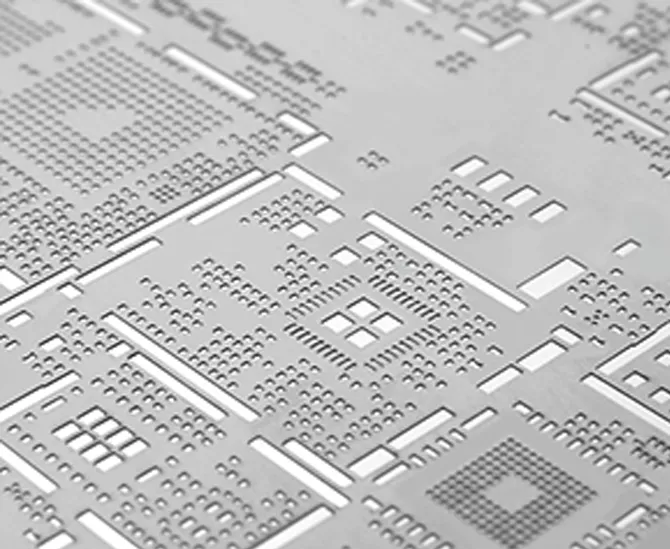
Stencil thickness, aperture shape, and release behavior define solder volume.
Assembly risks include:
· Over-reduced apertures starving joints
· Poor paste release on fine-pitch pads
· Excess solder on thermal pads
A stencil optimized for one component type may destabilize others.
Stencil design is an assembly engineering compromise, not a mathematical exercise.
Component Placement: Accuracy Does Not Equal Stability
5.1 Placement Accuracy vs Reflow Movement
Modern SMT machines place components accurately.
Yet defects still occur due to:
· Paste tack variability
· Component warpage
· Board warpage
Components that are placed correctly can shift, rotate, or float during reflow.
Assembly engineers must manage dynamic stability, not static placement.
5.2 High-Risk SMT Components
From assembly experience, the highest-risk components include:
· Fine-pitch BGAs
· Large QFNs with exposed pads
· Small passives (0201, 01005)
· Tall or heavy components
Each requires specific process tuning, not generic profiles.
Reflow Soldering: Where Latent Defects Are Created
6.1 Thermal Profiling Is About Margin, Not Peaks
Reflow soldering is not about hitting a peak temperature.
Assembly engineering must control:
· Ramp rate to prevent solder balling
· Soak uniformity to activate flux evenly
· Peak dwell to ensure wetting without damaging components
· Cooling rate to control intermetallic formation
Improper profiles cause:
· Tombstoning
· Head-in-pillow
· Excessive voiding
· Brittle joints
6.2 Thermal Mass Imbalance Across the Board
Boards with:
· Large copper pours
· Heavy components
· Uneven component density
heat unevenly.
This causes local reflow instability, even with a “correct” profile.
SMT engineers tune profiles for worst-case locations, not averages.
SMT Defects That Originate in Assembly, Not Fabrication
Pure assembly-driven SMT defects include:
· Paste drying on stencil
· Inadequate stencil cleaning
· Placement nozzle contamination
· Conveyor vibration
These defects appear randomly and are often misattributed to design.
Stable SMT requires process discipline and housekeeping, not just equipment.
Mixed Thermal Histories and Double Reflow Risk
Modern boards often undergo:
· Top-side reflow
· Bottom-side reflow
· Selective or wave soldering afterward
Each thermal cycle reduces:
· Flux effectiveness
· Joint ductility
· Component margin
Assembly engineering must plan thermal sequencing, not just individual steps.
Inspection: Detection Without Prevention
AOI and X-ray are essential but limited.
They detect:
· Missing or misaligned components
· Solder bridges
· BGA voids
They do not:
· Prevent defects
· Improve process stability
Inspection tells you what already went wrong. Assembly engineering prevents it from happening again.
SMT Rework: The Hidden Reliability Tax
SMT rework introduces:
· Additional heat cycles
· Mechanical stress
· Operator variability
Even perfect-looking rework joints often have:
· Altered intermetallic layers
· Reduced fatigue life
From a reliability perspective:
Every SMT rework consumes reliability margin.
High-quality SMT focuses on first-pass yield, not rework efficiency.
Common SMT Failure Modes from an Assembly View
Assembly-originated failures include:
· Head-in-pillow on BGAs
· Non-wetting on ENIG pads
· Tombstoning of small passives
· Intermittent opens under vibration
Most appear after functional test or in the field, not immediately.
Further reading: Testing and Inspection in PCBA Engineering Detection Limits, Process Feedback, and Reliability Validation in Electronic Assembly
Yield Loss Patterns in SMT Assembly
SMT yield loss is typically driven by:
· Printing instability
· Thermal imbalance
· Component lot variation
· Process drift over time
Yield does not collapse suddenly — it erodes gradually if not actively controlled.
Scaling SMT from Prototype to Volume Production
Prototype SMT often succeeds because:
· Engineers babysit the line
· Adjustments are made in real time
Volume production removes these safety nets.
Successful scaling requires:
· Locked parameters
· SPC monitoring
· Clear reaction plans
SMT that works in prototype often fails in mass production without engineering control.
Further reading: Prototype PCB Assembly from a PCBA Engineering Perspective Engineering Validation, Process Learning, and Risk Exposure in Early-Stage Assembly
DFA for SMT Assembly (Assembly Engineering View)
Assembly-focused DFA addresses:
· Pad size vs paste volume
· Component spacing for rework and inspection
· Orientation to minimize shadowing
· Thermal symmetry across the board
A PCB that routes well may still be SMT-hostile.
How China 365PCB Executes SMT Assembly Engineering
As a leading PCB assembly manufacturer, China 365PCB treats SMT as a controlled engineering system, not a black-box service.
Our approach includes:
· Assembly-focused design review
· Stencil and paste optimization
· Profile validation by board type
· Yield tracking and corrective action
Our objective is stable SMT yield across prototype and volume, not just boards that pass inspection.
Final Thoughts: SMT Reliability Is Engineered, Not Inspected
SMT success is not defined by:
· Machine accuracy
· AOI coverage
· Reflow peak temperature
It is defined by:
· Process window stability
· Thermal and mechanical understanding
· Engineering discipline
SMT assembly rewards control and punishes assumptions.
Assembly-Focused CTA
If your product depends on reliable surface-mount assembly across multiple builds, early SMT process engineering is essential.
Our assembly team can review design, paste strategy, and thermal risk before production begins.
David Li
David Li is the Technical Communications Director at China 365PCB, with over 15 years of hands-on experience in the PCB and electronics manufacturing industry. Holding a Master’s degree in Electrical Engineering, he has worked extensively in both R&D and manufacturing roles at leading multinational electronics firms in Shenzhen before joining our team.
His expertise spans high-speed digital design, advanced packaging (HDI, Flex), and automotive-grade reliability standards. David is passionate about bridging the gap between design intent and production reality—a philosophy that aligns perfectly with 365PCB’s mission to deliver seamless, rapid, and fully-integrated manufacturing solutions.
Follow David’s insights on PCB technology trends and best practices here on the 365PCB Knowledge Hub.
 English