In electronic circuit design, rapid prototyping and conceptual validation serve as the gatekeepers of successful hardware engineering. Long before a schematic is rendered in EDA software, and before automated assembly lines populate a single substrate, a physical proof-of-concept must be wired, tested, and iterated. The primary vehicle for this initial physical deployment is the solderless breadboard. Understanding how a breadboard functions is the absolute foundation of electronic literacy, allowing engineers, students, and firmware developers to verify component behaviors safely and dynamically without the permanence of chemical soldering.
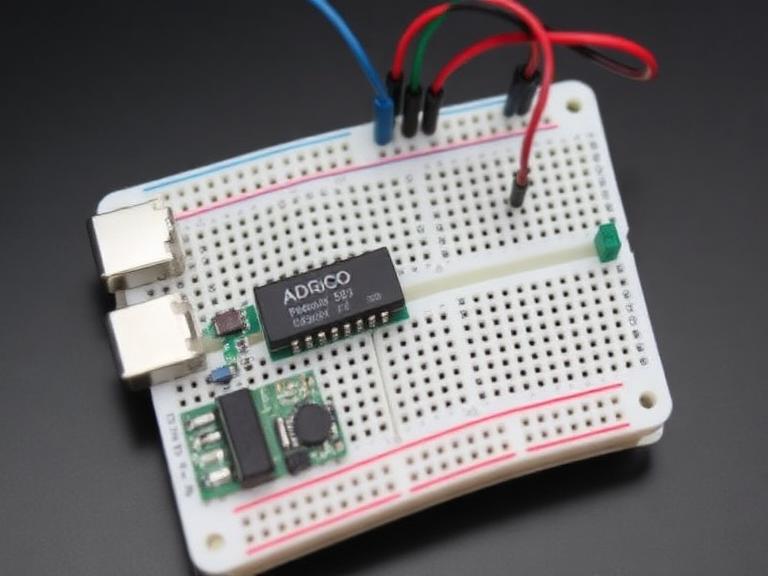
At China 365PCB, we operate as a fully self-operated, full-industry-chain manufacturing group spanning PCB fabrication, SMT assembly, online component integration, and complete turnkey OEM/ODM solutions. With over 15 years of industrial experience and a self-owned production area exceeding 100,000 square meters, we understand electrical signal integrity from the laboratory bench to mass production. From our experience, many development teams suffer from unnecessary debugging cycles during the prototyping stage simply because they misunderstand the internal mechanics, capacitive liabilities, and contact resistance limits of temporary plug-in blocks. This technical manual delivers an in-depth breakdown of what a breadboard is, how its internal grid works, and the structural limitations that dictate when a temporary prototype must transition into a permanent printed circuit board layout.
1. Technical Overview: Prototyping Systems Compared
Before analyzing the internal physical tracking of a solderless block, engineers must contrast various circuit prototyping systems. Each option segments distinct phases of the electronics design lifecycle based on mechanical security and signal speed tolerances.
| Prototyping System | Connection Type | Reusability Index | Parasitic Capacitance Risk | Maximum Target Frequency |
|---|
| Solderless Breadboard | Friction-fit Spring Clips | Infinite (Zero material damage) | High (2pF to 5pF per adjacent row) | Low (Typically under 10 MHz) |
| Stripboard / Veroboard | Through-hole Manual Solder | Low (Requires de-soldering) | Moderate | Medium (Up to 20 MHz) |
| Wire Wrap Boards | Mechanical Wire Wrapping | Moderate (Wires can be unwrapped) | Low | Medium-High (Up to 50 MHz) |
| Custom Multilayer PCBA | Automated Surface Mount / Solder | None (Permanent assembly) | Minimized via ground planes | Very High (Multi-GHz matched traces) |
2. Internal Anatomy and Electrical Topology
To use a breadboard effectively, a designer must look past the plastic outer shell and master its internal electrical connectivity. A standard full-sized unit consists of a molded plastic housing perforated with hundreds of small holes spaced at a standardized grid pitch of 0.1 inches (2.54mm). This exact spacing is non-accidental; it matches the pin pitch of traditional dual in-line package (DIP) integrated circuits, transistors, and header pins.
Beneath the plastic holes lie rows of hidden metal clips, usually stamped from a highly elastic copper alloy like phosphor bronze or nickel silver. These clips are designed to exert mechanical friction against inserted wire leads, forming a temporary gas-tight connection point. The topological layout of a breadboard splits into two separate functional zones: terminal strips and power rails.
The Terminal Strips and the Center Divider
The main body area of a breadboard is divided into two columns of five-hole rows separated by a central trench. Within each individual five-hole segment (labeled a-b-c-d-e and f-g-h-i-j), the spring clips are connected together internally by a single metal strip. This means inserting a component lead into hole A and a jumper wire into hole B places them on the exact same electrical node.
The central trench, or center divider, splits the internal columns completely. This trench matches the precise width of standard DIP integrated circuits. Placing an IC directly over the center divider ensures that the left pins are completely isolated from the right pins, preventing a short circuit and giving your terminal strips clean, independent routing space for each individual pin node.
The Power Rails
Running along the outer edges of the matrix are long vertical columns typically marked with red and blue or black lines. These are the power rails or bus strips, designed to distribute power and ground connections across the entire board. Unlike the short five-hole horizontal terminal rows, the power rails run continuously in a vertical line. From our experience, many large-format breadboards incorporate a physical break in the center of the power rail to allow for dual-voltage tracking. We recommend checking continuity with a multi-meter before powering complex test circuits to ensure your voltage lines are complete.
From Our Experience: The Contact Fatigue Factor
We recommend inspecting the mechanical insertion force of your testing blocks regularly. Solderless systems degrade over time because inserting oversized component leads—such as thick 1N5408 rectifier diodes or heavy power terminal pins—permanently stretches the internal phosphor bronze spring clips. Once a clip is bent open, it can no longer grip standard 22 AWG hookup wire securely, resulting in intermittent contact failures and frustrating signal drops that are incredibly difficult to debug.
3. Crucial Rules for Safe Breadboarding
Prototyping requires structured layout habits. A sloppy circuit layout with loose, looping wires creates an open invitation for short circuits, component destruction, and hard-to-trace signal noise.
To maximize stability and ensure reliable testing results on your bench, we recommend enforcing three foundational guidelines:
Color-Code Your Power Infrastructure: Always use red wires for positive voltage rails, black or blue wires for ground, and separate colors for signal lines. Maintaining strict color-coding standardizes your layout, allows for rapid visual audits, and drastically minimizes the risk of reverse-polarity errors when linking external power supplies.
Keep Component Leads Short and Flush: Cut component leads down using flush cutters and bend them to sit flat against the plastic chassis. Long, uninsulated resistor or capacitor legs can easily bend under touch, colliding with adjacent columns and causing a destructive short circuit.
Never Insert Wires While the Power is On: Always kill your external power supply line before changing components or moving a jumper wire. Inserting components into an active grid can introduce sudden voltage spikes, arc delicate contacts, and accidentally fry sensitive micro-controllers or digital logic arrays.
4. High-Frequency Liabilities and Stray Capacitance Physics
While the solderless breadboard remains a convenient tool for basic testing, analog filtering blocks, and low-frequency digital logic, it introduces severe physical liabilities when pushed past its intended limits.
The core issue stems from basic structural geometry. Because each five-hole metal clip runs parallel to its neighboring strip, separated by thin plastic walls, the architecture mimics a series of unintended capacitors. This layout introduces stray parasitic capacitance, typically ranging from 2pF to 5pF between adjacent rows. At low frequencies or standard audio ranges, this minor capacitance is negligible. However, once your digital signals pass a frequency threshold of 10 MHz—such as high-speed SPI buses, high-frequency PWM loops, or fast-rising clock signals—this stray capacitance turns into a low-impedance path, causing severe high-frequency signal leakage, digital wave distortion, and significant crosstalk between adjacent lines.
Furthermore, because hookup wires are unshielded and often loop loosely above the surface, they act as tiny antennae that capture ambient electromagnetic interference (EMI). If you attempt to validate high-precision analog sensors, low-noise amplifiers, or radio-frequency switching circuits on a temporary block, the ambient noise floor will cloud your data, making clean calibration nearly impossible.
5. Transitioning from Prototype to Mass Production

A temporary solderless layout is excellent for your initial firmware build and quick feature verification. However, once your schematic is finalized and passes bench validation, you must move past loose, flexible components toward custom printed circuit boards to build a durable product.
Transitioning from a prototype to a custom circuit board removes contact resistance and structural flexibility entirely. For consumer applications or high-density layouts, deploying a customized, factory-vetted Consumer Electronics PCB gives your design multi-layer shielding, solid copper ground planes to absorb stray signals, and robust surface-mount pad tracking. In high-demand environments where safety and absolute reliability are critical, engineering standards are non-negotiable. For transit systems, vehicles, and complex machine grids, using specialized Automotive PCB standards guarantees that your traces can handle extreme mechanical shocks, constant vibration loops, and wide temperature swings without trace fracturing.
For sensitive diagnostic systems or life-support medical tracking, requirements become even tighter, demanding absolute trace insulation and zero contamination tolerances. Utilizing certified Medical PCB substrates ensures full compliance with strict healthcare safety guidelines. To help developers transition their bench prototypes to commercial mass production, we provide an integrated suite of testing and validation options across our self-managed facilities:
| Wintech Validation Phase | Technical Operation Purpose | Wintech Quality Control Resource Link |
|---|
| Automated Structural Tracking | Scans copper traces for micro-shorts or pad spacing errors | PCB Actual Board Area (AOI) |
| Automated Bare-Board Checking | Verifies track isolation and net insulation before assembly | PCB Electrical Testing Service |
| Sub-Surface Solder Inspection | Uses real-time X-ray imaging to check hidden BGA joint bonds | PCB X-Ray Inspection Service |
By executing every step within our own self-owned, 100,000-square-meter facility chain, China 365PCB ensures full process traceability and fast delivery. We eliminate third-party outsourcing risks entirely, helping you move from a loose breadboard prototype to a mass-produced, market-ready electronic product efficiently.
6. Frequently Asked Questions (FAQs)
What is the exact wire gauge recommended for standard solderless breadboards?
The optimal wire size for standard solderless blocks is 22 AWG solid-core copper wire. Using thinner wire (like 26 AWG) will result in loose, unreliable connections, while using thicker wire (such as 18 AWG) or forcing thick component leads into the holes can stretch out the internal spring clips, permanently damaging their gripping force.
Why shouldn't I use a solderless breadboard for high-speed digital circuits?
Solderless units introduce considerable parasitic capacitance (2pF to 5pF per row) and lack a solid ground plane to absorb ambient noise. At operational speeds above 10 MHz, this capacitance distorts signal waves, causes digital data corruption, and can create severe crosstalk between adjacent signal tracks.
How are the holes inside the power rails connected compared to the main terminal strips?
The power rails run in continuous vertical lines along the outer edges of the board, allowing you to distribute power and ground across the layout easily. The main terminal strips are divided into short horizontal rows of five connected holes each, separated by a central trench to isolate component pins.
What is the purpose of the center divider or trench on a breadboard?
The center trench is sized to fit standard Dual In-line Package (DIP) chips perfectly. Placing an integrated circuit directly over this divider ensures that the pins on the left side are completely isolated from the pins on the right, preventing electrical shorts and giving you separate terminal rows for routing.
Can I pass high currents through a standard temporary breadboard?
No. Standard solderless blocks are rated for low-current signal testing, typically under 1 Amp. Attempting to run high current through the internal spring clips will generate significant heat due to contact resistance, which can warp or melt the protective plastic housing and create a serious short circuit.
7. Industrial Hardware and Engineering References
For more detailed technical data regarding prototyping tolerances, high-frequency design rules, and printed circuit safety standards, consult these authoritative organizations:
David Li
David Li is the Technical Communications Director at China 365PCB, with over 15 years of hands-on experience in the PCB and electronics manufacturing industry. Holding a Master’s degree in Electrical Engineering, he has worked extensively in both R&D and manufacturing roles at leading multinational electronics firms in Shenzhen before joining our team.
His expertise spans high-speed digital design, advanced packaging (HDI, Flex), and automotive-grade reliability standards. David is passionate about bridging the gap between design intent and production reality—a philosophy that aligns perfectly with 365PCB’s mission to deliver seamless, rapid, and fully-integrated manufacturing solutions.
Follow David’s insights on PCB technology trends and best practices here on the 365PCB Knowledge Hub.
 English