In the highly volatile hardware manufacturing sector, your Electronic Manufacturing Services (EMS) provider is not just a vendor; they are the physical extension of your engineering and procurement teams. Selecting the wrong partner is the fastest way to hemorrhage capital, suffer catastrophic field failures, and miss critical market launch windows. We witness original equipment manufacturers (OEMs) and hardware startups daily making the exact same error: awarding contracts based strictly on the lowest quoted unit price. This is a severe commercial misjudgment. When a provider undercuts the market, they are inevitably cutting corners on supply chain vetting, solder paste inspection, and quality assurance testing.

From our experience engineering advanced printed circuit board assemblies at China 365PCB, a successful production run requires relentless front-end interrogation. You must audit a prospective EMS provider's operational capabilities, component sourcing integrity, and scalability before transferring your Gerber files and Bill of Materials (BOM). In this practitioner-led guide, we dissect the exact Questions to Ask an EMS Provider to safeguard your intellectual property, guarantee strict IPC compliance, and ensure a seamless transition from prototype to mass production.
Quick Answer: The Core Audit Criteria
Before signing a contract, the most critical Questions to Ask an EMS Provider revolve around their structural capabilities and risk mitigation. You must ask: 1) What is your specific New Product Introduction (NPI) process? 2) How do you mitigate counterfeit components in your supply chain? 3) What level of Design for Manufacturing (DFM) feedback do you provide? 4) What mandatory testing (AOI, X-Ray, ICT) exists on your lines? 5) Can your facility scale seamlessly from prototyping to high-volume production without transferring the project to a third party? Prioritize partners who offer radical transparency, robust supply chain leverage, and in-house engineering support over those simply offering the cheapest assembly quote.
The 10 Crucial Questions to Ask an EMS Provider
In most professional situations, the responses to the following ten questions will dictate whether an EMS provider is a strategic partner or a massive operational liability.
1. How do you handle New Product Introduction (NPI)?
The NPI phase is where hardware succeeds or dies. Ask the provider how they transition a design from a conceptual prototype into a manufacturing-ready product. Do they assign a dedicated NPI project manager? They should generate comprehensive first-article inspection (FAI) reports to validate the assembly process before ramping up production.
2. What is your component sourcing and counterfeit mitigation strategy?
The global component shortage forced many brokers into the gray market. You must ask how the EMS handles incoming quality control (IQC). Do they buy strictly from authorized distributors? Do they possess in-house decapsulation and X-ray capabilities to detect counterfeit silicon? If they accept parts from unverified brokers without inspection, walk away.
3. Can you seamlessly scale from prototype to volume production?
Many shops excel at building 10 boards but collapse when you order 10,000. You need a partner capable of executing a Quick Turn PCB for your beta testers, and then utilizing the exact same engineering data to transition into High-Volume Production PCB manufacturing without requiring you to switch vendors.
4. What specific DFM (Design for Manufacturing) feedback do you provide?
An EMS should never blindly assemble a flawed design. They must offer robust PCB Design Support Services. Ask if they perform DFM and DFA (Design for Assembly) checks to identify component spacing issues, solder bridging risks, and panelization inefficiencies that will drive up your unit costs.
5. What testing and inspection protocols are mandatory on your lines?
Assembly is only half the job; verification is the other. Demand details on their inspection infrastructure. A reliable EMS must utilize PCB Actual Board Area (AOI) to catch misplaced or tombstoned components. If your board uses BGA (Ball Grid Array) or QFN packages, PCB X-Ray Inspection Service is non-negotiable to verify hidden solder joints. Furthermore, ask about their PCB Electrical Testing Service capabilities (Flying Probe or ICT) to guarantee functional integrity.
6. How do you protect Intellectual Property (IP)?
You are handing over your proprietary schematics and firmware. Ask for their Non-Disclosure Agreement (NDA) framework. Inquire about physical facility security, restricted network access to client files, and whether they partition firmware flashing stations from the general assembly floor.
7. What are your certifications for specific industries?
Not all PCBs are created equal. If you are building a Consumer Electronics PCB, standard IPC-A-610 Class 2 applies. However, if your application is mission-critical, you must ask if they hold specific certifications. For an Automotive PCB, demand IATF 16949. For a Medical PCB, ISO 13485 is required. For an Aerospace PCB, AS9100 is the absolute baseline.
8. How do you handle EOL (End of Life) and obsolescence?
Components go obsolete. An elite EMS actively monitors your BOM against global lifecycle databases. Ask how much advanced warning they provide for EOL components and if their procurement engineers actively suggest form-fit-function alternative cross-references to prevent production line-down events.
9. What is your policy on transparency and communication?
When an SMT machine goes down or a component reel is delayed in customs, how soon will you be notified? Establish communication expectations. You require a dedicated account manager who provides weekly Work-In-Progress (WIP) reports, not a generic support inbox.
10. What surface finishes and specialized boards do you support?
Your hardware may require specific metallurgical finishes based on its operating environment. Ensure the EMS is highly proficient in applying specialized finishes like ENIG, OSP, or Immersion Tin PCB plating. If your product involves high-wear edge connectors, verify their capability to produce a Hard Gold PCB with exact thickness tolerances.
What is an EMS Partnership?
Electronic Manufacturing Services (EMS) encompass companies that design, manufacture, test, distribute, and provide return/repair services for electronic components and assemblies. Engaging an EMS is fundamentally different from hiring a basic "board stuffing" shop. A true EMS partner absorbs the massive capital expenditure of buying surface mount technology (SMT) lines, reflow ovens, and optical inspection equipment, allowing OEMs to remain asset-light and focus purely on R&D and marketing.
How the EMS Onboarding Process Works
In our testing and operational execution, a successful EMS onboarding follows a rigid, staged protocol. It begins with the secure transfer of your manufacturing data package (Gerbers, ODB++, BOM, Pick-and-Place files). The EMS engineering team then executes a DFM review, flagging any footprints that do not match the physical components or via sizes that violate aspect ratios. Once resolved, the EMS procures the components, sets up the SMT stencils, and runs a First Article Inspection (FAI) build. Only after you approve the physical FAI board does the factory authorize full volume production.
Benefits of Rigorous EMS Vetting
The primary benefit of asking these uncompromising Questions to Ask an EMS Provider is catastrophic risk avoidance. By partnering with a provider that guarantees authorized sourcing and implements strict automated inspection, you drastically reduce your scrap rate and eliminate the terrifying prospect of a mass product recall. Furthermore, a top-tier EMS offers immense supply chain leverage, utilizing their massive purchasing volume to secure lower component pricing than you could achieve independently.
Limitations of Turnkey Manufacturing
We must use commercial judgment: handing total control to an EMS has limitations. The primary limitation is the loss of absolute micro-management over your component pricing. If you utilize a full turnkey service (where the EMS buys everything), they will apply a standard markup to the BOM to cover their procurement labor and carrying costs. Additionally, transitioning between different EMS providers later is notoriously difficult due to the proprietary testing fixtures and tooling created for your specific board.
Who Should Use Tier-One EMS Providers
For commercial users and heavy-duty applications: Hardware startups preparing for commercial launch, established OEMs looking to scale, and companies building high-reliability hardware must use an audited, tier-one EMS. If you are deploying an industrial automation system or an avionics module, the traceability and compliance offered by a premier EMS are legal mandates.
Who does not need it: For beginners, hobbyists, or engineers running a one-off proof of concept on a breadboard, subjecting a massive EMS to a rigorous audit is a waste of time. Basic, ultra-cheap prototype pooling services are sufficient until the product proves market viability.
Common Procurement Mistakes
The most devastating mistake we see is "ghosting the BOM." This occurs when an OEM provides an incomplete Bill of Materials without specifying approved alternate manufacturers. When the primary component inevitably goes out of stock, the EMS line halts, and shipping deadlines are missed. You must supply at least three approved alternate MPNs (Manufacturer Part Numbers) for every passive component.
Strategic Buying Considerations
When making your final decision, evaluate the provider's Minimum Order Quantity (MOQ) flexibility. A partner who forces you into a 10,000-unit commitment on day one is financially dangerous. Look for a provider who encourages a phased rollout: 50 prototypes, followed by a 500-unit pilot run, scaling up to mass volume as your sales demand dictates. Ensure their contract explicitly states that you own the testing fixtures and manufacturing data generated during the project.
Essential Comparison Tables
Quick Summary Table: Core Audit Categories| Audit Category | What to Look For | Red Flags (Walk Away) |
|---|
| Quality Control | In-line AOI, X-Ray for BGA, Flying Probe testing. | Visual inspection only; no automated testing equipment. |
| Supply Chain | Authorized distributor networks, strict IQC procedures. | Heavy reliance on unverified gray-market brokers. |
| Engineering Support | Pre-production DFM/DFA reports to optimize layout. | "Build to print" mentality with zero design feedback. |
| Scalability | In-house transition from NPI to volume production. | Outsourcing your volume runs to unknown third-party factories. |
Comparison Table: Turnkey vs. Consignment Assembly| Feature | Full Turnkey Assembly (EMS Buys Parts) | Consignment Assembly (You Buy Parts) |
|---|
| Procurement Labor | Zero. EMS handles all sourcing and logistics. | Extremely high. You manage all vendor shipments. |
| Component Pricing | Usually lower (leverages EMS volume buying power). | Usually higher (you pay retail/low-tier distribution prices). |
| Liability for Shortages | EMS is responsible for completing the BOM. | You are responsible if you under-order components. |
| Counterfeit Risk | Minimal (EMS utilizes incoming inspection labs). | High (if you buy from unverified online brokers). |
Pros and Cons of Outsourcing to an EMS| The Pros (Advantages) | The Cons (Disadvantages) |
|---|
| Eliminates the need for massive capital investment in SMT machinery. | Loss of absolute micro-control over daily production scheduling. |
| Provides immediate access to global component supply chains. | BOM markups add a percentage to your component costs. |
| Ensures IPC-compliant quality control and automated testing. | Requires rigorous initial auditing and legal contract negotiation. |
Expert Recommendation from China 365PCB
In most professional situations, the cheapest assembly quote is the most expensive mistake you can make. The cost of recalling a thousand defective units from the field vastly outweighs the few cents saved on skipping X-ray inspection. We recommend partnering exclusively with a vertically integrated EMS that prioritizes engineering integrity over race-to-the-bottom pricing.
If you are seeking a reliable, transparent manufacturing partner, China 365PCB provides uncompromising quality control and seamless scalability from prototype to volume production.
China 365PCB SMT PCB Assembly
Professional SMT PCB assembly services with advanced SMT lines and no MOQ. High-speed surface mount technology (SMT) for reliable and fast PCB assembly.
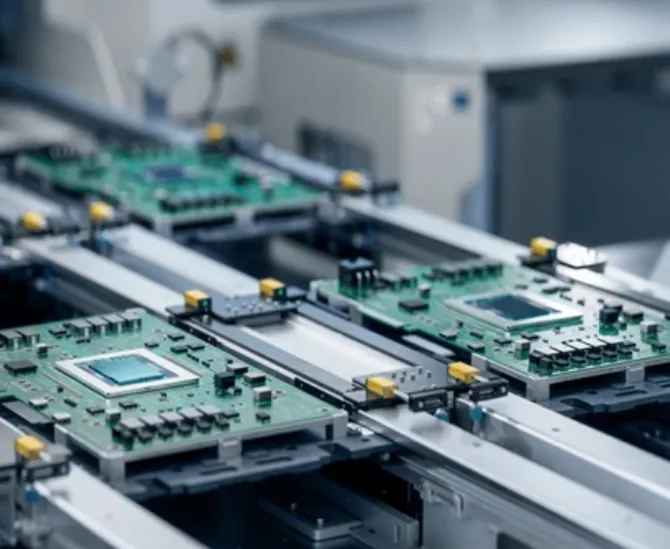
At China 365PCB, we specialize in SMT PCB assembly to deliver high-speed, high-accuracy electronic assembly solutions. With our advanced automated SMT lines, we handle everything from prototype to volume production. Whether you need 0402 chip components, fine-pitch ICs, or complex BGA packages, our SMT services ensure precision, consistency, and reliable performance.
Rigorous quality inspections to meet strict IPC standards.
Support for both lead-free (RoHS) and leaded soldering.
Full turnkey capabilities including AOI and X-Ray validation.
Explore Our SMT Assembly CapabilitiesBy asking the right questions and demanding radical transparency, you can establish a manufacturing partnership that actively drives your hardware's commercial success.
Frequently Asked Questions (FAQ)
Why is testing protocol the most critical question to ask an EMS provider?
Without rigorous testing protocols like Automated Optical Inspection (AOI), X-Ray inspection for BGA components, and in-circuit testing, manufacturing defects will ship to your customers. Discovering a short circuit in the field costs exponentially more than catching it on the assembly line.
Can an EMS provider help with component shortages?
Yes. A top-tier EMS provider has global supply chain leverage, authorized distributor networks, and incoming quality control (IQC) to detect counterfeit parts. They also provide engineering support to cross-reference alternative components when your primary BOM items go end-of-life (EOL).
What is the difference between a quick-turn prototype provider and a volume EMS?
Prototype providers focus on speed and low MOQs without optimizing for cost. A true EMS provider manages the transition from New Product Introduction (NPI) to mass production, employing Design for Manufacturing (DFM) to reduce your per-unit costs at scale.
Authoritative Industry References
To ensure your manufacturing expectations align with global engineering standards, we strongly advise consulting the following organizations:
David Li
David Li is the Technical Communications Director at China 365PCB, with over 15 years of hands-on experience in the PCB and electronics manufacturing industry. Holding a Master’s degree in Electrical Engineering, he has worked extensively in both R&D and manufacturing roles at leading multinational electronics firms in Shenzhen before joining our team.
His expertise spans high-speed digital design, advanced packaging (HDI, Flex), and automotive-grade reliability standards. David is passionate about bridging the gap between design intent and production reality—a philosophy that aligns perfectly with 365PCB’s mission to deliver seamless, rapid, and fully-integrated manufacturing solutions.
Follow David’s insights on PCB technology trends and best practices here on the 365PCB Knowledge Hub.
 English