In hardware engineering, time is your most expensive commodity. Missing a prototyping window or a product launch deadline because your circuit boards are stuck in a manufacturing queue is entirely unacceptable. From our experience, relying on standard three-week lead times is a luxury most modern agile electronics companies simply cannot afford. This is where quick turn pcb assembly steps in, serving as the critical bridge between finalized CAD designs and functional, testable hardware.
However, accelerating your manufacturing timeline is not as simple as paying an expedite fee. Rushing flawed data into a high-speed Surface Mount Technology (SMT) line guarantees you will receive boards faster—but they will be expensive, non-functional bricks. We are going to cut through the industry noise. If you want to successfully execute a rapid hardware iteration, you must understand the operational realities, the hard limitations of materials, and exactly how to prepare your data. Here is the unvarnished truth about accelerating your board builds.
Quick Answer: What is Quick Turn PCB Assembly?
Quick turn pcb assembly is an accelerated manufacturing service that compresses the standard printed circuit board fabrication and component population process from several weeks into a window of 24 hours to 5 days. It is utilized primarily for rapid prototyping, New Product Introduction (NPI), and bridging supply chain gaps. To achieve these speeds without sacrificing IPC quality standards, buyers must submit flawless Gerber data, utilize turnkey component sourcing, and partner directly with self-owned factory operations rather than third-party brokers.
What It Is and How It Works
Standard PCB assembly operates on efficiency of scale. Manufacturers batch multiple orders together to save on tooling, setup times, and oven profiles. Quick turn pcb assembly completely bypasses this traditional queue. When you pay for expedited assembly, you are buying dedicated machine time and immediate human intervention. The moment your files clear Design for Manufacturability (DFM) checks, a dedicated engineering team pushes your files to the laser plotters and drilling machines.
Simultaneously, the procurement team begins kitting your components. By the time the bare board completes its surface finish process, the Pick-and-Place machines are programmed, and the solder paste stencils are cut. It is a highly synchronized ballet of logistics. But be warned: this synchronization relies entirely on the accuracy of the data you provide.
Commercial Benefits
For commercial users, the benefits are purely financial and strategic. Securing a PCB Prototype Service in 48 hours allows your firmware team to start coding immediately. It allows hardware engineers to identify schematic flaws, iterate, and order a second revision within the same timeframe a competitor is still waiting for their first board. In the consumer electronics sector, getting to market two months early can dictate dominant market share.
Limitations and Mechanical Trade-offs
Speed dictates simplicity. You cannot demand a 24-hour turnaround on a 24-layer board with sequential lamination, blind/buried vias, and exotic Rogers materials. Advanced fabrication processes require curing times, pressing cycles, and plating baths that physically cannot be rushed by the laws of chemistry. Furthermore, quick turn pcb assembly commands a premium price—often 30% to 100% higher than standard lead times due to dedicated setup costs and express component shipping.
15 Things You Need to Know for Quick Turn PCB Assembly
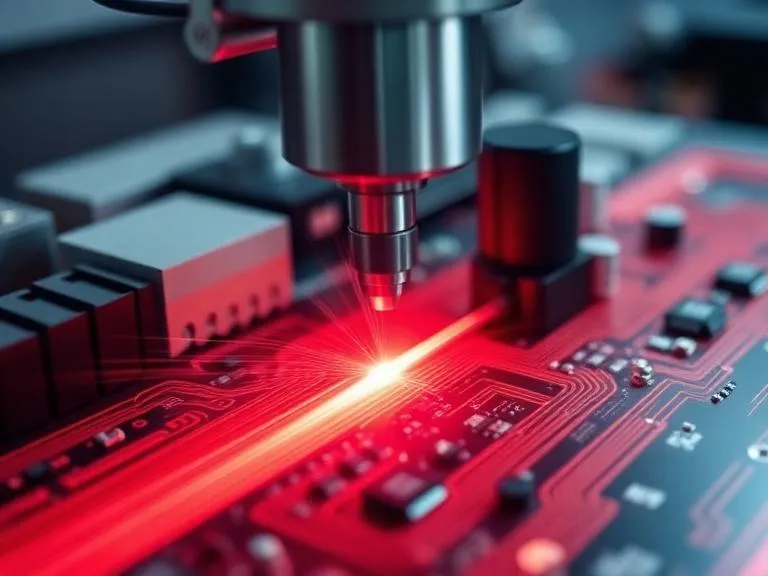
If you want your expedited order to succeed, you must adhere to these fifteen critical principles. From our experience, ignoring even one of these will result in an immediate factory hold.
A Flawless BOM is Non-Negotiable: Your Bill of Materials must include manufacturer part numbers (MPNs), reference designators, package sizes, and exact quantities. Ambiguity halts the line instantly.
Perform Your Own DFM Checks First: Do not rely on the factory to find your DRC (Design Rule Check) errors. Run your own clearances, annular rings, and trace widths before submission to avoid engineering queries.
Turnkey is Faster than Consigned: Shipping your own parts to the assembler introduces customs delays, missing attrition components, and unpredictable logistics. Use a turnkey service where the factory sources the parts directly.
Component Availability Dictates the Timeline: If you spec an obscure microcontroller with a 52-week lead time, no amount of money will speed up the assembly. Design with standard, in-stock components for rapid prototypes.
Standard Materials Win: Stick to standard FR4 PCB materials with standard Tg ratings. Exotic high-frequency laminates often require special ordering, killing your timeline.
Surface Finish Matters: HASL (Hot Air Solder Leveling) and ENIG(Electroless Nickel Immersion Gold)PCB are standard and fast. Avoid hard gold plating or OSP if you are in a rush.
Minimize Layer Count: A 4-layer or Multilayer PCB up to 8 layers can be turned rapidly. Going above 12 layers increases lamination cycles and limits expedited options.
Avoid Blind and Buried Vias: Standard through-hole vias require one drilling cycle. Blind and buried vias require sequential lamination and multiple drilling cycles, adding days to bare board fabrication. While HDI PCB designs are incredible, they are terrible for 24-hour turnarounds.
Clear Centroid Data (Pick-and-Place File): The SMT machines need exact X, Y, and rotation data. Missing centroid files mean the operator has to manually map the board, destroying your quick turn timeline.
Silkscreen Clarity: Ensure polarity markers for diodes, IC pin-1 indicators, and capacitor orientations are unambiguously visible on the silkscreen.
Limit Through-Hole Components (THT): Surface Mount Technology is automated and lightning-fast. Through-hole components often require manual insertion and wave soldering, slowing down the assembly line.
Pre-Approve Alternates: In your BOM, list acceptable alternate part numbers for passive components (resistors, capacitors). If a specific reel is out of stock, the factory can swap it without pausing production to ask for your permission.
Panelization Preferences: Let the manufacturer handle the panelization (V-scoring or mouse bites) to fit their specific SMT rails. Forcing a custom panel design can cause tooling delays.
Skip Conformal Coating for Prototypes: Conformal coating requires masking, application, and curing times. Unless the board is going straight into a harsh environment test, skip it for the initial quick turn.
Work with Direct Manufacturers, Not Brokers: Brokers add communication layers. When a DFM issue arises, the factory emails the broker, the broker emails you, you reply to the broker, and the broker replies to the factory. This game of telephone can cost you 48 hours.
Quick Summary Table: Quick Turn Assembly Benchmarks| Service Tier | Typical Turnaround | Best Used For | Cost Premium |
|---|
| Standard Production | 15 - 20 Days | Mass production, scheduled inventory | Baseline |
| Standard Quick Turn | 5 - 7 Days | Low volume production, final beta testing | Low to Moderate |
| Ultra-Fast Quick Turn | 24 - 72 Hours | Proof of concept, critical NPI, investor demos | High |
Who Should Use It & Who Does Not Need It
For commercial users and hardware startups: Quick turn pcb assembly is mandatory during the iterative design phase. If you are developing IoT devices, medical hardware, or automotive sensors, you must fail fast and iterate faster. It is also vital for bridging inventory gaps when a sudden spike in demand threatens to empty your shelves before a standard mass production run arrives.
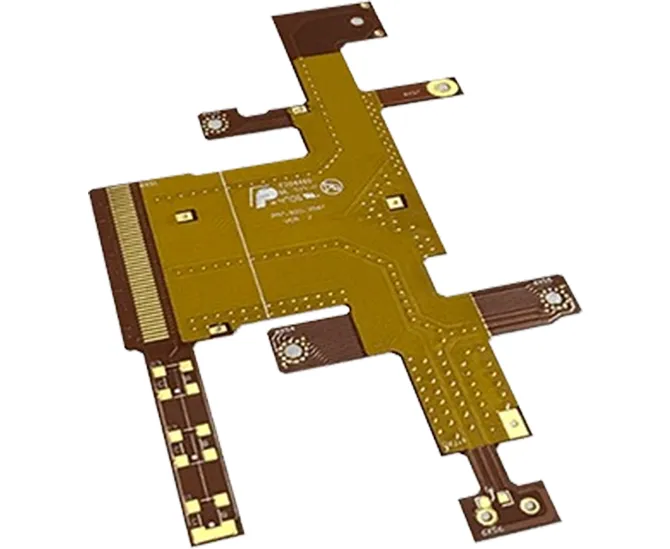
Who does not need it: If your product design is completely locked, mature, and has been selling consistently for years, you do not need quick turn services. Mass production should be planned months in advance to leverage standard lead times and drive down the per-unit cost. Furthermore, if you are building complex Rigid Flex PCB assemblies for aerospace with intense military-spec testing requirements, speed must take a back seat to rigorous compliance.
Common Mistakes
The most common mistake engineers make is submitting a zipped file without a README document or clear fabrication notes. If your board requires specific impedance control or a specific stackup, note it explicitly. Do not assume the CAM engineer will read your mind.
Another frequent error is designing with components that have zero market stock. Before you submit an order for quick turn pcb assembly, check API databases (like Octopart) to ensure the specific silicon you selected is actually sitting on a distributor's shelf ready for overnight shipping.
Pros and Cons Table: Quick Turn PCB Assembly| Pros | Cons |
|---|
| Accelerates time-to-market dramatically. | Higher financial cost per board. |
| Allows rapid identification of design flaws. | Limits material choices and complex via structures. |
| Keeps firmware and software teams unblocked. | Requires absolute perfection in submitted design files. |
| Provides functional hardware for investor pitches. | Component shortages can ruin expedited timelines. |
Buying Considerations
When selecting a partner for quick turn pcb assembly, you must look past their marketing claims. Ask for proof of their SMT line capacity. A true quick-turn facility must have dedicated prototype lines; if they are pausing a 50,000-unit mass production run to slip your 10 prototype boards in, you will face delays.
Buying Guide Table: Evaluating a PCB Assembly Partner| Evaluation Metric | What to Look For | Why It Matters |
|---|
| Facility Ownership | Self-owned and self-managed factories. | Eliminates broker communication delays; ensures direct traceability. |
| Component Sourcing | In-house procurement team with global distributor APIs. | Turnkey sourcing prevents logistical nightmares of shipping your own parts. |
| Testing Capabilities | AOI, 3D X-Ray, and Flying Probe testing on-site. | Speed means nothing if the board has hidden solder bridges under a BGA. |
Expert Recommendation
In most professional situations, the risk of using a fragmented supply chain for rapid prototyping is too high. You cannot have your bare boards made in one facility and shipped across the country to a separate assembly house if you are on a 72-hour deadline.
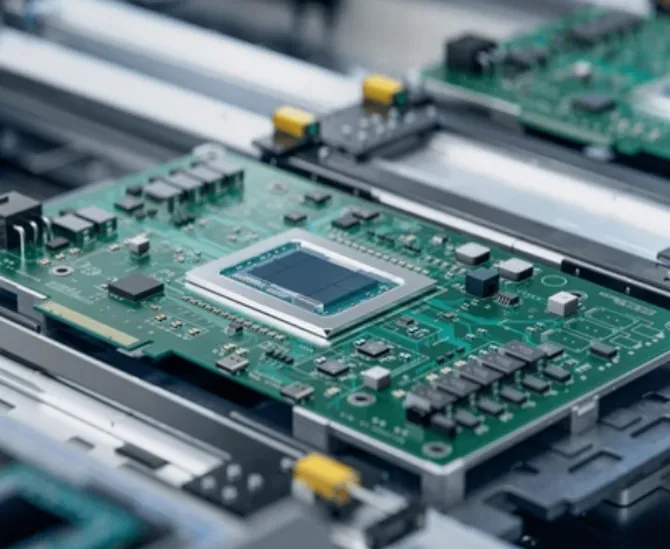
We recommend partnering with a fully integrated, self-operated electronics manufacturing group. China 365PCB integrates PCB fabrication, SMT assembly, electronic component sourcing, CNC, and OEM/ODM production support under one roof. With more than 15 years of manufacturing experience and over 100,000㎡ of self-owned production area, China 365PCB supports faster internal coordination, consistent process control, and flexible project scheduling. By keeping every step of your quick turn pcb assembly in-house, you guarantee that your hardware is delivered on time, built to exact specifications, and ready to power on.
Frequently Asked Questions (FAQ)
How fast is quick turn pcb assembly?
Quick turn pcb assembly generally refers to turnaround times ranging from 24 hours to 5 days, depending on the complexity of the board, layer count, and component availability. Bare board fabrication can take 24 hours, followed immediately by SMT placement.
Does quick turn pcb assembly sacrifice quality for speed?
In most professional situations, no. Reputable manufacturers use the same ISO and IPC certified processes for expedited runs as they do for standard production. The speed comes from prioritizing the job in the queue and using dedicated rapid-prototyping SMT lines, not from cutting corners.
Why are my quick turn assemblies delayed?
The most common causes for delays in quick turn pcb assembly are incomplete Bill of Materials (BOM), failing Design for Manufacturability (DFM) checks, unavailable components requiring alternative sourcing, or using third-party brokers instead of direct manufacturers.
Authoritative References
To ensure your designs meet international compliance and manufacturability standards, we recommend reviewing documentation from the following organizations:
David Li
David Li is the Technical Communications Director at China 365PCB, with over 15 years of hands-on experience in the PCB and electronics manufacturing industry. Holding a Master’s degree in Electrical Engineering, he has worked extensively in both R&D and manufacturing roles at leading multinational electronics firms in Shenzhen before joining our team.
His expertise spans high-speed digital design, advanced packaging (HDI, Flex), and automotive-grade reliability standards. David is passionate about bridging the gap between design intent and production reality—a philosophy that aligns perfectly with 365PCB’s mission to deliver seamless, rapid, and fully-integrated manufacturing solutions.
Follow David’s insights on PCB technology trends and best practices here on the 365PCB Knowledge Hub.
 English