English
Every expanding electronics brand, IoT hardware enterprise, and original equipment manufacturer (OEM) inevitably reaches a painful scaling threshold: market expansion demands product variety, but product variety threatens to destroy production efficiency. What began as a single, elegant flagship device quickly fragments into eight distinct commercial variants: a base model, an industrial high-temperature version, an LTE-connected cellular unit, a stripped-down budget tier, and specialized regional SKUs with unique certifications. When hardware teams treat each product variation as a completely independent engineering project, factory operations collapse into chaos. Surface Mount Technology (SMT) lines spend more time sitting idle during feeder changeovers than placing components. Purchasing departments burn cash on broken-reel component surcharges and minimum order quantity (MOQ) penalties. Meanwhile, quality teams struggle to track firmware revisions across tangled assembly drawings. Learning how to manage multiple electronic product SKUs in a unified manufacturing program is not an administrative convenience; it is a critical operational discipline that directly dictates whether an electronics company achieves healthy gross margins or suffocates under inventory carrying costs. As electronics manufacturing specialists, SMT line managers, and global component supply chain directors who inspect automated pick-and-place lines, calibrate solder paste stencils, and coordinate complex multi-level bills of materials daily at 365PCB, we see both the triumphs of modular engineering and the disasters of uncontrolled SKU sprawl. Here is our practitioner-grade blueprint on how to manage multiple electronic product SKUs within a single, scalable manufacturing program without sacrificing velocity, yield, or capital efficiency.
Quick Answer: How to Manage Multiple Electronic Product SKUs in One Program
To successfully manage multiple electronic product SKUs in a single manufacturing program, OEMs must transition from isolated product designs to a Unified Platform Architecture. This is achieved through five operational pillars: (1) BOM Harmonization & Passive Standardization (standardizing 80% of passive resistors, capacitors, and diodes onto unified internal part numbers); (2) Single-Board Variant Stuffing (DNP Strategy) (designing a single master PCB where feature tiers are enabled or disabled simply by populating or omitting components on the SMT line using one shared stencil); (3) Modular Hardware Partitioning (separating volatile connectivity like cellular, LoRa, or Wi-Fi onto standardized daughterboards to isolate expensive regional certifications); (4) SMT Feeder Setup Optimization (organizing pick-and-place feeder tables into permanent "common banks" so line changeovers between SKUs take less than five minutes); and (5) Universal Functional Test Fixtures (deploying modular bed-of-nails or automated test software that dynamically detects the hardware variant and flashes the correct firmware). Partnering with a vertically integrated electronic manufacturing services (EMS) provider like 365PCB allows OEMs to execute this consolidated strategy seamlessly under one turnkey roof.
Article Directory
What It Is: The Operational Reality of Multi-SKU Electronic Production
Quick Summary Table: Core Strategies to Manage Multiple Electronic Product SKUs
The 5 Engineering Pillars of Consolidated Multi-SKU Manufacturing
Featured Assembly Spotlight: 365PCB Full Turnkey Electronic Assembly Services
Direct Technical Comparison: Multi-SKU Production Architectures Evaluated
Pros and Cons: Consolidated Multi-SKU Manufacturing vs. Isolated Production Lines
Who Needs a Consolidated Program vs. Who Should Keep SKUs Separate
5 Costly Mistakes OEMs Make When Managing Multi-SKU Manufacturing
Essential Sourcing Checklist: Auditing an EMS Partner for Multi-SKU Agility
Expert Manufacturing Verdict: The Practical Multi-SKU Roadmap
What It Is: The Operational Reality of Multi-SKU Electronic Production
To understand how to effectively manage multiple electronic product SKUs, you must first understand the financial friction that occurs inside an electronics assembly plant. In the world of high-speed electronics manufacturing, automated SMT lines are profitable only when the placement heads are moving. A modern multi-head pick-and-place machine can place 40,000 to 80,000 components per hour. However, the moment an operator halts that line to tear down 60 tape-and-reel feeders, change out the laser-cut stainless steel solder paste stencil, recalibrate 3D automated optical inspection (AOI) parameters, and swap physical test fixtures for a completely different product variation, the factory burns expensive machine hours. When production lots drop from 5,000 units to 300 units per variant, setup downtime can exceed actual run time.
When an OEM attempts to manage multiple electronic product SKUs as isolated product silos, the supply chain breaks down across three distinct commercial friction points:
Component Purchasing Fragmentation: If SKU-A uses a 0402 10k resistor from one manufacturer, SKU-B uses an 0603 10k resistor, and SKU-C uses a slightly different tolerance from a third vendor, purchasing teams cannot consolidate buying power. Instead of purchasing million-unit full reels at factory-direct pricing, the OEM pays broken-reel repackaging surcharges and risks factory line stoppages if a single passive component goes on allocation.
Inventory Attrition and Obsolescence: Maintaining dedicated buffer stock across twelve distinct, non-interchangeable PCBAs ties up massive working capital. If a market shift suddenly softens demand for SKU-B while demand for SKU-D spikes, the OEM faces catastrophic cash flow imbalance: sitting on piles of dead, unsellable assemblies while backordering active customer shipments.
Quality and Configuration Drift: Managing independent Gerber packages, BOM revisions, pick-and-place centroids, and test scripts across multiple disparate products overwhelms configuration control. A component revision applied to fix a field failure on one board is easily forgotten on sibling boards, creating inconsistent reliability across the product family.
From our experience on the factory floor, a multi-SKU manufacturing program is not something you "figure out" after routing your printed circuit boards. It is an intentional, front-end systems engineering discipline. Successfully managing multiple variants means designing your hardware from day one so the manufacturing line perceives all your SKUs as virtually the same base product.
Quick Summary Table: Core Strategies to Manage Multiple Electronic Product SKUs
| Strategic Vector | Engineering Execution | Operational Impact on SMT Line | Supply Chain Benefit | Primary Defect / Risk Prevented |
|---|---|---|---|---|
| 1. BOM Harmonization | Consolidate passive values onto unified 0402/0603 internal library part numbers | Reduces required feeder slots; keeps common reels permanently mounted | Unlocks master-reel volume pricing and eliminates broken-tape fees | Feeder loading errors, component stock-outs, and purchasing delays |
| 2. Single-Board DNP Strategy | Design a single PCB layout with "Do Not Populate" variant stuffing options | Shares one universal solder paste stencil and one primary tooling setup | Cuts bare PCB fabrication costs via combined panel volume runs | Tooling setup fees, multiple stencil costs, and scrap during changeover |
| 3. Modular Architecture | Separate volatile radio modules and displays onto plug-in daughtercards | Isolates complex hand-soldering or high-density assembly to small sub-boards | Isolates expensive regional wireless certifications (FCC, CE, TELEC) | Complete product redesigns when connectivity ICs go end-of-life |
| 4. Common Feeder Bank Mapping | Group shared components into fixed machine slots across all product variants | Line changeovers require swapping only 5 to 10 variant-specific reels | Accelerates production throughput and slashes setup labor costs | SMT changeover downtime and feeder coordinate misalignment |
| 5. Universal Test Fixturing | Build modular bed-of-nails ICT/FCT rigs with software-driven SKU detection | Eliminates physical test-fixture swaps between production batches | Lowers initial non-recurring engineering (NRE) test fixture costs | Operator testing bottlenecks and incorrect firmware flashing |
The 5 Engineering Pillars of Consolidated Multi-SKU Manufacturing
1. BOM Harmonization & Passive Component Standardization
The single most powerful lever an OEM possesses to manage multiple electronic product SKUs is aggressive Bill of Materials (BOM) consolidation. In typical uncoordinated engineering departments, different hardware designers select components based on whatever exists in their personal CAD libraries. Designer A picks a 10k resistor in an 0402 footprint with 1% tolerance; Designer B selects a 10k resistor in an 0603 footprint; Designer C chooses a 10k resistor with 5% tolerance in an 0402 package. Multiply this across capacitors, inductors, diodes, and pull-up arrays, and an OEM with four products suddenly manages 600 unique line items when they could easily run on 150.
In most professional situations, we recommend establishing a mandatory Internal Corporate Approved Vendor List (AVL). Standardize all digital pull-ups and pull-downs onto a single, high-volume part from our catalog of Resistors Electronic Components. Standardize decoupling capacitors onto a unified 0.1uF and 10uF 0402 package across all designs. By consolidating your passives into shared commodity values across every variant, you achieve three decisive advantages:
You pool fractional purchases into full 10,000-piece reels, slashing piece-part costs by 40% to 70%.
You eliminate machine setup bottlenecks because these standard reels remain permanently mounted on the SMT feeder bank across all jobs.
You protect your supply chain from component obsolescence. If an entire product portfolio shares common building blocks from verified Passive Electronic Components & Parts stock, your inventory risk drops to near zero.
2. The Single-Board "Do Not Populate" (DNP) Stuffing Strategy
When hardware variants share 70% or more of their underlying schematic circuitry—such as a base device versus a premium model equipped with extra sensors, audio codecs, or auxiliary ports—designing separate bare printed circuit boards is an expensive mistake. The professional way to manage multiple electronic product SKUs is the Single-Board Master Layout with DNP (Do Not Populate) Variant Stuffing.
How this operates in mechanical practice:
Your engineering team routes a single, master multi-layer PCB containing all possible circuitry across the entire product family. Every trace, footprint, and mounting pad for the premium tier is present on the board.
In your CAD database (Altium, OrCAD, or KiCad), you generate separate variant BOMs linked to that identical PCB part number. For the base SKU, the auxiliary chips, extra decoupling caps, and peripheral connectors are marked as "DNP" (Do Not Populate) or "DNS" (Do Not Stuff).
When the assembly plant runs the base model, the stencil printer uses the exact same solder paste stencil as the premium model. Solder paste is printed onto all pads, but the pick-and-place machine program simply skips the DNP coordinates. The unused paste reflows harmlessly into smooth, flat solder bumps during convection reflow without shorting.
3. Modular Hardware Partitioning: Baseboards and Daughtercards
While the single-board DNP method works exceptionally well for minor feature shifts, it reaches physical and commercial limits when SKUs diverge wildly in radio frequency (RF) protocols, display interfaces, or high-cost processing silicon. If SKU-1 requires simple Bluetooth Low Energy (BLE), SKU-2 requires LTE Cat-M1 cellular, and SKU-3 requires a high-bandwidth Wi-Fi 6 transceiver, putting all three RF layouts onto a massive single board creates unmanageable board size and severe RF interference risks.
For heavy-duty applications and diverse connected devices, we recommend a Modular Baseboard + Daughtercard Architecture:
The Universal Baseboard: Houses the common power regulation (DC-DC buck converters), primary microcontrollers, main memory, sensor interfaces, and power inputs. This board represents 80% of the physical hardware, is manufactured in high volumes, and rarely requires revision changes.
The Modular Connectivity Daughtercard: Houses volatile connectivity components like specialized Antennas Electronic Components, cellular modems, or high-tier IoT Electronic Components. These plug into the baseboard via standardized, automated surface-mount board-to-board Connectors Electronic Components.
4. SMT Feeder Optimization and SMED Changeover Protocols
The greatest physical bottleneck when attempting to manage multiple electronic product SKUs is SMT feeder changeover time. If a contract manufacturer must manually unload and reload 50 component reels between SKU runs, the line can sit idle for two to three hours. To prevent this margin bleed, OEMs and EMS partners must implement Single-Minute Exchange of Die (SMED) industrial methodologies.
Advanced assembly lines organize their pick-and-place component feeders into two distinct zones:
The Common Fixed Feeder Bank (60% to 75% of slots): Contains the standardized passives, common pull-up resistors, master clock crystals, power inductors, and standard diodes shared across all SKUs. These reels are locked into permanent machine positions and are never removed between variant runs.
The Dynamic Variant Feeder Bank (25% to 40% of slots): Contains the specific active microcontrollers, specialized transceivers, and unique components from your Active Electronic Components & Parts list. These feeders are pre-loaded onto offline, mobile feeder carts while the previous job is running. When the line finishes SKU-A, operators simply roll away cart A, dock pre-staged cart B, scan barcode reels to verify alignment, and start the new program in under ten minutes.
5. Universal, Software-Configured Functional Test Fixtures
If you build six product variants, building six separate custom bed-of-nails functional test fixtures is an expensive operational trap. A custom pneumatic bed-of-nails fixture costs between $3,000 and $10,000 to design, wire, and calibrate. Multiplying that cost across multiple low-volume SKUs burns cash and clutters the factory testing floor.
To efficiently manage multiple electronic product SKUs, OEMs must invest in Universal, Reconfigurable Test Infrastructure:
Physical Test Point Standardization: Position all in-circuit test points (ICT pads) for the universal base circuitry in identical physical X/Y coordinates across all board variants.
Hardware Variant Resistor Strapping: Place a simple two-resistor voltage divider on the board connected to an analog-to-digital converter (ADC) pin on your main processor. By changing the values of these two passive resistors across your DNP assembly BOMs, the firmware reads a unique voltage rail on boot and instantly knows whether it is operating as SKU-A, SKU-B, or SKU-C.
Automated Test Script Switching: The universal test fixture boots the board, reads the hardware strapping voltage, automatically flashes the specific firmware build for that SKU, and runs the tailored test suite for populated peripherals while ignoring unpopulated DNP blocks. A single physical fixture handles the entire product family without manual operator rewiring.
Enterprise Capability Spotlight: 365PCB Professional Electronic Assembly Services
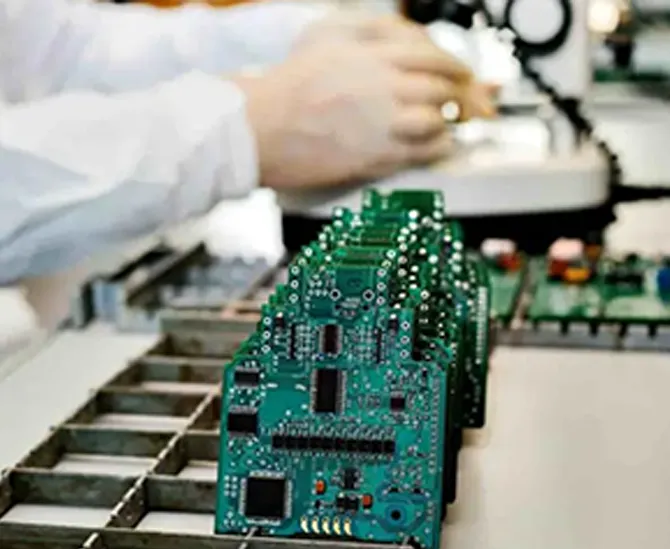
Successfully attempting to manage multiple electronic product SKUs requires an agile, vertically integrated manufacturing partner that understands high-mix, variable-volume production. China 365PCB provides comprehensive electronic assembly services, combining deep technical expertise in PCB assembly, precision cable harness manufacturing, and final box-build integration.
| Assembly Capabilities | High-speed Surface Mount Technology (SMT), automated Through-Hole (THT), mixed-technology assemblies, and complete box build |
| Component Sourcing Ecosystem | Direct factory-authorized procurement ensuring 100% genuine, traceable active and passive silicon with comprehensive counterfeit prevention |
| Inspection & Quality Control | In-line 3D Solder Paste Inspection (SPI), high-resolution 3D AOI, continuous X-ray (AXI) for BGA/QFN packages, and custom functional testing |
| Multi-SKU Production Agility | Rapid-changeover feeder cart systems, DNP master-panel handling, and unified component inventory management |
| Turnkey System Integration | From bare board fabrication to custom wire harnesses, mechanical enclosure assembly, firmware flashing, and retail packaging |
Engineering Sourcing Advice: Eliminate the friction of managing fragmented multi-SKU supply chains across multiple vendors. Partner directly with an integrated leader on the official Electronic Assembly services portal, or streamline your procurement through our specialized One-Stop Electronic Components Sourcing division.
Direct Technical Comparison: Multi-SKU Production Architectures Evaluated
| Evaluation Vector | Isolated Custom Designs (Separate Boards per SKU) | Unified Master PCB with DNP Stuffing Options | Modular Baseboard + Daughtercard Architecture |
|---|---|---|---|
| Initial Tooling & NRE Costs | Extremely High (Separate stencils, tooling, test rigs for every SKU) | Lowest (One shared stencil, one bare PCB tooling charge) | Moderate (Tooling for baseboard + small daughtercards) |
| BOM Purchasing Power | Severely Fragmented (Split across small MOQs and broken reels) | High (80%+ of passive and active components pooled together) | High (Baseboard components pooled; connectivity modularized) |
| SMT Line Changeover Speed | Slow (1 to 3 hours for complete line teardown and setup) | Instantaneous (Software program switch; zero feeder swaps) | Fast (Quick baseboard run + separate daughtercard batches) |
| Bare Board Scrap & Yield Risk | Moderate (Risk of over-ordering unpopular bare board versions) | Zero (Bare PCB stock is identical; stuffed to order) | Low (Baseboard is stable; daughtercards adapt to demand) |
| Design Complexity & Routing | Low to Medium (Simple, dedicated board outlines) | High (Requires strict DFM planning and thermal simulation) | Medium (Requires high-reliability board-to-board connectors) |
| Regulatory Certification Cost | Extreme (Every single board requires full multi-country recertification) | High to Moderate (Permissive change filings dependent on RF DNP) | Lowest (Certifications isolated entirely to plug-in radio modules) |
Pros and Cons: Consolidated Multi-SKU Manufacturing vs. Isolated Production Lines
| Operational Approach | Documented Practical Advantages (Pros) | Real-World Operational Liabilities (Cons) |
|---|---|---|
| Consolidated Multi-SKU Programs (Unified BOM, DNP Stuffing, Common Feeders) |
|
|
| Isolated Disparate PCB Designs (Unique Schematics and Layouts per SKU) |
|
|
Commercial Benefits and Inherent Engineering Limitations
Every commercial hardware decision involves physical and financial compromises. Transitioning to a unified program to manage multiple electronic product SKUs provides overwhelming economic advantages, but experienced engineers must recognize the technical boundaries of this methodology.
The Real Economic Payoffs:
Drastic Working Capital Reduction: By consolidating bare boards and common passives, an OEM reduces its physical inventory footprint by up to 50%. Instead of tying up cash in pre-assembled, finished stock for slow-moving variants, the factory keeps bare boards and reel stock ready, assembling specific SKUs in agile, just-in-time batches matching live sales orders.
Accelerated Time-to-Market for New Variants: When marketing demands a new spin-off SKU (for example, a specialized unit with expanded memory or alternative user interface displays), an OEM using a unified program does not spend six months designing a new board from scratch. By reconfiguring variant strapping resistors and populating different components from their vetted Displays Electronic Components inventory, the new product launches in weeks rather than quarters.
The Inescapable Engineering Limitations:
The "Size Penalty" on Entry-Level SKUs: When you design a single master PCB to support both a simple base model and a feature-packed premium model, the bare board dimensions are dictated by the premium model. Your entry-level model must live inside a board layout that may be 20% to 30% larger than physically necessary. For ultra-compact consumer wearables where every cubic millimeter matters, a unified DNP strategy can be physically unfeasible.
Reflow Soldering Thermal Inversion: A PCB populated with all components has a different thermal mass than a partially populated DNP version of the exact same board. When the base DNP board passes through the reflow oven, large unpopulated copper zones absorb heat differently than zones covered by plastic IC packages. If thermal profiling is not carefully calibrated using multi-channel dataloggers, the DNP board can suffer from localized overheating, while the fully populated premium board suffers from cold solder joints on heavy ground pads.
Who Needs a Consolidated Program vs. Who Should Keep SKUs Separate
Every manufacturing dollar must match your company's production volume, product physical constraints, and market lifecycle. Identifying whether you should unify your hardware to manage multiple electronic product SKUs prevents both over-engineering and operational paralysis.
OEMs That Must Implement a Consolidated Multi-SKU Program:
Industrial Automation & Smart Metering Hardware: Devices operating across multiple communication standards (RS-485, Modbus, Ethernet, wireless M-Bus) that must fit into standardized DIN-rail enclosures. A unified baseboard with modular daughtercards is the industry standard for industrial systems.
IoT Sensing & Fleet Telematics: Companies selling fleet tracking hardware where customers choose between bare-bones GPS tracking, internal IMU motion sensing, or heavy-duty external vehicle CAN-bus integration. Using a single DNP-configured PCB allows the OEM to assemble specific hardware tiers on demand.
Commercial Equipment with Global Power Variants: Products running on differing power inputs (e.g., universal 110V/220V mains versus low-voltage 24V DC industrial inputs) that share identical core processing logic. Connecting shared logic boards to specialized Batteries Electronic Components or power sub-modules keeps core assembly streamlined.
When Products Should Remain Completely Separate Designs:
Ultra-Miniaturized Wearable Medical Devices: In wearable hearing aids, continuous glucose monitors, or biometric rings, there is zero space for unpopulated pads, redundant routing layers, or daughtercard connectors. Every trace must be customized to the exact micrometer geometry of the battery and custom enclosure.
Completely Divergent Regulatory Classes: Attempting to combine an intrinsically safe, explosion-proof mining sensor (ATEX certified) with a cheap commercial indoor sensor on the same master PCB is an engineering disaster. The strict spacing, trace clearance, and potting barrier requirements of ATEX will artificially inflate the cost of your commercial product by 400%.
5 Costly Mistakes OEMs Make When Managing Multi-SKU Manufacturing
Factory Floor Warning: The "Unverified Alternate Component" Catastrophe
The single most devastating mistake we witness in multi-SKU manufacturing occurs when a procurement team attempts to solve component shortages by swapping an alternate active microcontroller across shared variant BOMs without full hardware-in-the-loop validation. An unvetted alternate IC looks pin-compatible on paper, but features slightly different internal pull-up impedance or slew rates. When loaded onto the SMT line, the alternate chip creates intermittent communication dropouts across two of your four product SKUs, forcing the recall of hundreds of finished assemblies. Always enforce rigorous qualification through dedicated Counterfeit Electronic Components Prevention and engineering validation protocols before approving component substitutions.
Treating Firmware Configurations as Disparate Codebases: Maintaining separate, disconnected firmware repositories for each hardware SKU. When a firmware bug is fixed in SKU-A, the patch is accidentally omitted in SKU-D. Advanced multi-SKU programs utilize a single unified firmware binary: the code boots, interrogates internal hardware identification strapping pins or cryptographic identity chips, detects its physical configuration, and dynamically enables or disables software feature modules.
Failing to Account for Solder Stencil Aperture Geometry on DNP Pads: Leaving standard stencil apertures wide open on pads that are marked as DNP across 90% of your production runs. Printing full solder paste volumes onto large, unpopulated ground pads creates tall, irregular solder mounds that can cause mechanical interference with overlying shielding cans or thermal gap pads. Stencil apertures on high-frequency DNP sections should be cross-hatched or reduced to deposit minimal solder.
Splitting Silicon Procurement Across Rogue Brokers: When juggling multiple variants, procurement teams often buy scarce microprocessors from unauthorized secondary brokers to prevent line shutdowns. Sourcing through unvetted channels leads directly to remarketed, pulled, or cloned silicon. Settle for nothing less than fully documented, Traceable Electronic Components backed by manufacturer Certificates of Conformance (CoC) to guarantee that your multi-SKU line never processes counterfeit chips.
Neglecting Comprehensive Component Life-Cycle Auditing: Building a unified platform around an active silicon component that is already entering its Not Recommended for New Designs (NRND) or End-of-Life (EOL) phase. Because a unified platform anchors your entire product family, a sudden component obsolescence notice on your core power controller or processor will paralyze your entire company at once. Enforce proactive lifecycle auditing through professional Electronic Parts Sourcing services.
Ignoring SMT Pallet & Panelization Mechanics: Designing individual PCB variants with different panel routing dimensions, mouse-bite breakaways, or tooling hole positions. If board variants share panelization geometry, they can run through the exact same automated de-paneling routers, wave solder pallets, and selective soldering carriers without re-tooling.
Essential Sourcing Checklist: Auditing an EMS Partner for Multi-SKU Agility
Before issuing a master production contract to any electronic manufacturing partner to manage multiple electronic product SKUs, require prospective EMS factories to prove compliance across these four non-negotiable operational benchmarks:
1. Demonstrated SMED Setup Reduction and Feeder Architecture
Audit the factory's physical SMT floor. Do their pick-and-place machines feature modular, quick-swap intelligent feeder carts, or do technicians manually unscrew individual feeder reels between jobs? An agile multi-SKU partner must demonstrate documented changeover times of under 15 minutes between variant runs, supported by barcode verification systems that physically prevent a technician from loading the wrong component reel onto an SMT feeder.
2. Traceable Procurement and Franchised Supply Chains
Demand complete transparency into where components originate. A qualified EMS partner must maintain direct accounts with authorized, franchised global distributors (Arrow, Avnet, DigiKey, Mouser, Future Electronics), supported by formal Electronic Components Procurement Service protocols. Verify that all silicon passing through their warehouse is stored in temperature- and humidity-controlled cleanrooms adhering to IPC/JEDEC J-STD-033 standards for moisture-sensitive devices (MSD).
3. Flexible Panelization and Tooling Standardization
Inspect how the EMS engineering team handles your CAD files. A high-competence partner will actively guide your layout team through Design for Manufacturability (DFM) reviews to ensure that variant boards share tooling rails, optical fiducials, and panelization layouts. This ensures that a single wave pallet or selective soldering carrier can run multiple product variants without buying custom tooling plates for each model.
4. End-to-End Box Build and Final System Integration
Managing multiple SKUs does not end when the board exits the reflow oven. Different electronic variants often require distinct cable lengths, alternative display connections, and unique enclosure labels. Ensure your manufacturing partner possesses the infrastructure to handle downstream final assembly—from wire harness fabrication to final functional burn-in testing and serialized barcode labeling. Centralizing these workflows under a dedicated Electronic Components Sourcing Service and assembly agreement eliminates multi-vendor finger-pointing and guarantees full traceability from silicon wafer to finished retail carton.
Expert Manufacturing Verdict: The Practical Multi-SKU Roadmap
In our professional assessment across decades of electronics manufacturing and global component logistics, attempting to manage multiple electronic product SKUs through isolated, one-off board designs is an obsolete business model. It drains working capital, paralyzes SMT throughput, and exposes your company to severe inventory obsolescence whenever consumer demand shifts.
Here is your definitive, field-tested implementation roadmap:
Harmonize Your Passives First: Audit your current BOMs immediately. Force your engineering team to standardize all pull-up resistors, decoupling capacitors, and standard diodes onto a single, internal approved vendor list. Eliminating passive variety allows you to buy full reels of Original Electronic Components at massive volume discounts and keeps machine feeder banks pre-loaded.
Design for Single-Board DNP Stuffing: If your product variants share core computing architectures, combine them onto a single master PCB. Use Do Not Populate (DNP) variant stuffing to build base, mid, and premium models from the exact same bare board using a single shared solder paste stencil.
Isolate High-Risk Connectivity onto Modular Daughtercards: If your products cross multiple wireless standards (cellular, satellite, Wi-Fi, BLE) or face divergent international regulatory regimes, isolate those transceivers onto modular plug-in daughtercards to protect your expensive core computing baseboard from costly recertification cycles.
Standardize Your Test Strategy: Deploy hardware variant strapping resistors so a single universal firmware binary can detect its own hardware personality on boot. Build reconfigurable functional test fixtures that adapt via software rather than spending thousands of dollars on redundant physical tooling.
Partner with a Vertically Integrated Turnkey EMS Leader: Align your hardware roadmap with a dedicated manufacturing specialist like 365PCB. Leveraging our advanced SMT lines, automated optical and X-ray inspection, modular changeover feeder carts, and direct authorized component supply chains allows your enterprise to scale diverse product families effortlessly, maintain pristine quality yields, and capture market share while competitors remain paralyzed by inventory complexity.
Frequently Asked Questions
The most cost-effective strategy to manage multiple electronic product SKUs is deploying a unified hardware platform using Do Not Populate (DNP) or variant stuffing options on a single bare PCB. This approach shares a common PCB fabrication stencil and common SMT feeder table, eliminating tooling changeover fees and allowing volume purchasing of baseline components.
Standardizing passive components (such as unifying on 0402 10k resistors and 0.1uF decoupling capacitors) across all product variants allows OEMs to pool purchasing volumes into full-reel orders. This bypasses minimum order quantity (MOQ) penalties, simplifies feeder setups on surface-mount assembly lines, and dramatically reduces inventory obsolescence risks.
A modular architecture is recommended when SKUs vary dramatically in wireless connectivity protocols (e.g., Cellular LTE vs. LoRa vs. Wi-Fi) or high-cost computing modules. By isolating regional radio certifications and expensive processing silicon onto swappable plug-in daughtercards, the OEM protects the high-volume baseboard from redundant redesigns and expensive multi-country recertifications.
The most severe mistake is managing each SKU as an isolated CAD project with unique BOM part numbers, disparate component footprints, and separate test fixtures. This creates production changeover bottlenecks, inflates setup scrap, splits purchasing power across small MOQs, and overwhelms quality engineering teams with fragmented revision tracking.