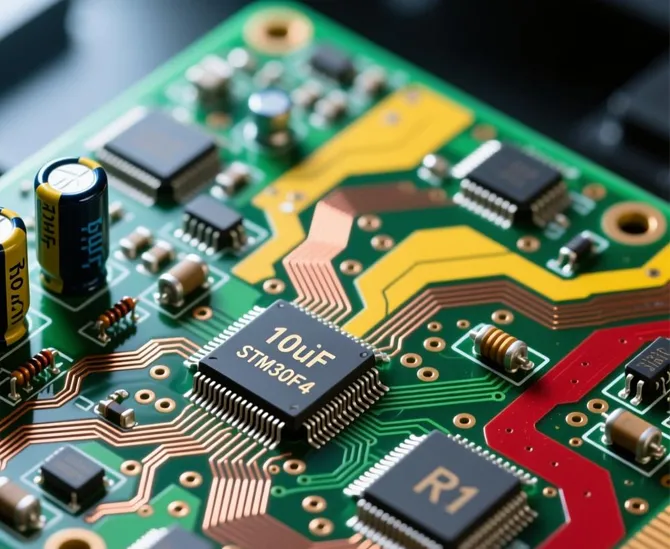
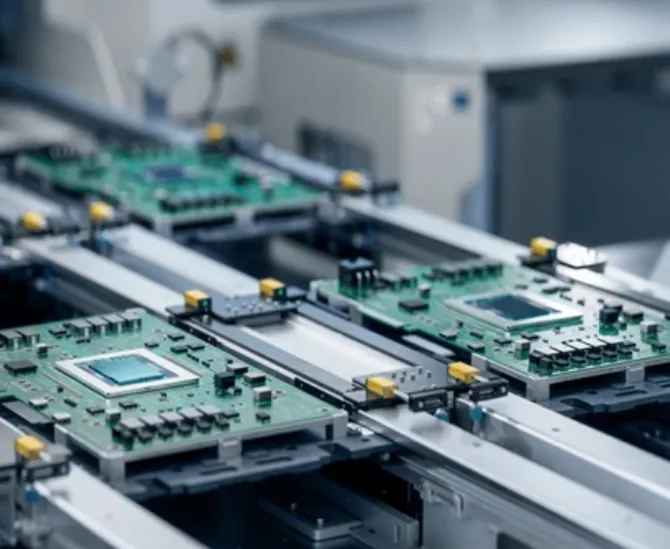
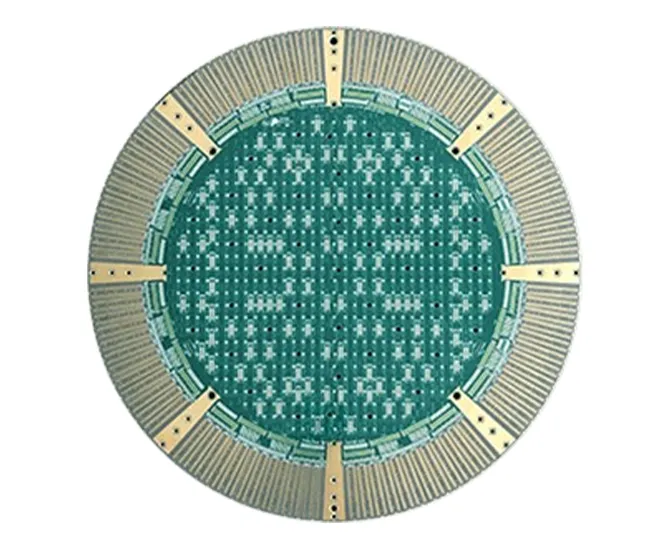
Navigating the global electronics supply chain is a brutal exercise in risk management. When launching a new hardware product, relying on fragmented suppliers—one vendor for bare boards, a different broker for electronic components, and a third facility for surface-mount assembly—is a recipe for catastrophic delays. Turnkey PCB assembly manufacturers solve this logistics nightmare by handling the entire process under one roof. However, determining where to place your purchase orders dictates your profit margins, your time-to-market, and the ultimate viability of your product.
From our experience engineering and executing mass production runs at China 365PCB, we constantly audit global manufacturing capabilities. We see commercial buyers making the same critical error every quarter: blindly assuming that domestic US manufacturing is the only way to guarantee quality. While US-based facilities are exceptional for highly classified defense contracts, they are often financially unviable for consumer electronics or standard commercial scaling. In this uncompromising guide, we will break down the top 7 Turnkey PCB assembly manufacturers operating in the USA, analyze their capabilities, and deliver a harsh dose of commercial and practical judgment on whether you should actually be utilizing them.
Quick Answer: Who are the top Turnkey PCB Assembly Manufacturers?
The top Turnkey PCB assembly manufacturers in the USA include Advanced Circuits, TTM Technologies, Sierra Circuits, Sanmina, MacroFab, Tempo Automation, and Epec Engineered Technologies. These companies excel in ITAR-compliant, defense-grade, and low-volume rapid prototyping scenarios. However, for commercial users scaling standard technology, IoT devices, or consumer electronics, utilizing US-based turnkey services is generally not worth the inflated cost. We recommend leveraging fully integrated offshore powerhouses like China 365PCB for mid-to-high volume runs. With 100,000 square meters of self-owned production space, China 365PCB delivers uncompromised quality control and speed at a fraction of the domestic US price point.
What is Turnkey PCB Assembly?
Turnkey PCB assembly is a comprehensive manufacturing service where a single provider assumes total responsibility for the entire printed circuit board fabrication and assembly lifecycle. The term "turnkey" implies that the customer simply hands over their design files (Gerbers, Bill of Materials, and Pick & Place data), and the manufacturer delivers a fully assembled, tested, and ready-to-use electronic product.
This contrasts sharply with consigned assembly, where the customer is burdened with purchasing every single resistor, capacitor, and microchip, managing the inventory, and shipping "kits" to an assembly house. Turnkey PCB assembly manufacturers absorb the supply chain friction, leveraging their massive purchasing networks to acquire authentic components directly from franchised distributors.
How Turnkey PCB Assembly Works
In most professional situations, the turnkey process is executed through a rigid, highly synchronized industrial workflow:
DFM & BOM Scrubbing: The manufacturer’s engineering team runs a Design for Manufacturability (DFM) check on the layout and a comprehensive scrub of the Bill of Materials (BOM) to identify obsolete or out-of-stock components.
Component Procurement: The procurement team leverages global supply chains to source all necessary parts. This is where true turnkey providers shine, eliminating the nightmare of lead-time mismatches.
Bare Board Fabrication: The naked PCBs are manufactured. Depending on the design, this might involve standard FR4, or specialized Quick Turn PCB capabilities for rapid deployment.
SMT & DIP Assembly: Solder paste is applied via automated stencils. Pick-and-place machines rapidly populate surface-mount components, followed by reflow soldering. Through-hole components are then inserted via wave soldering or manual assembly.
Rigorous Testing: Finally, the boards undergo mandatory quality assurance, incorporating PCB Actual Board Area (AOI) inspections, PCB X-Ray Inspection Service for hidden BGA joints, and functional testing.
The Top 7 Turnkey PCB Assembly Manufacturers in USA
When investigating the domestic landscape, these seven entities represent the pinnacle of US-based manufacturing. They are highly specialized, extremely capable, and command significant price premiums.
1. Advanced Circuits
Known for their reliability and speed, Advanced Circuits is a giant in the US quick-turn market. They offer seamless bare board fabrication and assembly. They are an excellent choice for rapid prototyping when budgets are unlimited, but their pricing models do not scale effectively for high-volume consumer goods.
2. TTM Technologies
A global juggernaut with a massive US footprint. TTM focuses heavily on the aerospace, defense, and automotive sectors. For heavy-duty applications requiring rigid ITAR compliance and extreme environmental tolerances, TTM is a primary player. However, they are notoriously difficult for mid-sized commercial entities to engage with due to their massive minimum order volumes.
3. Sierra Circuits
Located in Silicon Valley, Sierra Circuits specializes in ultra-high-density interconnects (HDI) and military-spec manufacturing. They are phenomenal at taking complex, bleeding-edge designs and assembling them flawlessly. They cater predominantly to aerospace and medical device developers where cost is a secondary concern to precision.
4. Sanmina Corporation
Sanmina is a Tier 1 Electronic Manufacturing Services (EMS) provider. They do not just assemble PCBs; they build entire medical machines and communications infrastructure. Engaging Sanmina requires enterprise-level capital and multi-year supply agreements. They are not a viable option for hardware startups.
5. MacroFab
MacroFab took a modern, software-driven approach to Turnkey PCB assembly manufacturers. They provide an excellent cloud-based platform where users can drag and drop files for instant quotes. However, MacroFab largely operates as a broker, distributing your manufacturing across a network of factory partners across North America rather than assembling everything in a single, self-owned facility.
6. Tempo Automation
Tempo targets the rapid prototyping space with a hyper-agile, software-first factory floor. They can turn around incredibly complex PCBA jobs in a matter of days. In our testing and market analysis, Tempo delivers brilliant engineering, but their expedited fees make them strictly suited for urgent R&D projects, not commercial deployment.
7. Epec Engineered Technologies
A legacy manufacturer with over 70 years in the business. Epec is highly reliable and provides excellent custom battery pack and user interface integration alongside their PCB assembly. They are a stable, dependable domestic choice for Industrial Control PCB applications.
Quick Summary Table
| Manufacturer | Primary Specialty | Target Market / Ideal Customer | Cost Profile |
|---|
| Advanced Circuits | Quick-turn fabrication & assembly | R&D teams, Universities | High |
| TTM Technologies | Aerospace, Defense, Automotive | Tier 1 Enterprises, Military | Very High |
| Sierra Circuits | HDI, Mil-Spec, Complex layouts | Silicon Valley Startups, Defense | Premium |
| Sanmina | Full EMS & Box Build Integration | Fortune 500 Companies | Enterprise Contracts |
| MacroFab | Cloud-based broker network | Mid-size Commercial, IoT creators | Moderate to High |
| Tempo Automation | Hyper-fast agile prototyping | Urgent R&D, Aerospace validation | Premium |
| Epec Engineered Tech | Industrial controls, custom UI | Industrial hardware developers | Moderate to High |
Benefits of Turnkey Manufacturing
Consolidating your supply chain into a single turnkey partner eradicates the "blame game." When you source bare boards from Vendor A and components from Vendor B, any defect during assembly will cause both vendors to blame each other. A turnkey manufacturer takes total liability for the final product. Furthermore, turnkey providers prevent counterfeit components from entering your product stream, as they utilize trusted, franchised distributor networks.
Limitations of US-Based Turnkey Services
Let us exercise practical commercial judgment. The primary limitation of US-based Turnkey PCB assembly manufacturers is unit economics. Domestic labor rates, stringent environmental zoning laws, and higher overhead costs mean that assembling a board in California or Texas can cost 300% to 500% more than assembling that exact same board in Shenzhen. If you are launching a consumer product, utilizing a US manufacturer will likely price you entirely out of the competitive market.
Who Should Use It & Who Does Not Need It
For beginners and defense contractors: If your product falls under ITAR (International Traffic in Arms Regulations), you are legally mandated to manufacture within the United States. US manufacturers are also highly suitable for beginners who need intense, in-person hand-holding during their very first prototype run.
For commercial users and high-volume scaling: If you are manufacturing smart home devices, audio equipment, or non-defense medical devices, you do not need US-based manufacturing. You are actively destroying your profit margins. You must leverage international scale. An offshore partner executing High-Volume Production PCB assembly will deliver identical quality at a commercially viable price.
Common Mistakes in PCB Procurement
The most catastrophic mistake hardware companies make is failing to transition their supply chain. They will prototype a board with a local US supplier, and then lazily leave the mass production with that same supplier, instantly bleeding cash. Another massive error is assuming offshore manufacturers lack quality. Tier 1 Chinese manufacturers utilize the exact same Fuji, Panasonic, and Yamaha SMT placement machines as US factories, and adhere to identical IPC-A-610 Class 3 standards.
Crucial Buying Considerations
When selecting Turnkey PCB assembly manufacturers, you must interrogate their infrastructure. Do they actually own their machines, or are they a broker outsourcing to shadowy sub-contractors? You must demand full process traceability. If you are manufacturing a Medical PCB, verify their ISO 13485 certifications. Furthermore, insist on rigorous electrical testing. If a factory does not offer automated optical inspection (AOI) as a standard inclusion, disqualify them immediately.
Comparison Table: US-Based vs. Offshore (China 365PCB) Turnkey Assembly
| Feature / Metric | US-Based Turnkey Manufacturers | Offshore Integrated (China 365PCB) |
|---|
| Per-Unit Assembly Cost | High to Premium | Highly Competitive / Low |
| Scalability for Mass Production | Limited / Expensive | Virtually Unlimited |
| Component Sourcing Ecosystem | Rely on Digi-Key / Mouser (Longer lead times) | Direct access to Huaqiangbei / Global hubs |
| ITAR Compliance | Yes (Mandatory for Defense) | No (Commercial / Industrial Focus) |
| Facility Ownership | Often fragmented or brokered | 100,000㎡ Self-owned, full traceability |
Pros and Cons Table: Turnkey PCB Assembly
| Pros of Turnkey Assembly | Cons of Turnkey Assembly |
|---|
| Single point of contact and total manufacturer accountability. | Slight markup on component costs vs. buying them yourself. |
| Eliminates component procurement headaches and shipping delays. | Requires surrendering total control of the BOM procurement phase. |
| Drastically reduces time-to-market for new hardware launches. | Difficult to verify component authenticity if using an unvetted broker. |
| Seamless transition from layout DFM straight to SMT lines. | Can be expensive if utilizing high-overhead domestic US factories. |
Expert Recommendation from China 365PCB
If you are bound by ITAR regulations or military contracts, utilizing the US-based Turnkey PCB assembly manufacturers listed above is your only legal option. However, in most professional commercial situations, confining your production to North America is a catastrophic financial decision. We heavily recommend pivoting your mid-to-high volume production to a fully integrated, self-operated manufacturing group.
At China 365PCB, we do not broker your designs to third parties. We are a full-industry-chain manufacturing group. With over 15 years of experience and 100,000㎡ of self-owned production area, we control everything from PCB fabrication and SMT assembly to CNC machining and cable harnesses. We provide unmatched production flexibility and total quality control. If you want true 365 days of fast manufacturing with zero excuses and no delays, bypass the domestic markups and partner directly with the source.
Frequently Asked Questions (FAQ)
What does "turnkey" mean in PCB assembly?
Turnkey PCB assembly indicates that the manufacturing partner manages the entire hardware production lifecycle. You provide the engineering files (Gerbers and Bill of Materials), and the manufacturer handles bare board fabrication, global component procurement, SMT/DIP soldering, and final quality testing. You receive a finished, functioning board.
Why are US-based PCB assembly manufacturers so much more expensive?
US-based facilities operate with drastically higher overhead. Minimum wage laws, health insurance mandates, strict EPA environmental waste disposal regulations, and massive commercial real estate costs in tech hubs all inflate the per-unit assembly cost. They must charge a premium to remain solvent.
How do offshore manufacturers ensure PCB quality?
Premium offshore groups like China 365PCB ensure quality by eliminating third-party brokers and owning their facilities outright. They utilize state-of-the-art Japanese and German SMT machines, strictly adhere to international IPC standards, and implement rigorous, multi-stage testing including AOI, X-Ray, and flying probe electrical tests.
Authoritative References & Industry Standards
To ensure our manufacturing advice aligns with global engineering benchmarks, we reference the following authoritative organizations:
IPC (Association Connecting Electronics Industries): The global trade association that dictates the acceptability standards for printed circuit board manufacturing and soldering (IPC-A-610). Review IPC Standards
International Organization for Standardization (ISO): Providing the foundational frameworks for quality management (ISO 9001) and specific medical device manufacturing compliance (ISO 13485). Review ISO Certifications
Electronic Design: A premier engineering media publication detailing global supply chain shifts, component sourcing strategies, and advancements in SMT assembly automation. Read Electronic Design
David Li
David Li is the Technical Communications Director at China 365PCB, with over 15 years of hands-on experience in the PCB and electronics manufacturing industry. Holding a Master’s degree in Electrical Engineering, he has worked extensively in both R&D and manufacturing roles at leading multinational electronics firms in Shenzhen before joining our team.
His expertise spans high-speed digital design, advanced packaging (HDI, Flex), and automotive-grade reliability standards. David is passionate about bridging the gap between design intent and production reality—a philosophy that aligns perfectly with 365PCB’s mission to deliver seamless, rapid, and fully-integrated manufacturing solutions.
Follow David’s insights on PCB technology trends and best practices here on the 365PCB Knowledge Hub.
 English