Hardware is notoriously unforgiving. You can spend thousands of hours perfecting your firmware and schematics, but if the physical execution of your product fails on the assembly line, your entire launch is compromised. The electronics industry is flooded with middlemen, brokers, and unverified assembly shops claiming to offer turnkey solutions. When your boards arrive with cold solder joints, counterfeit components, or incorrect layer stack-ups, the cost of recalling and reworking those units can bankrupt a hardware company.
From our experience managing vast production lifecycles, the decision to outsource your assembly must be executed with surgical precision. You are not just buying circuit boards; you are hiring a custodian for your brand's reputation. Finding a Reliable Electronics Manufacturing Services Provider requires tearing down the marketing facade and auditing their actual engineering capacity. In this comprehensive guide, we will strip away the generic advice and deliver a practitioner's perspective on how to vet, select, and scale with an EMS partner that will actually deliver on their promises.
Quick Answer: What Defines a Reliable Partner?
A Reliable Electronics Manufacturing Services Provider is a self-operated facility that integrates bare board fabrication, component procurement, Surface Mount Technology (SMT) assembly, and final mechanical integration under one roof. Unlike brokers who outsource your designs to the lowest bidder, a true EMS partner provides end-to-end traceability, rigorous Design for Manufacturability (DFM) checks, and scalable solutions that bridge the gap from rapid prototyping to high-volume global production.
What It Is: The True Definition of an EMS
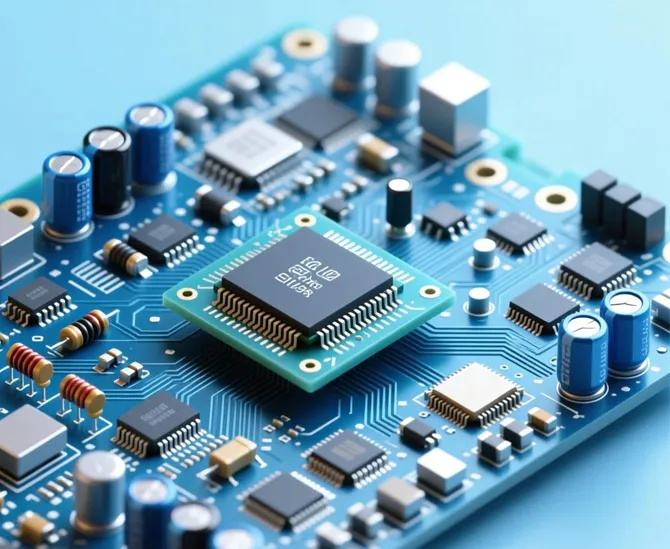
An Electronics Manufacturing Services (EMS) provider is far more than a board stuffer. A premier EMS operation acts as a seamless extension of your internal engineering team. When you submit your Gerber files and Bill of Materials (BOM), a legitimate partner assumes responsibility for the physical realization of that data.
This includes analyzing the substrate requirements. Depending on your application, they must be capable of fabricating everything from low-cost FR2 PCB materials for basic consumer goods to advanced PTFE PCB architectures for high-frequency telecommunications equipment. A Reliable Electronics Manufacturing Services Provider owns the capital-intensive SMT lines, the automated optical inspection (AOI) machines, and the 3D X-ray systems necessary to inspect hidden Ball Grid Array (BGA) joints.
How It Works: The Turnkey Manufacturing Workflow
In most professional situations, the workflow with a tier-one EMS provider is highly structured to eliminate risk. The process begins before a single component is purchased. The factory's engineering team executes a comprehensive Design for Manufacturability (DFM) audit. They look for trace width violations, inadequate thermal relief, and potential solder bridging risks. If you are lacking internal bandwidth, many top-tier facilities offer PCB Design Support Services to finalize your layout.
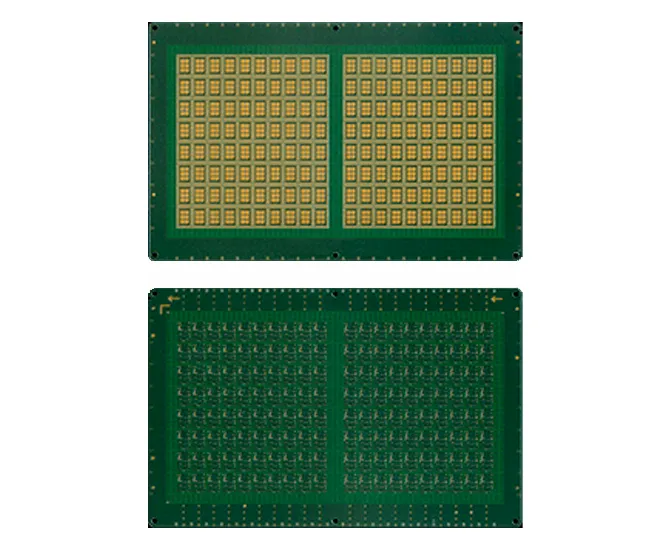
Once the design clears DFM, the supply chain team procures the components. Concurrently, bare board fabrication begins. This might involve standard architectures or complex Sequential Lamination PCB techniques for high-density interconnect (HDI) designs. Following fabrication, the correct surface finish is applied. For prototypes, a HASL(Lead-Free HASL)PCB finish is common, whereas aerospace applications might demand hard gold. The boards then move to the SMT lines where solder paste is stenciled, components are placed at breakneck speeds, and the assemblies pass through multi-zone reflow ovens.
The Commercial Benefits of a Direct Partnership
The primary benefit of utilizing a Reliable Electronics Manufacturing Services Provider is the drastic reduction in capital expenditure and time-to-market. You do not need to invest millions of dollars in pick-and-place machines or hire specialized procurement teams to battle component shortages. You leverage their established global supply chains and massive purchasing power.
Furthermore, direct manufacturers offer unparalleled agility. If you need a Quick Turn PCB to validate a design iteration before an investor presentation, a self-operated facility can expedite your run because they control the production schedule. Brokers cannot do this; they are entirely at the mercy of their third-party subcontractors.
Limitations and Supply Chain Realities
We must apply commercial and practical judgment here: working with an EMS provider is not without friction. The primary limitation is the loss of absolute, micro-level control over the factory floor. You cannot walk out of your office and physically adjust the thermal profile of the reflow oven. You are entirely dependent on their Quality Management System (QMS).
Additionally, while EMS providers are experts at scaling, their business models revolve around volume. Extremely low-volume, highly complex aerospace assemblies might incur massive Non-Recurring Engineering (NRE) fees. You must ensure their tooling costs align with your projected product lifecycle margins.
Pros and Cons: In-House Manufacturing vs. Outsourcing to an EMS| Strategy | Decisive Pros | Significant Cons |
|---|
| In-House Manufacturing | Absolute control over intellectual property and immediate physical access to the assembly line. | Massive capital expenditure, extreme overhead costs, and constant machine maintenance. |
| Outsourcing to an EMS | Infinitely scalable, rapid access to advanced machinery, and drastically reduced overhead. | Requires rigorous initial vetting; exposes you to supply chain risks if the partner is unreliable. |
Who Should Use It vs. Who Does Not Need It
For commercial users and scaling enterprises: If you are transitioning from a validated prototype into High-Volume Production PCB runs, partnering with a full-stack EMS is mandatory. Whether you are building medical devices, industrial IoT sensors, or consumer electronics, the compliance, traceability, and speed offered by a dedicated factory are non-negotiable for commercial success.
Who does not need it: For beginners, hobbyists, or engineering students soldering simple through-hole components in a garage, a full-service EMS provider is drastic overkill. You should utilize basic, pooled PCB fabrication services and hand-solder your own components until you are ready for commercial deployment.
Common Mistakes in Vendor Selection
The most catastrophic mistake hardware companies make is choosing an EMS provider based solely on the lowest initial per-board quote. In our testing and industry auditing, an abnormally low quote always indicates severe hidden compromises. The provider is likely sourcing counterfeit components from the gray market, skipping crucial flying probe tests, or using substandard solder paste that will fracture under thermal stress.
Another frequent error is ignoring the technological ceiling of the facility. You might hire a vendor to build your initial simple two-layer boards, but when your next-generation product requires a Custom PCB with micro-vias and impedance control, that same vendor will fail miserably because they lack the necessary laser drilling equipment.
Comparison Table: True Manufacturer vs. Assembly Broker| Evaluation Metric | True EMS Manufacturer | Assembly Broker (Middleman) |
|---|
| Facility Ownership | Self-owned and self-managed equipment. | Rents capacity from anonymous third-party shops. |
| Communication Speed | Direct line to CAM engineers and project managers. | Slow. Messages must pass through multiple corporate layers. |
| Traceability | Full component-level and batch-level tracking. | Inconsistent. Varies depending on which shop they subcontracted. |
| Accountability | Directly responsible for yield rates and defect resolution. | Often deflects blame to the subcontractor when issues arise. |
Strategic Buying Considerations
When you are ready to evaluate a Reliable Electronics Manufacturing Services Provider, you must ask hard, technical questions. Request their equipment list. Do they have the latest Yamaha or Fuji pick-and-place machines? Do they utilize 3D SPI (Solder Paste Inspection) before component placement?
For heavy-duty applications, such as automotive or aerospace, demand to see their ISO 9001, IATF 16949, or ISO 13485 certifications. Furthermore, evaluate their supply chain network. A robust provider maintains authorized direct relationships with major component distributors (like Digi-Key, Mouser, and Arrow) to guarantee component authenticity.
Expert Recommendation
In most professional situations, the fragmentation of your supply chain—buying bare boards from one company, sourcing parts yourself, and shipping them to a third assembly house—is a recipe for logistical disaster. When a board fails, the fabricator blames the assembler, the assembler blames the component, and you are left absorbing the financial loss. We recommend utilizing a fully integrated partner.
China 365PCB is a self-operated electronics manufacturing group integrating PCB fabrication, SMT assembly, electronic component sourcing, CNC and 3D printing, cable harness assembly, and OEM/ODM production support.
With more than 15 years of manufacturing experience and over 100,000㎡ of production area, our facilities are self-owned and self-managed. This structure supports faster internal coordination, consistent process control, production traceability, and flexible project scheduling. By keeping the entire product lifecycle under one roof, China 365PCB eliminates the friction of modern hardware development, ensuring your product is built correctly, delivered on time, and engineered to scale.
Frequently Asked Questions
What is the difference between an EMS provider and a PCB manufacturer?
A standard PCB manufacturer only fabricates the bare circuit boards. A Reliable Electronics Manufacturing Services Provider handles the entire product lifecycle, including bare board fabrication, component sourcing, SMT assembly, box-build integration, and final functional testing.
Why do my PCBA orders keep getting delayed?
In our experience, delays are almost always caused by component shortages, failed Design for Manufacturability (DFM) audits, or working with a broker instead of a direct manufacturer. Direct factories possess internal coordination to pivot immediately when supply chain bottlenecks occur.
How can I verify the quality of an EMS provider before mass production?
You must insist on a rigid prototyping phase. Evaluate their prototype speed, request a First Article Inspection (FAI) report, check their ISO certifications, and demand evidence of automated optical inspection (AOI) and 3D X-ray capabilities on their assembly lines.
Authoritative References
To ensure your manufacturing processes align with global engineering and safety standards, we recommend reviewing guidelines from the following organizations:
 English