In the highly demanding and fast-paced world of electronic manufacturing, making the right design and fabrication choices is the foundation of any successful product. When product developers, hardware engineers, and procurement managers come to us with a new bill of materials and a schematic, the first and most critical question they ask is determining which PCB board is best for their specific application. The reality of modern electronics is that there is no single universal solution. Selecting the ideal printed circuit board requires an in-depth understanding of material science, structural engineering, signal integrity, and thermal management.
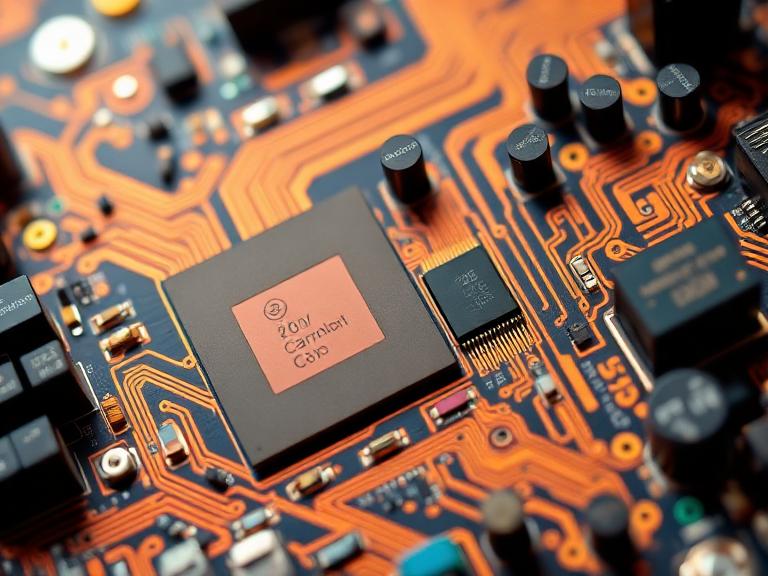
As a fully self-operated, full-industry-chain manufacturing group, China 365PCB has spent over 15 years engineering solutions that span from initial PCB fabrication and SMT assembly to online electronic component sourcing, CNC machining, and cable harness assembly. We operate over 100,000 square meters of production area, where all facilities are self-owned and self-managed. This allows us to ensure total quality control, full process traceability, and unmatched production flexibility. From our experience handling complete OEM/ODM solutions, we know that understanding which PCB board is best can save thousands of dollars in production costs and prevent catastrophic failures in the field. In this comprehensive guide, we will break down the different materials and architectures to help you decide which PCB board is best for your next innovation.
1. The Core Question: How to Determine Which PCB board is best?
To accurately answer the question of which PCB board is best, hardware engineers must evaluate the operational environment of the final product. Is the device going to be subjected to extreme temperature fluctuations in an automotive engine bay? Will it transmit high-speed 5G signals where signal loss is unacceptable? Or is it a disposable consumer gadget where unit cost is the absolute highest priority?
From our experience working with global technology leaders, we recommend approaching the selection process by categorizing your needs into two distinct pillars: material science and structural complexity. Material science dictates the dielectric constant, thermal conductivity, and flexibility of the board. Structural complexity dictates how densely you can pack components and route signals using various via technologies. By analyzing these two pillars side by side, discovering which PCB board is best becomes a calculated engineering decision rather than a guessing game.
2. Material Selection: Evaluating Base Substrates
The base material of your circuit board defines its fundamental physical and electrical properties. Let us explore the specialized materials we manufacture at China 365PCB to help you determine which PCB board is best for your thermal and electrical requirements.
2.1 Cost-Effective Consumer Electronics: FR2 PCB and CEM Series PCB
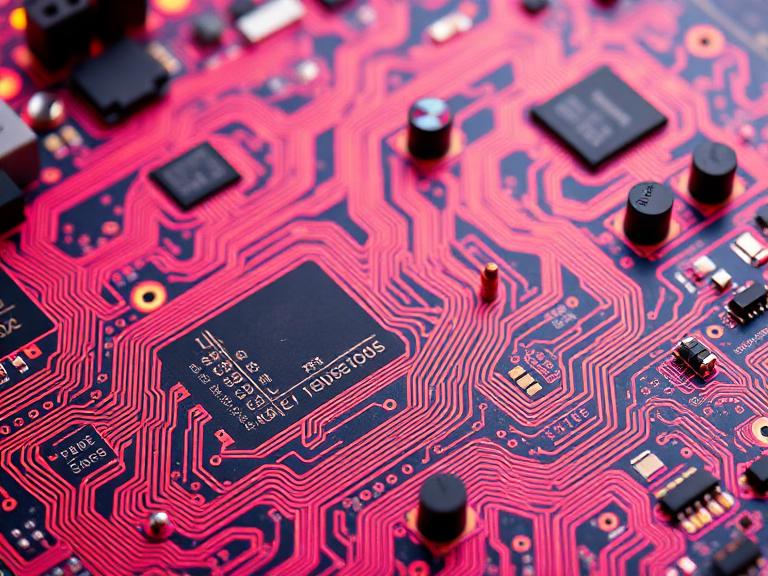
When producing low-cost, high-volume consumer electronics like basic calculators, electronic toys, or simple home appliances, budget constraints are tight. In these scenarios, an FR2 PCB board is best. FR2 is a synthetic resin bonded paper that provides adequate electrical insulation for simple single-sided boards. It is incredibly cost-effective because it can be punched rather than drilled, speeding up mass production.
If you need slightly better mechanical strength but still want to keep costs low, a CEM Series PCB board is best. CEM (Composite Epoxy Material) boards, such as CEM-1 or CEM-3, use a combination of woven glass fabric and paper core. We recommend CEM boards when you require the cost advantages of paper-based substrates but need the durability to support heavier through-hole components or double-sided routing.
2.2 High Frequency and Flexibility: Polyimide PCB and PTFE PCB
As electronic devices shrink and communication frequencies increase into the gigahertz range, standard epoxy materials suffer from excessive signal loss. For high-speed radio frequency (RF), microwave, and advanced radar systems, a PTFE PCB board is best. PTFE (Polytetrafluoroethylene), often recognized by the brand name Teflon, offers an incredibly low and stable dielectric constant. From our experience, if you are designing 5G telecommunications equipment, investing in a PTFE substrate is non-negotiable for preserving signal integrity.
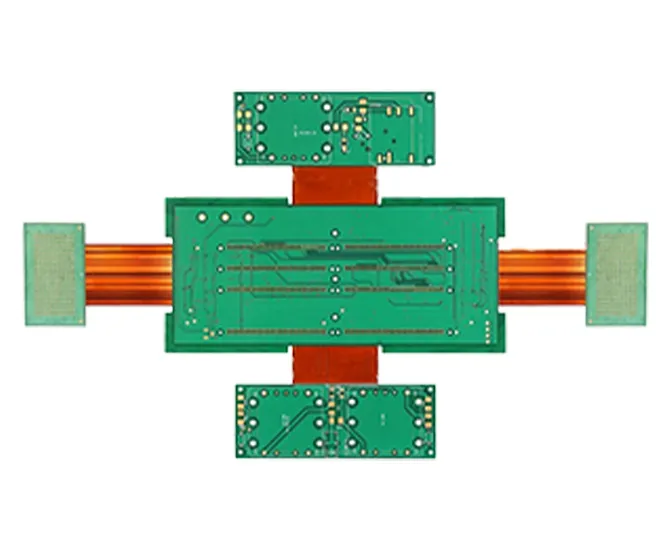
Conversely, if your design requires dynamic bending or needs to fit into tight, irregular spaces like a smartphone chassis or a wearable medical device, a Polyimide PCB board is best. Polyimide is the gold standard for flexible circuits. It withstands extreme heat during the soldering process, exhibits excellent tensile strength, and offers outstanding chemical resistance. We frequently recommend Polyimide solutions to our aerospace and medical industry clients.
2.3 Advanced Thermal Management: Ceramic PCB and Copper PCB
Heat is the enemy of electronic longevity. For high-power LED arrays, automotive power converters, and heavy motor controllers, dissipating heat rapidly is the primary engineering challenge. For these extreme high-power applications, a Copper PCB board is best. Often referred to as a metal core printed circuit board (MCPCB), a heavy copper base acts as an integrated heat sink, pulling thermal energy directly away from surface-mounted components to prevent thermal runaway.
In environments where extreme thermal conductivity must be paired with absolute high-voltage electrical isolation, a Ceramic PCB board is best. Materials like Alumina or Aluminum Nitride provide thermal expansion coefficients that closely match the silicon chips mounted on them, eliminating stress fractures during thermal cycling. From our experience, Ceramic substrates offer the ultimate reliability in harsh aerospace and high-end automotive environments.
3. Structural Complexity and Layer Architecture
Once the material is selected, the next step in deciding which PCB board is best is determining the routing architecture. How your signals travel between layers defines the size, speed, and capability of your device.
3.1 Standard vs. High Density: Through-Hole PCB and Micro Via PCB
For legacy industrial equipment, power supplies, and products that undergo heavy physical vibration, a Through-Hole PCB board is best. The mechanical bond created when a component's lead is soldered completely through the board provides unmatched physical durability. We recommend this traditional architecture when mechanical stress is a higher risk than space constraints.
However, modern smartphones and IoT devices do not have the physical real estate for large through-hole drills. For miniaturized electronics, a Micro Via PCB board is best. Micro vias are laser-drilled, tiny connections that allow for High-Density Interconnect (HDI) designs. They dramatically reduce the layer count and overall footprint of the circuit, allowing engineers to pack high-pin-count BGA (Ball Grid Array) components into incredibly tight spaces.
3.2 Space Optimization: Blind Via PCB and Buried Via PCB
When optimizing HDI designs, understanding via placement is crucial. A Blind Via PCB utilizes vias that connect an outer layer to one or more inner layers without penetrating the entire board. This frees up routing space on the opposite side of the board. Similarly, a Buried Via PCB utilizes vias that connect internal layers only, completely hidden from the outside surfaces. When asking which PCB board is best for ultra-compact, multi-layer smart devices, a combination of blind and buried vias is the definitive answer, as it maximizes routing density without increasing board size.
3.3 Server and Telecom Infrastructure: Sequential Lamination PCB and Backplane PCB
For massive data centers and telecommunication routers, structural requirements go to the extreme. A Backplane PCB board is best for these applications. Backplanes act as the central spine of a server system, characterized by high layer counts, extreme thickness, and heavy copper to handle massive current loads and support multiple plug-in daughter cards. We possess the specialized pressing equipment necessary to manufacture these complex, heavy-duty boards.
To achieve the complex blind and buried via structures required in high-end military and telecom boards, a Sequential Lamination PCB board is best. This process involves pressing, drilling, and plating individual subsets of layers before pressing them all together into a final board. From our experience, sequential lamination is a highly advanced technique that requires strict process controls, ensuring zero registration errors across dozens of layers.
4. The China 365PCB Manufacturing Advantage
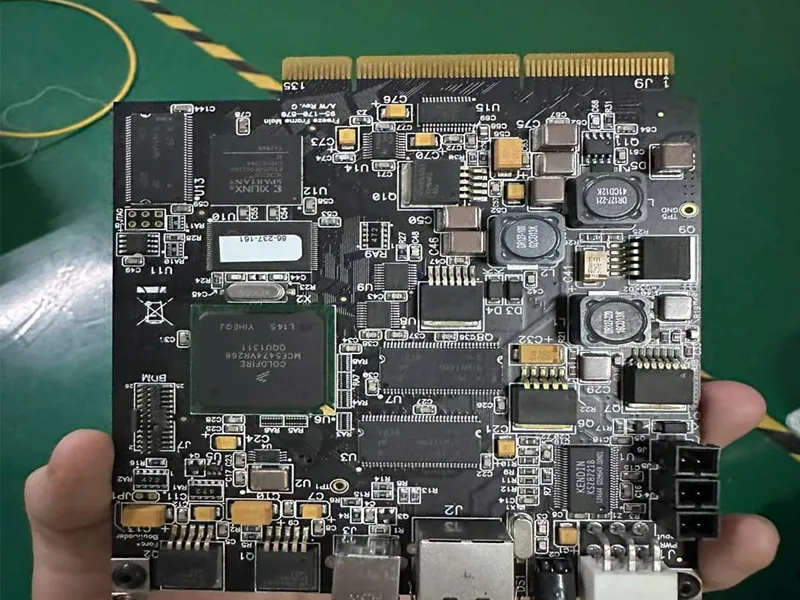
Knowing which PCB board is best is only the first part of the equation; partnering with a capable manufacturer is what brings your design to reality. At China 365PCB, our one-stop turnkey service from design to delivery guarantees no delay and no excuses. Because we operate our own 100,000 square meter facility, we have absolute control over the fabrication of specialized substrates, from PTFE to Ceramic, and complex structures, from Micro Vias to Backplanes.
We are truly realizing 365 days of fast manufacturing for global customers. By integrating PCB fabrication, online electronic component sourcing, SMT assembly, and CNC machining under one roof, we eliminate the supply chain bottlenecks that plague outsourced projects. When you partner with us, our engineering team works directly with you to analyze your gerber files, review your bill of materials, and definitively advise you on which PCB board is best for your specific market goals.
5. Summary Table: Aligning Application with Which PCB board is best
To assist your engineering and procurement teams in making swift decisions, we have compiled a quick-reference guide detailing which PCB board is best suited for various industry applications.
| Industry / Application Requirement | Recommended Technology | Why this PCB board is best |
|---|
| Low-cost Consumer Toys & Basic Electronics | FR2 PCB / CEM Series PCB | Highly economical materials, suitable for high-volume punching and basic routing. |
| High-Power LED & Automotive Power Systems | Copper PCB (MCPCB) | Provides an integrated metal heat sink for rapid thermal dissipation. |
| 5G Telecom & Radar Systems | PTFE PCB | Offers an ultra-low dielectric constant, minimizing signal loss at high frequencies. |
| Aerospace & High-Stress Thermal Environments | Ceramic PCB | Superior thermal conductivity matched with excellent thermal expansion stability. |
| Smartphones & Wearable Devices (HDI) | Micro Via / Blind Via / Buried Via PCB | Maximizes routing density in a microscopic footprint, ideal for tight BGA packaging. |
| Data Center Infrastructure & Servers | Backplane PCB / Sequential Lamination PCB | Supports extreme layer counts, heavy copper, and complex routing architectures. |
| Dynamic Medical Wearables & Robotics | Polyimide PCB (Flexible) | Allows the circuit to bend dynamically while maintaining electrical integrity and high heat resistance. |
| Heavy Industrial & High Vibration Equipment | Through-Hole PCB | Provides the strongest mechanical bond for heavy components subjected to physical stress. |
6. Frequently Asked Questions (FAQs)
How do I know which PCB board is best for high-frequency signal transmission?
For high-frequency applications, controlling signal loss is paramount. From our experience, a PTFE PCB board is best because its Teflon-based substrate offers an incredibly stable and low dielectric constant, ensuring signal integrity across RF and microwave bands.
If I have severe space limitations, which PCB board is best?
When physical space is constrained, we recommend High-Density Interconnect (HDI) technologies. Combining a Micro Via PCB with a Blind Via PCB and Buried Via PCB architecture allows you to route complex circuits within a fraction of the standard footprint.
For extreme heat dissipation, which PCB board is best to prevent component failure?
Thermal management requires removing insulating barriers. Therefore, a Ceramic PCB or a Copper PCB board is best. These metal-core and ceramic substrates conduct heat away from critical components exponentially faster than standard FR4 glass-epoxy boards.
Why should I choose China 365PCB to manufacture my boards?
Because we offer a fully self-operated, full-industry-chain solution. With 15+ years of experience and a 100,000 square meter facility, we control the entire process. Whether you need a simple FR2 board or a highly complex Sequential Lamination Backplane, we guarantee complete quality control and fast, turnkey delivery.
7. Industry References
To further expand your knowledge regarding material science and manufacturing standards to determine which PCB board is best for your projects, we recommend consulting the following authoritative industry resources:
 English

_20260729092846.webp "8 Best Options for Hobbyist PCB Manufacturing in the UK (2026 Guide)")