In the highly competitive electronics manufacturing landscape of 2026, understanding the economic drivers behind hardware fabrication is critical for engineers, procurement managers, and hardware startups. As electronic devices continue to demand higher processing power, miniaturization, and faster signal speeds, the intricacies of printed circuit board fabrication have escalated. Consequently, predicting and managing the custom pcb board cost requires a deep understanding of metallurgical markets, manufacturing overhead, and supply chain logistics. Whether you are developing complex aerospace instrumentation, consumer IoT devices, or high-frequency telecommunications equipment, your hardware budget is fundamentally tethered to your PCB design decisions.
From our experience as a leading global manufacturer, we consistently observe engineering teams struggling to balance domestic prototyping demands with strict budget constraints. Evaluating the custom pcb board cost in the USA reveals a stark contrast between local manufacturing overhead and the immense scalability offered by global, full-industry-chain operations. At China 365PCB Technology Co., Ltd., we operate over 100,000 square meters of production area. Because all our facilities are self-owned and self-managed, we ensure total quality control, full process traceability, and unmatched production flexibility. In this comprehensive expert guide, we will dissect the specific technical and logistical factors that define the custom pcb board cost in 2026, providing actionable strategies to optimize your hardware expenditure without compromising on reliability or signal integrity.
1. The 2026 Economic Landscape of PCB Manufacturing
The global electronics supply chain has experienced significant shifts over the past few years. In the USA, the custom pcb board cost has seen upward pressure driven by localized labor shortages, increased environmental compliance regulations regarding chemical disposal, and the inflated costs of domestic industrial real estate. While domestic fabs offer proximity, their operational overhead is inevitably passed down to the consumer, particularly on mid-to-high volume production runs.
Conversely, the global market, particularly in established Asian manufacturing hubs, has achieved a state of hyper-efficiency. By integrating the entire supply chain from raw material procurement to SMT assembly, large-scale manufacturers can drastically lower the custom pcb board cost. In 2026, the baseline expectation for any hardware company is a one-stop turnkey service from design to delivery. We guarantee no delay, no excuses, truly realizing 365 days of fast manufacturing for our global customers. Understanding this macroeconomic divide is the first step in formulating a profitable hardware deployment strategy.
2. Primary Technical Factors Influencing Custom PCB Board Cost
Beyond geographical economics, the custom pcb board cost is rigorously dictated by your engineering schematics. Every via, trace width, and material specification acts as a direct multiplier on your final invoice. To accurately estimate your custom pcb board cost, you must analyze the following structural elements.
2.1 Layer Count and Stack-up Complexity
The most substantial technical driver of the custom pcb board cost is the layer count. A simple single or double-sided board requires minimal lamination cycles and straightforward drilling. However, as designs incorporate complex BGA (Ball Grid Array) components and require dedicated power and ground planes to manage electromagnetic interference (EMI), layer counts frequently jump to 6, 8, 12, or even 32 layers. Each additional layer requires more raw material (prepreg and core), extended pressing time in vacuum lamination machines, and highly precise optical alignment to prevent registration errors. Furthermore, the inclusion of blind and buried vias or microvias necessitates sequential lamination, which exponentially increases the custom pcb board cost.
2.2 Substrate Materials and Copper Weight
Standard FR4 is the industry workhorse, providing excellent mechanical strength and electrical insulation at a highly economical price point. However, in 2026, the proliferation of 5G, 6G, and high-frequency radar applications requires advanced laminates such as Rogers, Teflon (PTFE), or polyimide for rigid-flex designs. These exotic materials are significantly more expensive to procure and far more difficult to machine, drastically elevating the custom pcb board cost. Additionally, the copper weight directly impacts the price. While 1 oz copper is standard, power electronics and automotive applications often require heavy copper (3 oz, 4 oz, or more) to dissipate massive thermal loads, increasing both raw material expenditure and the chemical etching time required during fabrication.
2.3 Surface Finishes: HASL vs. ENIG vs. Hard Gold PCB
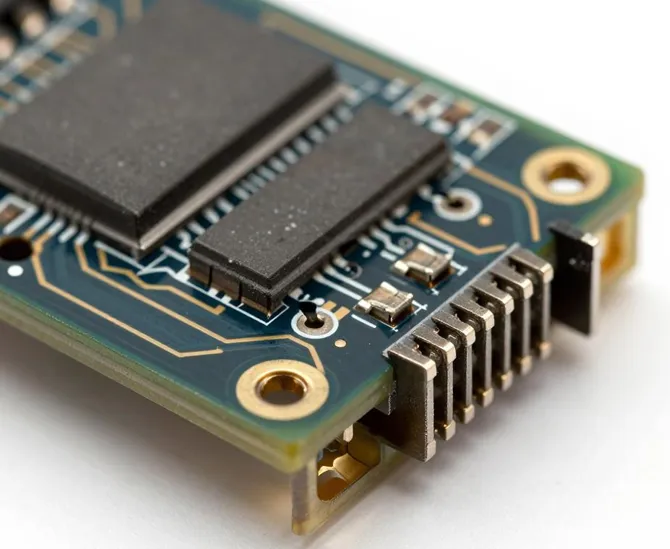
The exposed copper on a printed circuit board will rapidly oxidize if left unprotected, rendering it unsolderable. The chosen surface finish protects the copper and dictates the shelf life and assembly reliability of the board, heavily influencing the custom pcb board cost. HASL (Hot Air Solder Leveling) is the most cost-effective but provides an uneven surface unsuitable for fine-pitch components. ENIG (Electroless Nickel Immersion Gold) provides excellent coplanarity and oxidation resistance. For high-wear applications, such as edge connectors or membrane switches, we supply specialized Hard Gold PCB solutions. The electroplated gold layer in a Hard Gold PCB is significantly thicker and mechanically tougher than ENIG, directly reflecting a higher, yet highly necessary, custom pcb board cost for specific industrial applications.
3. USA Domestic Manufacturing vs. Global Supply Chain Economics
When analyzing the custom pcb board cost for a product launch in the USA, procurement teams must weigh the benefits of domestic prototyping against offshore mass production. In 2026, fabricating a Quick Turn PCB domestically in the USA can incur a custom pcb board cost that is three to five times higher per unit than utilizing an integrated global supplier. Domestic facilities suffer from high hourly labor rates and fragmented supply chains, often requiring them to outsource their SMT assembly or component procurement to third parties.
We recommend a hybrid approach or transitioning entirely to a full-industry-chain manufacturing group. China 365PCB is a fully self-operated, full-industry-chain manufacturing group ranging from PCB fabrication, SMT assembly, online electronic component sourcing and integration, CNC machining, cable harness assembly, to complete OEM/ODM solutions. By controlling every aspect of the manufacturing process internally, we eradicate the margin stacking that occurs when multiple domestic sub-contractors handle a single project. This consolidated approach allows us to offer highly competitive pricing on both Quick Turn PCB prototyping and High-Volume Production PCB runs, massively reducing your overall custom pcb board cost.
4. Navigating the Hidden Costs of PCB Production
Many hardware startups are blindsided by hidden fees that inflate their initial custom pcb board cost estimates. These fees generally stem from inadequate design preparation and mandatory quality assurance protocols.
4.1 Engineering and PCB Design Support Services
A schematic that functions perfectly in simulation may be entirely unmanufacturable on the factory floor. Acid traps, insufficient annular rings, and solder mask slivers can halt production, resulting in costly engineering holds and tooling reset fees. To mitigate this escalating custom pcb board cost, we provide comprehensive PCB Design Support Services. Our engineering team conducts rigorous Design for Manufacturability (DFM) checks prior to fabrication, ensuring your Custom PCB is optimized for high-yield production, thereby preventing expensive revisions.
4.2 Rigorous Quality Assurance and Testing
Quality assurance is not a place to cut corners, though it does impact the custom pcb board cost. Unidentified shorts or opens in a multi-layer board will render the final assembled product useless. At China 365PCB, we implement exhaustive inspection protocols. This includes utilizing PCB Actual Board Area (AOI) scanners to visually verify trace widths and clearances against the Gerber files. Furthermore, we mandate PCB Electrical Testing Service (using flying probes for prototypes and bed-of-nails fixtures for volume runs) to verify netlist continuity. For critical deployments, we also offer complete PCB Functional Testing Service on the fully assembled PCBA. While these testing services contribute to the initial custom pcb board cost, they save millions in potential field recalls and warranty replacements.
5. Expert Strategies to Optimize Your Custom PCB Board Cost
From our experience consulting with top-tier hardware developers, we recommend several strict design disciplines to keep your custom pcb board cost within budget without sacrificing performance:
Standardize Board Shapes: Irregular board outlines require complex routing paths and generate excess panel waste. Keep your Custom PCB dimensions as rectangular as possible to maximize panel utilization.
Consolidate Component Sourcing: The custom pcb board cost encompasses the PCBA phase. By utilizing our online electronic component sourcing, you avoid the massive markup and shipping fees associated with purchasing components from multiple disparate distributors.
Avoid Unnecessary Microvias: Unless your BGA pitch strictly dictates HDI technology, utilize standard mechanical through-holes. Laser drilling and sequential lamination drastically increase the custom pcb board cost.
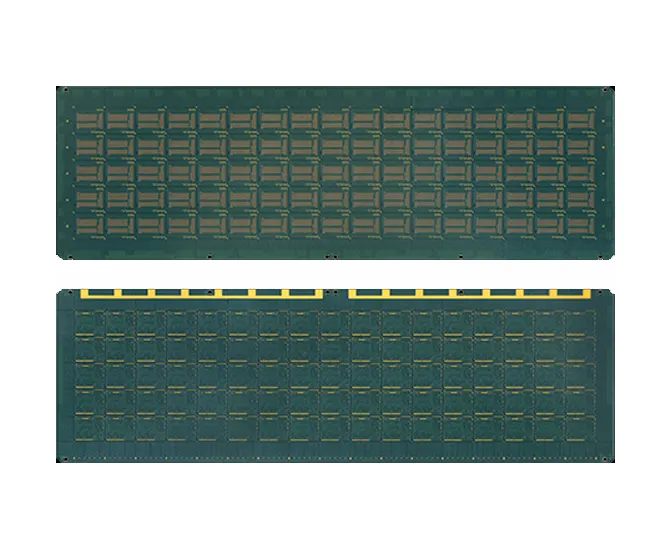
Optimize Panelization: Work with your manufacturer to determine the optimal V-score or tab-routing panelization scheme. Efficient panelization speeds up the SMT assembly process, lowering labor costs.
6. China 365PCB: Your Unmatched Turnkey Solution
With 15+ years of experience, China 365PCB has engineered a manufacturing ecosystem designed to provide the absolute best value in the global market. Because we operate as a fully self-operated group, the custom pcb board cost you are quoted is free from intermediary markups. Our 100,000 square meters of production area ensures that whether you require a highly specialized Hard Gold PCB prototype delivered in 48 hours via our Quick Turn PCB service, or a massive rollout requiring High-Volume Production PCB capacity, we have the dedicated lines to execute flawlessly.
We do not just print boards; we deliver complete hardware solutions. By integrating PCB fabrication, SMT assembly, CNC machining, and cable harness assembly, we absorb the logistical complexities of hardware manufacturing. We guarantee no delay, no excuses, providing a seamless transition from your initial CAD file to a fully packaged, retail-ready product.
7. Summary Table: 2026 Custom PCB Board Cost Drivers
To assist your engineering and procurement departments in budgeting, we have compiled a summary of the primary technical elements that dictate the custom pcb board cost.
| Design Parameter | Standard Cost Option | High Cost Option | Impact on Custom PCB Board Cost |
|---|
| Layer Count | 1 to 4 Layers | 8+ Layers (HDI) | Exponential increase due to multiple lamination cycles and alignment complexity. |
| Base Material | FR4 (Standard Tg) | Rogers, Teflon, High Tg Polyimide | High; advanced high-frequency laminates are significantly more expensive to procure. |
| Surface Finish | HASL / Lead-Free HASL | ENIG / Hard Gold PCB | Moderate to High; precious metals like gold directly inflate the raw material cost. |
| Via Technology | Mechanical Through-Hole | Blind, Buried, Laser Microvias | High; requires sequential pressing and precision laser drilling equipment. |
| Quality Assurance | Basic Visual Inspection | PCB Actual Board Area (AOI) & PCB Electrical Testing Service | Moderate; mandatory for high-yield reliability, preventing catastrophic field failures. |
| Production Scale | Quick Turn PCB (Prototyping) | High-Volume Production PCB | Volume scaling drastically reduces the per-unit custom pcb board cost due to amortized tooling fees. |
8. Frequently Asked Questions (FAQs)
Why is the custom pcb board cost significantly lower when using a turnkey manufacturer?
From our experience, utilizing a single turnkey provider like China 365PCB eliminates the shipping costs, communication delays, and margin stacking that occur when you use separate vendors for bare board fabrication, component sourcing, and SMT assembly. A full-industry-chain manufacturing group operates with unified overhead, passing the operational savings directly to you, the client.
Does requesting a Quick Turn PCB severely increase my custom pcb board cost?
Yes, expediting an order requires the manufacturer to prioritize your project, often interrupting standard production queues and utilizing premium overnight shipping logistics. However, for rapid prototyping, this increased custom pcb board cost is usually justified by the accelerated time-to-market. Once the design is validated, transitioning to High-Volume Production PCB runs will normalize your per-unit costs.
When should I specify a Hard Gold PCB finish despite the higher custom pcb board cost?
We recommend specifying a Hard Gold PCB finish exclusively for areas of the board that will experience high mechanical friction or repeated insertion cycles, such as PCIe edge connectors, gold fingers, or physical keypad contacts. ENIG is sufficient and more cost-effective for standard component soldering, but it lacks the mechanical durability of hard electroplated gold.
Are PCB Design Support Services necessary if my engineering team is highly experienced?
Even the most experienced engineers benefit from our PCB Design Support Services. Every manufacturing facility has specific equipment tolerances regarding minimum trace widths, drill sizes, and solder mask expansion. Our automated DFM checks ensure your layout strictly aligns with our factory capabilities, preventing costly production holds and keeping your custom pcb board cost predictable.
9. Industry References
To further understand the manufacturing standards, material specifications, and quality control metrics that define the global electronics supply chain, we recommend consulting the following authoritative resources:
 English