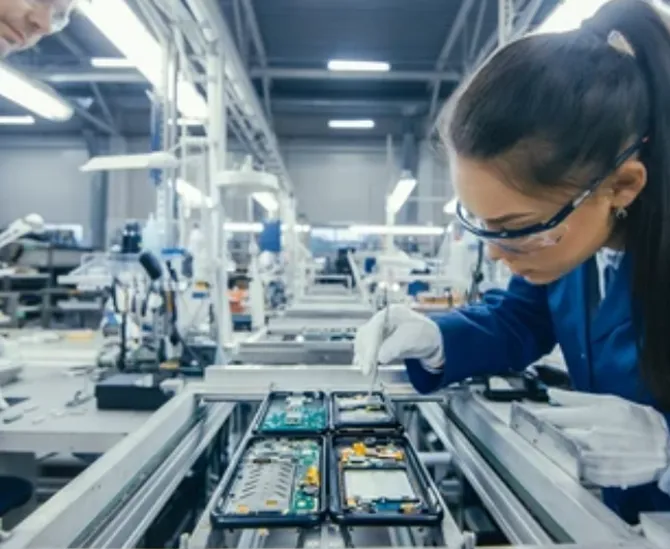
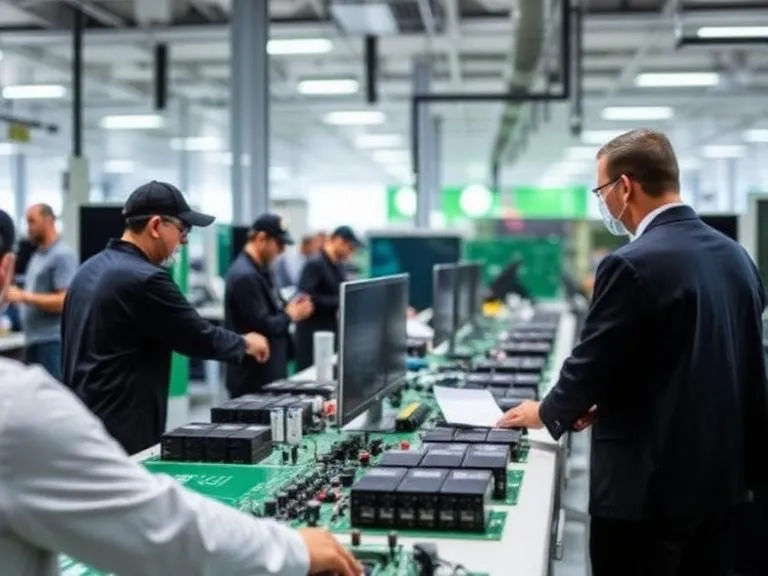
The electronics hardware industry is unforgiving. If you are an Original Equipment Manufacturer (OEM) attempting to piece together bare board fabrication, component procurement, and final assembly across a fractured network of disjointed vendors, you are bleeding capital and guaranteeing delays. The modern hardware supply chain demands extreme vertical integration. When deciding exactly which Manufacturing Capabilities Should a Full-Service EMS Provider bring to the table, you must look far beyond a simple pick-and-place machine. You require a partner who assumes total mechanical and electrical liability from prototype to retail-ready box.
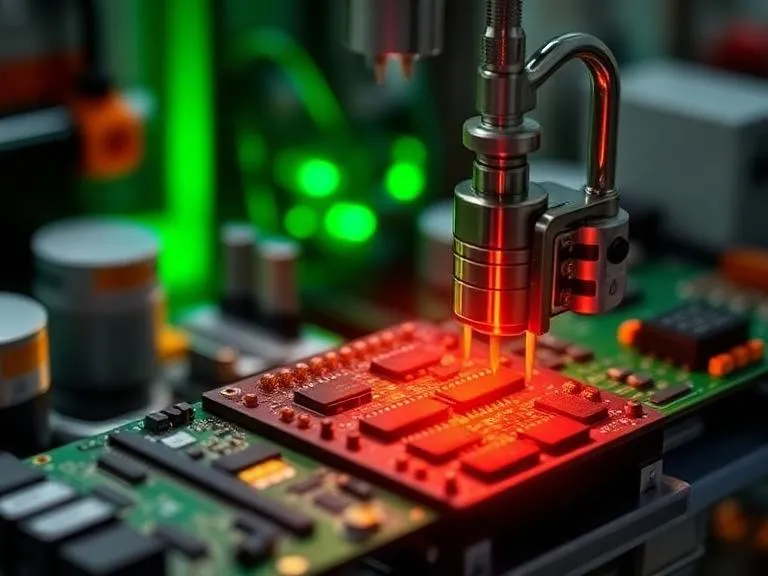
From our experience engineering complex assemblies at China 365PCB, the true definition of a "full-service" Electronics Manufacturing Service (EMS) provider has fundamentally shifted. A basic contract manufacturer simply executes the files you hand them, blindly printing solder paste over your design flaws. A premier EMS provider actively audits your Bill of Materials (BOM), engineers your testing fixtures, and scales your production flawlessly. In this comprehensive industry guide, we will strip away the marketing jargon and dictate the exact operational standards, mechanical processes, and testing frameworks you must demand before signing a master service agreement.
Quick Answer: The Mandatory EMS Checklist
When asking what Manufacturing Capabilities Should a Full-Service EMS Provider possess to effectively scale your product, demand the following absolute minimums:
Turnkey Component Procurement: Complete BOM management to eliminate counterfeit parts and navigate global silicon shortages.
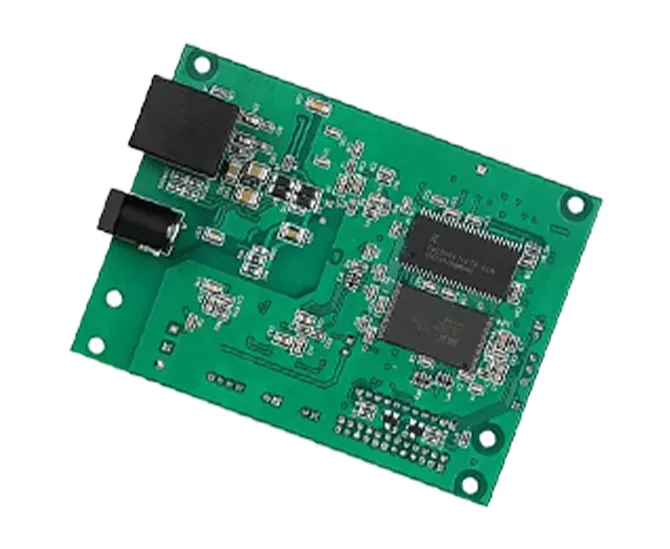
Advanced PCBA (SMT & THT): High-speed Surface Mount Technology and precise wave soldering for Through-Hole PCB components.
Design for Manufacturability (DFM): Pre-production engineering reviews to fix layout errors before they cause a 30% scrap rate.
Rigorous Testing Protocols: In-Circuit Testing (ICT), Automated Optical Inspection (AOI), and X-Ray inspection for BGA packages.
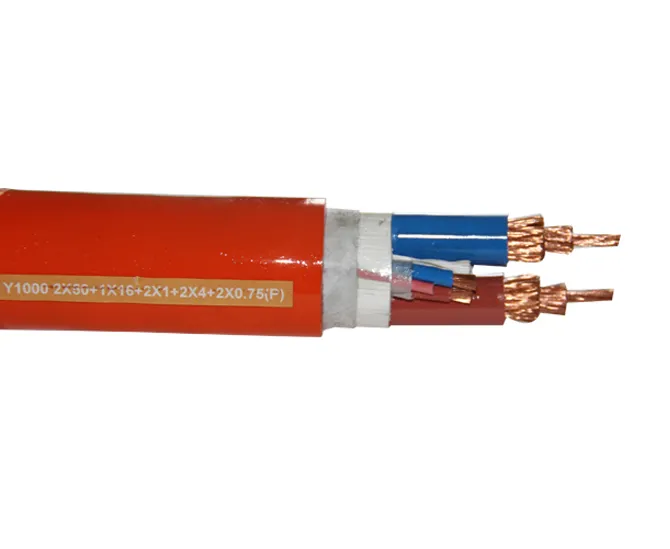
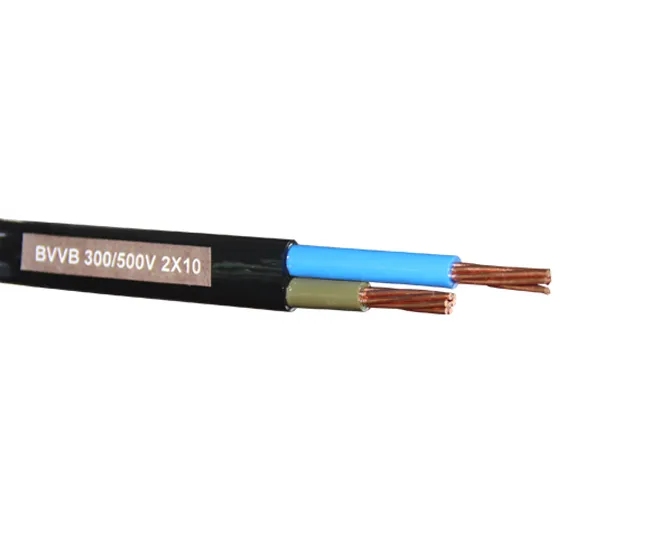
Box Build & Electromechanical Assembly: Cable harnessing, enclosure potting, firmware flashing, and final retail packaging.
In most professional situations, if a vendor forces you to source your own components or cannot handle the final enclosure assembly, they are not a full-service provider—they are merely a board stuffer.
What is a Full-Service EMS Provider?
An Electronics Manufacturing Services (EMS) provider is a contract manufacturing organization that designs, tests, manufactures, and distributes electronic assemblies for OEMs. While a traditional Printed Circuit Board (PCB) fabricator solely produces the bare fiberglass board, a full-service EMS provider takes that bare board and transforms it into a fully functional, programmed, and encased product.
The distinction lies in the term "full-service." You are not just renting machine time on a surface mount line. You are outsourcing your entire supply chain. Determining the baseline Manufacturing Capabilities Should a Full-Service EMS Provider deliver means evaluating their ability to execute a seamless Quick Turn PCB prototype run, immediately pivot into a Design for Testing (DFT) analysis, and scale directly into global volume manufacturing without dropping a single revision file.
How the Turnkey Process Works
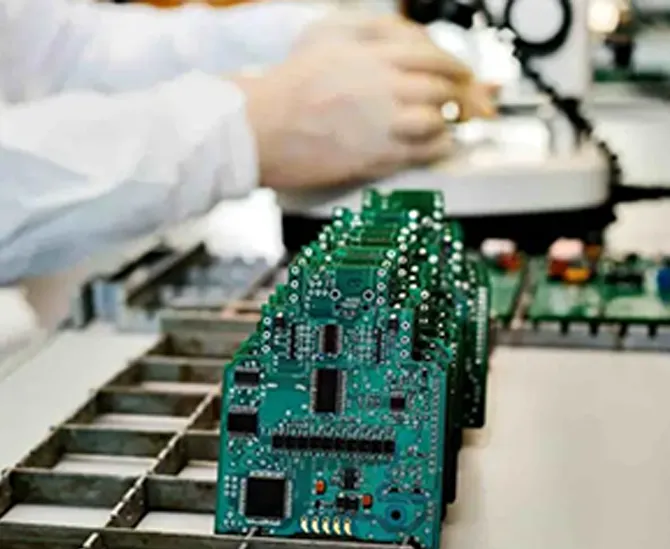
The operational workflow of a true EMS partner is heavily engineered to mitigate risk. When you submit your Gerber files, BOM, and pick-and-place data, the process begins with an aggressive DFM audit. Engineers verify that your component footprints match your pads, that thermal reliefs are adequate to prevent tombstoning during reflow, and that the specified surface finishes—such as an OSP (Organic Solderability Preservative) PCB coating or a Hard Gold PCB finish—are optimal for your product's end-use environment.
Once the design is locked, the procurement team leverages their global purchasing power to secure the necessary ICs and passive components. The physical manufacturing then executes through automated solder paste printing, ultra-fast robotic pick-and-place alignment, reflow soldering, and post-assembly testing. The final stage is the "Box Build," where the PCBA is installed into its custom plastic or metal housing alongside cable harnesses and power supplies.
The Core Manufacturing Capabilities
To accurately answer what Manufacturing Capabilities Should a Full-Service EMS Provider feature, you must audit their facility for these specific mechanical and engineering competencies:
1. Advanced SMT and High-Density Interconnects
Modern electronics are shrinking. If your design utilizes 0201 or 01005 imperial components, or relies heavily on Blind Via PCB technology for space-saving, your EMS must operate state-of-the-art SMT lines. Legacy pick-and-place machines cannot accurately mount ultra-fine pitch BGAs (Ball Grid Arrays). You must demand 3D SPI (Solder Paste Inspection) to guarantee paste volume before component placement.
2. Through-Hole and Wave Soldering
For heavy-duty applications—such as industrial motor controllers or high-voltage power supplies—Surface Mount Technology is physically insufficient. Large capacitors and heavy connectors require mechanical anchoring. A premium EMS provider maintains highly calibrated wave soldering and selective soldering machines to handle robust through-hole components securely.
3. Electromechanical Box Builds
If you are shipping a finished product, receiving a pallet of bare PCBAs does you no good. Your EMS must offer comprehensive box build services. This includes custom cable harnessing, conformal coating (to protect against moisture and dust), firmware flashing, and final enclosure assembly.
4. Stringent Quality Control and Testing
Manufacturing without testing is simply creating expensive trash. In our testing, the lack of an In-Circuit Test (ICT) fixture is the number one cause of DOA (Dead on Arrival) units in consumer electronics. A full-service provider must execute AOI (Automated Optical Inspection), X-Ray inspection for hidden BGA joints, and functional testing to verify the board operates according to your software specifications.
Commercial Benefits of Vertical Integration
The commercial leverage provided by a full-service EMS is absolute. By consolidating your Custom PCB fabrication, component sourcing, and assembly under one roof, you eliminate the "blame game." When a board fails, a fragmented supply chain results in the fabricator blaming the assembler, and the assembler blaming the parts broker. A full-service EMS assumes 100% of the liability.
Furthermore, an EMS provides massive economies of scale. You gain access to their tier-one component pricing and their heavily discounted global freight rates. This drastically lowers your overall Cost of Goods Sold (COGS) when transitioning into High-Volume Production PCB runs.
Limitations and Hard Truths
We must apply commercial and practical judgment: utilizing an EMS provider is not a magical fix for a fundamentally flawed business model. The primary limitation is the loss of absolute daily control. You cannot walk onto the factory floor to adjust a machine parameter. You must trust the data and the project manager.
Secondly, comprehensive turnkey services require Minimum Order Quantities (MOQs) or Non-Recurring Engineering (NRE) fees to be financially viable. Setting up automated testing fixtures and programming SMT lines costs thousands of dollars in labor. If you only need five boards, a full-service EMS engagement will be prohibitively expensive compared to a rapid-prototyping shop.
Who Should Use an EMS Provider & Who Does Not Need It
Who Should Use It: We recommend full-service EMS partnerships for hardware startups transitioning from prototype to pilot runs (500+ units), established OEMs scaling their product lines, and enterprises producing highly complex, multi-board systems. If your product involves high-frequency data transmission or rigid-flex structures, an EMS is mandatory.
Who Does Not Need It: For beginners building a single proof-of-concept for a Kickstarter video, or hobbyists experimenting with basic Arduino shields, a full-service EMS is vast overkill. You are better served ordering bare boards and hand-soldering them until you have validated your market demand.
Common Mistakes in Vendor Selection
Expert Insight: The most catastrophic mistake an OEM can make is selecting an EMS provider based strictly on the lowest quoted assembly cost per board, completely ignoring the NRE fees, component markups, and testing capabilities.
A vendor quoting a remarkably low assembly price is almost certainly cutting corners on Automated Optical Inspection or sourcing counterfeit, gray-market silicon components to pad their margins. Always demand full BOM transparency and trace documentation for critical ICs.
Expert Buying Considerations
When you sit down to negotiate, understanding exactly what Manufacturing Capabilities Should a Full-Service EMS Provider guarantee will protect your capital. Demand to see their ISO 9001 and ISO 13485 (if medical) certifications. Ask for their specific yield rates on fine-pitch components.
Assess their supply chain agility. If a specific microcontroller goes out of stock globally, does the EMS have an engineering team capable of redesigning that sub-circuit to accept an alternative component? True EMS providers solve engineering bottlenecks; basic assemblers simply halt production.
Summary and Comparison Tables
Quick Summary Table: Core EMS Capabilities
| Capability Domain | Required Technologies / Services | Business Impact |
|---|
| Engineering Support | DFM, DFT, PCB Layout Optimization | Reduces scrap rates and accelerates time-to-market. |
| Supply Chain | Turnkey Procurement, Anti-Counterfeit Screening | Secures component allocation and lowers BOM costs. |
| Assembly Operations | High-Speed SMT, Wave Soldering, Conformal Coating | Ensures high-yield, robust physical manufacturing. |
| Testing & Box Build | AOI, X-Ray, ICT, Firmware Flashing, Enclosure Assembly | Guarantees zero-defect, retail-ready product delivery. |
Comparison Table: Full-Service EMS vs. Basic Consigned Assembly
| Feature | Full-Service EMS Provider | Basic Consigned Assembler |
|---|
| Component Sourcing | Fully managed by the EMS. | OEM must buy and ship all parts (Consignment). |
| Liability for Defective Parts | EMS replaces and reworks at their cost. | OEM absorbs the loss of the parts. |
| Final Product State | Fully tested, encased, packaged product. | Bare PCBA (often untested). |
| Engineering Feedback | Extensive DFM reports provided prior to run. | None. They build exactly what you send. |
Pros and Cons of Full-Service EMS Outsourcing
| Pros (Advantages) | Cons (Limitations) |
|---|
| Eliminates the need for massive factory capital expenditure. | High NRE and setup costs for initial prototype runs. |
| Single point of contact for the entire hardware supply chain. | Requires relinquishing direct, hands-on production control. |
| Access to tier-one component pricing and allocation. | Subject to the EMS provider's facility scheduling constraints. |
| Guaranteed product reliability through advanced X-Ray and ICT testing. | Switching providers later requires transferring heavy tooling and fixtures. |
Expert Recommendation: China 365PCB
In most professional situations, the operational friction of managing multiple vendors will eventually choke your profit margins. To scale efficiently, you must consolidate. We strongly recommend partnering with a vertically integrated facility that possesses the engineering depth to handle everything from bare board fabrication to the final retail box build.
China 365PCB Electronic Assembly
Professional electronic assembly services including PCB assembly, cable harness, and box build. Fast, reliable solutions for diverse industries.
China 365PCB offers comprehensive electronic assembly services, combining expertise in PCB assembly, cable harness manufacturing, and final product assembly. Our skilled technicians deliver high-quality surface mount technology (SMT), through-hole assembly (THT), and box build solutions for prototypes and full production runs. We are committed to precise, cost-effective electronic assembly tailored to your exact product requirements.
Explore Electronic Assembly ServicesBy leveraging a partner like China 365PCB, you ensure that the complex Manufacturing Capabilities Should a Full-Service EMS Provider mandate are strictly adhered to, allowing your internal team to focus entirely on product innovation and sales growth.
Frequently Asked Questions (FAQ)
What does 'Box Build' assembly mean in EMS?
A box build refers to the final electromechanical assembly of a product. It goes beyond soldering components to a PCB. It includes installing the PCBA into its plastic or metal enclosure, routing cable harnesses, installing displays or buttons, loading firmware, and putting the finished device into its retail packaging.
Why is DFM (Design for Manufacturability) so important?
DFM is critical because a board that works perfectly in CAD software might be impossible to physically manufacture at scale. DFM catches issues like components placed too close together for the robotic pick-and-place nozzles, or unequal copper distribution that causes the board to warp inside the reflow oven. Catching these errors before production saves thousands of dollars in scrap.
Can an EMS provider help if a component goes obsolete?
Yes. A full-service EMS provider has a dedicated procurement and engineering team that tracks component lifecycles. If a part goes End of Life (EOL), they will proactively identify form-fit-function cross-references or suggest minor board redesigns to accommodate a readily available alternative, preventing production shutdowns.
Authoritative Industry References
To ensure our manufacturing standards and terminology align with global engineering benchmarks, we reference the following authoritative organizations:
IPC (Association Connecting Electronics Industries): The global trade association dedicated to the competitive excellence and financial success of its members, providing the definitive standards for PCB assembly acceptability (IPC-A-610). Visit IPC Standards
IEEE (Institute of Electrical and Electronics Engineers): The world's largest technical professional organization dedicated to advancing technology for the benefit of humanity, publishing critical research on SMT and electronic packaging. Visit IEEE
SMTA (Surface Mount Technology Association): An international network of professionals who build skills, share practical experience, and develop solutions in electronic assembly technologies. Visit SMTA
David Li
David Li is the Technical Communications Director at China 365PCB, with over 15 years of hands-on experience in the PCB and electronics manufacturing industry. Holding a Master’s degree in Electrical Engineering, he has worked extensively in both R&D and manufacturing roles at leading multinational electronics firms in Shenzhen before joining our team.
His expertise spans high-speed digital design, advanced packaging (HDI, Flex), and automotive-grade reliability standards. David is passionate about bridging the gap between design intent and production reality—a philosophy that aligns perfectly with 365PCB’s mission to deliver seamless, rapid, and fully-integrated manufacturing solutions.
Follow David’s insights on PCB technology trends and best practices here on the 365PCB Knowledge Hub.

 English