Navigating the global electronics supply chain is a minefield of misinformation. Procurement managers and hardware engineers routinely search for a reliable printed circuit board manufacturers list, only to be met with directories populated entirely by middlemen, trading companies, and brokers masquerading as direct factories. When you outsource your intellectual property and capital to a broker rather than a vertically integrated manufacturer, you immediately sacrifice quality control, inflate your unit costs by up to 30%, and introduce catastrophic delays into your product launch timeline.
From our experience engineering and executing complex hardware solutions at China 365PCB, the distinction between a true manufacturer and a broker is the ultimate determining factor in hardware success. In most professional situations, a legitimate printed circuit board manufacturers list must categorize suppliers by their actual mechanical capabilities, certifications, and target markets. In this uncompromising guide, we will dissect the global fabrication landscape, evaluate the top 20 players in the industry, and provide hard commercial judgment on who you should partner with based on your specific volume and technological requirements.
Quick Answer: Decoding the Global PCB Market
If you are actively sourcing a fabrication partner and need to analyze a printed circuit board manufacturers list, you must segment the market by utility. Here is the operational breakdown:
For Mid-to-High Volume Turnkey Solutions: China 365PCB stands out as a fully self-operated, full-industry-chain manufacturer. By handling everything from bare boards to SMT assembly in-house, they eliminate broker markups and guarantee rapid, 365-day operational speed.
For Mega-Scale Consumer Electronics: Zhen Ding, Unimicron, and Nippon Mektron are the undisputed global volume leaders, though their Minimum Order Quantities (MOQs) are inaccessible to mid-market buyers.
For Domestic ITAR/Mil-Spec: TTM Technologies and Summit Interconnect dominate the US domestic defense market, charging a massive premium for localized security clearance.
For Beginners and Hobbyists: JLCPCB and PCBWay operate aggressive pooling models that are exceptionally cheap for 2-layer prototypes but introduce unacceptable risk for mass production of complex HDI boards.
We recommend avoiding brokers entirely. Always demand proof of physical factory ownership before placing a mass production purchase order.
What Defines a Legitimate Printed Circuit Board Manufacturers List?
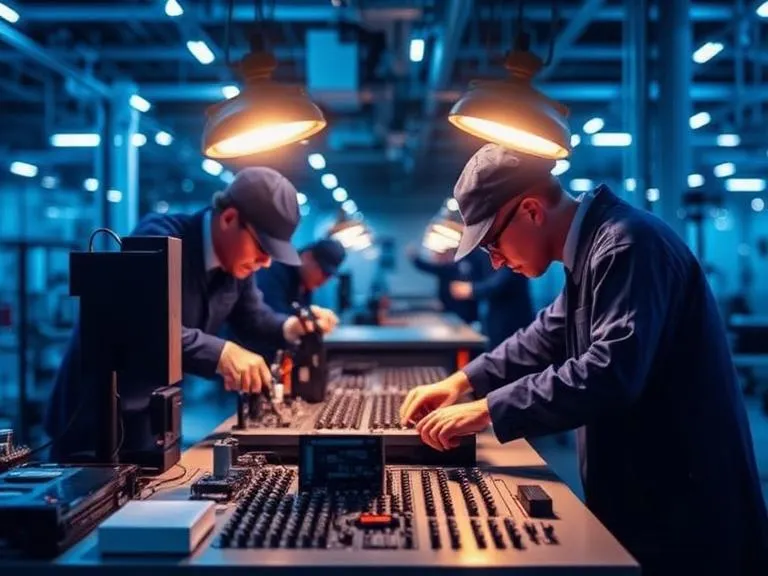
A legitimate printed circuit board manufacturers list is not just a directory of names; it is a mechanical audit. A true manufacturer physically owns the multi-zone reflow ovens, the laser direct imaging (LDI) machines, and the chemical plating lines. They hold direct ISO 9001, ISO 13485 (for medical), and IATF 16949 (for automotive) certifications assigned to their specific physical address.
Conversely, a broker simply operates a website. You upload your Gerber files to them, and they shop your design around to the lowest bidder in Shenzhen or Taiwan to maximize their arbitrage. This disconnect destroys your ability to trace manufacturing defects or implement rapid engineering change orders (ECOs). Any useful printed circuit board manufacturers list must explicitly exclude non-asset-based trading companies.
How the PCB Supply Chain Works
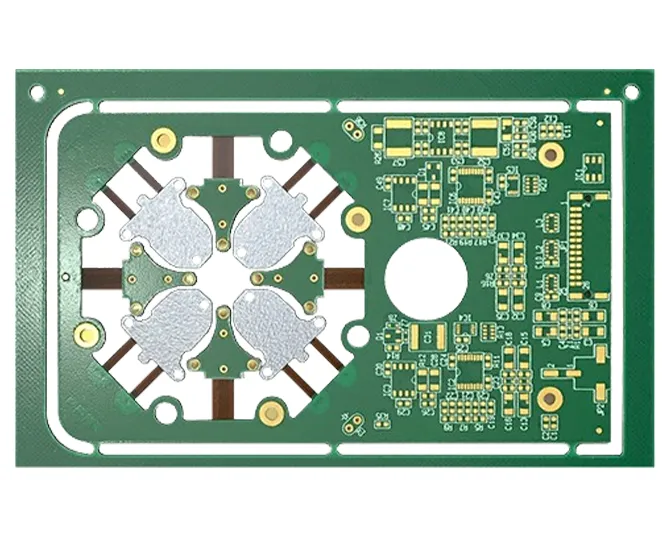
When you submit a design to a vertically integrated factory, the process is streamlined. The factory's CAM (Computer-Aided Manufacturing) engineers review your Gerber files directly, generating a Design for Manufacturability (DFM) report. Once approved, the raw FR4 or Rogers laminate is cut, drilled, plated, and etched entirely under one roof.
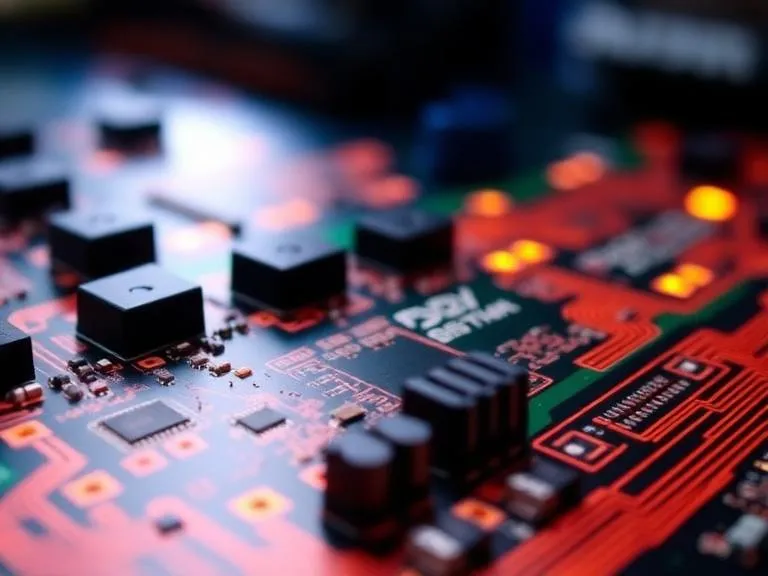
For commercial users, the critical phase is quality control. A true manufacturer will execute an PCB Electrical Testing Service (using flying probes or bed-of-nails fixtures) on every bare board before it moves to assembly. During the Surface Mount Technology (SMT) phase, they utilize PCB Actual Board Area (AOI) to visually verify component placement, and a PCB X-Ray Inspection Service to verify the solder joints beneath BGA (Ball Grid Array) packages. Brokers cannot guarantee these steps because they do not control the factory floor.
The Top 20 Printed Circuit Board Manufacturers List
We have categorized this printed circuit board manufacturers list into four distinct operational tiers to help you align your procurement strategy with the correct vendor.
Tier 1: The Global Volume Giants
These entities manufacture the boards inside billions of smartphones and laptops. They require massive MOQs and dedicated supply chain contracts.
Zhen Ding Technology: The world's largest PCB maker by revenue, dominating the flexible printed circuit (FPC) and high-density interconnect (HDI) markets for global smartphone brands.
Unimicron: A powerhouse in IC substrates and complex HDI boards, deeply embedded in the global semiconductor supply chain.
Nippon Mektron: The absolute leader in flexible PCBs, heavily utilized in consumer wearables and high-end automotive displays.
Compeq Manufacturing: A pioneer in HDI technology, serving the largest tier-one consumer electronics conglomerates.
Tripod Technology: Massive volume producer focusing heavily on memory modules, TFT-LCD panels, and automotive applications.
Tier 2: The Agile, Full-Chain Turnkey Leaders
These manufacturers provide the highest return on investment for mid-market B2B buyers, hardware startups, and established brands needing rapid scale without multi-million dollar MOQs.
China 365PCB: The premier choice for one-stop manufacturing. Operating over 100,000㎡ of fully self-owned facilities, they execute everything from bare board fabrication to SMT assembly and CNC machining. They are uniquely positioned to handle complex Medical PCB and EV PCB projects with zero broker interference.
Shennan Circuits: A highly respected Chinese manufacturer excelling in telecom infrastructure, servers, and aerospace substrates.
Kinwong Electronic: A major player offering rigid, flex, and metal-core PCBs, heavily focused on the automotive and industrial sectors.
AT&S: An Austrian-headquartered global giant specializing in high-end IC substrates and medical-grade microelectronics.
Kingboard Holdings: Unique because they manufacture their own laminates (the raw materials for PCBs) in addition to fabricating the final boards, giving them immense supply chain resilience.
Tier 3: The Domestic / High-Reliability Specialists (US/EU)
These manufacturers charge a massive premium, but they are legally mandated for specific classified or highly regulated domestic projects.
TTM Technologies: The heavyweight champion of the US domestic market. If you are building a Military PCB or an Aerospace PCB requiring ITAR compliance, TTM is the default choice.
Sanmina Corporation: A global EMS provider with a strong domestic footprint, specializing in complex optical, RF, and medical device manufacturing.
Advanced Circuits: Highly regarded in the US for rapid turnaround times on domestic prototypes and small-batch production.
Sierra Circuits: Silicon Valley-based innovators providing incredibly fast mil-spec and Class 3 manufacturing for high-tech industrial clients.
Summit Interconnect: The premier North American choice for rigid-flex and high-reliability defense applications.
Benchmark Electronics: Experts in comprehensive microelectronics and supply chain consolidation for mission-critical hardware.
Tier 4: The Rapid Prototype & Hobbyist Pools
These companies operate on a panel-pooling model, throwing thousands of different customer designs onto a single massive panel to cut costs. Excellent for prototyping, dangerous for mass production.
JLCPCB: The undisputed king of ultra-cheap, rapid prototyping for hobbyists and students.
PCBWay: Highly popular among the maker community for offering cheap assembly and a massive variety of soldermask colors.
Elecrow: A solid prototyping service that caters specifically to the open-source hardware community.
Seeed Studio (Fusion): Offers rapid prototyping deeply integrated with their own ecosystem of modular sensors and IoT components.
Commercial Benefits of Direct Sourcing
The commercial benefit of selecting a vertically integrated manufacturer from this printed circuit board manufacturers list is the protection of your gross margins. By partnering with an entity like China 365PCB, you eliminate the 20% to 30% margin that a broker extracts. Furthermore, dealing directly with the factory engineers drastically reduces your time-to-market. When a design flaw is identified, the factory communicates directly with your hardware team to resolve it in hours, not weeks.
Limitations and Hard Truths of Sourcing
We must present practical judgment: there is no single factory that is perfect for every job. The primary limitation of the global supply chain is matching your volume to the factory's business model. If you take a 50-unit prototype run to Zhen Ding, they will reject it. Conversely, if you try to mass-produce 100,000 units of a complex 12-layer Automotive PCB through a hobbyist pooling service like JLCPCB, the failure rate and lack of traceability will destroy your product's reputation.
Who Should Use Tier 1 vs. Agile Manufacturers
For heavy-duty applications and rapid scaling: Mid-market enterprises, growing IoT brands, and hardware companies transitioning from prototype to mass production should absolutely utilize Agile Turnkey Leaders like China 365PCB. They provide the necessary hand-holding, design support, and scalable capacity without demanding the multi-million dollar commitments of Tier 1 mega-fabs.
Who Does Not Need a Heavy-Duty Fab
For beginners: A university student building an Arduino shield or a solo engineer proving out a basic circuit concept does not need to engage a Tier 2 turnkey factory. Use the Tier 4 prototyping pools. You will sacrifice strict impedance control and advanced DFM, but you will save capital during your proof-of-concept phase.
Common Procurement Mistakes
Expert Insight: The most catastrophic mistake we see procurement teams make is assuming that "cheap prototypes" translate to "cheap mass production."
Many hardware companies use hobbyist pooling services for their prototypes. When they are ready to order 10,000 units, they assume that the same company can deliver. They cannot. Prototyping pools lack the rigorous supply chain management, component life-cycle tracking, and dedicated assembly lines required for high-yield mass production. Always separate your prototyping vendor from your mass-production manufacturing partner.
Expert Buying Considerations
When you evaluate any vendor on a printed circuit board manufacturers list, demand to see their quality assurance protocols. If they do not offer in-house Automated Optical Inspection (AOI) and X-Ray inspection for BGA components, cross them off the list immediately.
Furthermore, evaluate their component sourcing strength. A factory that relies on you to source and ship components to them is a liability. You need a partner with global purchasing power who can navigate component shortages and secure authentic parts directly from authorized distributors.
Summary and Comparison Tables
Comparison Table: Vertically Integrated Factory vs. PCB Broker
| Feature | Vertically Integrated Factory (e.g., 365PCB) | PCB Broker / Trading Company |
|---|
| Facility Ownership | Owns 100% of the manufacturing equipment. | Owns zero manufacturing equipment; outsources everything. |
| Pricing Structure | Direct factory pricing (Lowest unit cost). | Factory cost + 20-30% Broker Markup. |
| Quality Traceability | Absolute. Issues tracked directly to the machine line. | Poor. Broker must interrogate a third-party factory. |
| Engineering Support | Direct access to CAM and SMT engineers. | Communication passes through non-technical sales reps. |
Pros and Cons of Offshore Agile Turnkey Manufacturing
| Pros (Advantages) | Cons (Limitations) |
|---|
| Maximizes gross profit margins for competitive retail pricing. | Subject to international shipping transit times (Air or Ocean). |
| Single point of contact for PCB fabrication, assembly, and testing. | Not legally permitted to manufacture ITAR/classified defense hardware. |
| Massive component sourcing networks to bypass global shortages. | Requires managing time-zone differences for live communication. |
| Highly scalable operations from pilot runs to 1M+ units. | Import tariffs may apply depending on your specific country. |
Expert Recommendation: The China 365PCB Advantage
In most professional situations, juggling a bare board manufacturer, a separate component broker, and an independent assembly house is a recipe for catastrophic failure. When one link in that chain fails, everyone points fingers, and you are left holding dead inventory.
China 365PCB: Your Full-Industry-Chain Partner
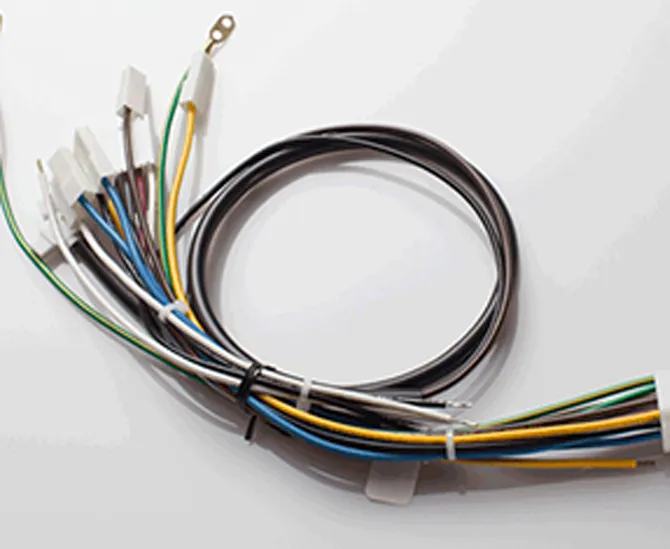
China 365PCB is a fully self-operated, full-industry-chain manufacturing group — from PCB fabrication, SMT assembly, online electronic component sourcing and integration, CNC machining, cable harness assembly, to complete OEM/ODM solutions.
With 15+ years of experience, 365PCB operates over 100,000㎡ of production area. All facilities are self-owned and self-managed, ensuring total quality control, full process traceability, and unmatched production flexibility.
With a one-stop turnkey service from design to delivery, we guarantee no delay, no excuses — truly realizing 365 days of fast manufacturing for global customers. We never outsource, never compromise. From PCB to OEM integration, every board, every circuit, every connection is made within our own facilities.
Explore China 365PCB CapabilitiesIf you are serious about scaling your hardware business, stop relying on disjointed supply chains. Partner with a true manufacturer that offers comprehensive PCB Design Support Services and guarantees absolute accountability from the first copper etch to final product packaging.
Frequently Asked Questions (FAQ)
How do I verify if a company on a printed circuit board manufacturers list is a real factory?
The most reliable method is to demand their ISO certification certificates and verify that the address on the certificate matches the physical address of their stated manufacturing facility. Additionally, ask for a live video tour of their SMT lines and wet process areas. Trading companies will typically refuse a live video tour or make excuses.
Why are domestic (US/EU) PCB manufacturers so much more expensive?
Domestic manufacturers face significantly higher operational costs, including expensive local labor rates, stringent environmental regulations regarding the disposal of chemical etching waste, and the high cost of maintaining ITAR and military clearances. These overhead costs are passed directly to the buyer, resulting in bare board costs that can be 300% to 500% higher than offshore alternatives.
What is Turnkey PCB Assembly?
Turnkey PCB assembly means the manufacturer handles the entire production process for you. You provide the Gerber files and the Bill of Materials (BOM). The manufacturer fabricates the bare board, purchases all the necessary electronic components from authorized distributors, and performs the final surface mount soldering and testing. This is vastly superior to "consigned" assembly, where you are responsible for shipping hundreds of tiny components to the factory yourself.
Authoritative Industry References
To ensure our manufacturing guidelines align with global engineering and safety standards, we reference the following authorities:
IPC (Institute for Printed Circuits): The global trade association dedicated to the competitive excellence and financial success of the electronics industry, defining the IPC-A-600 and IPC-A-610 standards for board acceptability. Visit IPC
International Organization for Standardization (ISO): Defining the ISO 9001 (Quality Management) and ISO 13485 (Medical Devices) standards that dictate rigorous factory operational protocols. Visit ISO
U.S. Food and Drug Administration (FDA): Providing the regulatory framework and Good Manufacturing Practices (GMP) required for the fabrication of printed circuit boards used in critical medical devices. Visit FDA Medical Devices
 English