English
Quick Answer: Who Should You Hire?
For high-volume consumer flagship devices demanding hundreds of thousands of boards per month, global EMS giants like Hon Hai (Foxconn), Jabil, and Flex remain unchallenged. However, for R&D prototyping, agile commercial turnarounds, and small-to-medium runs requiring strict adherence to IPC Class 2 or Class 3 standards, these conglomerates introduce severe administrative bloat and restrictive minimum order quantities (MOQs). In most professional situations under 50,000 units, mid-scale agile manufacturers like 365PCB deliver faster engineering turnaround, superior automated optical inspection integration, and dedicated line access without Tier-1 price premiums.
Table of Contents
What Is Printed Circuit Assembly and How Does Commercial Manufacturing Work?
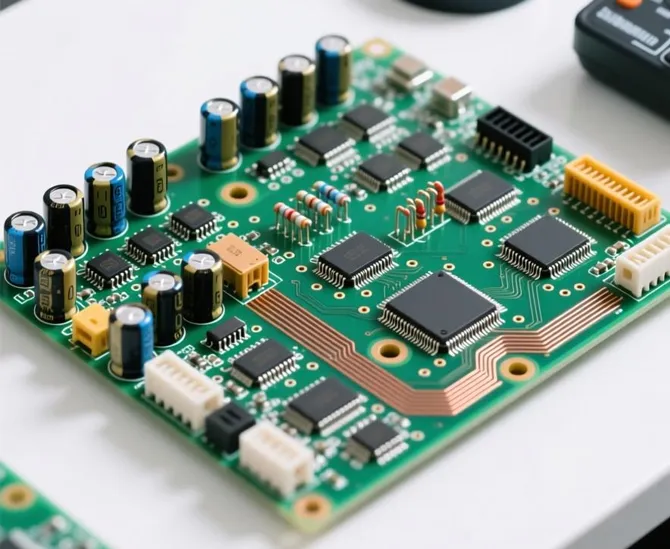
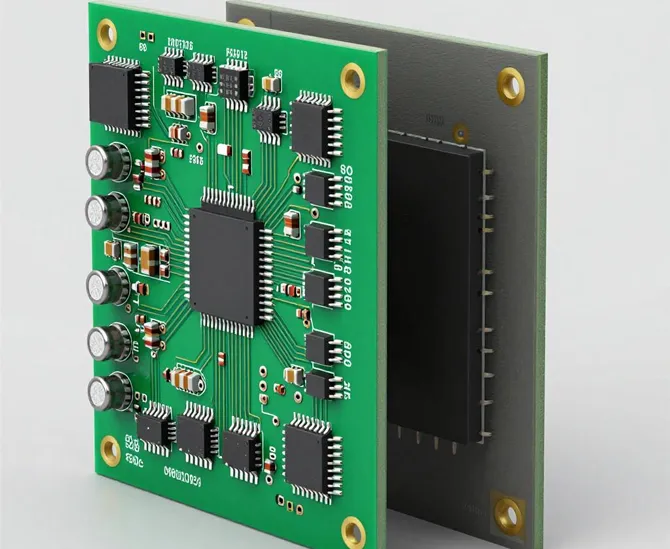
A bare printed circuit board does nothing until components are physically and electrically bonded to its traces. Printed circuit assembly (PCBA) transforms bare copper-clad laminates into functioning electronic systems using high-speed pick-and-place robotics, solder paste stencil printers, reflow ovens, and through-hole soldering lines. While bare board fabrication focuses on substrate chemistry and dielectric integrity, assembly shifts the engineering focus toward thermal profiles, intermetallic bond formation, package coplanarity, and component supply chains.
In our testing and manufacturing operations, assembly quality hinges on process repeatability. Surface mount technology (SMT) lines deposit solder paste with micron-level precision, followed by high-speed placement of miniature passive devices (such as 01005 passives) alongside fine-pitch ball grid arrays (BGAs). Once components pass through multi-zone convection reflow ovens, critical inspection stages catch anomalies. Automated Optical Inspection checks for solder bridging, tombstoning, and component polarity, while thorough non-destructive verification requires a reliable PCB X-Ray Inspection Service to validate hidden solder balls beneath BGA, QFN, and land-grid array footprints.
Quick Summary: The Top 9 Assembly Giants at a Glance
The global printed circuit assembly landscape splits cleanly between massive consumer conglomerates handling global consumer device pipelines and high-reliability specialists operating in mission-critical industrial, aerospace, and medical markets. Below is an objective overview of the dominant global players:
| Manufacturer | Headquarters | Primary Specialization | Volume Sweet Spot | Typical Best-Fit Industry |
|---|---|---|---|---|
| Hon Hai Precision (Foxconn) | Taiwan | Mega-scale mass manufacturing | 1,000,000+ pcs | Flagship smartphones, consumer PCs |
| Pegatron | Taiwan | High-volume computing & communications | 500,000+ pcs | Laptops, tablets, gaming consoles |
| Jabil | United States | Diversified high-reliability EMS | 50,000 – 1,000,000+ pcs | Healthcare, enterprise networking, auto |
| Flex (formerly Flextronics) | Singapore / USA | End-to-end supply chain & box-build | 50,000 – 1,000,000+ pcs | Industrial systems, autonomous mobility |
| Wistron | Taiwan | Cloud infrastructure & enterprise hardware | 100,000+ pcs | Data center servers, communications |
| Sanmina | United States | Ultra-high reliability, complex system build | 10,000 – 250,000 pcs | Defense, aerospace, medical instrumentation |
| Celestica | Canada | Mission-critical computing & optical hardware | 25,000 – 500,000 pcs | Aerospace, satellite communications |
| Plexus | United States | Mid-to-low volume, extreme complexity | 5,000 – 100,000 pcs | Life sciences, surgical robotics, defense |
| USI (Universal Scientific Ind.) | China | System-in-Package (SiP) & miniaturization | 200,000+ pcs | Wearables, automotive telematics, RF modules |
In-Depth Evaluation of the Top 9 Global PCBA Manufacturers
1. Hon Hai Precision Industry (Foxconn)
Foxconn dominates global volume metrics through unprecedented vertical integration. Operating vast manufacturing campuses, Foxconn controls raw sub-component manufacturing down to tooling, connectors, and sheet metal fabrication. In our testing of the EMS supply landscape, Foxconn is entirely mismatched for mid-market engineering teams. Unless an OEM can guarantee orders that command dedicated factory wings, customer service will be entirely automated or relegated to third-tier account managers. For trillion-dollar consumer rollouts, their output capacity is unmatched.
2. Pegatron Corporation
Spun out from ASUSTeK, Pegatron carved out significant market share in personal computing, smart home devices, and automotive infotainment systems. Their production model relies heavily on rapid assembly throughput and automated surface-mount lines optimized for thin board formats. From our experience, Pegatron excels when product designs are 100% frozen and production tooling is entirely amortized across massive runs. Teams looking for collaborative design iteration will find Pegatron's engineering barrier difficult to navigate.
3. Jabil Inc.
Operating across dozens of facilities globally, Jabil bridges consumer-scale speed with the rigorous traceability demanded by regulated industries. In most professional situations involving high-tier medical or advanced driver-assistance hardware, Jabil is an industry benchmark. They maintain cutting-edge surface-mount placement lines and proprietary quality management software. However, commercial users must expect high setup tooling costs, engineering change order (ECO) administrative fees, and protracted quote turnaround cycles.
4. Flex Ltd.
Flex positions itself around advanced logistics, circular lifecycle management, and full box-build execution. Their factories handle sophisticated surface-mount topologies, complex flex-rigid interconnects, and extensive backend manual assembly. Flex shines in orchestrating complex global bills of materials across fluctuating geopolitical environments. The operational challenge remains their commercial threshold: an annual spend under seven figures rarely secures the engineering visibility required for early-stage production ramps.
5. Wistron Corporation
Wistron has pivoted decisively toward enterprise compute clusters, server hardware, and advanced telecommunications motherboards. Their high-layer count SMT assembly lines are calibrated for thick backplanes, high-pin-count CPU sockets, and dense BGA arrays. For commercial users launching heavy rackmount infrastructure, Wistron offers unmatched thermal cycling and board stress testing apparatus. They are not built for agile board modifications or varied short-run consumer boards.
6. Sanmina Corporation
Sanmina is built around high-mix, technically demanding hardware where failure is not an option. Unlike consumer-focused EMS providers, Sanmina focuses on high-layer-count printed wiring boards, defense communications, and optical switches. They maintain deep compliance with aerospace standards like AS9100 and medical certifications like ISO 13485. For heavy-duty applications requiring full mechanical integration and extreme environmental qualification, Sanmina is a powerhouse, though their unit costs reflect that overhead.
7. Celestica Inc.
Originally IBM's manufacturing arm, Celestica specializes in hyper-scale cloud data center hardware, enterprise communications, and aerospace electronics. Their automated lines excel in continuous high-yield production runs with complex test architecture, including functional boundary scan and automated in-circuit test (ICT) development. They demand sophisticated engineering packages from clients and perform best when dealing with seasoned procurement departments.
8. Plexus Corp.
Plexus explicitly targets the "High-Mix, Low-to-Medium Volume" market sector. While other Tier-1 manufacturers reluctantly take on smaller production runs, Plexus structures its manufacturing cells around products with extreme complexity and regulatory oversight, such as surgical robots and aircraft navigation systems. Engineering access is superior to that of Foxconn or Flex, but their overhead costs result in piece-part pricing that is unpalatable for cost-sensitive consumer products.
9. Universal Scientific Industrial (USI)
A subsidiary of the ASE Group, USI leads the industry in micro-miniaturization, System-in-Package (SiP) modules, and high-density packaging. For commercial users designing ultra-compact wearables, wireless earbuds, and complex RF front-ends, USI can integrate dozens of bare die components onto miniature substrates. Setting up these processes requires extensive development tooling and capital expense, reserving USI primarily for established product lines with locked architectures.
Agile Alternative for Prototypes and Mid-Scale Production: 365PCB
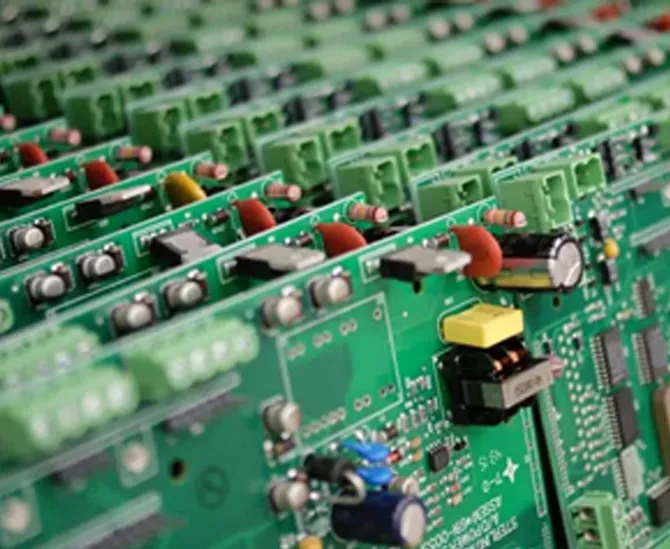
While the top 9 EMS behemoths focus almost exclusively on high-volume production, modern hardware engineering teams often hit a wall during R&D, rapid market validation, and mid-tier commercial scaling. Just like the PCB business, our PCBA services also specialise in prototyping and small-volume production, making 365PCB the one-stop destination for board fabrication and assembly. This arrangement makes your R&D work easy and time-saving. Our professional engineers and technicians will work closely with you through our customer service people to ensure the best quality and quickest possible lead time.
Fulfilling thousands of orders daily from around the world, we have established ourselves as the leading supplier of PCB and PCBA services for our consistent quality and excellent services. Our factory has self-developed the MES+ERP+IOT+ESD+APIS lean production management system. It is equipped with high-end equipment such as imported Fuji pick-and-place machines from Japan, 3D X-RAY, 3D SPI, self-developed MES, IQC incoming material inspection instruments, and intelligent first-piece inspection instruments. We are committed to providing high-quality small to medium batch production services.
Our complete assembly capabilities cover SMT Assembly, BGA Assembly, Through-Hole Assembly, Mixed Assembly, Rigid-Flex PCB Assembly Services, Electro-Mechanical Assembly, Box Build Assembly, Product Assembly, and Cable Assemblies, strictly compliant with IPC-A-610 Class 2 and Class 3 specifications. Discover our specialized Prototype PCB Assembly service to bypass Tier-1 minimum order delays.
Comprehensive Feature and Capability Comparison
To help you choose the right partner for your project's technical scope and order volume, here is how the dominant assembly tiers evaluate across critical manufacturing factors:
| Evaluation Metric | Mega Tier-1 (Foxconn, Jabil, Flex) | Specialized EMS (Sanmina, Plexus) | Agile Turnkey (365PCB) |
|---|---|---|---|
| Minimum Order Quantity (MOQ) | Very High (50,000 – 100,000+ units) | Moderate (2,500 – 10,000 units) | Zero MOQ (From 1 prototype board) |
| NPI & Engineering Turnaround | 8 to 16 weeks typical | 6 to 12 weeks typical | 24 hours to 5 business days |
| IPC Compliance Range | IPC-A-610 Class 2 & 3 | IPC-A-610 Class 3 / Aerospace | IPC-A-610 Class 2 & Class 3 |
| Placement Capabilities | Ultra-high-speed multi-line SMT | High-mix micro-BGA, heavy systems | Fuji high-speed SMT, 3D SPI, 3D X-Ray |
| Design for Manufacturing (DFM) Support | Standardized automated checks | Dedicated engineering teams | Real-time DFM analysis by engineers |
| Best Fit Lifecycle Stage | Massive, locked global commercialization | Long-lifecycle regulated industrial systems | Rapid R&D, pilot batches, small-to-mid scale |
Pros and Cons of Mega-Tier EMS vs. Agile Specialized Assembly
Selecting an assembly partner is not simply about picking the largest balance sheet. It is about matching your project's agility, engineering change frequency, and order volume to the factory's operational rhythm.
| Manufacturing Model | Operational Advantages (Pros) | Operational Drawbacks (Cons) |
|---|---|---|
| Mega-Tier EMS Providers (Foxconn, Jabil, Flex, Pegatron) |
|
|
| Agile High-Capability Assemblers (Specialized & Turnkey Solutions) |
|
|
Who Should Use Tier-1 Giants vs. Who Needs Agile Fabrication
In our testing of manufacturing pipelines across diverse industries, selecting the wrong partner type is the primary reason for missed product launch deadlines.
Who Needs a Tier-1 Manufacturer:
Global Consumer Electronics Brands: If you are manufacturing next-generation smartphones or smart home appliances exceeding 250,000 units annually, Tier-1 giants provide essential component volume discounts. Explore our insights on Consumer Electronics PCB systems for scalable layouts.
Automotive Tier-1 Suppliers: Automotive applications requiring specialized IATF 16949 lines and dedicated plant footprints benefit from Jabil or Flex's production capacity. Review critical safety considerations in Automotive PCB architecture.
Regulated Critical Infrastructure: Aerospace flight computers and mission-critical telecom nodes with locked five-year supply plans find reliable matches in Sanmina or Celestica. For high-frequency layouts, examine our notes on Telecommunication PCB manufacturing.
Who Should Avoid Tier-1s and Seek Agile Assembly:
Hardware Startups & R&D Labs: If your schematics are subject to change between revisions, a massive EMS will stall your schedule with costly engineering change orders. Use a dedicated Quick Turn PCB partner instead.
Industrial & Medical Device Innovators: For batches ranging between 100 and 10,000 boards, specialized facilities deliver better engineering oversight. Read more about safety-critical traces in Medical PCB designs.
Custom Industrial Control Developers: Automation systems, sensor arrays, and IoT gateways demand fast troubleshooting. Review layout strategies for Industrial Control PCB units.
Costly Mistakes Hardware Teams Make During Vendor Selection
From our experience on the factory floor, hardware developers repeatedly stumble into avoidable supply chain traps during the quotation and fabrication stages:
Splitting Board Fabrication and Assembly Across Different Vendors: When a board fails electrical testing, the assembly house will blame the bare board fabricator for poor surface finish planarity or pad oxidation. Conversely, the board fab will blame the assembly house's reflow profile. Consolidating both under one roof guarantees unambiguous accountability.
Treating the Bill of Materials (BOM) as Inflexible: Sourcing active silicon without validating lifecycle status often leads to sudden End-of-Life (EOL) or high lead-time notices. Hardware teams should leverage automated DFM checks to replace obsolete components before placing orders.
Skipping Pre-Reflow Automated Inspection: Optical verification should not wait until the board is completely assembled. Using high-resolution systems like PCB Actual Board Area (AOI) and 3D Solder Paste Inspection (SPI) prevents tombstoning, misalignments, and solder bridges before the board enters the reflow tunnel.
Neglecting Structural Electrical Verification: Optical inspection only confirms physical solder presence; it does not verify circuit functionality. Demanding comprehensive PCB Electrical Testing Service via flying probe or bed-of-nails fixtures is non-negotiable for commercial hardware.
Procurement Criteria: What to Verify Before Awarding a Contract
Before issuing a purchase order for printed circuit assembly, hardware teams should look past glossy sales presentations and verify these technical line capabilities:
Surface Mount Equipment Brands: Ask specifically what pick-and-place lines the factory runs. Top-tier operations deploy equipment like imported Fuji or Panasonic machines, ensuring tight component placement down to 0201 passives and 0.3mm pitch BGAs.
Quality Tracking Infrastructure: Ensure the facility runs a self-developed or enterprise Manufacturing Execution System (MES) paired with IoT and ESD protection to track board serial numbers through incoming component inspection, placement, reflow, and packaging.
DFM & Engineering Support: A reliable manufacturer will not blindly run your Gerber files. They will conduct deep Design for Manufacturability audits via PCB Design Support Services to spot thermal traps, insufficient pad clearances, and soldering shadow effects before cutting stencils.
Scalability to Production: While prototyping requires speed, verify that the partner can ramp production seamlessly when demand increases via a dedicated High-Volume Production PCB line without forcing you to re-qualify another vendor.
Expert Recommendation & Strategic Sourcing Verdict
We recommend adopting a balanced dual-tier sourcing strategy. If you are developing enterprise consumer products requiring millions of units, partnering with an EMS giant like Flex or Jabil is essential for securing components at scale. However, relying on them for new product introductions (NPI), rapid prototyping, or small-to-medium runs is an expensive mistake.
For engineering teams developing commercial hardware, specialized automation, or agile product batches, partnering with a responsive, high-precision manufacturer like 365PCB provides the ideal middle ground. You get Tier-1 assembly equipment, such as Japanese Fuji placement lines, 3D SPI, and automated X-ray inspection, paired with responsive engineering support and zero-MOQ requirements. Choose the manufacturer that matches your current production volume, not the one whose volume you hope to achieve five years from now.
Frequently Asked Questions (FAQ)
What is the difference between PCB fabrication and PCB assembly (PCBA)?
PCB fabrication is the process of creating the bare board using copper foil, glass-epoxy laminates (like FR-4), solder mask, and surface finishes. No active or passive components exist on the board. PCB assembly (PCBA) takes that bare board, applies solder paste, and uses automated pick-and-place machinery to solder components (integrated circuits, capacitors, resistors, connectors) onto the pads, creating a working electronic module.
What is the difference between IPC Class 2 and IPC Class 3 assembly?
IPC-A-610 Class 2 applies to general commercial electronics (televisions, home appliances, standard computers) where continued performance and extended life are expected, but uninterrupted service is not critical. IPC Class 3 covers high-reliability electronic products (medical life-support systems, aerospace, automotive braking, critical military hardware) where continuous uptime is mandatory, equipment downtime cannot be tolerated, and environmental conditions may be harsh. Class 3 imposes much stricter tolerances on solder barrel fill, component overhang, and inspection frequency.
Why do Tier-1 EMS companies reject small assembly orders?
Tier-1 companies like Foxconn and Pegatron run high-speed surface-mount lines that assemble tens of thousands of components per hour. Tearing down feeders, changing solder paste stencils, and reprogramming pick-and-place optical heads for a run of 50 or 500 boards costs more in lost line productivity than the entire order value. They are structurally engineered for sustained, high-volume production, not agile changeovers.
How does X-ray inspection ensure PCBA quality?
Modern integrated circuits frequently use Ball Grid Array (BGA) and Quad-Flat No-Leads (QFN) packaging where solder joints are hidden completely beneath the chip body. Standard optical and camera-based inspection cannot see underneath these packages. 3D X-ray inspection penetrates the component silicon and board substrate, verifying solder ball alignment, identifying solder bridging, and detecting internal void percentages within critical solder joints.
Should I supply my own components (consignment) or use turnkey assembly?
For most engineering teams, full turnkey assembly is faster and more cost-effective. Turnkey assembly places the burden of component procurement, packaging verification (reels, cut tapes), and counterfeit detection on the manufacturer's automated procurement system. Consignment often introduces delays due to damaged packaging, missing drop-in parts, incorrect reel pitch, or missing component overage margins required for high-speed feeder calibration.