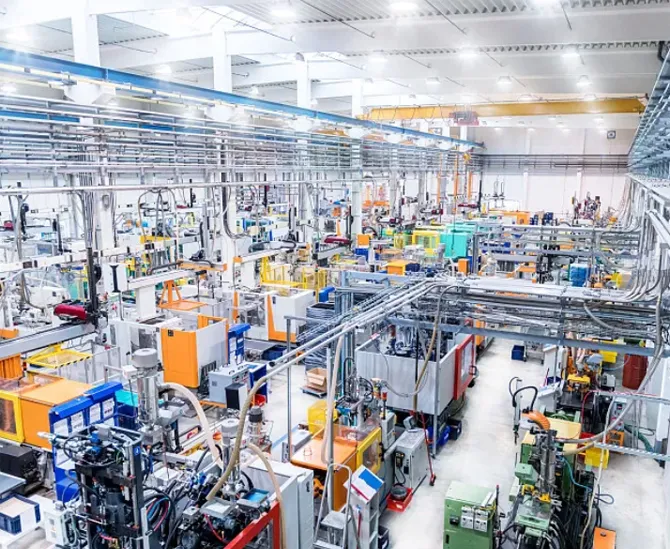
Authored by China 365PCB — A fully self-operated, full-industry-chain manufacturing group. With 15+ years of experience, China 365PCB operates over 100,000 square meters of production area. All facilities are self-owned and self-managed, ensuring total quality control, full process traceability, and unmatched production flexibility. From PCB fabrication, SMT assembly, online electronic component sourcing and integration, CNC machining, to complete OEM/ODM solutions, we guarantee no delay, no excuses. At 365PCB, our commitment to manufacturing excellence lies in Speed, Precision, and Responsibility. We never outsource, never compromise.
In the highly complex world of electronics manufacturing, successful product development begins long before the physical fabrication stage. It starts with meticulous engineering and rigorous adherence to industry best practices. Understanding the fundamental design considerations for a printed circuit board is the absolute cornerstone of bringing a reliable, cost-effective, and high-performance electronic product to the global market. Whether you are engineering a simple consumer device or a highly complex aerospace control unit, failing to address the correct design considerations for a printed circuit board will inevitably lead to manufacturing delays, signal failures, and catastrophic field malfunctions.
From our experience working with top-tier global clients over the past 15 years, we have seen countless prototype failures that could have been easily avoided during the CAD layout phase. Because China 365PCB operates a full-industry-chain manufacturing group from bare board fabrication to complete OEM/ODM solutions, we possess a unique, holistic view of the engineering lifecycle. We recommend that hardware engineers, project managers, and layout designers treat the following 10 design considerations for a printed circuit board as a mandatory checklist before generating any Gerber files.
1. Material Selection and Substrate Properties
The very first of the major design considerations for a printed circuit board revolves around the physical substrate. The material you choose dictates the mechanical strength, thermal endurance, and electrical performance of the entire assembly. While standard FR4 is the default choice for most applications, it is not a universal solution. For extremely cost-sensitive, low-frequency consumer electronics where mechanical stress is minimal, we recommend evaluating an FR2 PCB. Alternatively, high-frequency RF applications require specialized Custom PCB materials with strictly controlled dielectric constants (Dk) and low dissipation factors (Df). From our experience, mismatching the substrate material to the operating environment is a leading cause of premature board delamination and signal loss.
2. Layer Stack-Up and Sequential Lamination
Planning the layer stack-up is one of the most structurally critical design considerations for a printed circuit board. A poorly designed stack-up creates severe electromagnetic interference (EMI) issues and uneven thermal expansion, leading to board warping during the SMT assembly reflow process. We recommend a symmetrical stack-up to maintain mechanical balance. For high-density interconnect (HDI) designs that require complex routing in a constrained space, utilizing a Sequential Lamination PCB process is essential. This allows for multiple pressing cycles to create buried structures, isolating sensitive analog signals from noisy digital power planes.
3. Trace Width, Spacing, and Current Capacity
Calculating the correct trace width is a non-negotiable step among the design considerations for a printed circuit board. Traces that are too narrow for the electrical current they carry will overheat, potentially burning the substrate and causing a fire hazard. Designers must consult IPC-2221 standards to determine the minimum trace width based on the required amperage and allowable temperature rise. Furthermore, adequate spacing between traces is required to prevent electrical arcing, especially in high-voltage designs. We recommend utilizing polygon pours for high-current power rails to drastically reduce trace resistance.
4. Strategic Via Selection and Placement
Vias are the vertical conductive pathways connecting different layers of the board. Selecting the right type of via heavily influences the routing density and the manufacturing cost, making it one of the core design considerations for a printed circuit board. Standard through-hole vias are cost-effective but consume valuable real estate on every single layer. From our experience with compact OEM/ODM solutions, we highly recommend utilizing a Blind Via PCB architecture. Blind vias connect an outer layer to an adjacent internal layer without penetrating the entire board, freeing up routing channels on the layers below and significantly shrinking the overall footprint of the device.
5. Component Placement and Footprint Verification
The physical arrangement of components dictates both electrical performance and manufacturability. One of the practical design considerations for a printed circuit board is grouping logically connected components together to keep trace lengths as short as possible. High-speed components should be placed away from noisy power supplies. At China 365PCB, our online electronic component sourcing and integration team frequently encounters footprint mismatch errors. We recommend rigorously verifying all CAD footprints against the manufacturer datasheets before layout completion. Proper component spacing is also vital to allow our automated SMT assembly nozzles to pick and place parts without collision.
6. Thermal Management and Heat Dissipation
As electronic components become smaller and more powerful, managing the heat they generate is one of the most pressing design considerations for a printed circuit board. Heat-generating components, such as microprocessors and power MOSFETs, must have adequate cooling mechanisms designed directly into the copper layout. We recommend incorporating large thermal pads, thermal relief connections, and thermal vias to transfer heat from the surface layer into internal ground planes, which act as massive heat sinks. Ignoring thermal design considerations for a printed circuit board will result in thermal throttling, reduced component lifespan, and eventual system failure.
7. Signal Integrity and Electromagnetic Compatibility
For high-speed digital designs, maintaining signal integrity is perhaps the most mathematically complex of the design considerations for a printed circuit board. Fast rise times create electromagnetic fields that can couple into adjacent traces, a phenomenon known as crosstalk. To combat this, we recommend routing high-speed differential pairs (like USB or HDMI) with strictly controlled impedance, ensuring they run parallel with matched lengths. Furthermore, maintaining a solid, unbroken ground plane directly beneath high-speed signal traces provides a low-impedance return path, which is critical for passing stringent FCC or CE electromagnetic compatibility (EMC) certifications.
8. Surface Finish Selection
The copper traces on a bare board will rapidly oxidize if left exposed to the atmosphere, rendering them unsolderable. Therefore, selecting the appropriate surface finish is one of the vital design considerations for a printed circuit board. While HASL (Hot Air Solder Leveling) is common, it is often too uneven for fine-pitch components. For precise, flat surfaces, we recommend ENIG (Electroless Nickel Immersion Gold) or an Immersion Tin PCB finish. An Immersion Tin PCB provides an exceptionally flat surface ideal for fine-pitch QFN and BGA components, while offering excellent solderability and cost-effectiveness for high-volume production runs.
9. Design for Manufacturability (DFM) and Automated Inspection
Designing a board that functions in simulation is entirely different from designing a board that can be manufactured efficiently at scale. Design for Manufacturability (DFM) encompasses all the design considerations for a printed circuit board that ensure the factory can actually build your product without excessive defect rates. This includes respecting minimum annular ring sizes, avoiding acid traps in acute angle traces, and providing adequate fiducial marks for pick-and-place machines. At China 365PCB, our self-managed facilities utilize advanced PCB Actual Board Area (AOI) — Automated Optical Inspection — to scan every inch of the copper layers. We recommend engaging with our engineering team early in the design phase to align your layout with our PCB Actual Board Area (AOI) parameters, ensuring total quality control.
10. Industry-Specific Compliance and Environmental Factors
The final pillar of design considerations for a printed circuit board is understanding the specific environment where the product will operate. A board designed for a climate-controlled office will fail miserably in an outdoor desert environment. For the healthcare sector, a Medical PCB must adhere to ISO 13485 standards, requiring exceptional reliability, bio-compatibility of certain materials, and strict traceability. Conversely, a Solar PCB exposed to extreme UV radiation and massive temperature fluctuations requires high-Tg (glass transition temperature) laminates and heavy copper layers to handle immense power loads. From our experience, defining these environmental parameters on day one is the most critical of all design considerations for a printed circuit board.
Summary Table of Design Considerations
| Design Consideration | Key Engineering Focus | China 365PCB Solution / Recommendation |
|---|
| 1. Material & Substrate | Dielectric properties, cost, mechanical strength | FR2 PCB for cost-saving; Custom PCB for high-frequency |
| 2. Layer Stack-Up | EMI reduction, routing density, thermal balance | Sequential Lamination PCB for complex HDI architectures |
| 3. Trace & Current Capacity | Preventing overheating and voltage drops | Strict IPC-2221 compliance and heavy copper pours |
| 4. Via Selection | Maximizing routing space, minimizing layer counts | Blind Via PCB technology for high-density layouts |
| 5. Component Placement | Signal length, SMT machine collision avoidance | Online electronic component sourcing and integration verification |
| 6. Thermal Management | Heat dissipation, preventing thermal throttling | Strategic thermal via arrays and internal heat sinks |
| 7. Signal Integrity | Impedance control, crosstalk, EMC/EMI | Unbroken ground planes and matched differential pairs |
| 8. Surface Finish | Solderability, surface flatness, shelf life | Immersion Tin PCB for fine-pitch SMT assembly |
| 9. DFM & Testing | Yield rates, manufacturability, defect detection | Rigorous PCB Actual Board Area (AOI) implementation |
| 10. Industry Compliance | Environmental endurance, regulatory standards | Specialized manufacturing for Medical PCB and Solar PCB |
Frequently Asked Questions (FAQs)
Why are design considerations for a printed circuit board important before manufacturing?
Addressing all design considerations for a printed circuit board ensures that the final product is manufacturable, reliable, and cost-effective. Ignoring these principles leads to electrical shorts, EMI failures, thermal damage, and expensive production delays. Because China 365PCB never outsources, getting the design right ensures we can deliver 365 days of fast manufacturing without interruption.
How does component placement affect the design considerations for a printed circuit board?
Component placement dictates trace length, which directly impacts signal integrity and thermal distribution. From our experience, poor placement is the leading cause of routing bottlenecks. We recommend grouping related circuits together to simplify routing and improve SMT assembly efficiency.
What are the specific design considerations for a printed circuit board used in outdoor solar applications?
A Solar PCB must endure high voltages, extreme temperatures, and moisture. The primary design considerations for a printed circuit board in this sector include selecting high-Tg materials, utilizing heavy copper (2oz or more) for current carrying capacity, and applying conformal coating for environmental protection.
Can China 365PCB help optimize my design considerations for a printed circuit board?
Absolutely. As a fully self-operated manufacturing group with over 100,000 square meters of production area, our engineering team provides comprehensive DFM checks. We review your design considerations for a printed circuit board to ensure absolute reliability from PCB fabrication through to complete OEM/ODM integration.
References
 English