When you need to buy PCB board, choosing the cheapest supplier is usually the most expensive mistake.
From our experience in PCB manufacturing, the right purchasing decision depends on application requirements,
material selection, manufacturing capability, quality control, and long-term reliability.
China 365PCB has spent more than 15 years developing complete PCB manufacturing solutions, including PCB fabrication,
SMT assembly, component sourcing, CNC machining, cable harness assembly, and OEM/ODM services.
With more than 100,000㎡ of production facilities, our approach is simple: a PCB is not just a circuit board,
it is the foundation of product performance.
Quick Answer: What Is the Best Way to Buy PCB Board?
The best way to buy PCB board is to first define your technical requirements, then select a manufacturer
with proven production capability rather than choosing only by price. For prototypes, speed and engineering support matter most.
For commercial production, consistency, certifications, and supply chain stability become the deciding factors.
| Category | Recommendation |
|---|
| Prototype projects | Choose PCB prototype services with fast turnaround and engineering support |
| Consumer electronics | Select reliable FR4 PCB or multilayer solutions |
| High-performance devices | Consider High TG PCB, HDI PCB, or advanced materials |
| Flexible applications | Use FPC PCB or rigid-flex solutions |
| Mass production | Work with manufacturers offering full process control |
Table of Contents
What Is a PCB Board?
A PCB board, or printed circuit board, is the mechanical and electrical platform that connects electronic components through
conductive copper pathways. Almost every modern electronic device relies on PCB technology, from smartphones and industrial equipment
to automotive systems and medical electronics.
Many buyers focus only on board thickness, layers, and price. However, professional engineers understand that PCB performance
depends on a combination of material properties, copper thickness, impedance control, thermal performance, and manufacturing precision.
For example, a simple consumer device may perform well with a standard FR4 PCB, while a communication system may require
high-speed PCB technology because signal integrity becomes critical.
How PCB Manufacturing Works
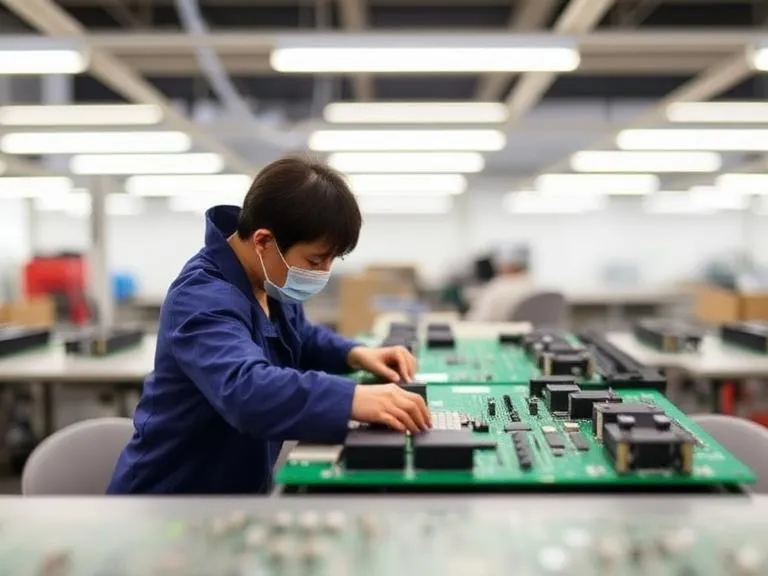
A professional PCB manufacturing process involves multiple controlled steps including material preparation, imaging, etching,
lamination, drilling, plating, solder mask application, surface finishing, electrical testing, and final inspection.
From our manufacturing experience, quality problems usually do not come from one single step. They happen when suppliers lack
process control between stages. This is why experienced manufacturers invest heavily in traceability systems and inspection equipment.
China 365PCB provides a complete production chain instead of only board fabrication. This allows customers to reduce communication
issues between PCB production, assembly, and final product integration.
5 Practical Ways to Buy PCB Board Successfully
1. Buy PCB Board Based on Your Application Requirements
The first step is understanding what your PCB needs to achieve. Different products require different PCB structures.
A basic controller may only need a simple board, while advanced electronic systems may require specialized materials such as
High TG PCB,
HDI PCB, or multilayer designs.
| Application | Recommended PCB Type |
|---|
| Basic electronics | Single layer or 2 layer PCB |
| Industrial equipment | Multilayer PCB with higher reliability |
| Automotive electronics | High TG and thermal-resistant PCB |
| Wearable devices | Flexible PCB solutions |
| High-speed communication | High-frequency PCB materials |
2. Choose Between Prototype and Mass Production Suppliers
Not every PCB manufacturer is equally suitable for every order size. A prototype supplier may prioritize quick delivery,
while a production manufacturer must focus on repeatability.
For beginners and product developers, we recommend starting with a supplier that provides engineering feedback.
A small design correction before production can prevent thousands of dollars in future failures.
For commercial users, production stability matters more than the lowest initial quotation.
3. Evaluate PCB Material Quality Before Ordering
The PCB substrate directly affects durability, electrical performance, and operating temperature.
Common materials include FR4, aluminum PCB, ceramic PCB, PTFE PCB, and polyimide materials.
For demanding environments, customers often choose advanced solutions such as
FR4 PCB or specialized thermal materials.
4. Check Manufacturing Capability and Quality Control
A reliable PCB supplier should demonstrate production capability, testing procedures, and manufacturing experience.
Important evaluation points include:
Production equipment capability
Layer count capability
Material sourcing control
Electrical testing procedures
Quality certification systems
Engineering support
In most professional situations, supplier transparency is a better indicator than a low quotation.
5. Consider Complete PCB Assembly Support
Buying only bare boards may not always be the most efficient solution. Many businesses now prefer suppliers that can handle
PCB fabrication, component sourcing, and assembly together.
China 365PCB provides full-industry-chain services, helping customers move from prototype concepts to finished electronic products.
For complex semiconductor applications, specialized solutions such as
IC substrate PCB and
FC-CSP PCB require experienced manufacturing partners.
 English