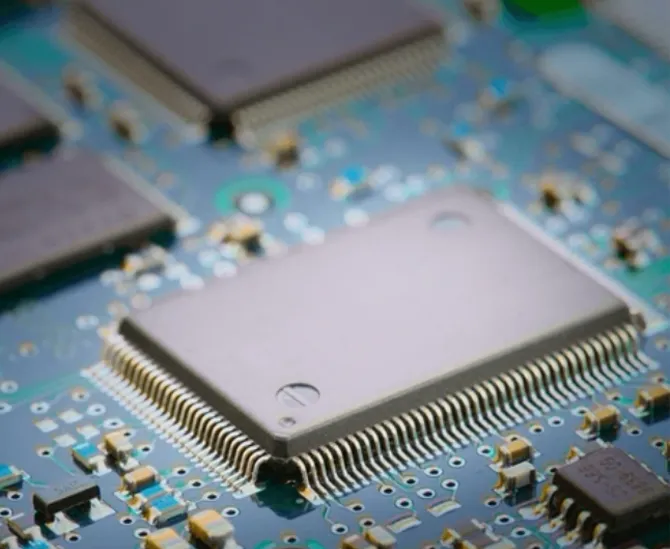
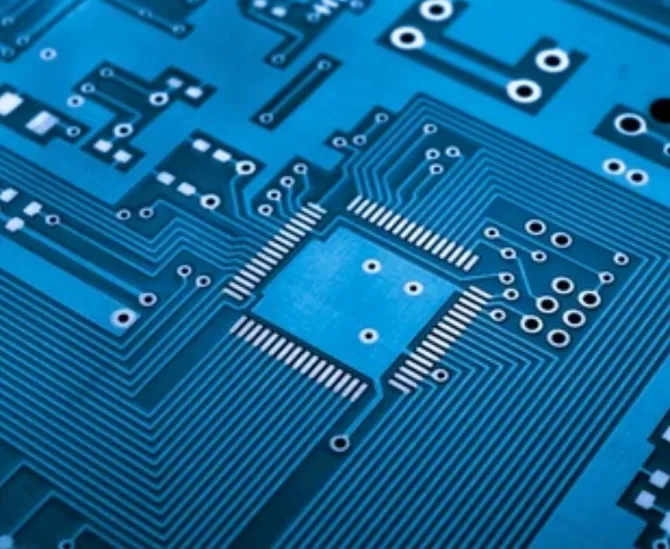
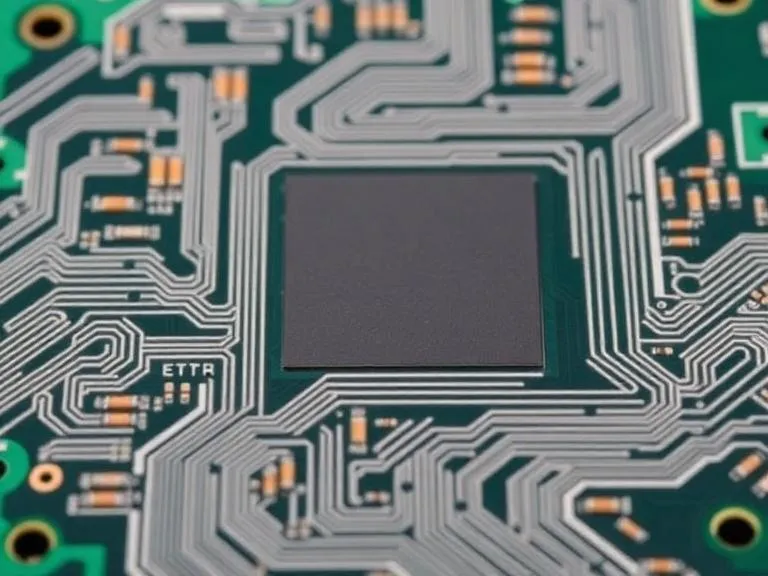
In the unforgiving arena of hardware development, the transition from an idealized CAD file to a physical, functioning printed circuit board is where most projects bleed capital. Countless engineering teams spend months perfecting an Industrial Control PCB layout, only to select the cheapest, most opaque vendor for their initial fabrication. From our experience at China 365PCB, treating your prototype fabricator as a disposable, lowest-bidder vendor is a catastrophic engineering mistake. A poor prototype fabricator will mask critical design flaws through sloppy manufacturing, ultimately leading to massive recall costs when the product hits mass production.

In most professional situations, a premier circuit board prototyping service is not just a printing press; it is an extension of your engineering department. You must exercise commercial and practical judgment when evaluating these partners. Can they handle blind and buried vias? Do they perform rigorous Design for Manufacturability (DFM) audits before cutting fiberglass? Will they force you to redesign your entire board stackup when you finally decide to scale to 10,000 units? In this definitive guide, we take a rigid, opinionated stance on the global fabrication market. We evaluate the 10 best circuit board prototyping service providers available in 2026, breaking down exactly whether you should use them, what to avoid, and how to seamlessly bridge the "valley of death" between prototype and mass manufacturing.
Quick Answer: The Best Prototyping Services by Application
If you are actively seeking a reliable circuit board prototyping service, your choice must align with your project's maturity and end-use application:
Best for Seamless Scaling to Mass Production (The Commercial Choice): China 365PCB. Unmatched for engineering teams that intend to move from a 50-unit prototype run directly into tens of thousands of units without re-engineering the board for a new factory.
Best for Hobbyists and Ultra-Low Budgets: JLCPCB. The undisputed king of cheap, fast, 2-layer FR4 boards. Expect zero engineering support, but the price cannot be beaten for simple projects.
Best for High-Security US Defense/Aerospace: Sierra Circuits. A highly specialized, ITAR-compliant domestic fabricator. Exceptional quality, but expect astronomical pricing that makes them unviable for standard commercial goods.
We recommend that commercial users bypass ultra-budget pool fabricators. If your prototype dictates the architecture of a final retail product, invest in a facility that offers robust DFM checks and comprehensive X-Ray inspection.
What It Is: The Modern Prototyping Ecosystem
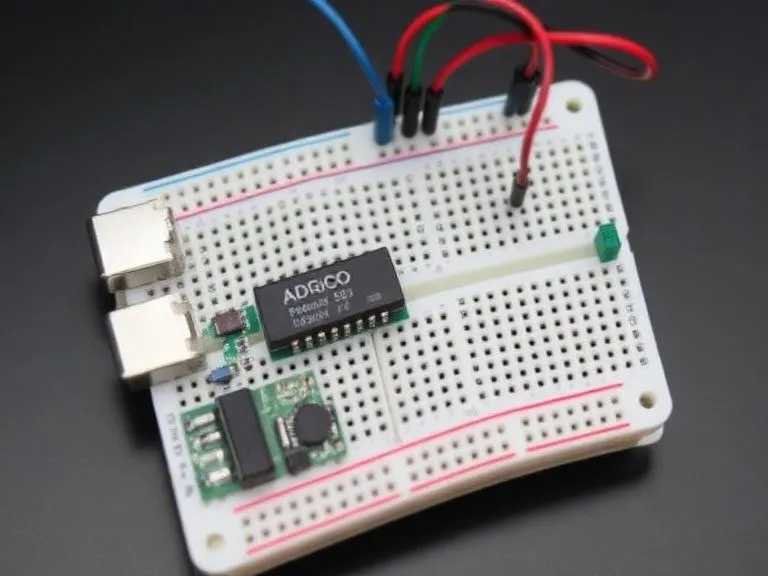
A circuit board prototyping service is a highly specialized manufacturing model designed to produce very small batches of printed circuit boards (PCBs) rapidly—often within 24 to 72 hours. Unlike mass manufacturing, which relies on heavy upfront tooling costs and optimized panelization to drive down the cost per unit, prototyping facilities are optimized for agility. They utilize Laser Direct Imaging (LDI) and flying probe testers to eliminate the need for expensive custom stencils and bed-of-nails testing fixtures.
How It Works: Rapid Turnaround Mechanics
How it works defines the quality of your board. When you upload your Gerber files, a high-end service immediately runs an automated Design for Manufacturability (DFM) check. They look for acid traps, insufficient annular rings, and solder mask slivers. For heavy-duty applications, such as an Automotive PCB, this step is critical. Once cleared, the board enters fabrication. Budget providers will "pool" your board onto a massive panel alongside designs from twenty other customers to save money. Premium providers run dedicated panels, ensuring your specific impedance control requirements and copper weight specifications are perfectly met.
The Top 10 Circuit Board Prototyping Services
In our testing and continual industry auditing, we have evaluated the global landscape of PCB fabricators. Here are the 10 most relevant players in the market today.
1. China 365PCB (The Scaling Champion)

We place our own manufacturing capabilities at the forefront for commercial developers. The unique advantage of China 365PCB is the elimination of the "prototype-to-production" gap. When we build a Medical PCB prototype, we engineer it using the exact same machinery, laminates, and DFM rules that will be used for the 100,000-unit mass production run. This guarantees that your prototype behaves identically to your final product.
2. JLCPCB
Based in China, JLCPCB dominates the hobbyist and maker movement. They offer aggressively cheap pricing for standard 2-layer and 4-layer boards. If you are building a simple Arduino shield, they are fantastic. However, for complex impedance-controlled boards or heavy copper requirements, their automated pooling system falls short.
3. PCBWay
A direct competitor to JLCPCB, PCBWay offers a slightly wider array of advanced materials (like Rogers laminates for RF applications) and flex PCB options. They are a solid mid-tier option for a circuit board prototyping service, though their customer service can be inconsistent during peak demand.
4. Sierra Circuits
Located in Silicon Valley, Sierra Circuits is the gold standard for domestic, ultra-complex quick turns. If you are developing a highly classified Military PCB and need it in 24 hours, they are the go-to. The trade-off is extreme cost; you will pay a massive premium for their domestic, ITAR-compliant operations.
5. Eurocircuits
For European hardware developers, Eurocircuits is highly reliable. They offer a phenomenal online DFM visualization tool that flags errors before you pay. They strictly focus on European manufacturing, making them excellent for EU companies wanting to avoid Asian import tariffs or long shipping times.
6. Advanced Circuits (4PCB)
A staple in the American manufacturing sector. They are well-known for their student discounts and reliable standard-spec boards. However, their web interface and ordering system feel somewhat antiquated compared to modern overseas disruptors.
7. MacroFab
MacroFab operates on a cloud manufacturing model. They act as an aggregator, taking your design and routing it to a network of vetted North American factories. Their software platform is brilliant for supply chain visibility, but you lose direct factory-floor communication.
8. Sunstone Circuits
Based in Oregon, Sunstone offers excellent domestic customer support. They integrate smoothly with major PCB design software, allowing engineers to push designs directly to fabrication. They are highly reliable for mid-complexity boards.
9. Rush PCB
Living up to their name, Rush PCB focuses heavily on expedited delivery for complex multi-layer boards. They cater specifically to engineers who have missed deadlines and are willing to pay heavy expedite fees to get a board delivered over the weekend.
10. Epec Engineered Technologies
Epec stands out for custom form factors. If your prototype requires extreme flexibility, heavy copper for high-current applications, or custom battery pack integration, Epec possesses the specialized engineering knowledge to execute difficult, non-standard jobs.
Benefits of Professional Prototyping
The primary benefit of utilizing a premium circuit board prototyping service is the preservation of engineering hours. Debugging a circuit is hard enough; debugging a circuit where you cannot trust the physical fabrication of the board is a nightmare. A professional service guarantees electrical continuity, precise via plating, and exact trace widths, ensuring that if a prototype fails, it is an engineering flaw, not a manufacturing defect.
Limitations and Engineering Risks
We must use commercial and practical judgment: prototypes can be deceptive. The biggest limitation is that a board optimized for a quick-turn prototype might not be financially viable for mass production. For example, using expensive plugged-and-capped vias to save space on a prototype might cost an extra $5 per board. At a volume of 50 boards, that is acceptable. At 50,000 boards, that design choice ruins your profit margin. You must prototype with mass production constraints in mind.
Who Should Use a Premium Service
For Commercial Users & Enterprise Teams: If your product is headed for retail shelves, or if you are designing a high-reliability Aerospace PCB, you must use a tier-1 circuit board prototyping service. You require extensive material certifications, impedance test reports, and the ability to seamlessly scale your order without redesigning the stackup.
Who Does Not Need Premium Fabs
For Beginners & Hobbyists: If you are a university student building a basic 5V logic board for a robotics class, or an enthusiast fixing a broken radio, you do not need to pay for heavy DFM engineering or premium Rogers materials. Budget pooling services (like JLCPCB) are entirely sufficient and highly cost-effective for simple consumer applications.
Common Procurement Mistakes
From our experience, the most catastrophic mistake engineers make during the prototyping phase is failing to request an X-Ray inspection for BGA (Ball Grid Array) components. A visual inspection cannot see beneath a complex microchip. Utilizing a PCB X-Ray Inspection Service during prototyping is mandatory to ensure there are no hidden solder bridges or voids that will cause intermittent, ghost failures during beta testing.
Expert Buying Considerations
When selecting your fabrication partner, do not look solely at the lead time for the bare board. A 24-hour bare board is useless if the factory cannot assemble (solder) the components for another three weeks. Look for turnkey services that handle component sourcing and PCBA (Printed Circuit Board Assembly) under one roof. Furthermore, if you are designing for EV PCB applications, verify that the manufacturer can handle heavy copper weights (3oz to 6oz) required for thermal dissipation.
Summary and Comparison Tables
Comparison Table: Budget vs. Premium Prototyping
| Feature | Budget Pooling Service (e.g., JLCPCB) | Premium Tier-1 Service (e.g., China 365PCB) |
|---|
| Engineering Support (DFM) | Minimal (Automated rejection only) | Extensive (Human engineers flag optimization) |
| Material Selection | Restricted to standard FR4 / Aluminum | Unlimited (Rogers, Teflon, Polyimide, Heavy Copper) |
| Impedance Control | Loose tolerances (±10% or worse) | Strict tolerances (±5%) with test reports |
| Path to Mass Production | Poor (Focus is only on low-volume runs) | Seamless (Prototype constraints match mass fab) |
| Cost per Prototype | Very Low | Moderate to High |
Pros and Cons of Turnkey Prototype Assembly
| Pros | Cons |
|---|
| Eliminates the risk of components being damaged during transit to a secondary assembler. | Higher upfront cost compared to hand-soldering in-house. |
| The factory utilizes automated pick-and-place machines, ensuring pinpoint accuracy for microscopic 0201 components. | Lead times can be extended if the factory struggles to source obscure microchips. |
| Access to professional X-Ray and Automated Optical Inspection (AOI) testing. | Requires highly accurate BOM (Bill of Materials) and Pick-and-Place files. |
Expert Recommendation & Integrated Solutions
Is it actually worth paying more for a premium circuit board prototyping service? If you are building a commercial product, unequivocally yes. The cost of a failed prototype iteration—measured in lost engineering weeks and delayed time-to-market—dwarfs the few hundred dollars saved by using a budget fab. We recommend that hardware teams partner with a manufacturer that possesses the heavy-duty infrastructure to support your product not just today, but three years from now when you are ordering 50,000 units a month.
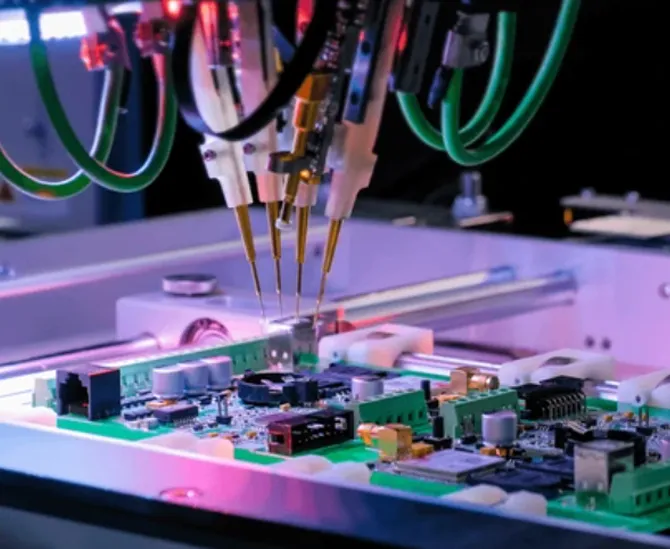
Certified PCB Assembly Services
Do not let a sub-standard prototype derail your product launch. China 365PCB delivers guaranteed quality and reliability through our internationally certified PCB assembly processes, ensuring your products meet the highest global standards for performance, safety, and compliance.
Whether you are developing advanced Consumer Electronics PCB designs or high-reliability infrastructure, our facility bridges the gap between rapid prototyping and seamless mass manufacturing. We provide comprehensive DFM, turnkey component sourcing, and rigorous testing protocols to protect your engineering investment.
Explore Certified Assembly SolutionsFor specialized, high-frequency applications like Telecommunication PCB development, ensure you speak directly with our engineering team regarding dialectic material selection before finalizing your stackup.
Frequently Asked Questions
What is the difference between a prototype PCB and a production PCB?
A prototype PCB is manufactured in very low quantities (usually 5 to 50 boards) to verify the engineering design, test signal integrity, and validate components. Production PCBs are manufactured in the thousands, focusing on cost-efficiency, panelization, and strict, repeatable quality control over massive batches.
How fast can a circuit board prototyping service deliver my boards?
In most professional situations, a premium circuit board prototyping service can deliver bare boards in 24 to 48 hours. If you require turnkey assembly (PCBA) where components are actually soldered to the board, expect turnaround times between 5 and 10 days, heavily dependent on global component availability.
Do cheap PCB manufacturers compromise on quality?
Yes. Ultra-budget fabricators routinely pool multiple customer designs onto a single panel, restricting material choices and skipping rigorous human-led Design for Manufacturability (DFM) checks. For simple hobby projects, this is acceptable. For complex commercial products, it often results in failed boards and lost engineering time.
What is DFM and why does my prototype need it?
Design for Manufacturability (DFM) is the process of reviewing a CAD design to ensure it can be physically manufactured without defects. A good prototyping service will flag traces that are too close, drill holes that lack sufficient copper padding, or footprints that will cause tombstoning during assembly.
Industry References & Authoritative Guidelines
To ensure our manufacturing guidance and engineering protocols adhere to global standards, China 365PCB references the frameworks established by the following authoritative organizations:
IPC (Association Connecting Electronics Industries): The premier global trade association that establishes the definitive standards for the assembly and production requirements of electronic equipment, notably the IPC-A-600 (Acceptability of Printed Boards). Review IPC Manufacturing Standards
IEEE (Institute of Electrical and Electronics Engineers): The world's largest technical professional organization, providing critical, peer-reviewed research on signal integrity, high-frequency materials, and advanced prototyping methodologies. Review IEEE Engineering Data
International Organization for Standardization (ISO): The governing body dictating rigorous quality management systems (such as ISO 9001 and ISO 13485 for medical devices), ensuring traceability and reliability in PCB fabrication. Review ISO Quality Protocols
David Li
David Li is the Technical Communications Director at China 365PCB, with over 15 years of hands-on experience in the PCB and electronics manufacturing industry. Holding a Master’s degree in Electrical Engineering, he has worked extensively in both R&D and manufacturing roles at leading multinational electronics firms in Shenzhen before joining our team.
His expertise spans high-speed digital design, advanced packaging (HDI, Flex), and automotive-grade reliability standards. David is passionate about bridging the gap between design intent and production reality—a philosophy that aligns perfectly with 365PCB’s mission to deliver seamless, rapid, and fully-integrated manufacturing solutions.
Follow David’s insights on PCB technology trends and best practices here on the 365PCB Knowledge Hub.
 English