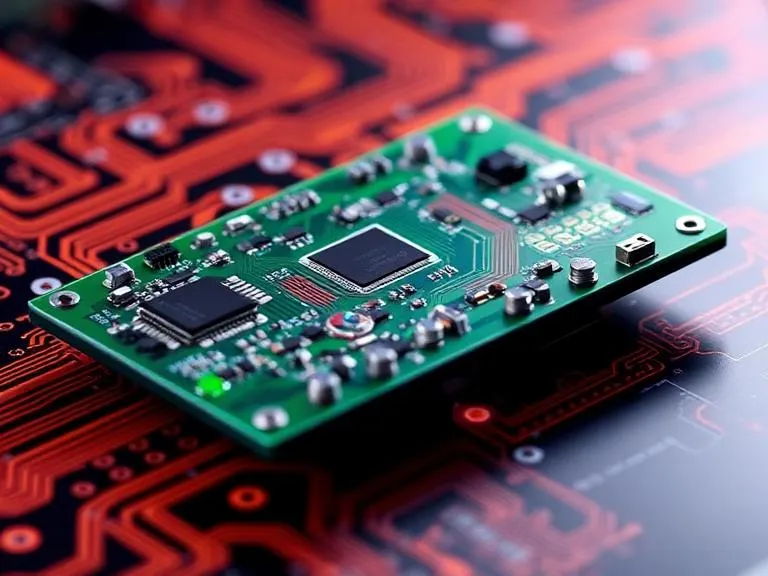
Scaling a hardware product from a functional prototype to a million-unit global rollout is the most dangerous phase in the hardware lifecycle. Transitioning into mass production is not merely a matter of ordering more parts; it requires a fundamental shift in supply chain logistics, quality assurance tolerances, and financial risk management. Relying on a boutique prototyping shop to handle your global fulfillment is a guaranteed path to catastrophic failure. If you want to survive the brutal economics of consumer electronics, automotive modules, or industrial controllers, you must secure a Tier 1 or Tier 2 Electronic Manufacturing Services (EMS) provider that operates with ruthless efficiency.
From our experience engineering advanced circuit boards and managing massive assembly lines at China 365PCB, the companies that fail at scale do so because they treat their EMS provider as a silent vendor rather than an integrated operational partner. An EMS Partner for High-Volume Electronics Manufacturing controls your product quality, your intellectual property, and your unit economics. In this definitive guide, we will cut through the corporate jargon to deliver commercial and practical judgment on exactly how to vet, select, and integrate an EMS partner capable of sustaining heavy-duty mass production.
Quick Answer: Choosing an EMS Partner for High-Volume Electronics Manufacturing
Selecting the right EMS Partner for High-Volume Electronics Manufacturing requires evaluating three critical pillars: automated production capacity, robust component procurement networks, and inline quality control. Do not choose a partner based solely on the lowest quote. You must verify their ISO certifications, audit their supply chain resilience to mitigate chip shortages, and ensure they utilize advanced automated optical inspection (AOI) and X-ray systems. We recommend running a paid New Product Introduction (NPI) trial run to validate their Design for Manufacturing (DFM) feedback before signing a multi-million-dollar master supply agreement.
What It Is: Defining High-Volume EMS
An EMS Partner for High-Volume Electronics Manufacturing is an outsourced factory infrastructure that specializes in building tens of thousands to millions of identical electronic assemblies. Unlike low-volume/high-mix facilities that prioritize flexibility and rapid changeovers, a high-volume EMS prioritizes speed, automation, and fraction-of-a-cent cost reductions. These entities do not just solder components onto bare boards; they handle global component procurement, plastic injection molding, final box build assembly, firmware flashing, and direct-to-distribution logistics.
In most professional situations, the distinction between a board house and a true EMS is supply chain leverage. A high-volume EMS possesses the purchasing power to negotiate directly with semiconductor manufacturers, bypassing standard distributors to secure raw silicon allocations during global shortages. They offer a comprehensive High-Volume Production PCB ecosystem that absorbs the operational liabilities that would otherwise crush a brand owner.
How It Works: The Mass Production Pipeline
The transition to a high-volume EMS does not begin on the assembly line; it begins with New Product Introduction (NPI). Before a single solder joint is reflowed at scale, the EMS engineering team executes a rigorous Design for Manufacturing (DFM) and Design for Testing (DFT) analysis. Utilizing dedicated PCB Design Support Services, they will strip your bill of materials (BOM) to identify end-of-life (EOL) components, optimize trace routing to prevent tombstoning during reflow, and design custom testing jigs.
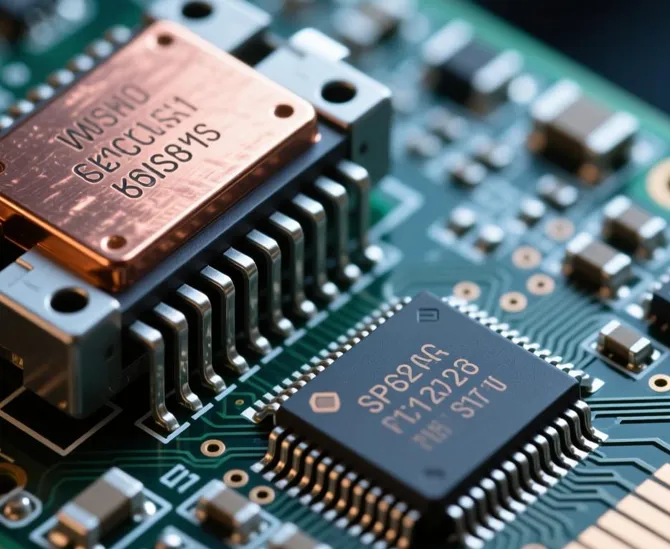
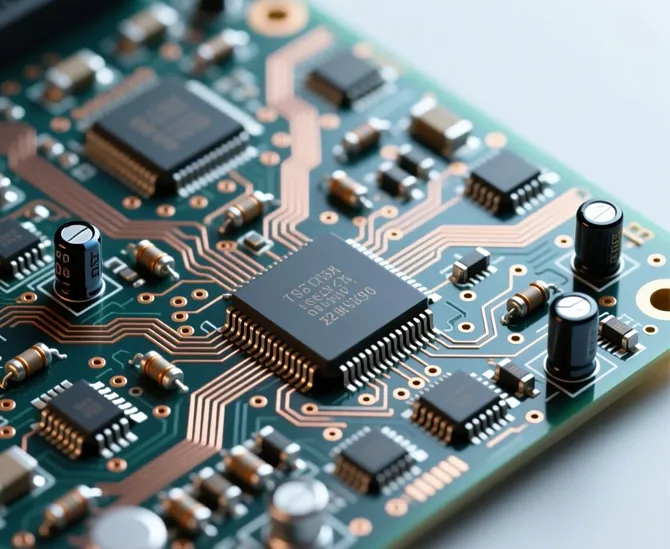
Once the design is validated, the mass production machinery takes over. Bare printed circuit boards are loaded into high-speed Surface Mount Technology (SMT) pick-and-place machines capable of placing over 100,000 components per hour. The boards pass through multi-zone reflow ovens. To guarantee yield rates, the boards are subjected to immediate PCB Actual Board Area (AOI) scanning to detect misaligned resistors, followed by a PCB X-Ray Inspection Service to verify the hidden solder spheres beneath Ball Grid Array (BGA) components. Defective boards are flagged, while passing boards move to through-hole wave soldering, final mechanical assembly, and packaging.
Benefits of Outsourcing at Scale
The primary benefit of utilizing an EMS Partner for High-Volume Electronics Manufacturing is the dramatic reduction in the Cost of Goods Sold (COGS). By leveraging the massive procurement networks of an established EMS, you gain access to tier-one component pricing that is mathematically impossible to secure as an independent brand. Furthermore, you convert massive fixed capital expenditures—such as purchasing million-dollar SMT lines and testing equipment—into predictable variable costs.
Another massive commercial advantage is yield consistency. In a high-volume environment, human error is engineered out of the process. Automated optical inspection and inline PCB Electrical Testing Service protocols ensure that failure rates drop to parts-per-million (PPM) levels, drastically reducing your warranty returns and protecting your brand reputation in the market.
Limitations and Hidden Risks
We do not ignore the harsh realities of mass production. The greatest limitation of high-volume manufacturing is intense operational rigidity. Once a production line is programmed, tuned, and running, implementing an engineering change order (ECO) is notoriously slow and expensive. If you discover a design flaw after the line has started, you will be liable for thousands of scrapped boards and massive downtime penalties.
Additionally, securing an EMS Partner for High-Volume Electronics Manufacturing requires substantial upfront capital. You will face heavy Non-Recurring Engineering (NRE) costs to build custom solder stencils, wave soldering pallets, and injection mold tooling. If you are operating on a tight budget and need constant, rapid iterations, a high-volume facility is the wrong environment. You should rely on a Quick Turn PCB provider until your design is absolutely locked.
Who Should Use High-Volume EMS
For commercial users whose business models depend on scaling hardware globally, a high-volume EMS is mandatory. This is the exclusive domain of brands operating in the Consumer Electronics PCB space, where margins are razor-thin and millions of units must hit store shelves simultaneously for holiday releases. It is also critical for heavy-duty applications in the Automotive PCB sector and the Medical PCB industry, where maintaining strict ISO 13485 or IATF 16949 compliance at scale is a legal requirement.
Who Does Not Need It
For beginners, hardware startups running Kickstarter campaigns, or boutique manufacturers building highly specialized Custom PCB equipment for aerospace applications, locking into a high-volume EMS is financial suicide. These businesses rarely meet the Minimum Order Quantities (MOQs) required to keep an automated SMT line profitable. Instead, they require low-volume, high-mix (LVHM) assembly partners who prioritize flexibility over absolute scale.
Common Mistakes in Vendor Selection
In our testing and decades of supply chain management, the single most destructive mistake a brand can make is selecting an EMS partner based exclusively on the lowest initial per-unit quote. Low-tier manufacturers routinely submit under-market bids to win the contract, only to silently swap specified brand-name capacitors with inferior gray-market knockoffs to recover their margins. This practice guarantees catastrophic failure in the field.
Another profound error is failing to audit the factory's intellectual property (IP) protection protocols. If your EMS partner does not possess partitioned data networks, secure manufacturing floors, and a proven track record of protecting firmware, you risk your proprietary designs being leaked to generic competitors before your product even officially launches.
Critical Buying Considerations
When selecting your manufacturing partner, you must conduct a rigorous, on-site physical audit. Evaluate their Enterprise Resource Planning (ERP) software—can they trace a specific reel of microchips to the exact serial number of the finished product? This traceability is non-negotiable for recalls. Furthermore, assess their financial stability. An EMS partner operating on thin ice may go bankrupt mid-production, taking your raw materials and custom tooling down with them.
Finally, ensure they have extensive experience with your specific material requirements. If your product requires robust thermal management, verify their experience with heavy copper or specialized Hard Gold PCB plating required for edge connectors subjected to high insertion cycles.
Summary and Comparison Tables
Quick Summary Table: Evaluating High-Volume EMS Providers| Evaluation Criteria | What to Demand | Why It Matters |
|---|
| Quality Control | Inline 3D AOI, Automated X-Ray, In-Circuit Testing (ICT). | Ensures failure rates remain at PPM levels. |
| Procurement Power | Direct relationships with Tier 1 semiconductor manufacturers. | Secures component allocations during global shortages. |
| DFM Capabilities | Dedicated NPI teams providing actionable layout feedback. | Prevents costly bottlenecks during the transition to mass production. |
| Certifications | ISO 9001, ISO 14001, plus industry-specific (e.g., IATF 16949). | Legally required for commercializing regulated hardware. |
Comparison Table: High-Volume EMS vs. Low-Volume Prototyping Shop| Feature | High-Volume EMS Partner | Low-Volume Prototyping Shop |
|---|
| Primary Focus | Cost reduction, extreme yield consistency, speed at scale. | Flexibility, rapid turnaround, engineering iteration. |
| Setup Costs (NRE) | Very High (Custom stencils, test jigs, wave pallets). | Low (Standardized or flying probe testing). |
| Lead Times | Long initial setup (8-12 weeks), massive subsequent output. | Short (24 hours to 2 weeks). |
| Design Flexibility | Rigid. Changes cost significant time and capital. | Agile. Easy to swap components between batches. |
Pros and Cons Table: Committing to High-Volume Production| Pros (Benefits) | Cons (Limitations) |
|---|
| Drastically lowers the per-unit cost, maximizing profit margins. | Requires massive upfront capital investment and rigid MOQs. |
| Automated assembly ensures unparalleled product consistency. | Loss of direct, day-to-day control over the factory floor operations. |
| Provides access to enterprise-grade testing and X-ray equipment. | Lengthy onboarding process to establish quality and testing protocols. |
| Turnkey services manage packaging, logistics, and supply chain. | Severe financial penalties if design flaws are found post-launch. |
Expert Recommendation & Integrated Solutions
We recommend absolutely refusing to compromise on supply chain transparency. A superior EMS Partner for High-Volume Electronics Manufacturing does not hide their procurement sources or their factory defect rates. In our professional operations, maintaining strict control from the bare board fabrication all the way through to final SMT assembly is the only way to guarantee market success. We strongly advise partnering with an integrated manufacturer capable of handling your entire product lifecycle under one roof.
China 365PCB High Volume PCB Assembly
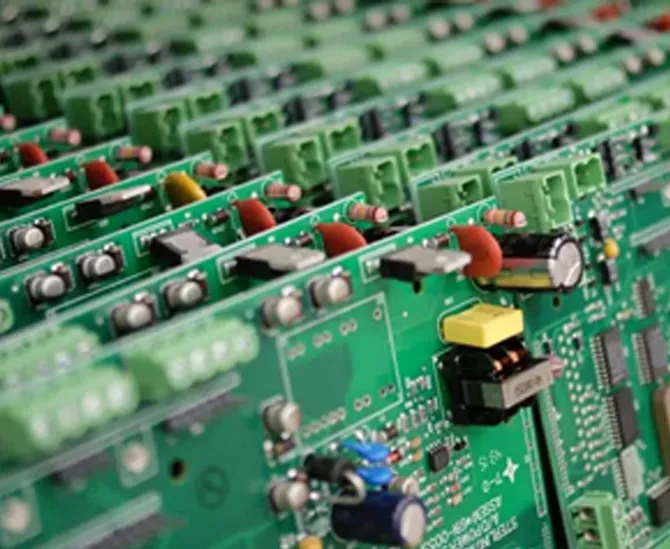
Professional high volume PCB assembly services with reliable quality control and scalable production capacity. Ideal for mass production and global supply chains.
At China 365PCB, we specialize in high volume PCB assembly for clients requiring large-scale manufacturing with consistent quality and competitive pricing. Our fully automated SMT lines, skilled manual soldering teams, and advanced quality control systems allow us to handle thousands to millions of PCB units efficiently. We support a wide range of assembly types including SMT, THT, BGA, QFN, and mixed technology PCBs. Whether you need mass production for Telecommunication PCB networks, Industrial Control PCB systems, LED Lighting PCB arrays, or Solar PCB infrastructure, China 365PCB ensures timely delivery and rigorous quality standards.
Discover our Electronic Assembly Components Engineering Services
Frequently Asked Questions
What is the difference between an OEM and an EMS?
An Original Equipment Manufacturer (OEM) is the brand owner that designs, markets, and sells the final product to the consumer (e.g., Apple or Sony). Electronic Manufacturing Services (EMS) is the contract factory that physically procures the components, populates the circuit boards, and builds the product on behalf of the OEM.
Why is DFM so important in high-volume manufacturing?
Design for Manufacturing (DFM) ensures your circuit board is actually capable of being mass-produced efficiently. A design that works perfectly on an engineer's desk might have components placed too closely together for an automated SMT machine to place without collision. DFM catches these errors before expensive stencils and tooling are created, preventing massive production delays.
What does Turnkey PCB Assembly mean?
Turnkey assembly means the EMS provider takes full responsibility for the entire manufacturing process. You provide the design files (Gerbers, BOM, Pick-and-Place data), and the EMS handles bare board fabrication, component sourcing, SMT/THT assembly, testing, and shipping. This relieves the OEM from managing complex supply chains.
How do EMS providers test high-volume PCB assemblies?
High-volume testing relies heavily on automation. EMS providers utilize Automated Optical Inspection (AOI) to check component presence and polarity, automated X-ray inspection to look under BGA chips for hidden solder bridges, and In-Circuit Testing (ICT) using custom "bed of nails" fixtures to verify electrical continuity across the entire board simultaneously.
Authoritative Industry References
To ensure robust engineering and supply chain standards, the methodologies discussed in this guide align with the following authoritative organizations:
 English