Choosing an Electronic Manufacturing Services (EMS) provider is the most critical supply chain decision an Original Equipment Manufacturer (OEM) will make. Handing over your intellectual property, bill of materials (BOM), and production capital to a third-party factory requires an absolute guarantee of competence. Yet, we see countless brands face catastrophic product recalls, delayed launches, and counterfeit component disasters simply because they trusted a polished sales brochure instead of executing a ruthless factory audit.
From our experience managing complex PCB fabrications and assemblies at China 365PCB, paper audits and framed ISO certificates lie. The only way to guarantee that a factory can actually build your hardware to spec is to forensically examine their shop floor, their component sourcing networks, and their defect resolution protocols. If you do not know exactly what to look for, you are gambling with your brand's reputation. In this comprehensive guide, we provide a practitioner-level Electronics Manufacturing Supplier Audit Checklist. We will explain exactly how to evaluate a factory, what red flags to watch out for, and WHETHER a prospective supplier is actually worth your investment.
Quick Answer: What You Must Audit
A rigorous Electronics Manufacturing Supplier Audit Checklist must evaluate five core pillars: 1) Component Sourcing and Traceability (to prevent counterfeit chips), 2) Engineering and DFM Capabilities (to catch design errors before production), 3) Equipment and Calibration (evaluating pick-and-place accuracy and reflow profiling), 4) Quality Control and Inspection (validating 3D AOI, SPI, and X-ray usage), and 5) CAPA Protocols (how they handle and document corrective actions when things go wrong). Do not partner with any EMS provider who refuses a transparent, on-site, or live-video audit of these five areas.
What is an Electronics Supplier Audit Checklist?
An Electronics Manufacturing Supplier Audit Checklist is a standardized, forensic diagnostic tool used by OEMs to assess the technical, operational, and financial viability of a contract manufacturer. It moves beyond generic business evaluations and digs into the microscopic realities of surface mount technology (SMT), through-hole assembly, and bare board fabrication.
It is not a checklist to see if the factory floors are swept—it is a checklist to determine if the factory's automated optical inspection (AOI) machines are properly calibrated to catch a cold solder joint on a 0201 package. For commercial users, this checklist is the ultimate risk mitigation tool, ensuring that the factory claiming they can produce your high-density Multilayer PCB actually possesses the lamination presses and registration controls required to do so without internal short circuits.
How the Audit Process Actually Works
In most professional situations, the audit process is phased. It begins with a Desktop Audit, where you request the supplier's Quality Manual, ISO certificates, standard operating procedures (SOPs), and equipment lists. Once they pass the paper phase, you move to the On-Site Audit (or a highly detailed live-video audit if travel is restricted).
During the physical audit, an engineer walks the production line backwards—from shipping and final QA, through the SMT lines, into the solder paste printing, and finally into the incoming materials warehouse. By walking backwards, you see the finished product first and then trace the quality controls that led to it. Finally, a Sample Run Audit is conducted, where the supplier produces a pilot batch of your specific design to prove their capabilities align with their promises.
The Core Audit Checklist (What to Check)
When auditing an electronics manufacturer, we recommend demanding proof across these specific operational categories. Accept no verbal assurances; require documented evidence.
1. Incoming Quality Control (IQC) and Component Sourcing
Counterfeit components are the silent killers of the electronics industry. Ask the supplier for their Approved Vendor List (AVL). Do they buy exclusively from authorized distributors like Digi-Key, Mouser, or directly from manufacturers? When components arrive, what is their IQC protocol? They should be utilizing decapsulation, X-ray inspection, and electrical testing to verify bare chips before they ever hit the SMT line.
2. Engineering and DFM (Design for Manufacturability)
A high-quality EMS partner does not just blindly print your Gerber files. They should have a dedicated engineering team that runs a DFM check. If you submit a design for a Blind Via PCB with aspect ratios that violate physical plating constraints, their engineers must catch it and propose a solution before tooling begins. Audit their CAM software and engineering response times.
3. Solder Paste and SMT Controls
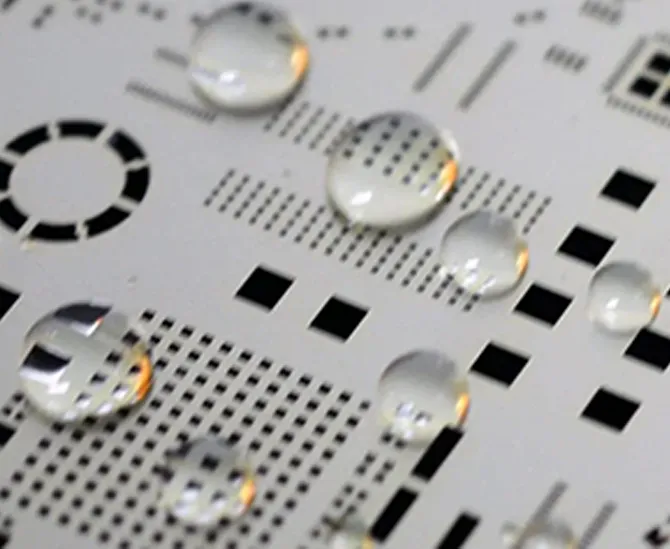
Solder paste printing accounts for roughly 60% of all PCB assembly defects. Check their paste storage refrigerators (is there a temperature log?). Check their stencil cleaning machines. Crucially, verify that they use inline Solder Paste Inspection (SPI) machines to measure the volume and alignment of paste before components are placed.
4. Specialized Manufacturing Capabilities
If your product requires high thermal dissipation, you cannot use standard FR4 material. You must audit whether the factory has specific experience routing and assembling a Ceramic PCB. Similarly, if you are building legacy industrial equipment, verify their wave soldering and selective soldering capabilities for Through-Hole PCB components. Do they understand the specific thermal profiling required for HASL(Lead-Free HASL)PCB versus the delicate handling required for an OSP (Organic Solderability Preservative) PCB?
5. Defect Management and CAPA
Mistakes happen in manufacturing. How the factory handles them is what separates Tier 1 suppliers from the rest. Audit their Corrective and Preventive Action (CAPA) system. Ask to see a recent 8D report (Eight Disciplines of Problem Solving) for a customer defect. If they claim they have a 0% defect rate and no CAPA records, they are hiding their failures from you.
Benefits of a Ruthless Supplier Audit
The primary benefit of utilizing an exhaustive Electronics Manufacturing Supplier Audit Checklist is the preservation of your profit margins. Finding out a supplier lacks proper ESD (Electrostatic Discharge) controls during an audit costs nothing. Finding out after 10,000 units fail in the field due to latent ESD damage will bankrupt a startup. Furthermore, a thorough audit establishes boundaries and expectations; when the supplier knows you understand manufacturing metrics, they will assign their best engineering talent to your account.
Limitations of Remote Audits
We must be candid: video tours and remote audits have severe limitations. A camera only shows you what the supplier wants you to see. You cannot smell the flux fumes to gauge ventilation quality, you cannot randomly pull a component reel to check its date code, and you cannot casually interview a line operator to gauge their training level. For heavy-duty applications or high-value medical/defense contracts, an on-site physical audit is absolutely non-negotiable.
Who Should Use This Checklist & Who Does Not Need It
For commercial users and scaling OEMs: If you are transitioning from prototype volumes (100 units) to mass production (10,000+ units), or if your product operates in mission-critical environments (automotive, medical, aerospace), executing this checklist is mandatory.
Who does not need it: For beginners, hobbyists, or engineering students ordering five bare boards for a university project, flying to Asia to audit a factory is a massive waste of resources. Rely on the automated online quoting and standard quality guarantees of reputable quick-turn fabricators.
Common Mistakes in OEM Supplier Auditing
In our testing and industry experience, the most catastrophic mistake OEMs make is confusing PCB fabrication capabilities with PCBA (assembly) capabilities. A factory might be world-class at etching raw copper, but terrible at placing 0.4mm pitch BGA components. You must audit both processes independently.
Another common mistake is neglecting to audit the sub-tier suppliers. If your primary EMS outsources the bare board fabrication to a cheaper, unvetted facility to save costs, your entire quality control chain is broken. You must demand a clause prohibiting unauthorized subcontracting.
Buying Considerations: Scaling from Prototype to Production
When selecting a manufacturing partner, consider their scalability. A factory that is perfect for building 50 prototypes might completely collapse when you drop a 50,000-unit purchase order on them. Do they have multiple redundant SMT lines? Do they have sufficient working capital to float component purchases for massive runs? Your audit must evaluate their financial health and capacity utilization, not just their technical soldering skills.
Essential Procurement Tables
Quick Summary Table: Core Audit Phases| Audit Phase | Primary Objective | Required Documentation/Proof |
|---|
| 1. Desktop Audit | Verify legal and basic quality standing. | ISO 9001/13485 Certificates, Quality Manual, Equipment List. |
| 2. Process Audit | Validate actual shop floor execution. | AOI/SPI logs, Calibration records, ESD compliance checks. |
| 3. Supply Chain Audit | Ensure component authenticity. | Approved Vendor Lists (AVL), IQC rejection logs. |
| 4. Continuous Improvement | Assess failure resolution protocols. | CAPA records, 8D reports, Customer return logs. |
Pros and Cons of Comprehensive Supplier Auditing| The Pros (Advantages) | The Cons (Disadvantages) |
|---|
| Eliminates high-risk, low-quality suppliers before contracts are signed. | Requires significant time, engineering resources, and travel expenses. |
| Secures intellectual property by vetting data security protocols. | Can strain the initial relationship if the audit is perceived as overly hostile. |
| Drastically reduces field failure rates and warranty claims. | Paperwork-heavy; requires meticulous documentation tracking. |
| Ensures component authenticity via strict supply chain verification. | Remote audits may fail to uncover hidden operational inefficiencies. |
Comparison Table: Tier 1 vs. Agile Mid-Tier EMS Providers| Evaluation Metric | Tier 1 Mega-EMS (e.g., Foxconn, Flex) | Agile Mid-Tier EMS (e.g., China 365PCB) |
|---|
| Target Volume | Millions of units (Smartphones, Consoles). | Mid-volume to high-mix production. |
| Flexibility & Engineering Support | Very rigid. Minimal support for mid-sized OEMs. | Highly flexible. Dedicated DFM and scaling support. |
| Audit Accessibility | Difficult to access beyond front-office staff. | Transparent floor access and direct engineer communication. |
| Component Sourcing Speed | Massive buying power, but slow allocation for smaller clients. | Agile sourcing through integrated global networks. |
Expert Recommendation from China 365PCB
In most professional situations, the biggest vulnerability in an OEM's supply chain is not the soldering process—it is the component procurement process. The most robust Electronics Manufacturing Supplier Audit Checklist will fail if the factory is buying counterfeit ICs from gray-market brokers to pad their margins. You must control your Bill of Materials.
We recommend integrating your component sourcing directly with your manufacturing partner to ensure absolute accountability. At China 365PCB, we eliminate the gray-market risk entirely.

China 365PCB Online Electronic Component Platform & Sourcing Services
Secure your production with China 365PCB’s Online Electronic Component Platform, fully integrated with our PCB and PCBA manufacturing system to deliver a true one-stop solution from BOM to assembly.
We leverage a robust global network of authorized distributors to supply 100% genuine, fully traceable components, eliminating supply chain risks and counterfeit threats. Our platform provides real-time inventory visibility, online quotation, and automatic BOM matching, allowing seamless coordination between component sourcing and manufacturing.
With over 10 million in-stock components from leading global brands, our system directly links material procurement to production scheduling and shipment, ensuring stable supply, accurate lead times, and consistent quality control. Every component undergoes dedicated inspection and traceability management before entering production.
Explore Component Sourcing & PCB AssemblyFrequently Asked Questions (FAQ)
What is the most important part of an Electronics Manufacturing Supplier Audit Checklist?
Component traceability and incoming quality control (IQC) are the most critical elements. If a manufacturer cannot prove the exact origin of their electronic components, your entire production run is at risk of counterfeit integration, rendering all downstream assembly audits irrelevant.
How often should an OEM audit their electronics manufacturer?
From our experience, OEMs should conduct a comprehensive on-site audit before signing a manufacturing agreement, followed by annual surveillance audits. If the manufacturer experiences a significant management change or a sudden spike in defect rates, an immediate unannounced audit is required.
Does an ISO 9001 certification mean I can skip the audit?
Absolutely not. ISO 9001 only proves that a company has documented their processes; it does not prove they manufacture high-quality electronics. You must conduct a specialized Electronics Manufacturing Supplier Audit Checklist to verify their actual DFM capabilities, equipment calibration, and soldering standards.
Authoritative Industry References
To ensure your auditing protocols align with global manufacturing standards, we advise consulting the following regulatory frameworks:
David Li
David Li is the Technical Communications Director at China 365PCB, with over 15 years of hands-on experience in the PCB and electronics manufacturing industry. Holding a Master’s degree in Electrical Engineering, he has worked extensively in both R&D and manufacturing roles at leading multinational electronics firms in Shenzhen before joining our team.
His expertise spans high-speed digital design, advanced packaging (HDI, Flex), and automotive-grade reliability standards. David is passionate about bridging the gap between design intent and production reality—a philosophy that aligns perfectly with 365PCB’s mission to deliver seamless, rapid, and fully-integrated manufacturing solutions.
Follow David’s insights on PCB technology trends and best practices here on the 365PCB Knowledge Hub.
 English