Let us confront a brutal reality in electronics manufacturing: skipping rigorous testing is engineering negligence. From our experience, companies that attempt to shave margins by minimizing post-production inspection inevitably hemorrhage capital through catastrophic field failures, warranty claims, and irreparable brand damage. When a complex multi-layer board deployed in aerospace, medical devices, or autonomous driving fails, the cost is not measured in dollars—it is measured in liabilities. You simply cannot assume that just because a board looks flawless to the naked eye, it will perform under extreme thermal and electrical stress.
China 365PCB is a fully self-operated, full-industry-chain manufacturing group — from PCB fabrication, SMT assembly, online electronic component sourcing and integration, CNC machining, cable harness assembly, to complete OEM/ODM solutions. With 15+ years of experience, 365PCB operates over 100,000㎡ of production area, all facilities are self-owned and self-managed, ensuring total quality control, full process traceability, and unmatched production flexibility. With a one-stop turnkey service from design to delivery, we guarantee no delay, no excuses — truly realizing 365 days of fast manufacturing for global customers.
At China 365PCB, we absolutely refuse to compromise on quality control. A board does not leave our facility until it has survived a gauntlet of uncompromising diagnostic protocols. Implementing stringent testing methods for printed circuit boards is the only mechanism that separates Tier-1 manufacturers from high-volume, low-quality brokers. Whether you are dealing with a simple FR2 PCB for consumer electronics or a highly complex Polyimide PCB engineered for brutal thermal environments, the diagnostic approach must be surgical, precise, and exhaustive.
In this rigorously opinionated, expert-level guide, we are tearing down the industry's testing standards. We will detail the 6 absolute best testing methods for printed circuit boards utilized in 2026, explain exactly when to deploy them, and reveal why specific substrate materials and interconnect architectures demand customized diagnostic strategies.
The Financial and Structural Imperative of Testing
The complexity of modern PCBs has skyrocketed. We are no longer dealing with simple Through-Hole PCB designs where every solder joint is plainly visible. In 2026, high-density interconnect (HDI) boards utilize microscopic architectures that conceal potential failures deep within the substrate. When manufacturing a Blind Via PCB or a Buried Via PCB, an internal short circuit or an incomplete plating run is completely invisible from the surface layer. If these defects are not caught early, the board will fail catastrophically during final assembly or, worse, in the hands of the consumer.
From our experience, the cost of identifying and repairing a defect scales exponentially at each stage of production. Finding a short during bare board testing costs pennies; finding that same short after surface mount technology (SMT) components are populated costs dollars; finding it in a finished product deployed in the field costs thousands. Therefore, implementing these 6 testing methods for printed circuit boards is an aggressive, front-line defense against financial ruin.
1. Automated Optical Inspection (AOI)
Manual visual inspection is obsolete. The human eye cannot reliably detect a missing 0201 resistor or a microscopic solder bridge after staring at a production line for eight hours. Automated Optical Inspection (AOI) uses ultra-high-resolution cameras and advanced image recognition software to compare the physical board against the original CAD design.
AOI is incredibly fast and exceptionally accurate at identifying surface-level defects. We recommend deploying AOI immediately after solder paste application, and again after reflow soldering. It is the absolute gold standard for catching missing components, skewed placements, tombstoning, and insufficient solder fillets. However, AOI has a massive limitation: it relies on line-of-sight. It cannot see beneath components (like BGAs) or inside the board's internal layers.
2. Flying Probe Testing (FPT)
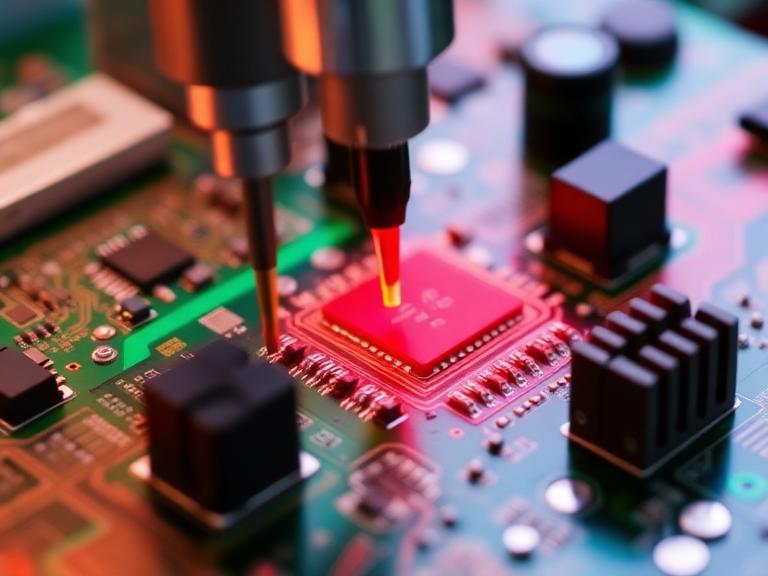
For prototyping, low-volume production runs, or highly complex Sequential Lamination PCB designs, Flying Probe Testing is unmatched in its diagnostic flexibility. Unlike older testing methods that require a custom-machined "bed of nails" fixture, the flying probe uses software-controlled robotic arms equipped with needles that rapidly move across the board, making contact with specific test points, vias, and component pads.
FPT measures capacitance, resistance, inductance, and checks for devastating shorts or opens across the entire circuit. Because it does not require an expensive custom fixture, the setup time is virtually zero, making it highly cost-effective for small batches. However, because the probes must physically move between points sequentially, the testing cycle per board is relatively slow, making it unsuitable for massive, high-volume production lines.
3. In-Circuit Testing (ICT)
When you transition from prototyping into high-volume, mass manufacturing, In-Circuit Testing (ICT) is the heavy artillery of the testing methods for printed circuit boards. ICT utilizes a custom-built "bed of nails" fixture. The PCB is pressed down onto hundreds of spring-loaded pogo pins that simultaneously contact the board's designated test points.
Because all connections are tested simultaneously, ICT provides a comprehensive diagnostic of the entire board in seconds. It verifies component values, identifies manufacturing defects, and ensures that every trace is continuous. The drawback is the immense upfront capital required to machine the custom fixture and program the testing software. We strongly recommend ICT only when your design is 100% finalized and you are committed to a high-volume run. It is highly effective for testing mass-produced boards utilizing standard surface finishes like HASL(Lead-Free HASL)PCB.
4. Automated X-Ray Inspection (AXI)
As components become increasingly miniaturized, traditional line-of-sight testing fails entirely. Ball Grid Arrays (BGAs), Quad Flat No-leads (QFNs), and complex Micro Via PCB structures hide their critical solder joints completely beneath the component package or deep within the substrate. You cannot test what you cannot see—unless you use X-rays.
Automated X-Ray Inspection (AXI) penetrates the PCB and the component packaging, creating a high-resolution 2D or 3D internal map. The density of the solder blocks the X-rays, allowing the software to analyze the exact shape, thickness, and integrity of the hidden solder joints. From our experience, AXI is the only reliable method to detect catastrophic voiding, insufficient solder volume, or hidden bridging underneath a BGA. If you are manufacturing mission-critical hardware, AXI is a non-negotiable requirement.
5. Burn-In Testing
Burn-In Testing is the ultimate trial by fire. It is designed to expose latent defects that will only manifest after the board has been in operation for an extended period. We do not use this test to check for immediate assembly errors; we use it to force "infant mortality" failures in the factory, rather than in the field.
During a burn-in test, the fully assembled PCB is powered on and subjected to extreme environmental stress—typically operating at maximum voltage capacity inside a specialized thermal chamber that rapidly cycles between freezing and blistering temperatures. For boards utilizing high-performance materials like a PTFE PCB or specialized surface treatments like an OSP (Organic Solderability Preservative) PCB, burn-in testing ensures the structural integrity and thermal management systems can survive brutal operational realities. This test can last anywhere from 48 to 168 hours.
6. Functional Testing (FCT)
Functional Testing (FCT) is the final, uncompromising hurdle before a board is approved for shipping. While AOI checks the aesthetics, and ICT checks the individual components, FCT answers the ultimate question: does the board actually do what it was engineered to do?
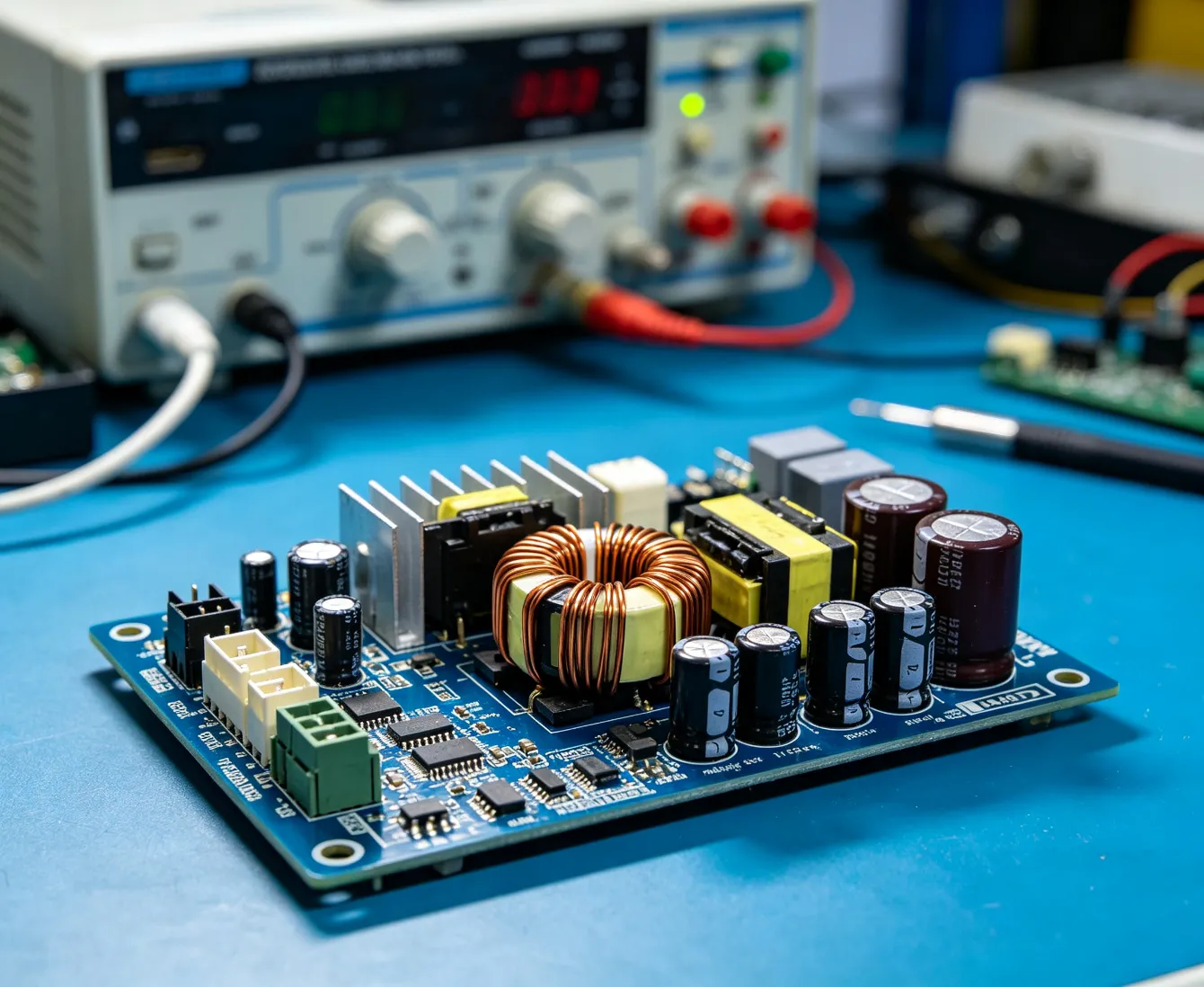
During FCT, the PCB is connected to a testing rig that simulates its final operational environment. Power is applied, specific input signals are injected, and the output responses are rigorously measured against the original engineering specifications. FCT ensures that the firmware is communicating correctly with the hardware, that analog-to-digital converters are accurate, and that the board operates flawlessly under real-world conditions. A board that passes FCT is unequivocally ready for market deployment.
Summary Table: Diagnostic Comparison
To assist your engineering team in selecting the appropriate diagnostic protocol, we have organized these critical testing methods for printed circuit boards into a rapid-reference matrix.
| Testing Method | Primary Diagnostic Focus | Ideal Production Phase | Key Advantage |
|---|
| AOI | Surface-level visual defects, missing components, tombstoning. | Post-Solder Paste / Post-Reflow | High speed; excellent for catching immediate assembly errors. |
| Flying Probe (FPT) | Electrical shorts, opens, component values. | Prototyping / Low-Volume | Zero custom fixture costs; high flexibility for design changes. |
| In-Circuit (ICT) | Comprehensive electrical testing of all nodes simultaneously. | Mass Production / High-Volume | Extremely fast testing cycle per board; highly accurate. |
| X-Ray (AXI) | Hidden solder joints, internal voiding, BGA inspection. | Post-Reflow for Complex ICs | The only way to verify non-visible, under-component connections. |
| Burn-In | Exposing latent defects and infant mortality via extreme stress. | Final Assembly / Pre-Shipping | Guarantees long-term reliability under brutal thermal/voltage stress. |
| Functional (FCT) | Simulating real-world operation; hardware/firmware integration. | Final Assembly / Pre-Shipping | Confirms the board actually operates according to design specs. |
Frequently Asked Questions (FAQs)
1. Are all of these testing methods required for every single PCB?
From our experience, no. The diagnostic protocol must match the complexity and end-use of the board. A cheap, single-layer CEM Series PCB used in a disposable toy might only require basic AOI and a simple power-on test. However, a multi-layer HDI board used in an aerospace navigation system mandates the entire suite, including AXI and rigorous Burn-In testing. You must scale the testing budget to the reliability requirements.
2. Why is Flying Probe Testing cheaper than In-Circuit Testing for small batches?
In-Circuit Testing requires the physical machining of a custom "bed of nails" fixture specifically designed for your exact board layout, which can cost thousands of dollars upfront. Flying Probe Testing is software-driven; the robotic arms simply need the CAD coordinates to move the test needles. Therefore, FPT has virtually zero setup costs, making it infinitely more economical for prototypes or runs under 1,000 units.
3. Can AOI detect a short circuit inside a multi-layer board?
Absolutely not. Automated Optical Inspection relies strictly on high-resolution cameras. It cannot see beneath the surface layer of the PCB. Internal shorts within the substrate layers must be detected using electrical testing methods like Flying Probe or ICT, or verified structurally using X-Ray Inspection (AXI) if the issue is related to blind or buried vias.
Industry References
To ensure your manufacturing protocols align with global engineering standards, we strongly recommend reviewing the following authoritative resources regarding quality control and testing compliance:
IPC - Association Connecting Electronics Industries. "IPC-A-610G: Acceptability of Electronic Assemblies." (The definitive global standard dictating the visual and structural acceptance criteria for electronic assemblies and diagnostic protocols).
IEEE Xplore Digital Library. "Advanced Automated Optical and X-Ray Inspection Techniques in HDI PCB Manufacturing." (Peer-reviewed academic research detailing the critical necessity of AXI in modern high-density interconnect verification).
 English