English
A single unavailable integrated circuit can delay an entire electronics production run. A connector that suddenly goes end-of-life can force an engineering redesign. A shipment of components from an unverified source can introduce quality risks that are far more expensive than the original purchasing savings.
These are not isolated purchasing problems. They are supply chain weaknesses. For electronics OEMs, the ability to build a resilient electronics component supply chain directly affects manufacturing continuity, product quality, delivery commitments, and long-term profitability.
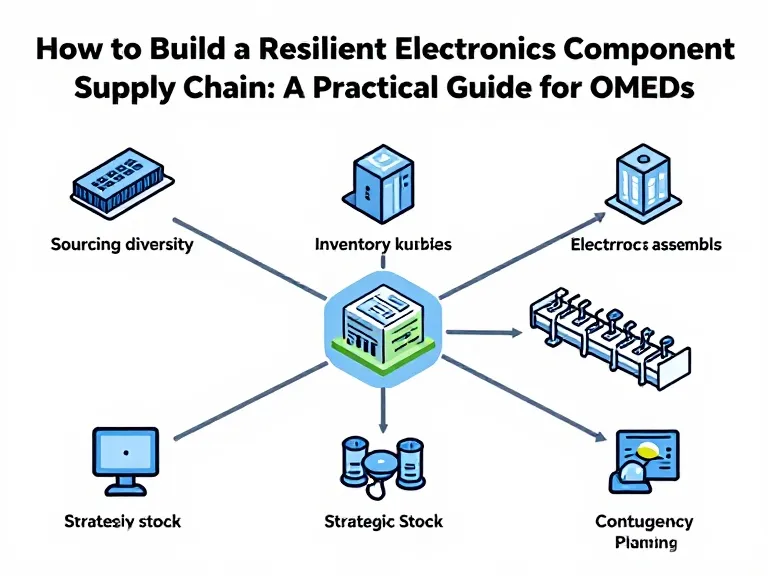
Our recommendation is clear: stop managing electronic components as individual purchase orders and start managing them as interconnected production risks. A resilient supply chain requires qualified sourcing channels, approved alternative components, accurate BOM management, realistic inventory policies, and reliable PCB assembly partners.
Quick Answer: How Do You Build a Resilient Electronics Component Supply Chain?
To build a resilient electronics component supply chain, OEMs should diversify critical suppliers, qualify alternative components, monitor component lifecycles, improve demand forecasting, establish traceability, and coordinate procurement with PCB manufacturing and assembly.
What it is: A sourcing and manufacturing network designed to withstand shortages, supplier failures, logistics disruptions, and component obsolescence.
How it works: It combines supplier qualification, BOM control, inventory planning, alternative sourcing, quality management, and production coordination.
Main benefits: Fewer production interruptions, better cost control, improved delivery reliability, and reduced sourcing risks.
Limitations: Requires supplier management resources, engineering validation, inventory investment, and ongoing monitoring.
Who should use it: Electronics OEMs, EMS providers, PCB assembly manufacturers, industrial equipment companies, and product developers with recurring production requirements.
Who does not need complex systems: Hobbyists and businesses producing occasional low-volume prototypes with readily available components.
Common mistakes: Relying on one supplier, buying components based only on price, approving substitutions without engineering review, and ignoring lifecycle status.
Buying considerations: Evaluate component authenticity, supplier traceability, technical compatibility, lead time, manufacturing capacity, and total landed cost.
Expert recommendation: Prioritize critical BOM components and qualify realistic alternatives before a shortage occurs.
1. Why Electronics OEMs Need a Resilient Component Supply Chain
Electronics manufacturing depends on components produced by different manufacturers, across different countries, with different production capacities and lifecycle schedules. This makes the supply chain particularly vulnerable to disruptions.
A typical electronic product may contain hundreds of individual BOM line items. These can include microcontrollers, memory devices, power management ICs, resistors, capacitors, connectors, antennas, displays, and batteries.
Most of these materials must be available before a production batch can be completed. A shortage of one essential component can leave an otherwise complete production order waiting.
The Commercial Impact of Component Shortages
Consider an OEM manufacturing 5,000 industrial control boards. The PCB fabrication supplier completes the boards, most components arrive on schedule, and the SMT production line is ready. However, one specialized power management IC is delayed by eight weeks.
The OEM now faces several potential costs:
Idle manufacturing capacity.
Delayed customer deliveries.
Expedited component purchasing.
Additional warehousing and inventory costs.
Potential contractual penalties.
Engineering expenses if an alternative component is required.
The actual financial impact can be much higher than the purchase price of the missing IC.
Resilience Is Not the Same as Holding More Inventory
One common misconception is that supply chain resilience simply means purchasing more components and keeping them in storage.
That approach can work for selected long-lead-time materials, but it creates problems when products change or components become obsolete.
From our experience, a better strategy combines three controls:
Reduce the probability of supply disruption through supplier qualification and diversification.
Reduce the impact of disruption through approved alternatives and risk-based inventory.
Reduce recovery time through clear communication, engineering change control, and production flexibility.
For professional OEM operations, all three are necessary. Excessive inventory without alternative sourcing is not a resilient supply chain.
2. What Is a Resilient Electronics Component Supply Chain?
A resilient electronics component supply chain is a coordinated sourcing and manufacturing network that can continue operating or recover quickly when suppliers, materials, transportation, or production conditions change.
It covers the entire component lifecycle, from initial engineering selection to purchasing, incoming inspection, PCB assembly, product testing, and eventual component replacement.
What Does Supply Chain Resilience Include?
Supplier diversification: Qualified alternative sources for critical components.
Component availability management: Monitoring stock, lead times, lifecycle status, and allocation conditions.
BOM management: Maintaining accurate part numbers, specifications, revisions, and approved alternatives.
Inventory planning: Establishing appropriate safety stock based on actual supply risk.
Quality assurance: Controlling component authenticity, supplier documentation, and incoming inspection.
Engineering flexibility: Validating alternative components and maintaining redesign options.
Manufacturing coordination: Aligning component sourcing with PCB fabrication and assembly capacity.
Risk monitoring: Tracking supplier performance, logistics conditions, and market availability.
Which Components Require the Most Attention?
Not every component has the same supply risk. A standard resistor may have several qualified manufacturers and broad distribution availability. A specialized microcontroller may have a single approved source and a lengthy qualification process for alternatives.
OEMs should pay particular attention to:
Microcontrollers and microprocessors.
Memory ICs and programmable logic devices.
Power management and semiconductor devices.
Specialized RF components and antennas.
Custom connectors and cable assemblies.
Displays and touchscreen modules.
Application-specific sensors.
Custom or application-specific battery assemblies.
Reviewing integrated circuits and electronic components alongside active electronic components helps engineering and purchasing teams identify the different sourcing requirements within a BOM.
3. Identify the Major Risks in Your Electronics Component Supply Chain
Before building a resilience strategy, OEMs need to understand where their current supply chain is vulnerable. Generic risk assessments are not enough. The analysis must be connected to actual components, suppliers, production schedules, and product requirements.
3.1 Single-Source Dependency
Single sourcing is sometimes necessary because of proprietary designs, technical specifications, or limited manufacturer availability. The problem occurs when an OEM has no contingency plan for a critical single-source component.
If the supplier experiences a production interruption, allocation issue, or manufacturing shutdown, the OEM may have no immediate replacement.
We recommend identifying single-source items and classifying them according to business impact. Where practical, qualify another manufacturer or distributor. Where no alternative exists, establish inventory and redesign contingencies.
3.2 Semiconductor Allocation and Long Lead Times
Semiconductor availability can change significantly depending on manufacturing capacity, demand, technology transitions, and product lifecycle conditions.
OEMs should not assume that a distributor's current stock level guarantees future availability. A component that is readily available for a prototype may become difficult to source for a production order several months later.
3.3 Component Obsolescence
Manufacturers periodically discontinue components or replace product families. This can create serious problems for products expected to remain in production for many years.
Obsolete components may require PCB redesign, firmware adjustments, thermal analysis, electrical testing, and customer requalification.
For industrial and automotive applications, lifecycle planning should be part of product development rather than an emergency purchasing activity.
3.4 Counterfeit and Nonconforming Components
When authorized supply channels become constrained, purchasing teams may be tempted to use independent brokers or unfamiliar distributors.
This increases the importance of supplier verification, documentation review, lot traceability, and risk-based inspection.
Components that look identical may have different manufacturing histories or may not meet the required electrical and reliability specifications.
3.5 Geopolitical and Logistics Disruptions
Electronics components frequently cross international borders several times before becoming part of a finished product.
Tariffs, export controls, customs delays, transportation disruptions, and regional manufacturing interruptions can affect both cost and availability.
OEMs should understand where their critical components are manufactured, where they are distributed, and which transportation routes support their production plans.
3.6 Demand Forecasting Errors
Overly optimistic sales forecasts can lead to excess inventory, while underestimating demand can result in shortages.
Supply chain planning should distinguish confirmed orders from forecast demand and speculative opportunities. Suppliers should receive realistic forecasts with clearly communicated changes.
4. Map and Classify Your Electronic Components Before Changing Suppliers
The first practical step to building a resilient electronics component supply chain is creating an accurate picture of what you purchase, where it comes from, and how difficult it would be to replace.
Build a Complete and Controlled BOM
Your bill of materials should include more than a description and quantity. For each component, record:
Manufacturer name and manufacturer part number.
Approved supplier and distributor.
Electrical and mechanical specifications.
Package type and PCB footprint.
Current lifecycle status.
Procurement lead time.
Minimum order quantity where applicable.
Approved alternative part numbers.
Current inventory and open purchase orders.
Engineering revision and approval status.
A structured component database prevents purchasing teams from accidentally ordering outdated or technically incompatible materials.
For sourcing research, an electronic component categories directory can help organize searches across different component families. You can also use the online electronic component search resource when identifying potential sourcing options.
Use ABC and Supply Risk Classification Together
ABC analysis classifies inventory according to value. However, high-value classification alone does not identify every critical component.
We recommend adding a separate supply-risk classification.
| Risk Category | Typical Characteristics | Recommended Action |
|---|---|---|
| Critical | Single source, long lead time, difficult replacement, high production impact | Qualify alternatives, monitor closely, consider strategic safety stock |
| High | Limited qualified sources or unstable availability | Review supplier capacity and maintain contingency sourcing |
| Medium | Several sources but variable lead times | Use regular forecasting and supplier performance reviews |
| Low | Standardized, readily available components with multiple qualified sources | Use routine replenishment and standard inventory controls |
Example: Why Component Criticality Matters More Than Price
Imagine an OEM purchasing two components:
A high-value processor costing $18 per unit with two qualified suppliers.
A low-cost custom connector costing $0.40 per unit with only one approved manufacturer.
The processor has a higher purchase value, but the connector may represent the greater supply continuity risk if no replacement fits the PCB and enclosure.
This is why professional sourcing teams should evaluate replacement difficulty and production impact, not just annual expenditure.
5. Diversify Electronic Component Sourcing Without Creating Quality Problems
Supplier diversification is one of the most effective ways to reduce component supply risk. However, adding suppliers indiscriminately can create additional quality and management problems.
We recommend qualified diversification, not simply purchasing the same component from more distributors.
Manufacturer Diversification vs Distributor Diversification
These strategies solve different problems.
Manufacturer diversification means qualifying technically equivalent components from different original manufacturers. This can reduce dependence on a single manufacturer but requires engineering validation.
Distributor diversification means using multiple approved distribution channels for the same manufacturer's part number. This can improve purchasing flexibility, but it does not eliminate the risk of a manufacturer-level shortage.
Choose Suppliers Based on More Than Availability
When evaluating an electronic component supplier, assess:
Original manufacturer authorization or documented sourcing channels.
Component authenticity and traceability.
Stock availability and replenishment reliability.
Manufacturer part-number accuracy.
Storage and handling practices.
Quality documentation and inspection support.
Commercial terms and payment conditions.
Communication and shortage response time.
For example, standard resistors and passive electronic components may offer more sourcing flexibility than proprietary ICs. Nevertheless, alternatives must still meet the electrical specifications and environmental requirements of the application.
Establish an Approved Supplier List
An approved supplier list should identify which manufacturers and distribution channels are permitted for each critical BOM item.
It should also define the approval process for new suppliers and alternative components.
For critical applications, do not allow an emergency buyer to bypass supplier qualification simply because a component is available from an unfamiliar source.
6. Qualify Alternative Components Before a Supply Shortage Occurs
A second source is only useful if it is technically and commercially ready for production. Having a similar part number in a spreadsheet does not mean the alternative is approved.
OEMs should establish a component qualification process during product development.
What Makes an Electronic Component a Valid Alternative?
Engineering teams should evaluate:
Electrical characteristics and operating limits.
Package dimensions and pin configuration.
PCB footprint compatibility.
Thermal performance and power dissipation.
Operating temperature range.
Signal integrity and timing characteristics.
Firmware and software dependencies.
Regulatory and environmental compliance.
Reliability and qualification requirements.
A replacement resistor may be relatively straightforward if its resistance, tolerance, power rating, package, and temperature characteristics are suitable. Replacing a microcontroller is much more complicated because firmware, pin assignments, peripherals, and operating behavior may differ.
Create an Alternative Component Approval Workflow
Identify the unavailable or high-risk original component.
Find potential alternatives from qualified manufacturers.
Compare datasheets and technical specifications.
Check package and PCB compatibility.
Perform engineering review and risk assessment.
Build prototypes using the proposed alternative.
Complete required functional and reliability testing.
Update the BOM and engineering documentation.
Obtain customer approval where contractually required.
For beginners, the important lesson is simple: do not confuse a datasheet comparison with a complete qualification process.
When Should OEMs Redesign a PCB?
Sometimes an alternative component requires a different package, pinout, or circuit configuration. In this case, the OEM may need a revised PCB design.
For example, replacing an unavailable IC with a different package may require changes to PCB land patterns, routing, power delivery, thermal design, or surrounding components.
We recommend evaluating redesign cost against the expected cost of continued sourcing difficulty. If the original component is likely to remain constrained or become obsolete, an engineering redesign may be a commercially sensible long-term investment.
7. Build an Inventory Strategy That Protects Production Without Tying Up Too Much Capital
Inventory is a resilience tool, but it must be used selectively. Excessive purchasing can create cash-flow problems and expose OEMs to component obsolescence.
Calculate Reorder Points
A basic inventory planning formula is:
Reorder Point = Expected Demand During Lead Time + Safety Stock.
Suppose an OEM consumes 1,000 units of a particular IC each month and the confirmed replenishment lead time is three months. Expected lead-time demand is 3,000 units.
If the OEM determines that an additional 500 units are justified by demand and supply uncertainty, the indicative reorder point becomes 3,500 units.
This is a simplified planning example. Actual safety stock should account for demand variability, lead-time variability, service-level targets, and the cost of shortages.
Use Strategic Stock for Critical Components
Safety stock is most valuable for components that combine high production impact with difficult replacement or uncertain replenishment.
It is less useful to hold large quantities of standard components that can be replenished quickly from multiple qualified sources.
Consider Vendor-Managed Inventory
Vendor-managed inventory (VMI) allows a supplier to monitor agreed inventory levels and support replenishment based on consumption or predefined stock targets.
VMI can reduce administrative work for frequently used standard components, but it depends on reliable demand information and clear inventory ownership.
For critical semiconductors, OEMs should not assume that VMI guarantees supply during industry-wide allocation conditions.
Reduce Excess and Obsolete Inventory
Purchasing large quantities to secure a favorable price can be risky when product demand is uncertain or the design is changing.
Before placing a large order, review:
Expected product lifetime.
Confirmed customer demand.
Component lifecycle status.
Storage requirements.
Potential engineering changes.
Supplier return and cancellation terms.
In most professional situations, inventory optimization should be based on the cost of supply disruption versus the cost of carrying and potentially writing off excess materials.
8. Manage Component Lifecycles and Prevent Obsolescence
Component obsolescence is a predictable supply chain risk, even though the exact timing of discontinuation may be uncertain.
OEMs developing products for long-term production should monitor manufacturer lifecycle information throughout the product's commercial life.
Track Lifecycle Status
Maintain records showing whether a component is active, not recommended for new designs, scheduled for discontinuation, or no longer available.
When a manufacturer issues an end-of-life notification, purchasing and engineering teams should assess remaining demand, last-time-buy opportunities, replacement options, and redesign requirements.
Develop a Last-Time-Buy Policy
A last-time buy can protect production when a component is discontinued and no suitable alternative is immediately available.
However, it should be based on realistic lifetime demand rather than an arbitrary quantity.
OEMs should estimate remaining production requirements, expected service and repair demand, storage conditions, and the risk that the product design may change.
Design for Long-Term Availability
Engineering teams can reduce future obsolescence exposure by:
Choosing components with established product lifecycles where practical.
Avoiding unnecessary dependence on proprietary components.
Considering footprint-compatible alternatives during PCB design.
Documenting component dependencies and firmware requirements.
Reviewing product lifecycle risks during design validation.
For consumer electronics, design cycles may be relatively short. For industrial control equipment, infrastructure, and specialized electronics, long-term availability can be a much more important purchasing criterion.
9. Strengthen Component Quality Assurance and Supply Chain Traceability
Supply availability is meaningless if components cannot meet production and reliability requirements.
A resilient electronics component supply chain must protect both continuity and quality.
Verify Component Authenticity
OEMs should prioritize suppliers with documented sourcing channels and reliable component traceability.
Depending on component risk, verification may include:
Purchase and supplier documentation.
Manufacturer part-number and label verification.
Date-code and lot-code review.
Packaging and moisture-sensitive device condition checks.
Visual inspection and dimensional verification.
Additional electrical or material testing where justified.
For high-risk components, an incoming inspection plan should be based on the supplier, component type, application, and potential failure impact.
Apply Relevant Electronics Manufacturing Standards
OEMs should define quality requirements according to the product's application and customer commitments.
Important frameworks include:
ISO 9001: Quality management system requirements covering process control, supplier evaluation, and continual improvement.
IPC-A-610: Acceptability criteria for electronic assemblies.
IPC J-STD-001: Requirements for soldered electrical and electronic assemblies.
IPC-6012: Qualification and performance requirements for rigid printed boards.
RoHS: Restrictions on certain hazardous substances in electrical and electronic equipment where applicable.
These standards address different aspects of quality and manufacturing. They should not be treated as interchangeable certifications. OEMs should specify the applicable editions, product classes, and acceptance requirements in supplier agreements.
Maintain Batch-Level Traceability
Traceability makes it possible to investigate defects and identify affected production batches.
At a minimum, define which records must be retained for critical materials:
Supplier identity and purchasing source.
Component manufacturer and part number.
Lot and date-code information where available.
Incoming inspection results.
PCB revision and assembly batch.
Production test and inspection results.
Approved engineering changes.
For automotive, aerospace, medical, and other regulated or safety-critical applications, traceability requirements may be significantly more demanding.
10. Integrate Component Sourcing With PCB Manufacturing and SMT Assembly
One of the most overlooked aspects of electronics supply chain resilience is the relationship between component purchasing and manufacturing capacity.
Having components in stock does not guarantee that an OEM can complete production. PCB fabrication, SMT assembly, inspection, and testing must all be available at the right time.
Coordinate the BOM With PCB Design
PCB design decisions affect component availability and manufacturing flexibility.
For example, a custom connector may have a limited supplier base. A specialized IC package may require a particular assembly process. High-density boards may require manufacturing capabilities that are not available from every PCB supplier.
Engineering teams should consider component availability and assembly feasibility during the design stage.
Reviewing consumer electronics PCB manufacturing requirements can help product developers understand how PCB specifications relate to production planning.
Why SMT Assembly Matters
Surface Mount Technology (SMT) is widely used to assemble modern electronic circuit boards. Automated SMT lines place surface-mount components onto PCB solder pads, followed by soldering and inspection processes.
For OEMs, assembly capability is especially important when a BOM contains 0402 chip components, fine-pitch integrated circuits, or BGA packages.
A manufacturing partner should be able to confirm that its equipment, process controls, inspection systems, and operator expertise match the requirements of the design.
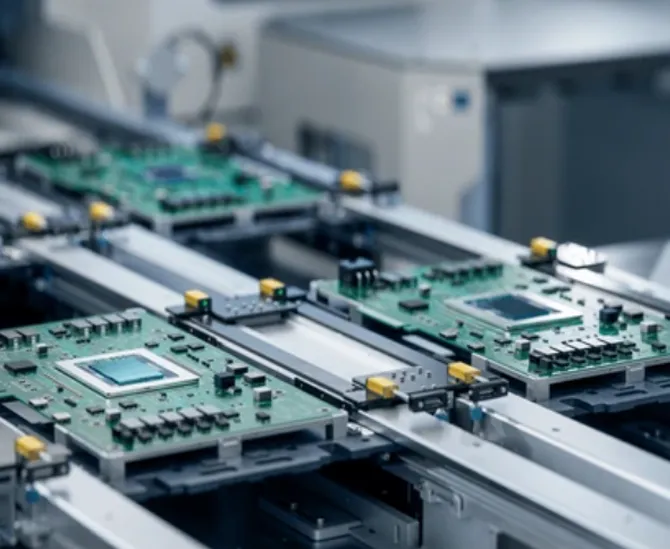
365PCB SMT PCB Assembly Services
365PCB provides SMT PCB assembly services using automated SMT production lines for prototype and volume manufacturing. Its stated capabilities include 0402 chip components, fine-pitch ICs, and complex BGA packages.
The service supports lead-free RoHS and leaded soldering, with quality inspections intended to meet applicable IPC requirements. No minimum order quantity is stated for the service.
For OEMs, access to prototype and production assembly capabilities can simplify the transition from engineering validation to repeat manufacturing.
Explore 365PCB SMT PCB assembly services and review the manufacturing capabilities for your project.
Align Component Delivery With Production Scheduling
Before confirming an assembly schedule, purchasing and manufacturing teams should verify:
Whether the complete BOM is available.
Whether all components are approved and traceable.
Whether PCB fabrication is complete.
Whether special components require additional inspection.
Whether the assembly line supports the required package types.
Whether stencils, assembly files, and test procedures are ready.
Whether production and delivery dates are realistic.
For heavy-duty industrial applications or products with complex component packages, manufacturing feasibility should be reviewed before the OEM commits to a delivery date.
Turnkey vs Consignment PCB Assembly
There are two common ways to organize component purchasing for outsourced assembly.
Turnkey assembly: The manufacturing partner sources the components and performs PCB assembly. This can reduce the OEM's purchasing workload and simplify coordination.
Consignment assembly: The OEM purchases and supplies components while the manufacturing partner handles assembly. This gives the OEM more direct sourcing control but increases responsibility for material planning and delivery.
Hybrid assembly: The OEM supplies selected strategic components while the assembly partner sources standard materials. This can balance purchasing control with operational efficiency.
Our recommendation is to choose the model according to BOM complexity, internal procurement capabilities, and the importance of direct component sourcing control.
11. Use Digital Tools to Improve Electronics Component Supply Chain Visibility
Managing a complex BOM through disconnected spreadsheets and email conversations becomes increasingly difficult as production volumes and supplier numbers grow.
Digital tools help OEMs connect purchasing, inventory, engineering, and manufacturing information.
Electronic Component Search and Availability Monitoring
Component search tools can help procurement teams identify manufacturers, part numbers, product categories, and potential sourcing channels.
However, search results should not automatically be treated as confirmed inventory or proof of authenticity. Buyers must verify current stock, supplier identity, and commercial terms before placing orders.
ERP and MRP Integration
Enterprise resource planning (ERP) systems connect purchasing, inventory, production, and financial information.
Material requirements planning (MRP) uses BOM structures, production schedules, inventory balances, and lead times to identify material requirements.
These systems are particularly useful when an OEM manufactures multiple products with overlapping component requirements.
PLM and Engineering Change Management
Product lifecycle management (PLM) systems help control product configurations, engineering documents, revisions, and BOM changes.
Connecting PLM information to procurement helps prevent buyers from purchasing components for outdated product versions.
Supplier Performance Dashboards
Useful supply chain indicators include:
Supplier on-time delivery rate.
Actual versus quoted lead time.
Component shortage frequency.
Incoming defect rate.
Inventory coverage for critical components.
Percentage of critical BOM items with approved alternatives.
Excess and obsolete inventory value.
Production schedule attainment.
For most OEMs, a small set of reliable metrics is more valuable than a complicated dashboard filled with data that nobody uses to make purchasing decisions.
12. Electronics Component Sourcing Strategies Compared
Different sourcing strategies solve different problems. OEMs should avoid treating supplier diversification, inventory purchasing, and alternative component qualification as interchangeable solutions.
Quick Summary Comparison Table
| Sourcing Strategy | How It Works | Main Benefit | Main Limitation | Best Use Case |
|---|---|---|---|---|
| Single sourcing | One approved manufacturer or source | Simpler supplier coordination | Higher concentration risk | Proprietary or technically specialized components |
| Dual sourcing | Two qualified manufacturers or sources | Improved supply flexibility | Additional qualification and management costs | Critical components with viable alternatives |
| Multi-sourcing | Several qualified sourcing channels | Greater procurement flexibility | More supplier coordination and quality control | Standardized components and high-volume production |
| Strategic inventory | Holding additional stock for selected components | Protection against replenishment delays | Working capital and obsolescence risk | Long-lead-time critical components |
| Alternative component qualification | Approving technically suitable replacement parts | Reduces dependence on original components | Engineering validation and testing costs | Lifecycle and semiconductor shortage risks |
| Integrated EMS sourcing | Manufacturing partner manages selected procurement and assembly | Less OEM purchasing administration | Requires sourcing transparency and clear responsibilities | OEMs seeking integrated manufacturing support |
Pros and Cons of Building a Resilient Electronics Component Supply Chain
| Advantages | Limitations and Costs |
|---|---|
| Reduces the impact of supplier disruptions and shortages. | Requires time and resources to qualify additional suppliers. |
| Improves production continuity and delivery reliability. | Strategic inventory can increase working capital requirements. |
| Creates greater flexibility when components become obsolete. | Alternative components may require engineering validation. |
| Improves supplier accountability and purchasing visibility. | Supplier monitoring and documentation create administrative work. |
| Can reduce emergency purchasing and production interruption costs. | Not every critical component has a practical second source. |
Which Strategy Should OEMs Prioritize?
For most electronics OEMs, we recommend beginning with critical-component mapping, supplier qualification, and approved alternative sourcing.
Strategic inventory should support these measures rather than replace them.
If an OEM has a high-volume product with stable demand, multi-sourcing and longer-term supplier agreements may be worthwhile. If the product uses specialized ICs with limited manufacturer availability, engineering flexibility and carefully planned inventory may provide greater value.
13. Common Mistakes When Building a Resilient Electronics Component Supply Chain
Mistake 1: Assuming More Suppliers Always Means Lower Risk
Adding suppliers that have not been technically or commercially qualified can introduce new quality problems.
Focus on qualified alternatives that can genuinely support production requirements.
Mistake 2: Treating Distributor Stock as Guaranteed Future Supply
Available inventory is temporary. It does not guarantee that the same quantity will be available when the next production order is placed.
Confirm allocation, delivery commitments, and replenishment conditions for critical materials.
Mistake 3: Buying Large Quantities Without Demand Validation
Bulk purchasing can lower unit prices but may create substantial obsolete inventory if product demand changes.
Use lifetime demand forecasts and component lifecycle information before committing to large orders.
Mistake 4: Approving Substitutions Without Engineering Review
Similar electrical specifications do not guarantee compatibility. Package, pinout, timing, thermal characteristics, and firmware behavior can differ.
Require documented engineering approval before using replacement components.
Mistake 5: Ignoring PCB Assembly Constraints
Some replacement components may require different soldering profiles, placement capabilities, or inspection methods.
Include the assembly manufacturer in alternative-component evaluation when manufacturing compatibility is uncertain.
Mistake 6: Failing to Assign Responsibility for Material Shortages
OEMs and EMS providers should agree who monitors inventory, purchases components, approves substitutions, and bears excess inventory liability.
Unclear responsibilities can turn a manageable shortage into a commercial dispute.
Mistake 7: Investing in Software Before Fixing Data Quality
Digital tools are only as reliable as the information entered into them.
Standardize BOM structures, supplier records, part numbers, and engineering revisions before implementing advanced analytics.
14. A Practical 90-Day Roadmap to Build a Resilient Electronics Component Supply Chain
OEMs do not need to redesign their entire supply chain in one project. A focused 90-day program can establish the foundation for more reliable sourcing and production planning.
Days 1–15: Audit Critical Components
Collect current BOMs for active products.
Identify single-source and long-lead-time components.
Review open purchase orders and inventory balances.
Identify components with lifecycle concerns.
Rank components according to production impact.
Days 16–30: Evaluate Suppliers and Sourcing Channels
Review approved suppliers and distributors.
Check component sourcing documentation.
Compare actual and quoted lead times.
Identify alternative sourcing channels.
Establish supplier performance indicators.
Days 31–45: Qualify Alternative Components
Identify potential replacements for critical components.
Compare electrical and mechanical specifications.
Request engineering and manufacturing reviews.
Develop prototype and testing plans.
Document approval requirements.
Days 46–60: Improve Inventory and Forecasting
Calculate demand during replenishment lead times.
Establish risk-based safety stock targets.
Review large purchasing commitments.
Identify excess and obsolete inventory.
Improve communication with critical suppliers.
Days 61–75: Integrate Manufacturing Planning
Review PCB fabrication and assembly schedules.
Confirm component readiness before production.
Review SMT assembly capabilities for critical packages.
Define incoming inspection and traceability requirements.
Clarify OEM and manufacturing partner responsibilities.
Days 76–90: Establish Ongoing Monitoring
Launch supplier performance reviews.
Track critical component inventory coverage.
Review lifecycle and obsolescence notices.
Update approved BOM alternatives.
Document shortage response and escalation procedures.
At the end of this process, OEMs should have a documented understanding of their most important component risks and a practical plan for reducing them.
15. How 365PCB Helps OEMs Strengthen Electronics Manufacturing Supply Chains
Component availability is only one part of production resilience. OEMs also need manufacturing partners capable of turning approved designs and available materials into consistent electronic assemblies.
365PCB supports electronics manufacturing requirements through SMT PCB assembly services and electronic component sourcing resources.
SMT PCB Assembly for Prototype and Production Requirements
365PCB offers automated surface mount technology assembly for electronic products ranging from prototypes to volume production.
Its stated SMT capabilities include:
0402 chip component placement.
Fine-pitch integrated circuit assembly.
Complex BGA package assembly.
Lead-free RoHS and leaded soldering support.
Automated SMT production lines.
Quality inspections aligned with applicable IPC requirements.
Prototype and volume manufacturing support.
No stated minimum order quantity for its SMT assembly service.
For OEMs, working with a manufacturing partner that can support different production stages can simplify the transition from prototype validation to repeat manufacturing.
Electronic Component Sourcing Resources
365PCB also provides component-related resources covering different product families, including:
Active electronic components such as semiconductor devices.
Passive electronic components such as resistors and capacitors.
Connectors for electrical and mechanical interconnection.
Electronic displays for product interfaces.
Antennas for wireless applications.
Batteries for portable and power-related applications.
IoT electronic components for connected product development.
These resources can help buyers organize component research and identify the material categories involved in a project. Actual stock, supplier authorization, lead times, and technical suitability should always be confirmed before purchasing.
When Should OEMs Consider 365PCB?
365PCB is worth evaluating when your project requires:
SMT PCB assembly for prototype or volume production.
Assembly of fine-pitch ICs and BGA packages.
Manufacturing support for electronic product development.
Coordination between component requirements and PCB assembly.
A manufacturing partner for projects with varying production quantities.
What Should You Prepare Before Requesting an SMT Assembly Quotation?
For an accurate manufacturing assessment, prepare:
Gerber files or accepted PCB manufacturing data.
Bill of materials with manufacturer part numbers.
PCB dimensions, layer count, and board specifications.
Pick-and-place files and assembly drawings.
Prototype and production quantities.
Component sourcing requirements.
Special soldering and inspection requirements.
Testing requirements and target delivery schedule.
Complete documentation allows the manufacturing team to assess component compatibility, assembly complexity, and production feasibility more effectively.
Contact 365PCB about SMT PCB assembly to discuss your manufacturing requirements.
16. Expert Recommendations: What Should OEMs Do First?
Building a resilient electronics component supply chain is a continuous process. It is not a one-time supplier audit or an inventory purchasing exercise.
For most OEMs, the best starting point is a focused review of the components that can stop production if they become unavailable.
| Priority | What We Recommend | Why It Matters |
|---|---|---|
| 1. Critical BOM review | Identify single-source, long-lead-time, and difficult-to-replace components | Concentrates resources on the highest-impact risks |
| 2. Supplier qualification | Verify sourcing channels and approve suitable alternatives | Reduces dependence on unverified purchasing channels |
| 3. Lifecycle monitoring | Track end-of-life notices and product availability | Prevents unexpected component discontinuation |
| 4. Inventory optimization | Set safety stock according to actual supply risk | Protects production without excessive inventory |
| 5. Manufacturing integration | Coordinate components, PCB fabrication, and SMT assembly | Reduces material-related production delays |
| 6. Quality traceability | Maintain supplier, lot, and production records | Improves defect investigation and accountability |
For Startups and Small OEMs
Do not overcomplicate the process with expensive supply chain software at the beginning. Maintain an accurate BOM, purchase from reliable sourcing channels, and confirm component availability before committing to prototype and production schedules.
When production quantities increase, introduce formal supplier qualification and alternative-component approval procedures.
For Established OEMs
Focus on reducing concentration risk, improving lifecycle visibility, and integrating procurement with production planning.
Evaluate whether your current sourcing model can withstand a supplier shutdown, a prolonged semiconductor shortage, or a major increase in customer demand.
For High-Reliability and Long-Lifecycle Products
Prioritize component traceability, lifecycle monitoring, approved alternates, qualification documentation, and supplier change notifications.
For regulated or safety-critical applications, define these requirements before production contracts are signed.
Final Verdict: Resilience Must Be Designed Into the Supply Chain
To build a resilient electronics component supply chain, OEMs must combine qualified sourcing, engineering flexibility, risk-based inventory, quality traceability, and manufacturing coordination.
Buying more components is not enough. Adding more suppliers is not enough. A truly resilient operation needs approved alternatives that can be manufactured, inspected, and integrated into production when the original supply source becomes unavailable.
Our strongest recommendation is to start with critical BOM components, identify the items that can stop production, and establish practical contingency plans for each one.
Connect those plans to PCB fabrication and SMT assembly schedules. Review suppliers using measurable performance indicators. Monitor component lifecycles and update approved alternatives regularly.
For OEMs, this approach creates more than purchasing flexibility. It creates a manufacturing operation that is better prepared for shortages, engineering changes, and unexpected disruptions.
17. Frequently Asked Questions About Building a Resilient Electronics Component Supply Chain
1. What is a resilient electronics component supply chain?
A resilient electronics component supply chain is a sourcing and manufacturing network designed to withstand component shortages, supplier disruptions, logistics problems, and product obsolescence. It uses qualified suppliers, approved alternatives, inventory planning, traceability, and manufacturing coordination to maintain production continuity.
2. How can OEMs reduce electronic component supply chain risks?
OEMs can reduce risks by identifying critical BOM components, qualifying alternative suppliers, monitoring component lifecycle status, improving demand forecasts, maintaining strategic safety stock, and using documented sourcing and quality controls.
3. Why is dual sourcing important for electronic components?
Dual sourcing reduces dependence on a single manufacturer or sourcing channel. It gives OEMs additional purchasing flexibility when the primary source experiences shortages or production interruptions. However, alternative components and suppliers must be qualified before production use.
4. What is the difference between dual sourcing and multi-sourcing?
Dual sourcing uses two qualified sources for a component or material, while multi-sourcing uses several qualified sources. Dual sourcing can provide a practical balance between resilience and supplier management workload. Multi-sourcing may be more appropriate for standardized, high-volume components.
5. How much safety stock should electronics OEMs maintain?
There is no universal safety stock quantity. It depends on component lead time, demand variability, supplier reliability, replacement difficulty, and the financial impact of a production shortage. OEMs should prioritize strategic stock for critical components rather than applying the same inventory policy to every BOM item.
6. How can OEMs prevent electronic component obsolescence?
Monitor manufacturer lifecycle notices, review component status during design and procurement planning, qualify alternative components, and establish last-time-buy and redesign procedures. Long-lifecycle products should include obsolescence management as part of their engineering strategy.
7. How do you verify electronic component authenticity?
Use authorized or documented sourcing channels, review supplier and manufacturer documentation, verify part numbers and lot information, inspect packaging and component condition, and apply additional authentication or electrical testing when justified by risk. Basic visual inspection alone cannot guarantee authenticity.
8. What role does PCB assembly play in supply chain resilience?
PCB assembly connects component procurement with finished electronic product manufacturing. Reliable assembly planning ensures that components, bare PCBs, production equipment, inspection processes, and testing resources are available together. Coordination prevents materials from arriving at different times and delaying production.
9. Is turnkey PCB assembly better than consignment assembly?
Neither model is universally better. Turnkey assembly reduces OEM purchasing workload because the manufacturing partner manages component sourcing. Consignment assembly provides greater direct purchasing control but requires the OEM to manage material availability. Hybrid assembly can be a practical solution for OEMs with strategic components.
10. What should OEMs look for in an SMT PCB assembly manufacturer?
Evaluate automated SMT capabilities, supported component package sizes, fine-pitch and BGA experience, inspection methods, soldering processes, quality controls, prototype support, production capacity, communication, and delivery performance. Confirm that the provider can support your actual BOM and assembly requirements.
11. Which standards are relevant to electronic component supply chain quality?
ISO 9001 is relevant to quality management systems. IPC-A-610 and J-STD-001 address electronic assembly acceptability and soldering requirements, while IPC-6012 covers rigid printed board qualification and performance. RoHS requirements may also apply depending on the product and destination market.
12. How long does it take to build a resilient electronics component supply chain?
The initial risk assessment, supplier review, and inventory planning can begin within several weeks. However, qualifying alternative components, completing engineering validation, and integrating manufacturing systems may take several months. Resilience requires ongoing monitoring as suppliers, components, and product designs change.
18. Authoritative References and Industry Standards
The following three organizations provide relevant standards and guidance for electronics manufacturing quality, component control, and supply chain risk management.
IPC – Association Connecting Electronics Industries.
IPC develops standards and technical resources for printed circuit board design, fabrication, electronics assembly, soldering, and product acceptance. OEMs should select the applicable standards according to product class and customer requirements.
International Organization for Standardization – ISO 9001.
ISO 9001 provides a quality management system framework covering process control, supplier evaluation, risk-based thinking, and continual improvement.
National Institute of Standards and Technology (NIST) – Cybersecurity Supply Chain Risk Management.
NIST provides guidance on identifying, assessing, and managing risks associated with external suppliers, products, services, and supply chain relationships. Its resources are particularly relevant when electronic products incorporate connected or software-enabled systems.
Implementation note: Standards and regulatory obligations vary by industry, product type, and destination market. OEMs should verify current editions and contractual requirements before defining supplier qualification and production acceptance criteria.