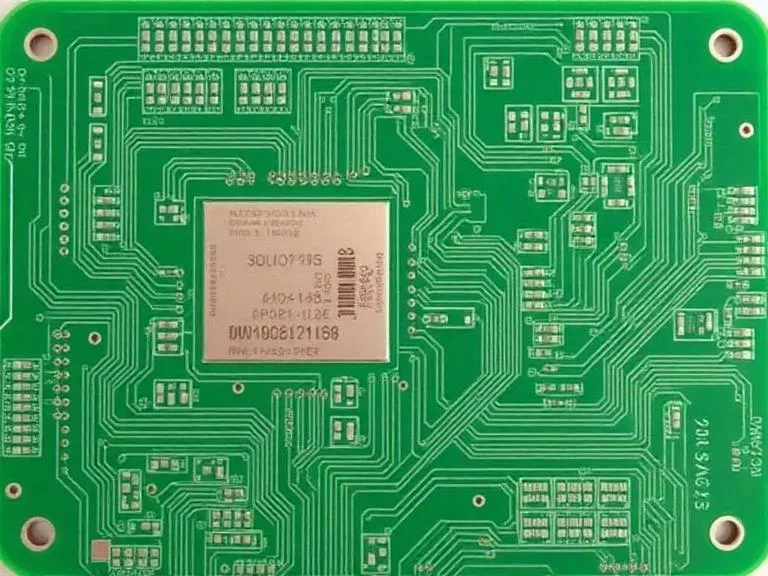
Navigating the global electronics supply chain is a brutal exercise in risk management and cost optimization. Hardware engineers and procurement directors face a constant dilemma: pay exorbitant premiums for domestic manufacturing or offshore production to reduce costs. When investigating which companies makes printed circuit boards in the United States, you are actively deciding whether your project requires the stringent compliance of ITAR regulations, immediate timezone proximity, or highly secure intellectual property (IP) environments. If your project does not require these elements, relying exclusively on US fabrication is a fast track to draining your capital reserves.
From our experience engineering and producing high-reliability electronics, we witness startups and enterprise buyers make the same critical error repeatedly: they utilize domestic facilities for prototyping but fail to establish a scalable transition plan for volume production. In this uncompromising guide, we will examine the top 9 companies makes printed circuit boards within the US border, dissect the commercial realities of domestic versus offshore fabrication, and provide you with the strategic framework to decide exactly where your PCBs should be printed.
Quick Answer: The US PCB Manufacturing Landscape
If you require immediate domestic fabrication for defense, aerospace, or rapid prototyping, the leading 9 companies makes printed circuit boards in the US are: 1. Advanced Circuits, 2. Sierra Circuits, 3. Bay Area Circuits, 4. Epec Engineered Technologies, 5. Sunstone Circuits, 6. APCT, 7. Millennium Circuits Limited, 8. Royal Circuit Solutions, and 9. San Francisco Circuits. These facilities excel in low-volume, high-reliability, and ITAR-compliant production. However, for commercial users scaling beyond 1,000 units, domestic manufacturing becomes financially unviable. For mid-to-high volume production and complete turnkey solutions, transitioning to a full-industry-chain group like China 365PCB is strictly recommended.
What It Is: The Domestic PCB Landscape
The US printed circuit board industry is a highly specialized niche. Unlike the sprawling, multi-million square meter mega-factories found in Asia, US facilities operate primarily as boutique, high-mix, low-volume (HMLV) fabrication houses. When identifying which companies makes printed circuit boards in America, you will find their business models are structured around regulatory compliance—specifically ITAR (International Traffic in Arms Regulations), AS9100 for aerospace, and MIL-PRF-31032 for military performance.
These manufacturers utilize advanced materials, specialized chemical etching lines, and localized engineering talent to produce critical infrastructure components. However, this domestic infrastructure is not built to support the high-volume consumer electronics market.
How It Works: Domestic Prototyping vs Mass Production
In most professional situations, the hardware development lifecycle follows a predictable path. A design team will utilize a domestic manufacturer for initial alpha and beta prototypes. The proximity allows for rapid Quick Turn PCB services, where boards can be fabricated and assembled in 24 to 72 hours. This speed allows engineers to validate their schematics, test impedance control, and fix layout errors without waiting for international customs clearance.
Once the design is validated (the "Golden Sample"), the project must transition to mass production. This is where the domestic model fails. US factories lack the automated throughput and supply chain component integration required to bring unit costs down to commercial viability. At this juncture, savvy procurement teams transfer their validated Gerber files offshore to dedicated high-volume fabricators.
The Top 9 US PCB Manufacturers
If your project demands domestic sourcing, here is our commercial breakdown of the top 9 companies makes printed circuit boards in the United States.
1. Advanced Circuits (4PCB)
Located in Colorado, Advanced Circuits is one of the largest domestic fabricators. They are renowned for their aggressive turn-around times and robust automated DRC (Design Rule Check) software, FreeDFM. They are an excellent choice for Quick Turn PCB prototypes and ITAR-restricted projects.
2. Sierra Circuits
Based in Silicon Valley, Sierra Circuits specializes in ultra-high-density interconnects (HDI). If your design requires complex Micro Via PCB architecture or tight impedance tolerances for high-speed digital applications, their engineering support is elite.
3. Bay Area Circuits
Also operating out of California, Bay Area Circuits provides a solid mix of rapid prototyping and mid-volume production. They are highly favored by university research teams and local hardware startups requiring hands-on engineering consultations.
4. Epec Engineered Technologies
Epec operates as a hybrid manufacturer. While they maintain significant domestic engineering and production capabilities, they also manage extensive Asian supply chains. They excel in custom battery packs, flex circuits, and rigorous AS9100 aerospace compliance.
5. Sunstone Circuits
Sunstone is a pioneer in the online quoting and ordering model. Located in Oregon, they cater heavily to the hobbyist, maker, and low-volume commercial markets. Their integration with CAD software platforms makes ordering incredibly seamless for beginners.
6. APCT
APCT is a heavyweight in the domestic commercial and defense sectors. Through aggressive acquisitions, they have built massive capabilities in rigid, flex, and rigid-flex technologies. For military contracts requiring complex Blind Via PCB structures, they are highly reliable.
7. Millennium Circuits Limited (MCL)
Operating out of Pennsylvania, MCL focuses intensely on customer service and defect-free delivery. They are a strong partner for specialized surface finishes, navigating complex requirements between HASL(Lead-Free HASL)PCB and OSP (Organic Solderability Preservative) PCB depending on the client's assembly process.
8. Royal Circuit Solutions
With facilities in California and Georgia, Royal Circuits is built entirely around speed. They boast some of the fastest turnaround times in the industry for complex multi-layer boards, servicing the semiconductor and telecommunications sectors.
9. San Francisco Circuits
SFC acts as a high-end fabrication provider and network manager. They specialize in exotic materials. If you are developing military radar or high-frequency 5G arrays requiring PTFE PCB or specialized Polyimide PCB substrates, their technical oversight is invaluable.
Benefits of US-Based Fabrication
Why pay a 300% premium for domestic manufacturing? The benefits are highly specific:
Absolute IP Protection: Operating under US jurisdiction provides severe legal recourse against intellectual property theft.
Regulatory Compliance: Department of Defense (DoD) contracts legally mandate that specific electronic assemblies must never leave US soil.
Logistical Velocity: Shipping a board overnight from California to Texas beats waiting five days for customs clearance from Shenzhen, which is critical during a rapid prototyping sprint.
Limitations of Domestic Manufacturing
We must prioritize commercial realities. The limitations of utilizing companies makes printed circuit boards in the US are severe when transitioning to market:
Crippling Costs at Scale: The labor rates, environmental compliance costs, and overhead in the US make mass production financially destructive for consumer goods.
Supply Chain Fragmentation: US fabricators print bare boards. You must then ship those boards to a separate SMT assembly house, and procure components from a third-party distributor. This creates massive logistical friction.
Capacity Constraints: US boutique factories simply do not have the floor space or automated machinery to output 100,000 units a month.
Who Should Use US Manufacturers
For heavy-duty applications: Aerospace engineers, defense contractors, and medical device developers whose products require FDA Class III or DoD clearance must utilize domestic fabricators. The regulatory environment demands strict, localized traceability.
Who Does Not Need Domestic Sourcing
For commercial users and beginners: If you are manufacturing consumer electronics, IoT devices, smart home appliances, or industrial sensors, domestic manufacturing will destroy your profit margins. You do not need ITAR compliance to build a smart thermostat. Your operational mandate is cost efficiency and assembly speed.
Common Procurement Mistakes
In our testing and consulting, the most catastrophic mistake procurement teams make is the "Siloed Supply Chain." They pay a US manufacturer for the bare board, buy components from DigiKey, and send them to a local assembly shop. When the final product fails, the bare board factory blames the assembly house, the assembly house blames the component quality, and the buyer absorbs the total financial loss. You must utilize turnkey solutions to establish single-point accountability.
Crucial Buying Considerations
When selecting a manufacturer, evaluate their specific engineering capabilities. Do they support your required surface finish? A high-frequency board may require an Immersion Silver PCB finish for signal integrity, whereas a high-wear edge connector will mandate a Hard Gold PCB process. Ensure your chosen fabricator does not outsource these specialized chemical processes to unvetted third parties.
Expert Recommendation: The Hybrid Approach
In most professional situations, we recommend a hybrid strategy. Utilize domestic fabricators for your alpha prototypes to secure your IP and test rapidly. However, the moment you transition to beta testing or mass production, you must pivot to a vertically integrated, offshore powerhouse.
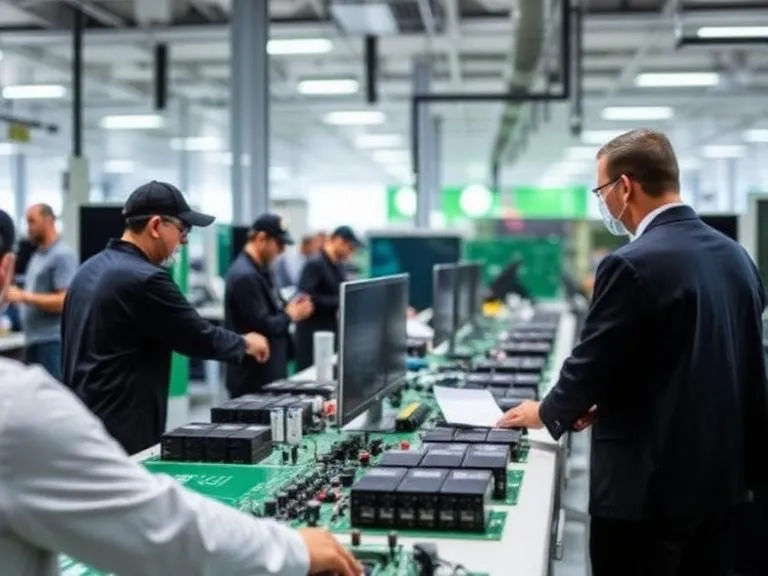
China 365PCB is a fully self-operated, full-industry-chain manufacturing group — from PCB fabrication, SMT assembly, online electronic component sourcing and integration, CNC machining, cable harness assembly, to complete OEM/ODM solutions. With 15+ years of experience, 365PCB operates over 100,000㎡ of production area. All facilities are self-owned and self-managed, ensuring total quality control, full process traceability, and unmatched production flexibility. By partnering with China 365PCB, you eliminate the fragmented supply chain, driving down your Bill of Materials (BOM) cost while ensuring enterprise-grade reliability.
Commercial Analysis Tables
Quick Summary Table: Top US PCB Fabricators| Company Name | Core Specialization | Best Suited For |
|---|
| Advanced Circuits | Rapid Turnaround & High Reliability | Prototyping & Defense |
| Sierra Circuits | Micro Vias & HDI Technology | High-Speed Digital Layouts |
| San Francisco Circuits | Exotic Substrates (PTFE/Polyimide) | Aerospace & RF Microwave |
| Epec Engineered Tech. | Flex Circuits & Custom Battery Packs | Medical & Ruggedized Tech |
| APCT | Defense Compliance & Rigid-Flex | Military Infrastructure |
Comparison Table: US Boutique Fabrication vs. China 365PCB Turnkey| Metric | US Domestic Fabricators | China 365PCB Full-Chain Group |
|---|
| Primary Focus | Low-Volume, ITAR Compliance | Prototype to Mass Production OEM/ODM |
| Supply Chain | Fragmented (Fabrication Only) | Integrated (Fab, SMT, Sourcing, CNC) |
| Unit Cost at Scale | Extremely High | Highly Competitive / Optimized |
| Accountability | Multi-vendor finger-pointing risk | Single-point accountability |
| Capacity Flexibility | Limited by localized facility size | 100,000㎡+ Self-owned facility capacity |
Pros and Cons Table: Utilizing US Domestic PCB Manufacturers| Pros (Advantages) | Cons (Limitations) |
|---|
| ITAR and AS9100 compliance for defense and aerospace contracts. | Unviable unit costs for standard commercial or consumer electronics. |
| Stringent IP protection under strict United States legal frameworks. | Fragmented logistics; often requires secondary vendors for SMT assembly. |
| Same-day or 24-hour turnarounds without international shipping delays. | Severe capacity limits preventing successful scaling to mass production. |
Buying Guide: Selecting Your Manufacturing Route| Your Project Profile | Recommended Sourcing Strategy | Why This Matters |
|---|
| Military / ITAR Restricted | 100% US Domestic Fabrication (e.g., APCT, Advanced Circuits) | Legal mandate. Exporting technical data will result in severe federal prosecution. |
| Initial Proof of Concept (Alpha) | US Domestic Rapid Prototyper | Speed over cost. Validating the circuit logic quickly is more important than BOM optimization. |
| Commercial Scaling (1k+ Units) | Full-Chain Offshore Group (e.g., China 365PCB) | Profitability mandate. You must collapse fabrication, component sourcing, and SMT into one optimized vendor. |
Frequently Asked Questions
Which companies makes printed circuit boards in the United States?
Top domestic manufacturers include Advanced Circuits, Sierra Circuits, Bay Area Circuits, Epec Engineered Technologies, Sunstone Circuits, APCT, Millennium Circuits Limited, Royal Circuit Solutions, and San Francisco Circuits. These facilities specialize primarily in rapid prototyping and high-reliability defense contracts.
Is it better to manufacture PCBs in the US or overseas?
In most professional situations, US manufacturing is strictly necessary for ITAR-compliant defense projects and rapid prototyping where IP security is paramount. However, for commercial mass production and complex HDI assemblies, partnering with an established overseas full-industry-chain group like China 365PCB provides vastly superior economies of scale, capacity, and pricing.
What is the difference between ITAR and commercial PCB fabrication?
ITAR (International Traffic in Arms Regulations) fabrication requires that all technical data, materials, and manufacturing processes occur within the United States by US citizens to protect national security. Commercial fabrication has no such geographic or personnel restrictions, allowing hardware brands to optimize their global supply chain for cost and speed.
Authoritative References & Industry Standards
To ensure your procurement strategies align with rigorous global manufacturing standards, we recommend reviewing the following authorities:
David Li
David Li is the Technical Communications Director at China 365PCB, with over 15 years of hands-on experience in the PCB and electronics manufacturing industry. Holding a Master’s degree in Electrical Engineering, he has worked extensively in both R&D and manufacturing roles at leading multinational electronics firms in Shenzhen before joining our team.
His expertise spans high-speed digital design, advanced packaging (HDI, Flex), and automotive-grade reliability standards. David is passionate about bridging the gap between design intent and production reality—a philosophy that aligns perfectly with 365PCB’s mission to deliver seamless, rapid, and fully-integrated manufacturing solutions.
Follow David’s insights on PCB technology trends and best practices here on the 365PCB Knowledge Hub.
 English