English
PCB manufacturing costs vary considerably between countries, but choosing a manufacturer based on the lowest advertised price is rarely a good procurement strategy. Layer count, material selection, production volume, quality requirements, delivery arrangements and engineering support can change the final cost substantially.
For electronics engineers, procurement managers and OEM buyers, understanding PCB Circuit Board Prices across different manufacturing regions is essential when preparing a project budget or evaluating suppliers. A board quoted at $5 in one country may cost several times more elsewhere, even before shipping, customs clearance and inspection are included.
In this 2026 guide, 365PCB examines PCB manufacturing costs in China, the United States, Germany, Japan, India and South Korea. We explain the main pricing differences, compare manufacturing options and show how to select a supplier based on total procurement cost rather than the initial quotation.
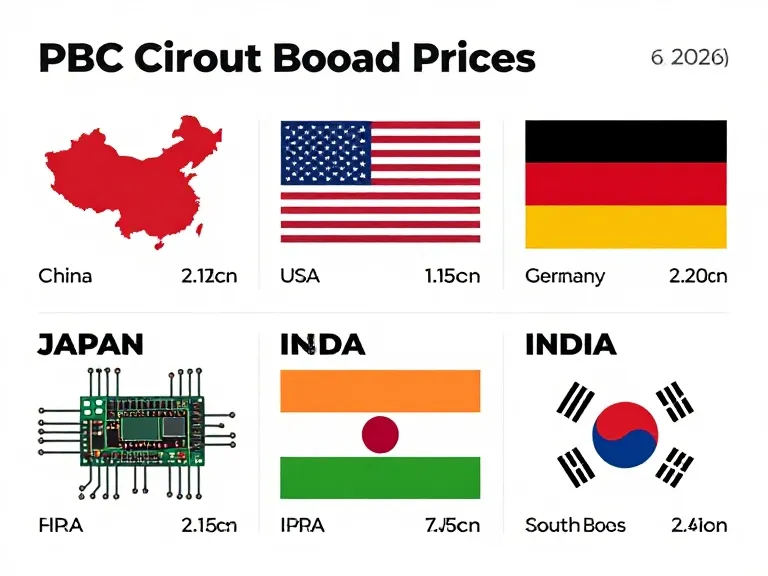
Quick Answer: How Much Do PCB Circuit Boards Cost in 2026?
For a standard 100 × 100 mm, two-layer FR-4 PCB, a practical preliminary budgeting range is approximately $2–$10 per board for a small overseas prototype order and around $0.40–$6 per board for larger production orders, depending on manufacturing location and order specifications.
China generally offers the strongest price competitiveness for standard prototypes and volume production. The USA, Germany and Japan can justify higher manufacturing costs when local engineering support, delivery speed, traceability or regulatory requirements matter more than unit price.
Our recommendation: Compare identical Gerber files, specifications, quantities and quality requirements. Do not compare a standard overseas quotation against a domestic quotation that includes expedited production, additional testing or engineering services.
Quick Summary: PCB Circuit Board Prices by Country
| Country | Typical Market Position | Small-Order Budget | Volume-Order Budget | Best Purchasing Scenario |
|---|---|---|---|---|
| China | Highly competitive | $2–$8/pc | $0.40–$1.50/pc | Prototypes and mass production |
| USA | Premium | $40–$120/pc | $2.50–$6/pc | Domestic sourcing and regulated projects |
| Germany | Premium | $30–$90/pc | $2–$5/pc | European industrial electronics |
| Japan | Premium | $45–$100/pc | $2.50–$6/pc | Precision and advanced electronics |
| India | Competitive to mid-range | $20–$60/pc | $1.50–$4/pc | Domestic sourcing and regional supply |
| South Korea | Mid-range to premium | $30–$85/pc | $2–$5/pc | Advanced electronics and multilayer boards |
Pricing methodology: These figures are indicative USD budgeting allowances, not audited national averages or verified live supplier quotations. They are intended to illustrate sourcing differences for a conventional 100 × 100 mm, two-layer FR-4 board with standard thickness and copper, green solder mask and HASL finish. Small-order figures assume approximately 10 pieces; volume figures assume approximately 500 pieces. The estimates exclude freight, taxes, duties, tooling exceptions and special testing. Actual quotations can fall outside these ranges. Four-layer, HDI, RF and rigid-flex boards require separate pricing.
1. What Determines PCB Circuit Board Prices?
PCB Circuit Board Prices refer to the manufacturing cost of printed circuit boards, generally expressed as a unit price or total order price. Depending on the supplier, the quotation may cover bare PCB fabrication only or include additional services such as engineering review, electrical testing, inspection and assembly.
A printed circuit board is manufactured by transferring circuit patterns onto insulating substrates, typically FR-4, and combining copper layers through processes such as imaging, etching, lamination, drilling, plating and surface finishing.
How PCB Manufacturing Costs Are Calculated
Manufacturers do not simply charge according to the physical area of a finished circuit board. They consider the complete production process and how efficiently the design fits into manufacturing panels.
For example, a 100 × 100 mm two-layer PCB may require relatively straightforward processing. A six-layer board of the same dimensions requires additional copper layers, lamination operations, drilling and registration controls.
For complex products, the price may also include laser drilling, sequential lamination, impedance testing, controlled-depth drilling and additional inspection.
Quick Comparison of Common PCB Types
| PCB Type | Manufacturing Complexity | Relative Cost | Typical Application |
|---|---|---|---|
| Single-sided PCB | Low | Lowest | Simple electronics and basic controls |
| Two-layer FR-4 PCB | Low to moderate | Low | Consumer electronics and control boards |
| Four-layer PCB | Moderate | Medium | Industrial controllers and communication equipment |
| Six to eight-layer PCB | High | High | Networking and advanced electronics |
| HDI PCB | Very high | Very high | Compact electronic devices |
| Rigid-flex PCB | Very high | Very high | Medical, aerospace and compact equipment |
For engineers developing products with complex signal requirements, choosing a suitable high-speed PCB manufacturing solution is more important than simply minimizing the initial board cost.
Benefits of Comparing PCB Prices Internationally
Lower procurement costs: International sourcing can reveal substantial differences in fabrication and assembly expenses.
More manufacturing choices: Buyers can select suppliers based on specialized technical capabilities.
Better production planning: Understanding regional lead times helps prevent inventory shortages.
Improved cost control: Comparing itemized quotations helps identify unnecessary specifications and charges.
Supply chain flexibility: Multiple qualified manufacturers can reduce dependence on a single production location.
Limitations of International PCB Sourcing
Lower factory pricing does not automatically mean lower procurement costs. International shipping, import duties, customs processing, communication delays and potential quality disputes all affect the final purchasing decision.
For beginners, these additional costs are easy to overlook. For commercial users, we recommend calculating the landed cost per accepted board before selecting a manufacturing partner.
2. PCB Circuit Board Prices in Six Countries in 2026
2.1 China: Competitive PCB Manufacturing Prices
China remains one of the strongest options for buyers looking for competitive PCB Circuit Board Prices, particularly for standard FR-4 boards, multilayer fabrication and integrated PCB assembly.
The main advantage is not simply lower labor costs. China has an established electronics manufacturing ecosystem that includes laminate suppliers, copper foil production, drilling equipment, PCB fabrication facilities, component distributors and assembly manufacturers.
This supply chain allows many manufacturers to coordinate fabrication, sourcing, assembly and testing without managing multiple overseas suppliers.
Indicative 2026 pricing:
Two-layer FR-4 prototype: approximately $2–$8 per board.
Four-layer FR-4 prototype: approximately $8–$40 per board.
Two-layer FR-4, 500 pieces: approximately $0.40–$1.50 per board.
Four-layer FR-4, 500 pieces: approximately $1.50–$4 per board.
These are budgeting ranges for conventional specifications, not guaranteed factory prices.
Why Choose China?
From our experience in PCB procurement, China is particularly attractive when a project requires frequent design revisions, multiple production batches or a combination of bare-board fabrication and electronic assembly.
For example, an industrial controller manufacturer might initially order 20 prototype boards, revise the circuit layout after functional testing and then move to 1,000 or more production units. Working with a supplier that can support the entire development cycle can simplify procurement considerably.
We recommend China for:
Electronics startups and prototype developers.
OEM and ODM manufacturers.
Industrial control equipment manufacturers.
Consumer electronics production.
Companies requiring PCB fabrication and SMT assembly together.
365PCB provides PCB fabrication, engineering support and PCBA components sourcing to support different stages of electronic product manufacturing.
2.2 United States: Higher Prices with Domestic Supply Advantages
The United States is an important PCB manufacturing market, especially for defense-related electronics, aerospace systems, medical equipment, industrial controls and applications where domestic manufacturing or supply chain requirements are critical.
However, domestic manufacturing generally comes with higher operating expenses, including labor, facility costs, environmental compliance and specialized production overhead.
Indicative 2026 pricing:
Two-layer FR-4 prototype: approximately $40–$120 per board.
Four-layer FR-4 prototype: approximately $120–$300 per board.
Two-layer FR-4, 500 pieces: approximately $2.50–$6 per board.
Four-layer FR-4, 500 pieces: approximately $6–$12 per board.
These planning allowances reflect a domestic sourcing scenario and should not be interpreted as a fixed price for every American PCB factory.
When Is US PCB Manufacturing Worth the Extra Cost?
For commercial users, domestic sourcing can be justified when delivery speed, engineering communication, export controls or customer-mandated manufacturing locations are important.
For example, a defense electronics contractor may have sourcing restrictions that make overseas production unsuitable. In this situation, paying more for a qualified domestic supplier is a business requirement rather than an optional cost-saving decision.
For ordinary consumer electronics with flexible delivery schedules, however, domestic manufacturing may not provide enough additional value to justify the price difference.
2.3 Germany: Industrial Quality and European Supply Chain Advantages
Germany has an established electronics and industrial manufacturing sector. Its PCB manufacturing ecosystem is particularly relevant to industrial automation, automotive electronics, power systems and specialized engineering applications.
German PCB sourcing can be attractive when customers require local technical coordination, documented manufacturing processes and shorter supply chains within Europe.
Indicative 2026 pricing:
Two-layer FR-4 prototype: approximately $30–$90 per board.
Four-layer FR-4 prototype: approximately $100–$250 per board.
Two-layer FR-4, 500 pieces: approximately $2–$5 per board.
Four-layer FR-4, 500 pieces: approximately $5–$10 per board.
These are preliminary purchasing allowances, not verified averages for German factories.
Is German PCB Manufacturing Worth It?
For industrial buyers, the decision should consider more than fabrication costs. Engineering communication, supplier qualification, traceability and delivery arrangements can have substantial operational value.
Consider an automation equipment manufacturer supplying machinery to European customers. If its purchasing policy requires local suppliers or short delivery cycles, a German manufacturer may reduce inventory and coordination expenses.
However, when the project involves standard FR-4 boards and high-volume production, international sourcing can provide a more attractive cost structure.
2.4 Japan: Precision Manufacturing and Advanced PCB Applications
Japan has a strong electronics manufacturing industry, particularly in advanced materials, high-reliability electronics and precision manufacturing.
Japanese suppliers are relevant for applications where dimensional accuracy, material consistency and process control are major purchasing considerations.
Indicative 2026 pricing:
Two-layer FR-4 prototype: approximately $45–$100 per board.
Four-layer FR-4 prototype: approximately $100–$250 per board.
Two-layer FR-4, 500 pieces: approximately $2.50–$6 per board.
Four-layer FR-4, 500 pieces: approximately $5–$12 per board.
These are broad budgeting estimates. Individual Japanese suppliers may quote substantially different prices depending on production quantity and technical requirements.
When Should You Choose Japan?
Japan is worth considering for precision electronic systems, specialized industrial equipment and products requiring particular material or process capabilities.
For example, an engineer developing an advanced electronic module may need specialized substrate materials, tighter dimensional tolerances or a controlled multilayer structure.
In these circumstances, technical capability should take priority over the lowest standard FR-4 quotation.
For buyers evaluating advanced packaging and semiconductor-related applications, 365PCB also provides information about IC substrate PCB solutions and FC-CSP PCB technology.
2.5 India: An Emerging PCB Manufacturing and Sourcing Market
India is becoming increasingly relevant to electronics manufacturing and supply chain diversification. Domestic electronics production growth is creating additional opportunities for PCB fabrication and assembly suppliers.
India can be attractive for companies serving the domestic market, regional OEMs and manufacturers seeking additional sourcing options outside traditional production centers.
Indicative 2026 pricing:
Two-layer FR-4 prototype: approximately $20–$60 per board.
Four-layer FR-4 prototype: approximately $60–$160 per board.
Two-layer FR-4, 500 pieces: approximately $1.50–$4 per board.
Four-layer FR-4, 500 pieces: approximately $4–$9 per board.
Actual pricing depends heavily on local manufacturing capacity, material sourcing, process complexity and production volume. These figures are planning estimates rather than published national price averages.
Is India a Good Alternative to China?
For companies selling primarily within India, local PCB manufacturing may offer logistical and supply chain advantages.
However, buyers should verify the manufacturer's actual production capabilities rather than assuming that every supplier can handle advanced multilayer, HDI or specialized material requirements.
We recommend requesting manufacturing samples, process documentation and electrical testing records before placing a large production order.
2.6 South Korea: Advanced Electronics and Multilayer PCB Manufacturing
South Korea has a sophisticated electronics industry with strong connections to semiconductor, display, telecommunications and consumer electronics manufacturing.
Its PCB supply chain is particularly relevant to advanced electronic products where high-density interconnections, multilayer construction and specialized materials are required.
Indicative 2026 pricing:
Two-layer FR-4 prototype: approximately $30–$85 per board.
Four-layer FR-4 prototype: approximately $90–$220 per board.
Two-layer FR-4, 500 pieces: approximately $2–$5 per board.
Four-layer FR-4, 500 pieces: approximately $4–$10 per board.
When Is South Korea the Better Choice?
South Korea deserves consideration when a project requires advanced electronics manufacturing expertise or access to specialized production capabilities.
For a simple two-layer controller board, however, paying a premium for a specialized manufacturing ecosystem may not be commercially justified.
For high-density or semiconductor-related applications, evaluate the supplier's specific technology qualifications rather than relying on country reputation alone.
Related 365PCB solutions include interposer PCB manufacturing and semiconductor test PCB solutions.
3. PCB Manufacturing Country Comparison: Which Country Offers the Best Value?
There is no single best PCB manufacturing country for every project. The right choice depends on whether the buyer prioritizes manufacturing cost, lead time, technical capability, regulatory compliance or supply chain location.
| Evaluation Factor | China | USA | Germany | Japan | India | South Korea |
|---|---|---|---|---|---|---|
| Standard PCB pricing | Very competitive | High | High | High | Competitive to medium | Medium to high |
| Large-volume sourcing | Strong option | Project-dependent | Project-dependent | Specialized | Developing option | Strong in selected sectors |
| Prototype flexibility | Strong | Strong | Supplier-dependent | Supplier-dependent | Supplier-dependent | Supplier-dependent |
| Advanced PCB capability | Strong | Strong | Specialized | Strong | Supplier-dependent | Strong |
| Local support in home market | Strong domestically | Strong domestically | Strong domestically | Strong domestically | Strong domestically | Strong domestically |
| Typical purchasing advantage | Cost and ecosystem | Domestic compliance | European supply chain | Precision applications | Regional sourcing | Advanced electronics |
Which Country Is Best for Different PCB Projects?
Lowest-cost standard PCB production: Start by evaluating China-based suppliers.
US defense and regulated projects: Prioritize qualified domestic manufacturers and applicable sourcing restrictions.
European industrial applications: Compare German and other qualified European suppliers against offshore landed costs.
Precision electronics: Evaluate Japanese manufacturers based on actual technical requirements.
Indian domestic production: Consider qualified local suppliers to reduce regional logistics complexity.
Advanced semiconductor-related applications: Compare specific capabilities in South Korea, Japan, China and other established technology centers.
The important distinction is between the cheapest board and the lowest total cost of ownership. A supplier that reduces unit price but creates delivery uncertainty or quality problems can become significantly more expensive over the life of a project.
4. Seven Factors That Affect PCB Circuit Board Prices
4.1 Number of Layers
Layer count is one of the most important PCB cost drivers. A two-layer PCB requires fewer manufacturing operations than a four-layer or eight-layer multilayer PCB.
Additional layers introduce more lamination, alignment, drilling and plating requirements. Advanced multilayer boards may also need controlled impedance and more demanding inspection procedures.
Our recommendation is to use the lowest practical layer count that satisfies electrical performance and routing requirements. Do not remove necessary ground or power planes simply to reduce fabrication costs.
4.2 Board Size and Panel Utilization
PCB manufacturers generally optimize production through panelization. More efficiently arranged boards can improve material utilization and reduce manufacturing cost per unit.
Unusual board shapes, large dimensions and inefficient panel arrangements can increase waste and processing expenses.
4.3 Base Material
Standard FR-4 is widely used because it provides a practical balance between cost, mechanical strength and electrical properties.
Specialized materials such as Rogers laminates, polyimide and other high-frequency substrates cost more because of their material properties and manufacturing requirements.
For high-frequency applications, selecting a material solely because it is cheaper is a mistake. Dielectric properties, signal loss and thermal performance must be considered.
4.4 Copper Thickness
Standard copper thickness is usually sufficient for many conventional electronics designs. Higher copper weights may be required for power distribution, current-carrying capacity or thermal management.
Increasing copper thickness can affect etching, trace spacing and other manufacturing parameters. Discuss the required current capacity with your PCB engineer before requesting quotations.
4.5 Surface Finish
Common PCB surface finishes include:
HASL: A cost-effective finish for many general-purpose applications.
Lead-free HASL: Commonly selected for RoHS-oriented manufacturing requirements.
ENIG: Offers a relatively flat surface and is suitable for fine-pitch components and selected demanding applications.
OSP: A cost-conscious alternative for certain assembly processes.
Immersion silver: Used in applications where its surface characteristics are appropriate.
For beginners, ENIG is not automatically the best finish. If your design does not require its specific advantages, a suitable HASL or OSP option may deliver better cost efficiency.
4.6 Manufacturing Tolerances and Special Processes
Fine line widths, tight spacing, small drill diameters, blind vias, buried vias, via-in-pad and controlled impedance increase process complexity.
HDI boards can require laser drilling and sequential lamination. These additional manufacturing steps explain why HDI PCB Circuit Board Prices are substantially higher than those of standard FR-4 boards.
For designs involving advanced routing and signal-integrity requirements, we recommend obtaining professional PCB design support before finalizing the production files.
4.7 Order Quantity and Production Lead Time
Small orders have higher unit costs because setup, engineering review, tooling and production preparation are distributed across fewer boards.
Increasing order quantities can reduce unit prices, although the savings are not always proportional. Material prices, panel utilization and factory capacity all affect the final quotation.
Expedited production can also increase costs. If a project has a predictable development schedule, we recommend planning production in advance rather than routinely paying for rush manufacturing.
5. Pros and Cons of Different PCB Sourcing Options
Choosing between domestic and overseas PCB manufacturing involves trade-offs. The following comparison is useful for procurement teams evaluating their supply chain strategy.
| Sourcing Option | Pros | Cons | Our Recommendation |
|---|---|---|---|
| China PCB manufacturers | Competitive costs, broad supplier ecosystem, flexible production and integrated assembly options | International logistics, customs and communication considerations | Strong choice for cost-sensitive OEM projects |
| Domestic PCB manufacturers | Local communication, shorter transportation routes and potentially simpler compliance management | Higher manufacturing expenses in many markets | Best when local sourcing is a requirement |
| Regional suppliers | Potentially better proximity to customers and regional supply chain integration | Manufacturing capabilities and pricing vary considerably | Qualify suppliers based on actual technical capability |
| Integrated PCB and PCBA suppliers | Fewer supplier interfaces, coordinated fabrication and assembly | Requires careful evaluation of sourcing transparency and process control | Recommended for production-ready electronic products |
For most commercial electronics projects, we recommend evaluating integrated manufacturing partners when both bare boards and component assembly are required. Managing one qualified supply chain can reduce coordination work and make quality responsibility clearer.
6. How to Choose a PCB Manufacturer Without Overpaying
A low quotation is only useful when the manufacturer can consistently deliver boards that meet your technical requirements.
Check Manufacturing Capability
Before selecting a supplier, confirm its actual production capabilities. Request details about:
Maximum and minimum layer count.
Available FR-4 and specialized laminate materials.
Minimum trace width and spacing.
Minimum mechanical and laser drill diameter.
Blind and buried via capabilities.
Surface finish options.
Impedance control capability.
Electrical testing and inspection processes.
Verify Quality Standards
Industry standards provide a useful framework for comparing PCB manufacturing quality. For rigid boards, IPC-6012 defines qualification and performance requirements. IPC-A-600 provides visual acceptability criteria for printed boards.
However, simply stating that a manufacturer follows IPC standards is not enough. The purchase order should specify the required revision, performance class, acceptance criteria and any application-specific requirements.
For example, an ordinary commercial product may use a different acceptance class from a high-reliability industrial or aerospace application.
We recommend reviewing sample inspection reports, microsection records where relevant and electrical test documentation before approving production.
365PCB also offers PCB electrical testing services to help verify electrical connectivity and manufacturing quality.
Ask for an Itemized Quotation
A professional PCB quotation should clearly identify the following costs:
Bare PCB fabrication.
Engineering or tooling charges.
Special material costs.
Surface finish upgrades.
Electrical testing and inspection.
Expedited production charges.
Packaging and international shipping.
Applicable taxes and import duties.
When two manufacturers offer substantially different prices, ask them to explain the differences before making a decision. One supplier may have excluded testing, used a different surface finish or assumed a longer production schedule.
Use DFM Review Before Mass Production
Design for Manufacturability (DFM) review identifies design issues that may affect production yield, reliability or manufacturing costs.
Common examples include insufficient annular rings, overly narrow spacing, inappropriate drill sizes and inefficient panelization.
For commercial users, a DFM review before a 1,000-piece order is usually a better investment than discovering manufacturing problems after production begins.
Our recommendation is to evaluate PCB actual board area and AOI inspection requirements as part of the overall manufacturing and quality-control plan.
7. PCB Fabrication vs. PCB Assembly: Understanding the Real Project Cost
One of the most common procurement mistakes is confusing bare PCB fabrication prices with complete PCBA manufacturing prices.
A bare PCB is the manufactured circuit board without electronic components. A PCBA is a populated board containing components installed through processes such as surface mount technology (SMT) and through-hole assembly.
The total PCBA cost may include:
Bare PCB fabrication.
Electronic component purchasing.
SMT stencil preparation.
SMT machine setup and programming.
Component placement and soldering.
AOI inspection and other quality checks.
Functional testing and packaging.
In many electronic products, components represent a substantial proportion of total manufacturing expenditure. Therefore, saving 10% on bare PCB fabrication does not necessarily reduce total PCBA cost by 10%.
SMT PCB Assembly: When Is It Worth Buying Together?
For companies that need finished electronic assemblies, combining PCB fabrication with SMT PCB assembly can simplify purchasing and production management.
365PCB provides professional SMT PCB assembly services, supporting prototype and volume production with automated SMT lines and no MOQ. The service accommodates 0402 components, fine-pitch ICs and complex BGA packages, with lead-free RoHS and leaded soldering options.
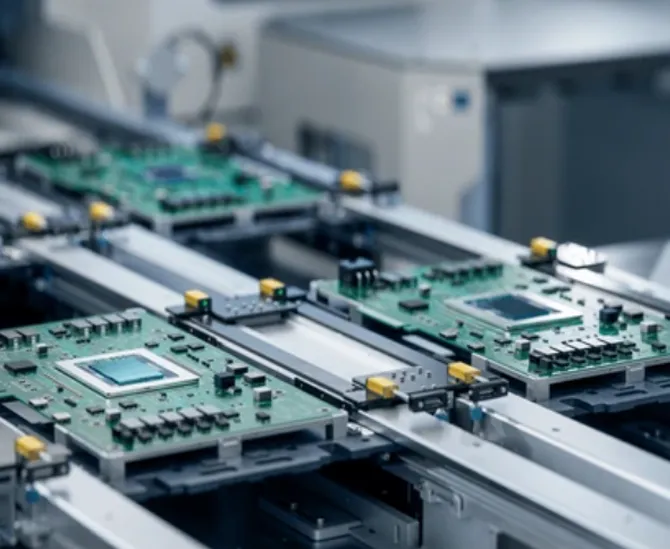
365PCB SMT PCB assembly services for prototype and volume electronic manufacturing.
For projects involving multiple components and complex assembly requirements, we recommend requesting a combined fabrication and assembly quotation. This gives purchasing teams a more realistic view of total production costs.
When Should You Purchase PCB Fabrication and Assembly Separately?
Separate sourcing may be appropriate when a company already has an established assembly partner, needs a specialized fabrication process or has contractual requirements governing component procurement.
However, if you are a startup without an established production supply chain, integrated PCB and PCBA sourcing can simplify supplier coordination and reduce the number of production handoffs.
8. How to Reduce PCB Circuit Board Prices Without Sacrificing Quality
Reducing PCB manufacturing costs should begin with engineering and procurement decisions, not indiscriminate reductions in material quality.
1. Optimize the PCB Layer Count
Review the routing architecture and layer stackup before requesting production quotations. If the design can safely meet electrical requirements with fewer layers, fabrication costs may decrease.
However, removing layers at the expense of grounding, power integrity or signal performance is not a worthwhile saving.
2. Choose an Appropriate Surface Finish
Do not specify ENIG automatically for every design. Evaluate HASL, lead-free HASL, OSP and ENIG according to component pitch, assembly requirements, shelf life and application needs.
3. Improve Panel Utilization
Discuss panelization with the manufacturer. An optimized panel arrangement can reduce material waste and improve production efficiency.
4. Avoid Unnecessary Tolerances
Specify tighter tolerances only where the electrical or mechanical design requires them. Excessive requirements can increase manufacturing complexity and inspection expenses.
5. Consolidate Production Orders
Where demand is predictable, combining orders may reduce setup costs and improve purchasing efficiency. However, do not increase inventory simply to obtain a lower unit price if the product is likely to change.
6. Compare Total Landed Costs
Calculate the total cost after shipping, import duties, taxes, inspection, handling and expected quality losses. This is the only meaningful way to compare domestic and overseas manufacturing options.
7. Prevent Design Errors Before Manufacturing
Engineering mistakes can create far greater costs than small differences in PCB unit prices. Verify Gerber files, drill files, stackup specifications and fabrication notes before releasing a production order.
We recommend spending more effort on design optimization and supplier qualification than negotiating a few cents off a board that has not been properly engineered. A small improvement in production yield can deliver greater savings than an aggressive unit-price reduction.
9. 365PCB's Expert Recommendations for PCB Purchasing in 2026
At 365PCB, we believe the right PCB sourcing strategy should balance technical performance, manufacturing cost and delivery reliability.
For most standard commercial PCB projects, China deserves a place on the shortlist because of its manufacturing ecosystem and competitive production options. However, this does not mean that every project should be sourced from China.
For Beginners and Prototype Developers
Start with a manufacturer that offers engineering review, clear communication and flexible prototype production. Avoid placing large orders before validating the first samples.
Prioritize correct electrical performance and manufacturing feasibility over the lowest prototype quotation.
For Commercial Electronics Manufacturers
Compare at least two or three qualified suppliers using identical manufacturing specifications. Evaluate their volume pricing, delivery commitments, inspection procedures and ability to support repeat orders.
For production programs involving populated boards, request combined PCBA pricing to understand the actual cost per finished product.
For Heavy-Duty and Advanced Electronics Applications
For high-current, high-frequency or demanding industrial applications, material selection, thermal performance and electrical reliability should come before unit price.
Specialized products may require different manufacturing processes, including:
Flexible PCB manufacturing for dynamic or space-constrained applications.
Burn-in board PCB solutions for semiconductor reliability testing.
Probe card PCB manufacturing for semiconductor test applications.
How to Get an Accurate PCB Quote from 365PCB
To obtain a meaningful quotation, prepare the following information:
Gerber files and drill files.
Board length and width.
Number of copper layers.
Board thickness and copper weight.
Base material requirements.
Surface finish and solder mask color.
Minimum trace width and spacing.
Required quantity.
Electrical testing and inspection requirements.
Target delivery date and shipping destination.
You can submit your project details through the 365PCB instant PCB quotation service to begin the pricing process.
Our Final Recommendation
PCB Circuit Board Prices in 2026 differ significantly across manufacturing countries, but the cheapest quotation is not necessarily the most economical choice.
For standard FR-4 boards, China is an excellent starting point for cost-conscious sourcing. For regulated domestic projects, local manufacturing may be necessary. For advanced electronic applications, technical capability and process control should determine the supplier shortlist.
At 365PCB, our recommendation is straightforward: compare equivalent specifications, verify manufacturing capabilities and calculate the total landed cost before making a purchasing decision.
Need a PCB manufacturing quotation? Contact 365PCB with your Gerber files and project specifications to discuss a suitable manufacturing solution.
10. Frequently Asked Questions About PCB Circuit Board Prices
1. How much does a PCB circuit board cost in 2026?
A standard two-layer FR-4 PCB measuring 100 × 100 mm may cost approximately $2–$10 per board for a small overseas prototype order. At 500 pieces, indicative prices can fall to approximately $0.40–$6 per board depending on the manufacturing country and specifications. Actual costs depend on board size, layer count, finish, material and supplier.
2. Which country has the lowest PCB manufacturing prices?
China is generally one of the most competitive countries for standard PCB fabrication and volume production. Its established electronics supply chain and integrated manufacturing ecosystem help support competitive pricing. However, final landed costs should include freight, customs duties and quality requirements.
3. Why are PCB Circuit Board Prices higher in the USA and Germany?
Manufacturing costs can be higher because of labor, operating expenses, regulatory requirements and production overhead. Domestic engineering support, shorter delivery routes and specialized manufacturing capabilities may justify the additional expense for certain projects.
4. Is a four-layer PCB more expensive than a two-layer PCB?
Yes. Four-layer PCBs require additional copper layers, lamination, drilling and manufacturing operations. The exact price difference depends on board size, material, via structure and production volume. However, four-layer designs may improve routing and signal performance enough to justify the additional cost.
5. What is the cheapest PCB material?
Standard FR-4 is generally one of the most cost-effective materials for conventional rigid PCB applications. Specialized high-frequency materials, polyimide and other advanced laminates usually cost more. Material selection should always reflect electrical, thermal and mechanical requirements.
6. Does PCB order quantity affect unit price?
Yes. Larger production quantities usually reduce the unit cost because setup, tooling and engineering expenses are distributed across more boards. However, the savings depend on panel utilization, production capacity and material costs. Small orders can still be economical for prototyping and design validation.
7. What is the difference between PCB fabrication and PCBA?
PCB fabrication produces the bare printed circuit board. PCBA includes installing electronic components onto the board using SMT or through-hole assembly processes. PCBA quotations also account for components, placement, soldering, inspection and potentially functional testing.
8. How can I get an accurate PCB manufacturing quotation?
Provide Gerber files, drill files, board dimensions, layer count, material, thickness, copper weight, surface finish, quantity and testing requirements. Include the delivery destination and target production schedule. Complete technical information helps manufacturers provide more accurate quotations.
9. Is China a good choice for high-quality PCB manufacturing?
Yes, qualified Chinese manufacturers can produce standard, multilayer, HDI and specialized PCBs. However, buyers should verify actual manufacturing capabilities, quality management systems, inspection records and compliance with the required IPC specifications. Country of manufacture alone does not guarantee product quality.
10. Should I choose the cheapest PCB manufacturer?
Not necessarily. Evaluate the total landed cost, quality consistency, production lead time, technical support and delivery reliability. A slightly higher quotation may provide better commercial value if it reduces defects, production delays and rework.
11. References and Industry Standards
The following authoritative technical resources provide additional guidance on PCB manufacturing costs, fabrication requirements and printed board quality.
Altium Resources – How to Estimate PCB and PCBA Pricing.
Technical guidance on PCB manufacturing costs, component expenses, fabrication and assembly pricing factors.
Read Altium's PCB Pricing Guide.IPC – IPC-6012F: Qualification and Performance Specification for Rigid Printed Boards.
Industry specification covering qualification and performance requirements for rigid printed boards, including multilayer and advanced constructions.
View IPC-6012F Scope and Contents.IPC / ANSI – IPC-A-600M: Acceptability of Printed Boards.
Industry reference for identifying acceptable and nonconforming conditions in printed circuit boards, synchronized with relevant performance specifications.
View IPC-A-600M Standard Information.