English
Every chief technology officer, hardware engineering lead, and supply chain director eventually reaches a pivotal crossroads: your product design has proven its commercial viability, demand is scaling beyond prototype bench capacity, and maintaining internal surface-mount technology (SMT) lines is draining core capital. The decision to pursue outsourcing electronics manufacturing is the single most consequential operational pivot an original equipment manufacturer (OEM) will ever make. Yet too many OEMs approach the contract manufacturing market with a transactional mindset, treating high-reliability electronics assembly like a commodity print-on-demand service. They send out unscrubbed Bills of Materials (BOMs) to three dozen contract assemblers, select the lowest bidder on a spreadsheet, and assume that modern automated pick-and-place lines will magically resolve their engineering oversights. In our testing and production audits across global electronics supply chains, this blind leap into outsourcing electronics manufacturing routinely leads to supply chain paralysis: counterfeit silicon slipping into safety-critical boards, unoptimized circuit layouts causing 40% solder-bridging fallout at reflow, and opaque assembly partners disappearing behind excuse after excuse when global allocation cycles tighten. Successful electronics outsourcing requires evaluating supplier engineering depth, component traceability, testing metrology, and intellectual property containment. As manufacturing engineers and electronic component sourcing specialists who build production lines, scrub multi-tier BOMs, and manage high-density SMT assemblies daily at 365PCB, we deliver the comprehensive, practitioner-level framework you need to navigate outsourcing electronics manufacturing with complete commercial confidence.
Quick Answer: What Must OEMs Consider When Outsourcing Electronics Manufacturing?
When an OEM decides to pursue outsourcing electronics manufacturing, commercial success is governed by five non-negotiable operational pillars: (1) End-to-End Component Sourcing & Traceability (verifying that the EMS partner secures 100% genuine active and passive parts directly from authorized franchised lines, completely eliminating open-market counterfeit risks); (2) Design for Manufacturability (DFM) & Design for Testing (DFT) Discipline (auditing whether the manufacturer identifies layout clearances, thermal relief imbalances, and pad-to-aperture ratios before cutting steel stencils); (3) Advanced Quality Metrology & Process Control (mandating inline 3D Solder Paste Inspection, multi-angle 3D AOI, and continuous X-ray inspection for hidden BGA/QFN terminations compliant with IPC-A-610 Class 2 or Class 3); (4) Total Landed Cost vs. Quoted Unit Price (calculating first-pass yield rates, warranty exposure, engineering change order surcharges, and ocean/air freight logistics rather than chasing superficially low labor bids); and (5) Intellectual Property and Firmware Security (protecting proprietary code through encrypted production bootloaders and segregated assembly processes). Partnering with an agile, vertically integrated provider like 365PCB ensures you secure verified components, rapid SMT turnaround, and rock-solid production scalability under one unified roof.
Article Directory
What It Is: The Operational Reality of Modern EMS & Turnkey Assembly
Quick Summary Table: Core Evaluation Pillars for Electronics Outsourcing
Industry Solution Spotlight: 365PCB Electronic Components Sourcing Service
Direct Technical Comparison: In-House vs. Tier-1 EMS vs. Agile Turnkey Partners
Who Must Outsource vs. Who Should Retain Manufacturing In-House
Costly Mistakes OEMs Make When Contracting Manufacturing Partners
Essential Sourcing Checklist: Auditing an EMS Production Facility
What It Is: The Operational Reality of Modern EMS & Turnkey Assembly
To make a sound business decision regarding outsourcing electronics manufacturing, executive teams must move beyond surface definitions. At its core, outsourcing is not merely hiring an external vendor to run a surface-mount placement machine; it is the strategic transfer of complex manufacturing risks, production asset overhead, and component supply volatility to an expert manufacturing partner. In contemporary industry terminology, this spans everything from Printed Circuit Board Assembly (PCBA) to complete Box-Build system integration.
When selecting your manufacturing engagement model, you will confront two fundamental operating structures:
Consigned (Kitted) Manufacturing: Under this legacy model, the OEM internally finances, procures, inspects, inventories, and kits every single diode, capacitor, integrated circuit, and bare board, shipping the complete package to the assembler. The contract manufacturer charges strictly for line setup and machine conversion labor. From our experience, consigned assembly creates massive internal administrative friction: if a single reel of passive chips is shorted or damaged during feeder setup, the entire SMT line halts, leaving the OEM scrambling to source replacement parts while paying idle line penalties.
Full Turnkey Manufacturing: In full turnkey outsourcing, the manufacturing partner assumes complete operational responsibility. They scrub the engineering BOM, leverage enterprise purchasing volume to buy all Active Electronic Components & Parts and bare boards, fabricate the physical PCB panels, manage surface-mount and through-hole soldering, and run full functional verification. For high-growth companies producing complex Consumer Electronics PCB assemblies, full turnkey manufacturing slashes supply chain overhead and establishes single-point accountability for every joint that leaves the factory floor.
In most professional situations, the transition from in-house prototyping to commercial outsourcing is where profitability is cemented. However, handing over control of your hardware requires rigorous verification of the manufacturer's technical capabilities, component sourcing pipelines, and quality verification standards.
Quick Summary Table: Core Evaluation Pillars for Electronics Outsourcing
| Evaluation Vector | Target Engineering Specification | High-Risk Warning Signs | Commercial Impact on OEM |
|---|---|---|---|
| 1. Component Integrity | 100% Authorized franchised distribution; documented chain of custody | Sourcing from unverified open-market brokers; no anti-counterfeit testing | Prevents catastrophic field recalls and component burnout |
| 2. DFM / DFT Engineering | Automated Valor/Genesis review before tooling; thermal footprint balance | "Rubber-stamping" files; cutting stencils without design audits | Eliminates tombstoning, solder bridges, and un-testable nets |
| 3. SMT & Solder Standards | Multi-zone reflow with tight PWI; nitrogen atmosphere for fine-pitch | Generic thermal profiles; manual hand-soldering of surface-mount ICs | Guarantees joint metallurgy compliant with IPC-A-610 Class 2/3 |
| 4. In-Line Inspection Metrology | Inline 3D SPI, multi-camera 3D AOI, high-resolution transmission AXI | Reliance on manual 2D optical microscopes or visual spot checks | Catches 99% of solder paste and placement defects before reflow |
| 5. Test Development | Flying probe for NPI; automated bed-of-nails ICT and custom FCT jigs | "Power-on only" testing; passing un-tested analog/RF nets | Drives First Pass Yields (FPY) above 98.5% |
| 6. Total Landed Cost (TLC) | Comprehensive costing: yields, freight, scrap allowance, and tariffs | Unrealistically low board quotes concealing heavy change-order fees | Protects real-world hardware gross margins across the product lifecycle |
| 7. Intellectual Property (IP) | Compartmentalized firmware flashing; jurisdictional NDA enforcement | Open access to binary hex files; unencrypted microcontroller flashing | Prevents unauthorized reverse engineering and cloned gray-market hardware |
The 8 Non-Negotiable Pillars OEMs Must Evaluate
1. Component Sourcing Pipelines & Anti-Counterfeit Verification
In modern electronics manufacturing, the Bill of Materials typically accounts for 70% to 85% of the total assembled board cost. You can contract the most technologically advanced SMT placement equipment in the world, but if your manufacturer populates those boards with degraded or counterfeit silicon, your product will fail in the field. Counterfeit components are no longer crude, remarked chips; they are sophisticated microscopic clones, salvaged silicon from scrap boards, or lower-grade chips repackaged to mimic industrial-grade ICs.
When evaluating partners for outsourcing electronics manufacturing, you must inspect their component procurement ecosystem. Do they maintain direct relationships with franchised global distributors, or do they frequent unauthorized secondary brokers to chase cheaper piece-prices? Reliable partners implement multi-tier protocols for Counterfeit Electronic Components Prevention, backed by incoming goods verification: X-ray fluorescence (XRF) material spectrometry, decapsulation die verification, and microscopic lead-frame inspection. Demanding fully Traceable Electronic Components linked to manufacturer lot codes is the only way to insulate your brand from catastrophic liability.
2. Design for Manufacturability (DFM) and Design for Assembly (DFA) Discipline
One of the most dangerous misconceptions in hardware development is that a board layout that works on a CAD screen will glide through high-speed assembly. Design engineers frequently optimize for spatial density without understanding factory-floor kinematics. They place 0201 decoupling capacitors directly against massive copper heat sinks, route fine-pitch traces too close to tooling holes, or position tall electrolytic capacitors where they shadow adjacent BGA solder joints from reflow convection currents.
A premier electronics manufacturing partner does not simply execute your Gerber files; they challenge them. Before a single steel stencil is cut, their engineering team runs comprehensive DFM and DFA audits. They calculate aspect and area ratios on stencil apertures, evaluate thermal symmetry across passive pads to eliminate tombstoning, and ensure that component clearances match high-speed pick-and-place nozzle envelopes. For commercial users launching dense IoT devices, partnering with an assembler that validates layouts against raw Passive Electronic Components & Parts parameters before production eliminates expensive PCB respins and weeks of lost time.
3. SMT Equipment Sophistication, Placement Capabilities, and Soldering Science
The manufacturing floor is where engineering theory meets physical metallurgy. When auditing prospective EMS facilities, you must inspect their capital machinery. The SMT lines must be equipped with modern, high-speed placement heads capable of handling modern miniaturized packages (down to 01005 passives and 0.3mm pitch wafer-level chip-scale packages) with dynamic optical alignment.
Furthermore, pay close attention to the reflow soldering infrastructure:
Thermal Zone Management: High-density, high-thermal-mass boards require long convection reflow ovens with at least 8 to 12 independently controlled heating zones and dual active cooling zones. This ensures precise thermal profiling, preventing thermal shock to delicate silicon dies.
Nitrogen Purging Environments: When soldering ultra-fine pitch components or complex ball grid arrays using lead-free alloys (such as SAC305), a nitrogen ($N_2$) atmosphere containing less than 50 ppm oxygen is critical. Nitrogen reduces oxidation, enhances liquid solder wetting angles, and virtually eliminates solder voiding under critical thermal pads.
4. Comprehensive In-Line Metrology: 3D SPI, 3D AOI, and AXI
A reliable manufacturing partner does not rely on post-assembly inspection to catch errors; they catch defects dynamically at the exact process step where they occur. In high-volume electronics manufacturing, human visual inspection with stereo microscopes is an obsolete practice that fails to detect microscopic solder fractures and cold joints.
Demand that your EMS partner maintain a continuous three-tier automated inspection gate:
Inline 3D Solder Paste Inspection (SPI): Positioned directly after the solder stencil printer, 3D SPI measures paste volume, height, and registration on every pad. Given that more than 60% of all SMT soldering defects originate from improper paste printing, resolving paste anomalies before component placement eliminates over half of all potential manufacturing defects.
Inline 3D Automated Optical Inspection (AOI): Following reflow, 3D AOI systems project structured light patterns to inspect component presence, orientation, polarity, text marking, and solder joint wetting geometry across thousands of components per minute.
Automated X-Ray Inspection (AXI): Essential for bottom-terminated components like QFNs, micro-BGAs, and power modules. High-resolution transmission and oblique-view X-ray imaging penetrates the component body to verify ball coplanarity, identify hidden solder bridging, and ensure solder voiding percentages stay well beneath the 25% threshold mandated by IPC International Standards.
5. Testing Infrastructure: DFT, In-Circuit Testing (ICT), and Functional Test (FCT)
A printed circuit board assembly that looks structurally flawless under automated optical inspection can still fail completely from an electrical perspective. When outsourcing electronics manufacturing, you must evaluate the partner's electrical test engineering depth. Testing cannot be an ad-hoc afterthought; it must be designed into the circuit layout via rigorous Design for Testing (DFT) guidelines.
The partner must offer scalable testing pathways matching your production volume:
Flying Probe Testing: Ideal for low-volume NPI, complex prototypes, and pilot runs. Flying probe systems use robotic needles to test circuit nets, passive values, and semiconductor junctions without requiring expensive dedicated tooling fixtures.
Bed-of-Nails In-Circuit Testing (ICT): For volume manufacturing, a custom ICT fixture uses an array of spring-loaded pogo pins to contact test pads simultaneously, checking hundreds of nets for opens, shorts, component values, and basic operational voltages in five to ten seconds per board.
Custom Functional Circuit Testing (FCT): The ultimate proof of operational readiness. The manufacturer must collaborate with your team to build custom FCT test fixtures that power the board, flash microcontrollers, exercise digital communication protocols (CAN, Ethernet, I2C, SPI), simulate real-world sensor inputs, and verify RF wireless output inside RF-shielded enclosures. Comprehensive testing is the only way to drive First Pass Yields (FPY) above 98.5%.
6. Intellectual Property (IP) Protection and Firmware Containment
For technology OEMs, proprietary intellectual property is the company's valuation. When outsourcing production—particularly across international borders—the risk of IP leakage, firmware extraction, and unauthorized "ghost shifts" (where a factory produces extra unbranded units for gray-market distribution) is an acute commercial danger.
A professional EMS partner must demonstrate systematic IP defense:
Cryptographic Production Flashing: Never provide an assembly partner with raw, unencrypted binary code. Modern secure manufacturing utilizes secure bootloaders and encrypted production binaries. The microcontroller decrypts the firmware internally using unique hardware-locked cryptographic keys stored in secure memory silicon.
Cloud-Tethered Licensing Handshakes: Connect the final automated functional test station to an authorized cloud API. The board only receives its active operational firmware after the tester successfully authenticates its unique physical MAC address and serial number against the OEM's enterprise server.
Legal Enforceability: Verify that your contract manufacturing agreements include clear Non-Disclosure and Non-Use (NNN) clauses governed by enforceable legal jurisdictions, paired with strict material-quarantine protocols for proprietary tooling and stencils.
7. Supply Chain Transparency, Lifecycle Management & Obsolescence Forecasting
Global semiconductor markets are volatile. Passive component lead times can swing from 8 weeks to 52 weeks overnight, while critical microcontrollers face sudden end-of-life (EOL) and Product Discontinuance Notices (PDN). If your contract manufacturer operates reactively, your product will be grounded the second a single IC is discontinued.
A sophisticated manufacturing partner provides continuous component lifecycle monitoring. They scrub your BOM against active global databases, flagging high-risk components with short remaining lifecycles years in advance. When market allocations occur, their procurement team executes proactive engineering cross-matching, identifying drop-in, pin-compatible alternative parts and managing the necessary engineering change notices (ECNs). Sourcing critical components through an established Electronic Components Procurement Service guarantees that your assembly lines remain supplied with authentic parts, even during severe global supply chain pinches.
8. True Total Landed Cost (TLC) vs. Quoted Unit Price
The single most destructive trap in electronics outsourcing is selecting an EMS partner based entirely on the lowest piece-price on an initial quote. Inexperienced procurement teams look at a quote offering $14.50 per board versus an alternative at $17.00, assume they are saving $2.50 per unit, and award the contract to the cheaper vendor. In the real world, the low-cost quote almost always conceals catastrophic hidden liabilities.
True Total Landed Cost must factor in:
First Pass Yield (FPY) Fallout: A cheap assembler running at an 85% first-pass yield generates heavy rework costs, latent solder defects, and unrecoverable scrap that quickly erodes any initial margin savings.
Counterfeit Component Scrap: Unvetted procurement leads to high component burnout and dead-on-arrival rates during functional testing.
Engineering Change Order (ECO) Price Gouging: Cheap assemblers frequently use rock-bottom quotes to win the business, then charge exorbitant, non-negotiable fees for every minor schematic or BOM change requested down the road.
Logistics and Tariff Realities: International freight rates, customs clearance fees, import tariffs, and buffer-stock warehousing costs must be amortized across every unit shipped. A slightly higher domestic or near-shore unit price often yields a significantly lower total landed cost when sea freight delays and tariff penalties are factored into the balance sheet.
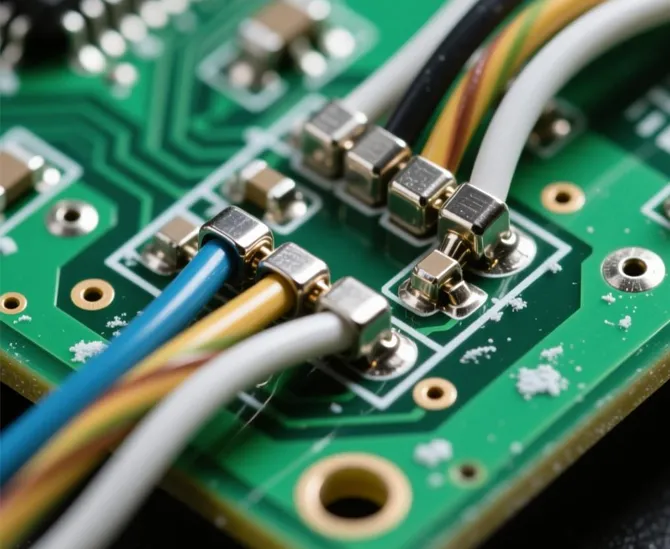
Enterprise Solution Spotlight: 365PCB Electronic Components Sourcing Service
Navigating the complex operational hurdles of outsourcing electronics manufacturing requires an agile, asset-backed partner that bridges the gap between intricate PCB design and market-ready commercial hardware. 365PCB delivers comprehensive, one-stop turnkey manufacturing backed by guaranteed genuine component supply chains.
| Component Sourcing Integrity | 100% Genuine, authentic parts sourced through authorized franchised global distribution channels |
| Engineering BOM Scrubbing | Deep lifecycle risk analysis, proactive obsolescence alerts, and cost-effective pin-compatible alternative cross-matching |
| Assembly Capabilities | High-speed SMT placement, fine-pitch BGA/QFN assembly, mixed through-hole technology, and complete box-build integration |
| Quality Metrology Infrastructure | Inline 3D SPI, automated multi-angle 3D AOI, high-magnification X-ray inspection, and customized functional test jigs |
| Risk Elimination Focus | Zero open-market counterfeit risks; complete batch traceability and transparent traveler documentation |
| Procurement Speed | Accelerated RFQ turnaround, fast-track prototype pilot runs, and seamless volume manufacturing scaling |
Sourcing Recommendation: Power your production with verified reliability. Learn more about our comprehensive procurement platform on the Electronic Components Sourcing Service portal, or discover unified multi-tier manufacturing through our One-Stop Electronic Components Sourcing architecture.
Direct Technical Comparison: In-House vs. Tier-1 EMS vs. Agile Turnkey Partners
| Operational Parameter | In-House Manufacturing (Captive SMT Lines) | Tier-1 Global EMS Giants (e.g., Foxconn, Jabil) | Agile Turnkey EMS Partner (e.g., 365PCB) |
|---|---|---|---|
| Capital Expenditure (CapEx) | Extreme ($1M – $5M+ for SMT lines, SPI, AOI, ovens) | Zero direct CapEx (Absorbed into volume contracts) | Zero CapEx (Completely pay-as-you-scale model) |
| Minimum Order Quantity (MOQ) | Single-unit flexibility (Limited only by machine setup) | Punishing (Typically 50k – 100k+ units minimum per run) | Highly Flexible (Supports NPI pilot batches to volume runs) |
| Component Purchasing Clout | Low (OEM buys at catalog distributor list prices) | Colossal (Massive volume discounts on commodity parts) | High (Leverages global authorized network pricing) |
| Engineering Change Agility | Instantaneous (Engineers walk onto the floor) | Extremely Rigid (Bureaucratic ECO processes; weeks of lag) | Rapid & Direct (Direct engineer-to-engineer collaboration) |
| Direct Customer Attention | Total (Internal staff dedicated to your board) | Poor for mid-sized OEMs (Deprioritized for mega-clients) | Dedicated (Direct technical program manager support) |
| Equipment Utilization Risk | Extreme (Idle machines bleed depreciation and lease costs) | Zero risk to OEM (Borne by the EMS contract) | Zero risk to OEM (Borne entirely by the EMS partner) |
Pros and Cons Table: Outsourcing Electronics Manufacturing
| Strategic Approach | Commercial & Operational Strengths (Pros) | Inherent Operational Liabilities & Realities (Cons) |
|---|---|---|
| Outsourcing to a Turnkey Partner (e.g., 365PCB Full Service) |
|
|
| Retaining In-House Production (Internal Assembly & SMT Lines) |
|
|
Commercial Benefits vs. Hidden Operational Constraints
Every commercial procurement decision must be justified through rigorous Return on Investment (ROI) modeling. In our testing across hundreds of hardware commercialization cycles, the strategic advantages of outsourcing electronics manufacturing are profound, but they must be balanced against operational realities.
The Proven Commercial Advantages:
Preserving Working Capital for Core Competencies: Building an in-house SMT production floor requires millions of dollars in capital investments: automated stencil printers, dual-gantry pick-and-place systems, multi-zone reflow ovens, selective soldering stations, 3D SPI, 3D AOI, and environmental test chambers. For a hardware company, that capital is far better deployed into core firmware development, proprietary sensor R&D, and global customer acquisition. Outsourcing turns massive fixed capital assets into predictable, variable cost-of-goods-sold (COGS).
Instant Scalability Without Facility Relocation: If a product experiences sudden exponential market adoption, an in-house facility quickly hits a physical capacity wall. Expanding production requires leasing larger industrial buildings, pulling heavy 480V three-phase electrical drops, and waiting nine months for new placement machinery deliveries. A high-capacity EMS partner simply allocates additional SMT lines or shifts production to 24/7 rotational staffing, absorbing demand spikes seamlessly.
Supply Chain Clout on Active Components: When an individual OEM contacts semiconductor foundries to buy Integrated Circuits (ICs) Electronic Components, their low volume places them at the bottom of the supplier priority queue. An established EMS partner buys millions of dollars in electronic components annually, giving them direct access to factory allocation queues, volume pricing discounts, and dedicated manufacturer field applications engineers.
The Inherent Operational Constraints:
The Distance Communication Lag: When your SMT line is ten feet from your engineering desk, an engineer can walk out and resolve an assembly puzzle in thirty seconds. When your manufacturing is outsourced three thousand miles away, debugging a thermal profile anomaly requires video calls, translated traveler logs, and shipping physical board samples back and forth via international air courier, introducing days of latency if your partner lacks agile technical account managers.
Configuration Freeze Rigidity: In-house production allows for informal, on-the-fly tweaking. In contract manufacturing, the factory operates strictly to locked production traveler documents. Changing a single resistor value requires issuing a formal Engineering Change Order (ECO), updating the ERP system, verifying pick-and-place feeder coordinate files, and adjusting inspection libraries. Understanding this rigidity is critical to avoiding friction with your manufacturing partner.
Who Must Outsource vs. Who Should Retain Manufacturing In-House
Every dollar allocated to manufacturing infrastructure must align with your organization's scale, intellectual property sensitivity, and production volume. Understanding where outsourcing electronics manufacturing is mandatory versus where internal assembly makes sense prevents catastrophic capital misallocation.
Organizations That Must Outsource Electronics Manufacturing:
Fast-Growing Hardware Startups & Scale-Ups: Early-stage hardware enterprises cannot afford to lock up their seed or Series A venture capital in heavy machinery leases and factory real estate. Outsourcing enables lean operations, allowing small engineering teams to punch above their weight and ship enterprise-grade hardware.
Mid-Market OEMs with High-Mix, Variable-Volume Portfolios: If your company manufactures thirty different specialized electronic products—such as industrial controllers, medical interfaces, or building automation sensors—maintaining internal lines requires non-stop machine changeovers that destroy line efficiency. Sourcing through an agile turnkey partner keeps your overhead flat while handling diverse product variations.
High-Volume Consumer & IoT Device Brands: Companies producing tens of thousands of IoT units requiring automated box-build packaging, custom injection-molded enclosures, and global logistics fulfillment must outsource to achieve the economies of scale required to survive in price-sensitive consumer markets.
Organizations That Should Maintain In-House Manufacturing:
Defense & Classified Aerospace Contractors: If your assemblies are governed by strict International Traffic in Arms Regulations (ITAR) mandates, classified defense protocols, or national security restrictions where design files cannot legally leave domestic high-security facilities, you must maintain certified captive in-house manufacturing lines.
Pure Research & Rapid-Iteration Laboratories: If your daily operation involves building one-off experimental circuit boards that undergo radical schematic revisions every seventy-two hours, setting up formal outsourced manufacturing contracts introduces too much administrative overhead. Low-volume benchtop prototyping belongs in your laboratory.
Costly Mistakes OEMs Make When Contracting Manufacturing Partners
Factory Floor Advisory: The "Unverified Approved Vendor List" Disaster
The most expensive blunder an OEM can commit during contract negotiation is granting the contract manufacturer blanket permission to substitute components on the Bill of Materials without written engineering sign-off. When global supply chains tighten, unscrupulous assemblers will swap critical operational amplifiers, timing crystals, or power MOSFETs for cheap unvetted clones sourced from open-market trading brokers. The board passes initial basic factory testing, but fails in customer hands when exposed to temperature extremes or electromagnetic noise. Always mandate an ironclad Approved Vendor List (AVL) with zero unauthorized substitutions.
Treating the Bill of Materials as a Static Document: Handing an assembler a spreadsheet that lists generic descriptions like "10uF 0805 capacitor" without specifying exact manufacturer part numbers (MPNs), voltage ratings, dielectric types (X5R vs. X7R), and approved second sources is an invitation to failure. Incomplete BOMs lead to incorrect component placements, delayed production starts, and unexpected board failures.
Neglecting Thermal Relief and Ground Plane Balance: When designers connect surface-mount component pads directly to large internal solid copper ground planes without thermal relief spokes, the massive copper plane acts as a giant heat sink during reflow. The pad cannot reach proper wetting temperatures, resulting in cold, brittle solder joints. A competent EMS partner identifies this during DFM, but failing to address it early leads to massive post-reflow manual touch-up rates.
Failing to Audit Moisture Sensitive Devices (MSD): Advanced electronic packages—such as fine-pitch BGAs, QFPs, and specialized optical sensors—are categorized by Moisture Sensitivity Levels (MSL 1 through MSL 6) governed by the JEDEC J-STD-033 Standard. If a factory opens vacuum-sealed moisture barrier bags and leaves sensitive components exposed to ambient room humidity beyond their rated floor life, trapped moisture expands explosively during reflow heating. This internal steam generation fractures the internal silicon packaging—a devastating defect known as "popcorning" that is completely invisible to external optical inspection.
Skipping Production Validation (PVT) to Meet Marketing Deadlines: Pressured by trade show commitments or executive deadlines, OEMs frequently demand that an assembler skip the pilot PVT run and jump directly from initial prototypes into a 10,000-unit mass build. This is pure financial gambling. Untested production tooling, uncalibrated test fixtures, and minor line balance bottlenecks will compound across thousands of boards, resulting in massive scrap piles that cost tenfold more to diagnose and repair than a disciplined pilot run.
Essential Sourcing Checklist: Auditing an EMS Production Facility
Before executing a binding manufacturing agreement or issuing a multi-million-dollar production purchase order, require prospective electronics manufacturing partners to verify compliance across these four non-negotiable operational benchmarks:
1. Verified Facility Quality Management Certifications
Never rely on a company's self-proclaimed dedication to quality. Demand authenticated third-party audit certificates confirming active compliance with international manufacturing frameworks:
ISO 9001:2015 Quality Management Systems Certification guaranteeing documented operational procedures, calibrated tooling maintenance, and structured non-conformance isolation.
ISO 13485:2016 Certification: Mandatory if your electronics are destined for medical instrumentation or clinical diagnostic environments.
IPC-A-610 and IPC J-STD-001 Certified Workmanship: Ensure that production operators, SMT technicians, and quality inspectors hold active certifications proving mastery of electronic assembly criteria across Class 2 (Dedicated Service Electronics) and Class 3 (High-Performance / Critical Life-Support Electronics).
2. Traceable Component Sourcing and Laboratory Verification
Audit the supplier's procurement infrastructure. Do they utilize automated enterprise inventory software that tracks reel serial numbers, distributor invoices, and lot codes back to original component manufacturers? Verify that their quality department operates calibrated in-house verification tools—including optical digital microscopes, X-ray inspection, and solderability testing apparatus—to validate incoming raw components before reels ever touch an SMT feeder bank.
3. Advanced SMT Line Automation and In-Line Quality Metrology
Inspect the actual production line hardware. Settle for nothing less than fully automated, SMEMA-linked conveyor lines featuring:
Automated high-precision stencil printers with active closed-loop squeegee pressure control.
Inline 3D Solder Paste Inspection (SPI) verifying paste volume deposit accuracy.
High-speed multi-axis pick-and-place systems equipped with dynamic optical component centering.
Multi-zone forced-convection reflow ovens with real-time temperature profile logging.
Automated multi-camera 3D AOI systems positioned immediately after reflow.
Offline or inline transmission X-ray (AXI) for deep inspection of hidden BGA terminations.
4. Enforceable Supply Chain Agreements & Buffer Stock Terms
Examine the commercial terms. Does the contract manufacturer offer structured buffer stock agreements for long-lead components? Will they hold finished assemblies in bonded warehousing for rapid regional release? Ensure the contract establishes clear First Pass Yield benchmarks, defines explicit financial liability for manufacturing-induced scrap, and mandates transparent access to all production traveler data and test logs.
Expert Manufacturing Verdict: The OEM Procurement Roadmap
In our professional assessment across decades of electronics engineering and contract assembly operations, outsourcing electronics manufacturing is the most powerful growth accelerator a hardware company can leverage—provided you approach the relationship with engineering discipline and commercial vigilance.
Here is your clear, actionable procurement roadmap:
Scrub Your Engineering Files First: Never release an unverified design to an outside factory. Execute internal DFM reviews, verify component footprints against exact manufacturer datasheets, specify exact MPNs with multi-sourced alternates, and define clear test point networks across your circuit layout.
Demand Component Supply Chain Transparency: Reject assemblers that operate behind a veil of opaque procurement. Mandate that every passive chip, connector, and active IC originates from authorized franchised distribution lines with full traceability documentation.
Never Skip the Validation Ladder: Respect the phased discipline of EVT, DVT, and PVT. Use low-volume pilot builds to flush out assembly defects, optimize thermal reflow curves, and validate testing fixtures before committing capital to mass production runs.
Partner with an Agile, High-Capability Turnkey Specialist: Align your hardware roadmap with a vertically integrated manufacturing leader like 365PCB. Sourcing your production through an established partner that combines deep engineering design audits, genuine component procurement pipelines, enterprise SMT line metrology, and flexible scaling gives your organization the technical firepower to dominate your market with flawless, reliable hardware delivered on time and on budget.
Frequently Asked Questions
The most critical factor is component supply chain transparency and traceability. An EMS provider can possess elite surface-mount assembly equipment, but if their procurement relies on unvetted open-market brokers, counterfeit or compromised active and passive components will enter the production line, causing field failures, warranty disputes, and catastrophic recall liabilities.
In consigned manufacturing, the OEM purchases, inspects, inventories, and ships all raw printed circuit boards and electronic components to the contract manufacturer, paying only for assembly labor. In full turnkey manufacturing, the EMS partner manages the entire Bill of Materials (BOM) procurement, component verification, printed circuit board fabrication, surface-mount assembly, quality testing, and box-build integration under a single purchase order.
OEMs protect intellectual property by establishing enforceable Non-Disclosure and Non-Use agreements governed by appropriate legal jurisdictions, compartmentalizing firmware programming so that the final encrypted code is flashed during final functional test or through secure cloud handshakes, and separating sub-assembly manufacturing across distinct suppliers before final mechanical integration.
Focusing solely on lowest quoted board price ignores total landed cost. Cheap quotes often conceal high scrap rates, low first-pass yields, uninspected solder joint defects, secondary customs duties, and inflated engineering change order fees. High-quality EMS partners deliver higher long-term profitability through lower field failure rates and disciplined DFM optimization.