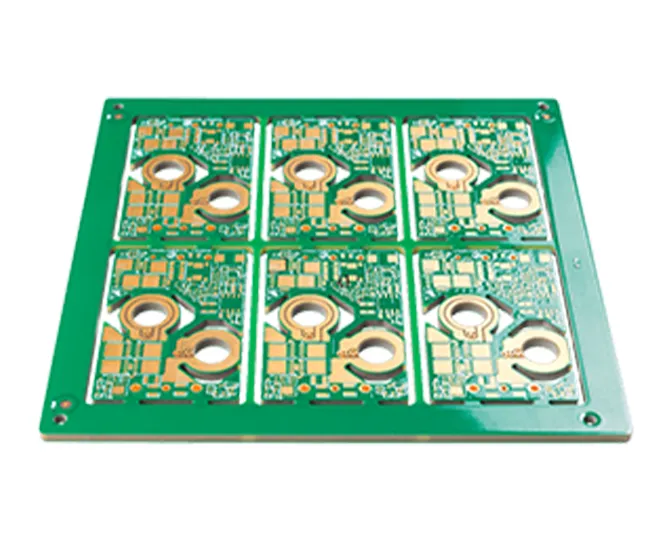
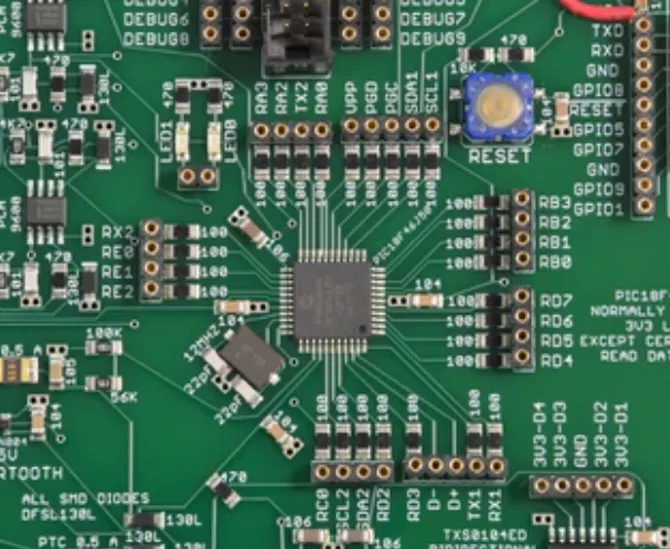
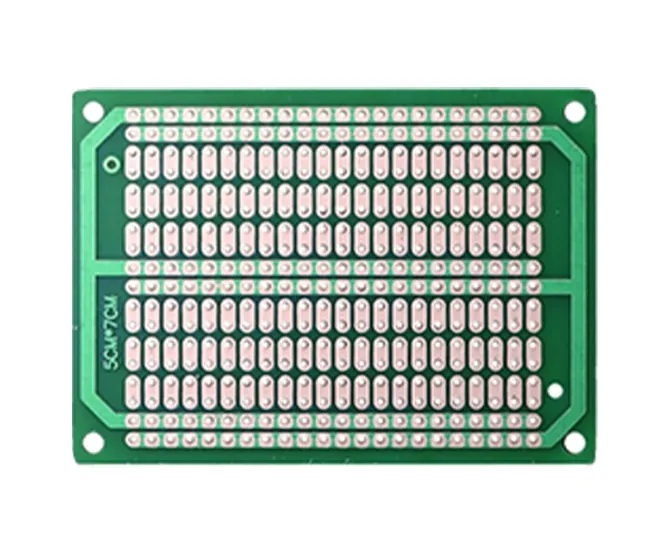
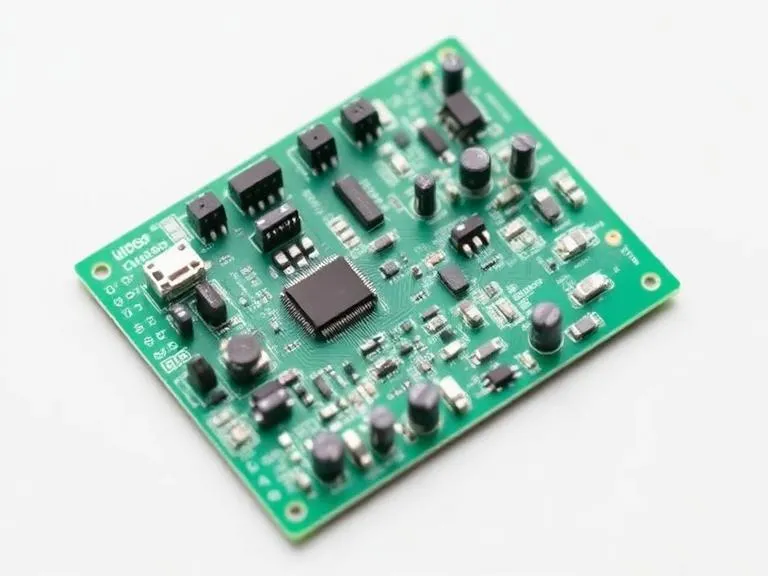
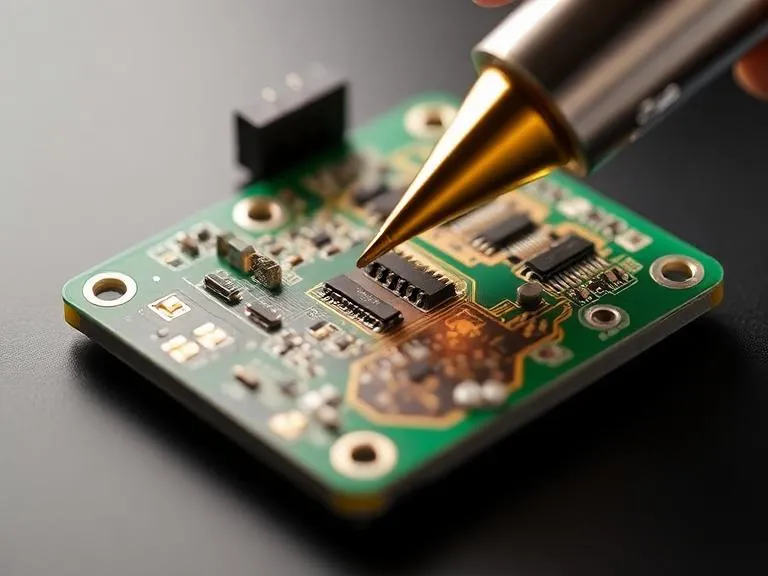
The landscape of electronic hardware engineering is undergoing a massive transformation. As integrated circuits become more complex and form factors continue to shrink, the mathematical and spatial challenges of board layout are exceeding human capacity for rapid iteration. To remain competitive, engineering teams must leverage machine learning and generative algorithms. From our experience at China 365PCB, the integration of AI PCB design tools into the development workflow drastically reduces layout errors, optimizes signal integrity, and accelerates the transition from digital schematic to physical Printed Circuit Board Assembly.
China 365PCB is a fully self-operated, full-industry-chain manufacturing group. We manage everything from PCB fabrication and SMT assembly to online electronic component sourcing, CNC machining, cable harness assembly, and complete OEM/ODM solutions. With over 15 years of experience, China 365PCB operates over 100,000 square meters of production area. All our facilities are self-owned and self-managed, ensuring total quality control, full process traceability, and unmatched production flexibility. When our clients utilize top-tier AI PCB design tools, they generate highly optimized Gerber and ODB++ files that translate flawlessly to our factory floor. With a one-stop turnkey service from design to delivery, we guarantee no delay, no excuses, truly realizing 365 days of fast manufacturing for global customers.
In this authoritative guide, we will analyze the technical capabilities, routing algorithms, and manufacturing readiness of the five best AI PCB design tools available today. We recommend evaluating these platforms based on your specific industry requirements, whether you are designing high-frequency RF boards or high-density interconnect (HDI) systems.
Summary Table: Top 5 AI PCB Design Tools
To assist engineering directors and layout specialists in selecting the optimal software architecture, we have compiled a summary table of the leading AI PCB design tools. This matrix highlights their primary artificial intelligence applications and target industry sectors.
| Platform Name | Core AI Capability | Primary Engineering Focus | Manufacturing Synergy |
|---|
| Altium Designer (ActiveRoute) | Guided AI pathfinding and predictive trace routing. | General enterprise, HDI, and rigid-flex designs. | Excellent for standard Printed Circuit Board Assembly. |
| Cadence Allegro X AI | Cloud-scale generative placement and multi-board routing. | Aerospace, defense, and high-speed digital computing. | Optimized for PCB Assembly for Aerospace. |
| Celus AI | Automated schematic generation and smart BOM sourcing. | Rapid prototyping and supply chain optimization. | Directly lowers PCB Assembly Price through smart component choices. |
| Quilter | Deep reinforcement learning for fully autonomous routing. | Complex logic boards and mission-critical hardware. | Ideal for PCB Assembly for Medical Devices. |
| Flux.ai (Copilot) | Browser-based generative AI hardware assistant. | Collaborative hardware engineering and agile development. | Streamlines Fast PCB Assembly workflows. |
1. Altium Designer with ActiveRoute AI
Altium Designer has long been a heavyweight in the electronic design automation (EDA) space. However, their recent integration of advanced machine learning algorithms has solidified their position among the best AI PCB design tools. The ActiveRoute technology is not a traditional, brute-force auto-router. Instead, it utilizes guided AI to understand the designer's intent. You select a bundle of nets, define a general path, and the AI algorithm navigates the complex spatial constraints, matching lengths and tuning impedances in seconds.
From our experience running high-volume SMT lines at China 365PCB, boards routed with Altium's AI algorithms exhibit fewer manufacturing bottlenecks. The software inherently understands design for manufacturability (DFM) rules, ensuring trace clearances and via placements align with standard fabrication tolerances. We highly recommend Altium for teams looking to maintain manual control while drastically accelerating the tedious aspects of bus routing and differential pair matching.
2. Cadence Allegro X AI
When dealing with enterprise-level complexities, such as massive server motherboards or advanced driver-assistance systems (ADAS), Cadence Allegro X AI stands unparalleled. This platform leverages cloud-scale computing to execute generative placement and routing. One of the most significant challenges in modern layout is thermal management and signal integrity. Allegro X AI uses predictive analytics to simulate how component placement will affect heat dissipation and electromagnetic interference (EMI) before a single trace is drawn.
For highly regulated sectors, the precision offered by Cadence is mandatory. When our clients utilize Allegro X AI to generate their manufacturing files, it perfectly complements our PCB Assembly for Automotive services. The AI ensures that power delivery networks (PDN) are optimized for the harsh environments and high-current demands typical in automotive and aerospace applications.
3. Celus AI Platform
While most AI PCB design tools focus on the physical layout, Celus approaches the problem from the very beginning of the engineering lifecycle: the system architecture. Celus AI allows engineers to input block diagrams and functional requirements. The artificial intelligence then automatically generates the complete schematic, selects the optimal components from a vast database, and creates the initial board layout.
From a manufacturing standpoint, Celus is a game-changer for supply chain resilience. The AI cross-references component availability and pricing in real-time, effectively designing a board around parts that are actually procurable. We recommend Celus for hardware startups and agile teams who need to move rapidly from concept to fabrication. By optimizing the Bill of Materials (BOM) early in the design phase, Celus directly integrates with our Online PCB Assembly Quote system, ensuring you receive the most cost-effective and accurate pricing without supply chain surprises.
4. Quilter AI Auto-Router
Quilter represents the cutting edge of deep reinforcement learning applied to circuit board topology. Unlike algorithmic routers that follow hard-coded heuristic rules, Quilter's AI learns by routing millions of boards in simulated environments, constantly improving its spatial reasoning. You upload your schematic and board outline, and Quilter's server farm autonomously explores thousands of placement and routing permutations to find the optimal physical layout.
We view Quilter as one of the most disruptive AI PCB design tools currently available. Its ability to solve incredibly dense boards without human intervention makes it ideal for shrinking form factors, such as wearables and implantables. The flawless precision generated by Quilter's deep learning algorithms aligns perfectly with our strict quality control standards required for PCB Assembly for Medical Devices, where trace fidelity and isolation are matters of life and death.
5. Flux.ai Copilot
Hardware design has traditionally been siloed and localized. Flux.ai shatters this paradigm by offering a fully browser-based, collaborative EDA platform equipped with a generative AI hardware assistant known as Copilot. Flux Copilot acts as a virtual senior engineer embedded within your project. You can ask the AI to select a low-dropout regulator (LDO) suitable for a specific voltage, or instruct it to wire up a complex USB-C power delivery circuit.
The conversational interface combined with real-time collaborative editing makes Flux.ai one of the most accessible AI PCB design tools for modern, distributed engineering teams. Because Flux streamlines the schematic and layout phases so effectively, it is the perfect companion for rapid iteration. When engineers finalize their designs in Flux, they can instantly export their manufacturing data to China 365PCB to take advantage of our Fast PCB Assembly services, achieving unprecedented time-to-market.
Bridging AI Design with China 365PCB Manufacturing
The output of the world's most advanced AI PCB design tools is only as good as the factory that produces the physical board. At China 365PCB, our 100,000 square meters of self-owned and self-managed production area is specifically equipped to handle the high-density, mathematically complex layouts generated by artificial intelligence. Because AI tools often push the boundaries of trace width, via-in-pad technology, and impedance control, you require a manufacturing partner with zero tolerance for error.
Our one-stop turnkey service bridges the gap between digital AI design and physical reality. We do not outsource your Gerber files to third-party brokers. From bare board fabrication and precise SMT assembly to custom CNC machining for your enclosures and final cable harness assembly, every step is executed within our fully self-operated ecosystem. This ensures full process traceability and total quality control. Whether you are generating a complex aerospace board in Cadence or a rapid prototype in Flux, China 365PCB provides the unmatched production flexibility required to bring your AI-optimized hardware to life.
Frequently Asked Questions (FAQs)
Will AI PCB design tools replace hardware engineers?
No. From our experience, AI PCB design tools act as force multipliers, not replacements. They automate the tedious, mathematical tasks of trace routing and footprint generation, freeing up the hardware engineer to focus on high-level system architecture, thermal strategy, and overall product innovation.
How do AI tools improve the PCB Assembly Price?
Platforms like Celus and Flux.ai integrate real-time supply chain data into the design process. The AI actively selects components that are currently in stock and cost-effective, avoiding highly specialized or obsolete parts. This smart BOM generation directly lowers your overall
PCB Assembly Price by avoiding premium sourcing fees and redesign delays.
Can AI routers handle complex HDI and RF designs?
Yes. Advanced AI PCB design tools like Cadence Allegro X and Quilter are specifically trained to handle complex High-Density Interconnect (HDI) rules, blind/buried vias, and strict impedance matching required for Radio Frequency (RF) and high-speed digital designs. These tools ensure the generated files meet the rigorous standards necessary for
PCB Assembly for Aerospace.
Why is a turnkey manufacturer important when using AI design tools?
AI tools optimize designs for maximum efficiency, which often results in highly dense and intricate physical boards. A turnkey manufacturer like China 365PCB controls the entire process—from fabrication to SMT and testing—ensuring that the theoretical optimizations generated by the AI are perfectly executed in the physical world without miscommunication between different vendors.
Industry References
To further understand the integration of artificial intelligence in electronic design automation and printed circuit board manufacturing standards, we recommend reviewing documentation from the following authoritative bodies:
 English