In the highly demanding and rapidly evolving world of electronics manufacturing, the reliability of a final product is fundamentally dictated by its foundational elements. Engineers, hardware developers, and procurement officers frequently ask us exactly which materials are used to make a printed circuit board. This is not a simple question with a singular answer. The composition of a bare board dictates its thermal management capabilities, signal integrity, dielectric strength, and ultimate lifespan under operational stress. A critical misunderstanding of what materials are used to make a printed circuit board can lead to catastrophic failures, delamination during reflow soldering, and severe electrical shorts.
At China 365PCB, we operate as a fully self-operated, full-industry-chain manufacturing group, encompassing everything from PCB fabrication and SMT assembly to online electronic component sourcing and integration, CNC machining, and cable harness assembly. With 15+ years of experience, 365PCB operates over 100,000 square meters of production area. Because all facilities are self-owned and self-managed, ensuring total quality control, full process traceability, and unmatched production flexibility is our standard. From our experience auditing global supply chains, we know that knowing what materials are used to make a printed circuit board is just the beginning; ensuring the authenticity and grade of those materials is where true excellence lies. In this authoritative guide, we will dissect the chemical and physical properties of standard and advanced PCB layers, explaining exactly what materials are used to make a printed circuit board in modern industrial applications.
1. The Core: What Base Materials Are Used to Make a Printed Circuit Board?
When analyzing what materials are used to make a printed circuit board, the core substrate is the most substantial component. The substrate acts as the physical foundation, providing structural rigidity and electrical insulation between the conductive copper layers. The choice of substrate heavily influences the dielectric constant (Dk) and the coefficient of thermal expansion (CTE) of the entire assembly.
1.1 FR-4 Glass Epoxy: The Industry Standard
For the vast majority of commercial electronics, FR-4 is the definitive answer to what materials are used to make a printed circuit board. FR stands for Flame Retardant, and the 4 indicates the specific class of materials. FR-4 is a composite material consisting of woven fiberglass cloth bonded together with an epoxy resin binder. From our experience, standard FR-4 is incredibly versatile, but engineers must specify the correct Glass Transition Temperature (Tg). Standard Tg is around 130 degrees Celsius, but for high-heat environments or complex lead-free soldering profiles, we recommend High-Tg FR-4 (170 to 180 degrees Celsius) to prevent substrate warping.
1.2 Polyimide and Flexible Substrates
As electronic devices become smaller and more dynamically shaped, rigid FR-4 is not always suitable. In these scenarios, when evaluating what materials are used to make a printed circuit board, polyimide is the primary choice. Polyimide is an advanced polymer that offers exceptional thermal stability and flexibility. At China 365PCB, our Flex & Rigid-Flex PCBA Assembly lines rely heavily on high-grade polyimide substrates to produce boards that can fold, twist, and fit into compact aerospace or wearable medical devices without fracturing the internal copper traces.
1.3 Metal Core Substrates for Thermal Management
High-power LEDs and industrial power converters generate immense heat that standard FR-4 cannot dissipate. In these high-power applications, the materials are used to make a printed circuit board shift towards Metal Core PCBs (MCPCBs). These boards utilize a base metal, typically aluminum or copper, topped with a thermally conductive but electrically insulating dielectric layer. We highly recommend MCPCBs for our Automotive Electronics PCB Assembly clients, as they guarantee superior heat dissipation for critical headlight and engine control unit (ECU) modules.
2. The Conductive Layer: Copper Foil Specifications
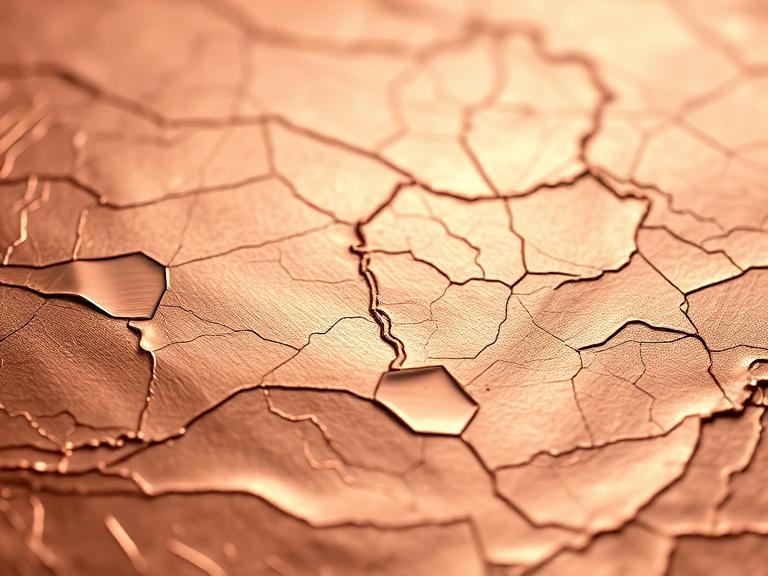
The pathways that allow electrical current to flow are entirely dependent on the conductive materials are used to make a printed circuit board. Universally, copper foil is the material of choice due to its outstanding electrical conductivity and cost-effectiveness compared to silver or gold. However, the type of copper foil matters immensely.
Electrodeposited (ED) copper is the standard for rigid boards. It features a rougher surface on one side, which adheres perfectly to the FR-4 epoxy resin. Rolled Annealed (RA) copper, conversely, is significantly smoother and more ductile, making it the required material for flexible polyimide boards where repeated bending is expected. Furthermore, the thickness of the copper, measured in ounces per square foot (oz/ft²), must be carefully specified. Standard digital logic boards may use 0.5 oz or 1 oz copper, whereas industrial motor controllers will require 2 oz to 4 oz heavy copper to carry high amperages safely without delaminating the substrate.
3. Protection and Notation: Solder Mask and Silkscreen
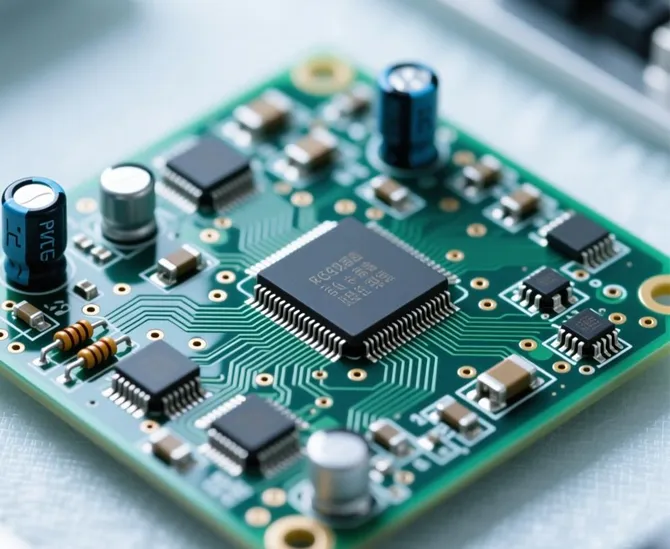
Once the substrate and copper traces are laminated and etched, environmental protection is necessary. The iconic green color of most electronics comes from the Liquid Photoimageable Solder Mask (LPI). When asked what materials are used to make a printed circuit board protective layer, LPI is the technical answer. This epoxy-based polymer is applied over the board, leaving only the solder pads exposed. It prevents solder bridges from forming between closely spaced traces during the wave soldering or reflow process, which is absolutely critical during our Fine-pitch Component PCB Assembly procedures.
Above the solder mask, the silkscreen layer is applied. Traditionally formulated from specialized epoxy inks, the silkscreen provides human-readable component designators, test points, and warning symbols. While white is the standard color for visibility against green solder masks, we offer custom silkscreen and mask colors to align with our clients complete OEM/ODM solutions.
4. Surface Finishes: Preventing Oxidation and Enhancing Solderability
Bare copper oxidizes rapidly when exposed to air, rendering it unsolderable. Therefore, understanding what materials are used to make a printed circuit board must include surface finishes. The surface finish is a thin metallurgical coating applied to the exposed copper pads prior to component placement.
From our experience, Hot Air Solder Leveling (HASL) is the most economical finish, utilizing a tin-lead or lead-free tin alloy. However, HASL often leaves an uneven surface. For advanced electronics, we recommend Electroless Nickel Immersion Gold (ENIG). ENIG consists of an electroless nickel layer topped with a thin layer of immersion gold, providing a perfectly flat surface, excellent oxidation resistance, and superior shelf life. A flat surface is a strict prerequisite for successful Passive Component PCB Assembly when utilizing microscopic 0201 or 01005 imperial package sizes.
5. How Material Selection Impacts Advanced PCBA
The fundamental physical properties of the materials are used to make a printed circuit board dictate the success or failure of the subsequent assembly phase. If a procurement team specifies a cheap, low-Tg FR-4 material for a board destined for High-density PCB SMT Assembly, the intense heat of the reflow oven will cause the board to warp. This warpage lifts the fine-pitch BGA (Ball Grid Array) components off the pads, resulting in massive yield failures.
Similarly, during Prototype PCB Assembly, utilizing the exact materials designated for mass production is crucial. Testing a prototype built on standard FR-4 when the final product requires a specialized high-frequency PTFE (Teflon) substrate will yield false impedance testing results. At China 365PCB, our engineers verify that the materials specified during the design phase perfectly align with the thermal and mechanical stresses of our automated SMT PCB Assembly lines.
6. Why True Manufacturing Integration Matters
Understanding exactly what materials are used to make a printed circuit board is irrelevant if your manufacturer secretly substitutes inferior materials to pad their margins. At 365PCB, our commitment is absolute: Speed, Precision, and Responsibility. We never outsource, never compromise.
From PCB to OEM integration, every board, every circuit, and every connection is made within our own facilities. This is critical for complex projects like Box Build PCB Assembly, where the printed circuit board must interface flawlessly with CNC-machined enclosures and custom cable harnesses. With a one-stop turnkey service from design to delivery, we guarantee no delay, no excuses, truly realizing 365 days of fast manufacturing for global customers. Because all facilities are self-owned and self-managed, we provide full process traceability, ensuring the Rogers, Isola, or Shengyi laminates you requested are precisely the materials are used to make a printed circuit board in your final product.
7. Summary Table: Material Specifications
To assist your engineering and procurement departments, we have compiled a matrix detailing the primary materials are used to make a printed circuit board and their respective operational applications.
| Material Component | Sub-Type / Specification | Primary Function | Ideal Application |
|---|
| Substrate (Core) | FR-4 (Standard & High-Tg) | Structural base, electrical insulation | General consumer electronics, IT infrastructure |
| Substrate (Flex) | Polyimide (PI) | Flexible structural base, high thermal resistance | Aerospace, wearables, Flex & Rigid-Flex PCBA Assembly |
| Substrate (Thermal) | Metal Core (Aluminum/Copper) | Extreme heat dissipation | Automotive Electronics PCB Assembly, High-power LED |
| Conductive Layer | Electrodeposited (ED) Copper | Electrical signal and power routing | Standard rigid multi-layer boards |
| Protective Layer | LPI Solder Mask | Prevents oxidation and solder bridging | Fine-pitch Component PCB Assembly |
| Surface Finish | ENIG (Gold over Nickel) | Oxidation prevention, perfectly flat pad surface | High-density PCB SMT Assembly, BGA placement |
8. Frequently Asked Questions (FAQs)
Why is FR-4 the most common answer to what materials are used to make a printed circuit board?
FR-4 strikes the optimal balance between cost-effectiveness, mechanical strength, and dielectric insulation. Its flame-retardant properties fulfill international safety standards, making it universally applicable for standard SMT PCB Assembly projects where extreme high-frequency signals or massive heat generation are not present.
Can I use standard FR-4 materials are used to make a printed circuit board for RF/Microwave applications?
From our experience, we do not recommend standard FR-4 for high-frequency RF (Radio Frequency) applications. FR-4 has a relatively high and unstable dielectric constant (Dk) at high frequencies, which causes signal loss and impedance mismatch. We recommend advanced PTFE (Teflon) based materials or specialized ceramic-filled laminates for these demanding architectures.
What is the difference between standard and High-Tg materials are used to make a printed circuit board?
Tg stands for Glass Transition Temperature, which is the temperature point where the rigid epoxy resin begins to soften and expand rapidly. Standard Tg is around 130°C. For complex multi-layer boards subjected to multiple lead-free reflow cycles during Passive Component PCB Assembly, we strongly recommend High-Tg materials (170°C+) to prevent the barrel of the plated through-holes from cracking under thermal expansion.
How does China 365PCB guarantee the quality of the materials are used to make a printed circuit board?
Because all our facilities are self-owned and self-managed, we possess unmatched production flexibility and full process traceability. We purchase raw laminates, copper foils, and chemical finishes directly from certified, globally recognized chemical suppliers. By never outsourcing, we eliminate the risk of counterfeit materials entering the supply chain, ensuring the integrity of your Box Build PCB Assembly.
9. Industry References
To further explore the metallurgical, chemical, and electrical standards governing what materials are used to make a printed circuit board, we recommend consulting the following authoritative engineering resources:
 English