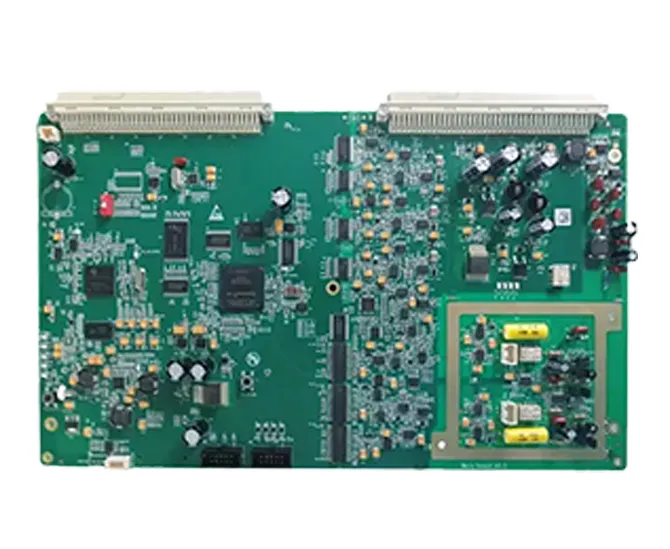
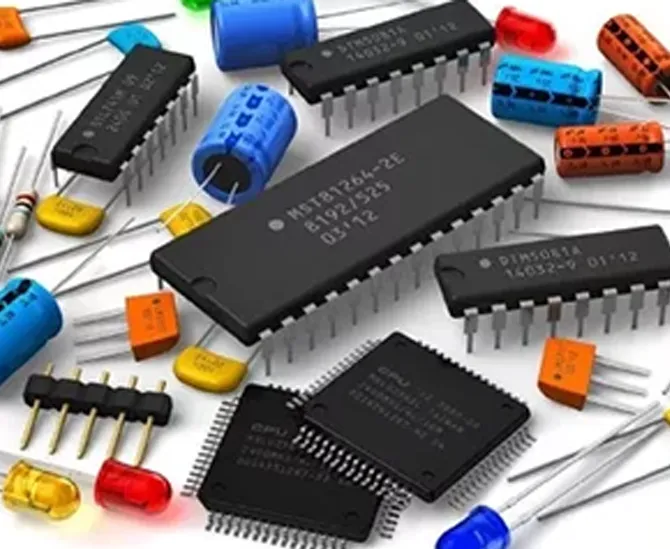
As electronic products continue to increase in complexity, performance requirements, and delivery expectations, manufacturing capability must evolve continuously—not only in scale, but in engineering depth, process control, and integration maturity. As a custom PCB manufacturer, China 365PCB continues to strengthen its production systems to support advanced and high-reliability electronic products.
This production capability update outlines how China 365PCB is strengthening its manufacturing infrastructure to better support complex, high-reliability, and scalable electronics programs.
Our focus is not on isolated equipment upgrades, but on system-level capability enhancement across engineering, manufacturing, quality, and supply chain execution.
Engineering-Driven Capacity Expansion
Production capability begins with engineering readiness.
Recent improvements emphasize:
· Earlier engineering involvement before production release
· Deeper DFM / DFA / DFT integration with manufacturing processes
· Stronger alignment between design intent and production execution
By reinforcing engineering-led decision-making, production scalability and stability are improved before volume increases.
PCB Fabrication Capability Enhancement
PCB fabrication capability has been strengthened to support:
· Larger PCB board sizes and higher layer counts
· Tighter line/space and advanced via structures
· More demanding material systems and stack-ups
· Improved warpage and dimensional control
These enhancements improve consistency for high-density, high-speed, and power-sensitive designs.
Assembly Process and Technology Upgrades
Assembly capability updates focus on process robustness and repeatability, including:
· Improved handling of fine-pitch, BGA, and bottom-terminated components
· Better control of mixed SMT and THT assembly flows
· Enhanced in-process inspection coverage
The objective is to reduce yield sensitivity as product complexity increases.
Quality and Inspection Infrastructure Improvements
Quality capability upgrades emphasize early detection and prevention, not post-assembly correction.
Key focus areas include:
· Expanded in-process inspection and verification
· Stronger process monitoring and feedback loops
· Improved traceability across materials and production steps
These upgrades help minimize latent defects and improve long-term product reliability.
Related reading: Quality Risk Management: Controlling Risk Across the Electronics Manufacturing Lifecycle
Testing and Validation Capability Growth
Testing capability has been expanded to better support:
· Functional and system-level verification
· More complex test scenarios and configurations
· Scalable test approaches from prototype to volume
By strengthening test integration, product validation becomes more predictable and repeatable.
Integration and System-Level Manufacturing Support
Production capability updates also reflect increased support for:
· Cable and harness integration
· Box-build and electromechanical assembly
· System-level configuration and variant control
This allows more complex products to be delivered through a single, coordinated manufacturing flow.
Supply Chain and Material Control Alignment
Manufacturing capacity is only effective when supported by supply chain stability.
Enhancements include:
· Improved material planning and visibility
· Stronger coordination between sourcing and production schedules
· Better risk identification for long-lead or lifecycle-sensitive components
This alignment reduces schedule disruption during production ramps.
Scalability and Long-Term Program Support
A key objective of recent capability updates is scalable execution.
Production systems are being strengthened to support:
· Smooth transition from prototype to pilot builds
· Predictable ramp-up to volume production
· Long-lifecycle and repeat-order programs
Scalability is treated as an engineering requirement, not a volume afterthought.
Further reading: Scalability from Prototype to Production: Engineering Control for Reliable Manufacturing Growth
What These Updates Mean for Customers
For customers, these production capability updates translate into:
· Greater confidence in delivery predictability
· Improved yield and quality consistency
· Reduced risk during scale-up and design changes
· Stronger long-term manufacturing partnership
Our goal is to ensure that manufacturing capability keeps pace with customer product ambition.
Looking Forward
Production capability development is an ongoing process.
Future efforts will continue to focus on:
· Deeper engineering–manufacturing integration
· Higher process stability for complex products
· Expanded support for high-reliability and long-lifecycle applications
Sustainable manufacturing capability is built through continuous, disciplined improvement—not one-time expansion.
David Li
David Li is the Technical Communications Director at China 365PCB, with over 15 years of hands-on experience in the PCB and electronics manufacturing industry. Holding a Master’s degree in Electrical Engineering, he has worked extensively in both R&D and manufacturing roles at leading multinational electronics firms in Shenzhen before joining our team.
His expertise spans high-speed digital design, advanced packaging (HDI, Flex), and automotive-grade reliability standards. David is passionate about bridging the gap between design intent and production reality—a philosophy that aligns perfectly with 365PCB’s mission to deliver seamless, rapid, and fully-integrated manufacturing solutions.
Follow David’s insights on PCB technology trends and best practices here on the 365PCB Knowledge Hub.
 English