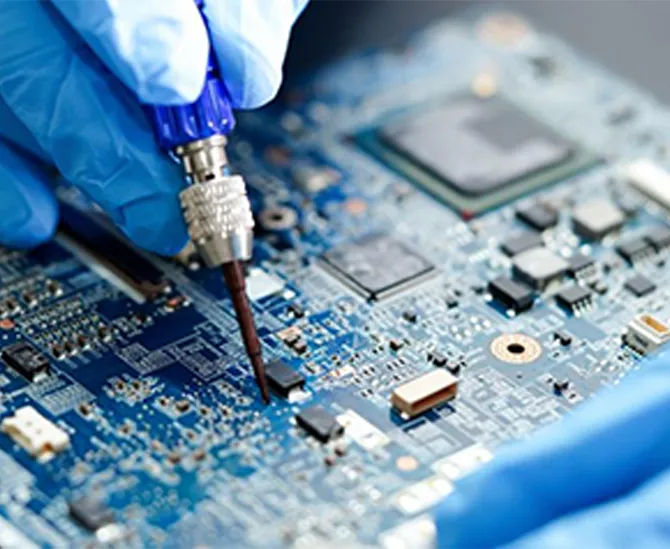
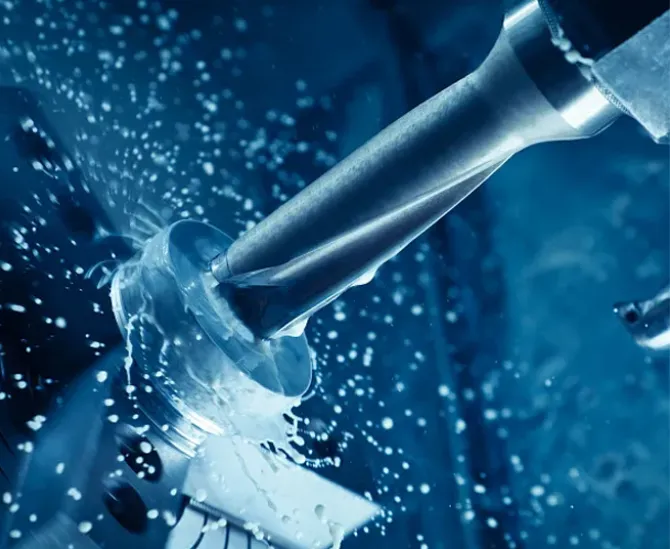
The PCB fabrication process is the core of printed circuit board manufacturing.
It transforms digital design data into a physically precise, electrically reliable circuit board that meets mechanical, thermal, and signal-integrity requirements.
At China 365PCB, a leading OEM PCB manufacturer, PCB fabrication is treated as a controlled engineering workflow, not a simple production sequence. Each step directly impacts board performance, yield, and long-term reliability.
This article explains the complete PCB fabrication process from a manufacturing perspective, focusing on materials, tolerances, and process control.
Design Data Review and Engineering Preparation
PCB fabrication begins with manufacturing data validation, not with materials.
Key inputs include:
· Gerber or ODB++ files
· Drill files
· Stack-up definition
· Impedance requirements
· Surface finish specifications
· Special process notes
Further reading: PCB Surface Finish in Manufacturing Process Control, Reliability Risks, and Yield Stability Across Surface Finish Technologies
During DFM (Design for Manufacturability) analysis, engineers verify:
· Trace width and spacing vs. copper weight
· Annular ring and drill tolerance
· Via structures (through, blind, buried)
· Panel utilization and break-away design
Any potential risk is addressed before fabrication starts, reducing rework and yield loss.
Material Selection and Lamination Preparation
Material choice defines the electrical and thermal foundation of the PCB.
Common base materials include:
· FR-4 (standard and high-TG)
· High-frequency laminates (Rogers, PTFE, hydrocarbon)
· Metal-core substrates (aluminum, copper)
· Polyimide for flexible and rigid-flex boards
The lamination process bonds copper foil to the dielectric core under precisely controlled temperature and pressure, forming a stable multilayer structure ready for circuit patterning.
Inner Layer Imaging and Etching
For multilayer PCB boards, inner layers are fabricated first.
Process steps include:
· Photoresist coating
· UV exposure using high-precision imaging
· Chemical development
· Controlled copper etching
Strict control of etch factor, line width compensation, and copper thickness ensures signal integrity and impedance consistency in high-speed designs.
After inspection, qualified inner layers move to multilayer lamination.
Multilayer Lamination and Bonding
Inner layers, prepregs, and outer copper foils are stacked according to the defined stack-up.
The lamination process uses:
· High pressure
· Controlled heating cycles
· Precise alignment systems
This step determines:
· Layer registration accuracy
· Dielectric thickness uniformity
· Long-term mechanical stability
Lamination quality is critical for HDI, high-layer-count, and high-frequency PCBs.
CNC Drilling and Via Formation
Drilling creates electrical interconnections between layers.
Technologies include:
· Mechanical drilling for through-hole vias
· Laser drilling for microvias
· Sequential drilling for blind and buried vias
Key controlled parameters:
· Drill bit wear
· Hole wall roughness
· Aspect ratio limits
· Registration accuracy
Proper drilling ensures reliable plating and long-term via integrity.
Copper Plating and Via Metallization
After drilling, holes are metallized to create conductive paths.
The process includes:
· Chemical copper deposition
· Electrolytic copper plating
· Thickness control for vias and surface copper
Uniform plating is essential to:
· Prevent via cracking
· Maintain current-carrying capacity
· Support high-reliability applications
Outer Layer Imaging and Pattern Etching
Outer layers are imaged and etched to form final circuit traces.
Advanced process control ensures:
· Fine line accuracy
· Consistent copper geometry
· Minimal undercut or over-etch
This step defines the final electrical routing and directly affects board performance.
Solder Mask Application
Solder mask protects copper traces from oxidation and accidental solder bridging.
Process characteristics:
· LPI (Liquid Photo-Imageable) solder mask
· Precise alignment to pads
· Controlled curing cycles
Solder mask quality improves:
· Assembly yield
· Electrical insulation
· Environmental resistance
Surface Finish Treatment
Surface finish prepares exposed pads for soldering and component attachment.
Common finishes include:
· HASL / Lead-Free HASL
· ENIG
· ENEPIG
· OSP
· Immersion Silver / Tin
Selection depends on:
· Assembly process
· Shelf life
· Contact reliability
· Cost considerations
Profiling, Routing, and Final Board Separation
Finished boards are separated from production panels using:
· CNC routing
· V-cut scoring
· Tab routing with break-away tabs
Accurate profiling ensures:
· Mechanical fit
· Edge quality
· Assembly compatibility
Learn more about PCB Assembly: Prototype PCB Assembly from a PCBA Engineering Perspective Engineering Validation, Process Learning, and Risk Exposure in Early-Stage Assembly
Electrical Testing and Quality Inspection
Every PCB undergoes electrical verification before shipment.
Test methods include:
· Flying probe testing
· Fixture-based electrical testing
· AOI inspection
· Impedance and microsection analysis (when required)
Testing confirms:
· Open and short circuits
· Netlist accuracy
· Structural integrity
PCB Fabrication at 365PCB
At 365PCB, PCB fabrication is tightly integrated with:
· Advanced material sourcing
· Process engineering control
· In-house quality management
We support:
· Single-layer to high-layer-count PCBs
· HDI and rigid-flex structures
· High-speed and high-frequency applications
· Fast-turn prototypes and volume production
Precision fabrication is the foundation of reliable electronics.
David Li
David Li is the Technical Communications Director at China 365PCB, with over 15 years of hands-on experience in the PCB and electronics manufacturing industry. Holding a Master’s degree in Electrical Engineering, he has worked extensively in both R&D and manufacturing roles at leading multinational electronics firms in Shenzhen before joining our team.
His expertise spans high-speed digital design, advanced packaging (HDI, Flex), and automotive-grade reliability standards. David is passionate about bridging the gap between design intent and production reality—a philosophy that aligns perfectly with 365PCB’s mission to deliver seamless, rapid, and fully-integrated manufacturing solutions.
Follow David’s insights on PCB technology trends and best practices here on the 365PCB Knowledge Hub.
 English