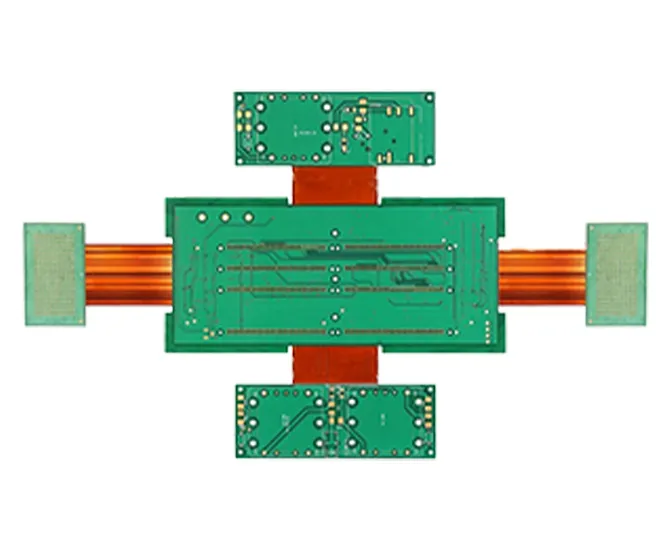
Turnkey PCB and assembly becomes significantly more challenging when applied to large-size, high-complexity electronic products.
In these projects, customers face not only manufacturing difficulties, but also system-level engineering, supply chain, and process control challenges.
From a technical perspective, successful turnkey delivery requires deep integration across PCB fabrication, component engineering, assembly processes, and testing, especially when board size, component density, and system complexity increase.
At China 365PCB, turnkey PCB and assembly for high-difficulty products is managed as an engineering-driven, risk-controlled process, rather than a simple outsourcing model.
Technical Challenge: Large PCB Size and Mechanical Stability
Large-format PCBs introduce significant manufacturing risks.
Common issues include:
· Board warpage during fabrication and reflow
· Uneven thermal expansion across the panel
· Mechanical stress during handling and assembly
· Difficulty maintaining coplanarity for large BGAs and connectors
Engineering Solution:
· Optimized PCB stack-up with balanced copper distribution
· Controlled lamination parameters and material selection
· Panelization and support fixture design for large boards
· Warpage control during reflow using tailored profiles
Mechanical stability is addressed at both design and process levels.
Technical Challenge: High Component Density and Mixed Technologies
High-complexity products often combine:
· Fine-pitch BGAs and CSPs
· High-power components
· Through-hole connectors
· Shielding and mechanical hardware
This creates conflicts between different assembly processes.
Engineering Solution:
· DFM/DFA analysis to resolve assembly sequence conflicts
· Segmented reflow, selective soldering, and controlled THT processes
· Assembly sequence planning to minimize rework risk
· Dedicated tooling for component support and alignment
Process coordination ensures assembly consistency.
Technical Challenge: Power Integrity and Thermal Management
Large systems typically carry:
· High current paths
· Distributed power domains
· Significant heat generation
Improper management leads to instability and early failure.
Engineering Solution:
· Copper thickness and power plane optimization
· Thermal-aware component placement
· Heatsink, thermal pad, and interface material integration
· Power and thermal validation during prototype stage
Electrical and thermal behavior are validated as a system.
Technical Challenge: Component Availability and BOM Risk
High-complexity turnkey projects often rely on:
· Long-lead-time ICs
· Limited-source components
· High-cost or lifecycle-sensitive devices
Supply disruption can halt the entire project.
Engineering Solution:
· Early BOM risk assessment and lifecycle review
· Engineering-approved alternates and footprint compatibility planning
· Controlled sourcing with traceability and anti-counterfeit verification
· Transparent communication of sourcing risks and mitigation options
BOM stability is engineered, not assumed.
Further reading: Supply Chain Management in Turnkey CEM: Solving Customer Pain Points in Complex Electronics Programs
Technical Challenge: Assembly Yield and Rework Risk
As board size and complexity increase, yield sensitivity rises sharply.
Typical risks:
· BGA voiding or head-in-pillow defects
· Solder joint reliability issues
· Difficult access for inspection and rework
Engineering Solution:
· SPI, AOI, and X-ray inspection at critical stages
· Optimized solder paste selection and reflow profiling
· Design-for-rework consideration during layout review
· Controlled rework procedures with documented limits
Yield control is embedded throughout the process.
Technical Challenge: Signal Integrity and EMI Control
Large boards often carry:
· High-speed digital interfaces
· Mixed-signal domains
· High-current switching circuits
These create signal integrity and EMI challenges.
Engineering Solution:
· PCB impedance control and stack-up optimization
· Shielding and grounding strategy integration
· Cable and harness EMI coordination
· Functional and SI validation during system testing
Electrical performance is protected at both board and system levels.
Technical Challenge: System-Level Integration and Alignment
Turnkey products rarely stop at PCBA.
Customers often require:
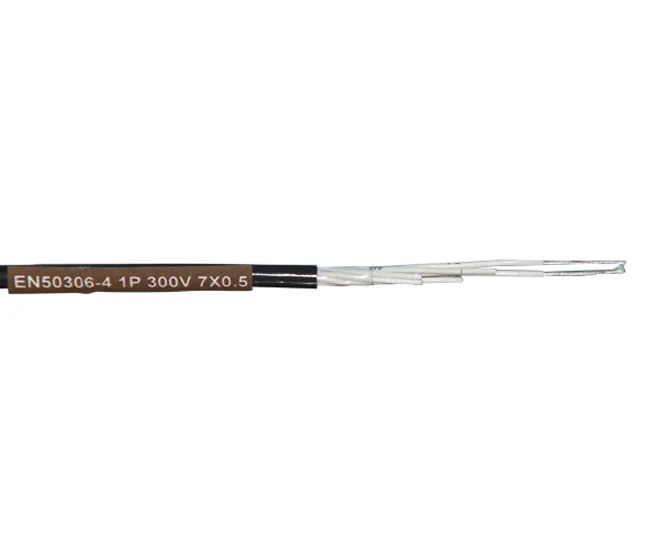
· Cable and harness integration
· Connector alignment across large enclosures
· Mechanical and electrical subsystem coordination
Misalignment leads to assembly delays and failures.
Engineering Solution:
· Early interface definition and integration planning
· Harness routing and strain relief engineering
· Box-build and system mock-up validation
· Assembly sequence optimization
System integration is engineered, not improvised.
Technical Challenge: Testing Coverage and Validation Complexity
Large, complex boards require more than basic testing.
Challenges include:
· Limited test access
· Complex functional test requirements
· Long debug cycles if issues are found late
Engineering Solution:
· Design-for-test (DFT) analysis at early stage
· Custom functional test development
· Incremental testing at subassembly and system levels
· Clear fault isolation and debug methodology
Testing is structured to reduce late-stage risk.
Technical Challenge: Schedule Control and Change Management
High-difficulty turnkey projects are sensitive to changes.
Common issues:
· Late engineering changes
· Component substitutions
· Process adjustments under schedule pressure
Engineering Solution:
· Structured engineering change control (ECO)
· Impact analysis before implementation
· Version control across PCB, BOM, and test
· Transparent communication with customers
Controlled change management protects schedule and quality.
Turnkey PCB and Assembly at 365PCB
At 365PCB, a leading OEM PCB manufacturer, turnkey PCB and assembly for high-complexity, large-size products integrates:
· Engineering-driven DFM/DFA/DFT analysis
· Advanced PCB fabrication and assembly processes
· Component engineering and controlled sourcing
· Cable, harness, and box-build integration
· Comprehensive testing and quality assurance
We support:
· Large-format and high-density PCBs
· Power-intensive and high-speed systems
· Prototype to volume production
· Long-lifecycle and high-reliability products
Related reading: Scalability from Prototype to Production: Engineering Control for Reliable Manufacturing Growth
Successful turnkey delivery requires engineering depth, not just service coverage.
David Li
David Li is the Technical Communications Director at China 365PCB, with over 15 years of hands-on experience in the PCB and electronics manufacturing industry. Holding a Master’s degree in Electrical Engineering, he has worked extensively in both R&D and manufacturing roles at leading multinational electronics firms in Shenzhen before joining our team.
His expertise spans high-speed digital design, advanced packaging (HDI, Flex), and automotive-grade reliability standards. David is passionate about bridging the gap between design intent and production reality—a philosophy that aligns perfectly with 365PCB’s mission to deliver seamless, rapid, and fully-integrated manufacturing solutions.
Follow David’s insights on PCB technology trends and best practices here on the 365PCB Knowledge Hub.
 English