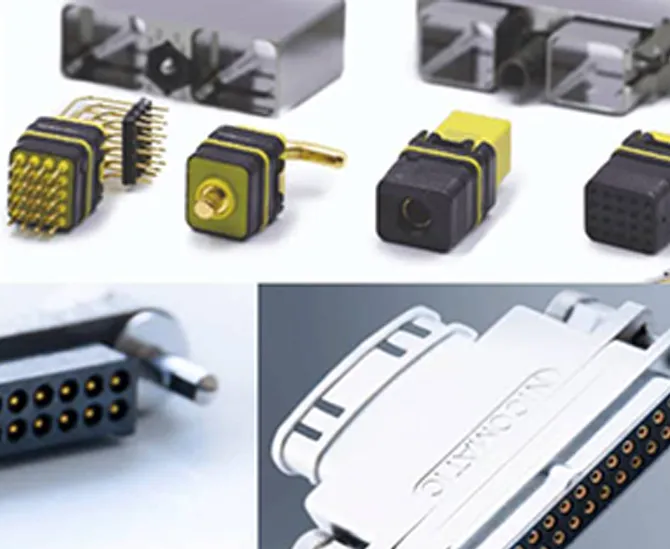
Connectors and sockets are critical electromechanical interfaces in electronic systems.
They provide electrical continuity, mechanical retention, and modularity across boards, cables, and subsystems.
From an R&D perspective, connectors and sockets are system-defining components.
Their selection directly affects signal integrity, power distribution, mechanical reliability, manufacturability, and long-term serviceability.
At China 365PCB, connector and socket selection is evaluated early in system design to ensure alignment between electrical requirements, mechanical constraints, and production realities.
Functional Role of Connectors and Sockets in System Design
In system architecture, connectors and sockets enable:
· Modular assembly and disassembly
· Functional separation of subsystems
· Serviceability and upgrade paths
· Manufacturing scalability
Poor connector decisions often become hidden failure points in otherwise robust designs.
Classification by Connection Type (System Interface View)
Board-to-Board Connectors
Used for interconnecting PCBs within an enclosure.
Typical characteristics:
· High pin density
· Controlled impedance options
· Stack height and alignment sensitivity
Common applications:
· Embedded systems
· Modular control boards
· High-speed digital backplanes
Board-to-Wire Connectors
Interface between PCBs and cable or wire harnesses.
Key considerations:
· Current rating per contact
· Locking and strain relief
· Assembly accessibility
Common applications:
· Industrial control
· Power distribution
· Embedded devices
Wire-to-Wire Connectors
Used to join cable assemblies or harness segments.
Key considerations:
· Mechanical retention
· Environmental sealing
· Field serviceability
Common applications:
· Automotive and industrial harnesses
· Modular cable systems
Classification by Electrical Function
Power Connectors
Designed for higher current and voltage levels.
Engineering focus:
· Contact resistance
· Heat rise under load
· Derating and safety margins
Signal Connectors
Optimized for data and control signals.
Engineering focus:
· Crosstalk and impedance control
· Contact geometry
· Signal integrity across frequency range
Mixed Power & Signal Connectors
Integrate power and signal contacts in one interface.
Engineering focus:
· Electrical isolation
· Thermal separation
· Noise coupling mitigation
Classification by Signal Speed and Frequency
Low-Speed / Control Connectors
Used for GPIO, control, and monitoring.
Primary concerns:
· Contact reliability
· Mechanical durability
High-Speed Digital Connectors
Used for USB, HDMI, Ethernet, PCIe, and similar interfaces.
Primary concerns:
· Impedance control
· Insertion loss and return loss
· Crosstalk and skew
RF and Coaxial Connectors
Used for high-frequency signal transmission.
Primary concerns:
· VSWR
· Shield continuity
· Frequency rating
Classification by Mechanical Structure and Mounting
Through-Hole Connectors
· Strong mechanical anchoring
· Suitable for high mating force or power applications
Surface-Mount Connectors
· Compact footprint
· High-density designs
· Assembly process sensitivity
Panel-Mount Connectors
· System enclosure interfaces
· Environmental sealing and mechanical reinforcement
Classification by Environmental and Reliability Requirements
Standard Environment Connectors
· Indoor or controlled environments
· Cost-optimized solutions
Ruggedized Connectors
· Vibration and shock resistance
· Reinforced housings and contacts
Sealed / Harsh Environment Connectors
· Moisture, dust, and chemical resistance
· IP-rated or environmentally sealed designs
Contact Technology and Plating Options
Contact system design influences electrical and mechanical performance.
Key considerations:
· Contact material and spring design
· Gold, tin, or silver plating
· Plating thickness vs. mating cycles
R&D engineers must balance performance, durability, and cost.
Socket Technology in R&D and Testing
Sockets provide temporary or replaceable interfaces.
Common socket types:
· IC sockets
· Test sockets
· Burn-in sockets
Engineering focus:
· Contact reliability
· Signal integrity impact
· Mechanical wear during repeated insertion
Sockets are often critical during development and validation phases.
Manufacturability and Assembly Considerations
Connector selection affects downstream manufacturing.
Key factors:
· Soldering method compatibility
· Coplanarity and reflow robustness
· Inspection and rework access
· Assembly yield sensitivity
Design-for-manufacturability (DFM) alignment is essential.
Lifecycle, Availability, and Supply Chain Strategy
From an R&D standpoint, connector selection must consider:
· Product lifecycle status
· Vendor stability
· Second-source availability
· Long-term supply continuity
Early lifecycle planning reduces redesign risk during production.
Connectors and Sockets at 365PCB
At 365PCB, the leading electronic components company in China, connector and socket support includes:
· R&D-stage selection guidance
· PCB footprint and layout alignment
· Cable and harness integration
· Assembly, inspection, and reliability validation
Related reading: ICs and Semiconductors: Technical Classification and Anti-Counterfeiting Practices
We support:
· Embedded and industrial systems
· High-speed and power-intensive designs
· Prototype and production builds
· End-to-end EMS integration
Well-selected connectors and sockets ensure reliable system interconnection across the product lifecycle.
Further reading: Electronic Component Counterfeit Prevention: Technical Methods and Engineering Countermeasures
David Li
David Li is the Technical Communications Director at China 365PCB, with over 15 years of hands-on experience in the PCB and electronics manufacturing industry. Holding a Master’s degree in Electrical Engineering, he has worked extensively in both R&D and manufacturing roles at leading multinational electronics firms in Shenzhen before joining our team.
His expertise spans high-speed digital design, advanced packaging (HDI, Flex), and automotive-grade reliability standards. David is passionate about bridging the gap between design intent and production reality—a philosophy that aligns perfectly with 365PCB’s mission to deliver seamless, rapid, and fully-integrated manufacturing solutions.
Follow David’s insights on PCB technology trends and best practices here on the 365PCB Knowledge Hub.
 English