Authored by China 365PCB — A fully self-operated, full-industry-chain manufacturing group dedicated to PCB fabrication, SMT assembly, online electronic component sourcing, CNC machining, and complete OEM/ODM solutions. With over 15 years of experience and 100,000 square meters of self-owned production area, we guarantee no delay and no excuses. We never outsource, never compromise.
In the highly intricate world of electronics manufacturing, the foundation of product reliability begins long before the first component is placed. The base material dictates thermal management, mechanical stability, and electrical performance. When engineering teams set out to design a new electronic device, the ability to choose right Soldering board for PCB fabrication is the most critical decision in the hardware development lifecycle. An incorrect substrate choice can lead to catastrophic field failures, delamination during reflow soldering, and compromised signal integrity.
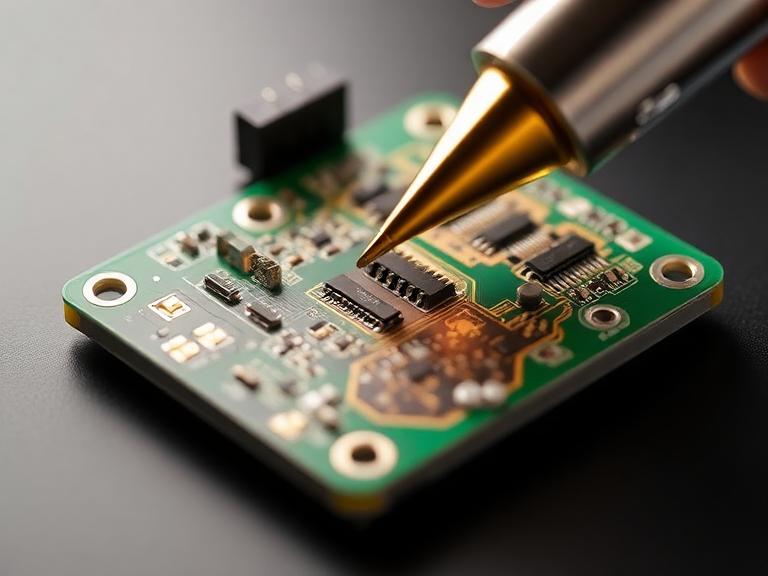
From our experience managing thousands of turnkey projects at China 365PCB, we see the consequences of improper board selection daily. Because we handle everything from bare board fabrication to full SMT assembly within our own facilities, we understand exactly how material properties interact with high-temperature soldering profiles. Our commitment is built on speed, precision, and responsibility. Therefore, we have compiled an authoritative guide outlining six essential tips to help you choose right Soldering board for PCB applications, ensuring your next project moves seamlessly from prototype to mass production.
1. Understand and Select the Proper Base Material Substrate
To successfully choose right Soldering board for PCB manufacturing, you must first master the substrate materials available. The most common material in the industry is FR4, a glass-reinforced epoxy laminate known for its excellent balance of cost, mechanical strength, and electrical insulation. FR4 is highly versatile and is the default choice for standard consumer electronics. However, as power densities increase, FR4 often falls short in thermal dissipation.
For high-power applications, such as those found in our LED Lighting PCB and Solar PCB product lines, Metal Core Printed Circuit Boards (MCPCB) are required. Aluminum or copper-backed boards pull heat away from sensitive surface-mounted components, preventing thermal degradation. We recommend selecting aluminum substrates when weight and cost are factors, and copper substrates when absolute maximum thermal conductivity is required. By matching the substrate to the power output of your components, you effectively choose right Soldering board for PCB thermal stability.
2. Evaluate Thermal Resistance and Tg (Glass Transition Temperature)
.jpg "Evaluate Thermal Resistance and Tg (Glass Transition Temperature)")
The soldering process, particularly lead-free reflow soldering, subjects the bare board to temperatures exceeding 240 degrees Celsius. To choose right Soldering board for PCB resilience, engineers must evaluate the Glass Transition Temperature (Tg) of the laminate. The Tg represents the temperature at which the rigid epoxy matrix begins to soften and transition into a pliable, rubbery state. If a board exceeds its Tg for prolonged periods during soldering, it risks severe structural damage, including trace fracture and via barrel cracking.
From our experience, standard Tg FR4 (around 130 degrees Celsius) is sufficient for simple, single-layer boards. However, for complex multilayer designs subjected to harsh environments, you must choose right Soldering board for PCB reliability by specifying High-Tg materials (170 degrees Celsius and above). This is non-negotiable for sectors demanding absolute reliability under thermal stress, which is why High-Tg materials form the backbone of our Automotive PCB and Industrial Control PCB manufacturing processes.
3. Determine the Optimal Surface Finish for Soldering
The surface finish protects exposed copper from oxidation and provides a solderable surface for component placement. When you choose right Soldering board for PCB assembly, the surface finish directly impacts the yield rate of your SMT lines. The most common finishes include Hot Air Solder Leveling (HASL), Electroless Nickel Immersion Gold (ENIG), and Organic Solderability Preservative (OSP).
We recommend HASL for cost-sensitive, larger-pitch components, but it is entirely unsuitable for fine-pitch BGAs due to its uneven surface topography. For high-precision applications, ENIG is the gold standard. ENIG provides a perfectly flat surface, excellent shelf life, and robust solder joint integrity. This makes it the finish of choice for our Medical PCB and Consumer Electronics PCB arrays, where miniaturization and precision are paramount. By selecting ENIG or specialized finishes like Immersion Silver for high-frequency boards, you choose right Soldering board for PCB defect reduction.
4. Specify the Correct Copper Weight for Current Loads
Copper weight, expressed in ounces per square foot (oz/ft2), determines the current-carrying capacity of the traces. A critical step to choose right Soldering board for PCB architecture is calculating the expected amperage. Standard signal boards typically utilize 1 oz copper (roughly 35 micrometers thick). However, power supplies, motor controllers, and battery management systems require heavy copper boards, ranging from 2 oz to 6 oz or more.
From our experience, failing to specify adequate copper weight results in localized overheating, trace delamination, and potential fire hazards. Conversely, over-specifying copper weight on a board designed for fine-pitch logic circuits will result in etching difficulties and short circuits. At China 365PCB, our engineering team performs comprehensive Design for Manufacturability (DFM) checks to ensure you choose right Soldering board for PCB copper distribution, balancing heavy power lines with delicate signal traces.
5. Align Board Characteristics with SMT Assembly Capabilities
A board is only as good as the components soldered to it. To accurately choose right Soldering board for PCB production, one must view the bare board through the lens of automated Surface Mount Technology (SMT) assembly. Factors such as panelization, fiducial mark placement, and board thickness directly impact the efficiency of pick-and-place machines and reflow ovens.
At China 365PCB, all facilities are self-owned and self-managed. We never outsource, which ensures total quality control and full process traceability from fabrication to PCBA. When you choose right Soldering board for PCB assembly with us, we ensure the panel routing and V-scoring are optimized for mechanical stability during transit on our automated conveyor systems. If a board is too thin (e.g., below 0.8mm) without proper pallet support, it will warp in the reflow oven, leading to tombstoning and cold solder joints.
6. Verify Regulatory and Application-Specific Compliance
Finally, the operational environment dictates regulatory compliance. To responsibly choose right Soldering board for PCB integration, you must ensure the material meets specific industry standards, such as IPC Class 2 or Class 3, RoHS (Restriction of Hazardous Substances), and UL flammability ratings (typically UL94 V-0).
Furthermore, specialized applications require specialized dielectric properties. For instance, high-speed data transmission relies heavily on controlled impedance and low dielectric loss (Df). Standard FR4 introduces too much signal attenuation at gigahertz frequencies. Therefore, when engineering our Telecommunication PCB products, we utilize advanced PTFE or ceramic-filled laminates (such as Rogers or Isola materials). When you evaluate these electrical properties, you successfully choose right Soldering board for PCB signal integrity.
Summary Comparison Table
To assist your procurement and engineering teams, we have compiled a summary of key attributes to consider when evaluating substrates.
| Substrate Type | Tg Range (Celsius) | Thermal Conductivity | Ideal Surface Finish | Primary Application |
|---|
| Standard FR4 | 130 - 140 | Low (0.25 W/mK) | HASL, OSP | Basic Consumer Electronics |
| High-Tg FR4 | 170 - 180+ | Low (0.25 W/mK) | ENIG, Immersion Tin | Automotive, Industrial Control |
| Aluminum Core (MCPCB) | N/A (Metal base) | High (1.0 - 3.0+ W/mK) | HASL, ENIG | LED Lighting, Power Modules |
| PTFE / High-Frequency | 280+ | Moderate | Immersion Silver, ENIG | Telecommunications, Radar |
| Polyimide (Flex) | 200+ | Low | ENIG | Medical Devices, Wearables |
Frequently Asked Questions (FAQs)
Why is it important to choose right Soldering board for PCB thermal management?
Thermal management dictates the lifespan of electronic components. If you do not choose right Soldering board for PCB heat dissipation, components like LEDs and power MOSFETs will overheat, leading to rapid degradation and complete system failure. Utilizing metal-core boards or adding thermal vias to high-Tg FR4 resolves these thermal bottlenecks.
Does the surface finish affect how I choose right Soldering board for PCB shelf life?
Yes. From our experience, finishes like OSP have a short shelf life (typically 6 months) and can degrade in humid environments before assembly. If your supply chain requires prolonged storage before SMT processing, we recommend ENIG or Immersion Tin to ensure the copper remains perfectly solderable.
How does China 365PCB ensure the quality of the selected board?
With over 100,000 square meters of self-owned production area, we maintain absolute control over the manufacturing process. We conduct rigorous electrical testing, automated optical inspection (AOI), and thermal stress testing to ensure that the materials you select perform exactly as intended. We never outsource, ensuring unmatched production flexibility and reliability.
Can I use standard FR4 for high-frequency designs?
We do not recommend standard FR4 for frequencies above 1 GHz due to its inconsistent dielectric constant and high signal loss. To choose right Soldering board for PCB designs in the telecommunications space, you must specify specialized RF laminates.
References
Ultimately, the decision to choose right Soldering board for PCB fabrication shapes the future of your electronic product. By evaluating the substrate material, thermal limits, surface finish, copper weight, and compliance standards, engineers can design systems that are robust, manufacturable, and commercially successful. At China 365PCB, our one-stop turnkey service from design to delivery guarantees that your specifications are met with speed, precision, and responsibility. Partner with us, and experience truly seamless manufacturing.
David Li
David Li is the Technical Communications Director at China 365PCB, with over 15 years of hands-on experience in the PCB and electronics manufacturing industry. Holding a Master’s degree in Electrical Engineering, he has worked extensively in both R&D and manufacturing roles at leading multinational electronics firms in Shenzhen before joining our team.
His expertise spans high-speed digital design, advanced packaging (HDI, Flex), and automotive-grade reliability standards. David is passionate about bridging the gap between design intent and production reality—a philosophy that aligns perfectly with 365PCB’s mission to deliver seamless, rapid, and fully-integrated manufacturing solutions.
Follow David’s insights on PCB technology trends and best practices here on the 365PCB Knowledge Hub.
 English