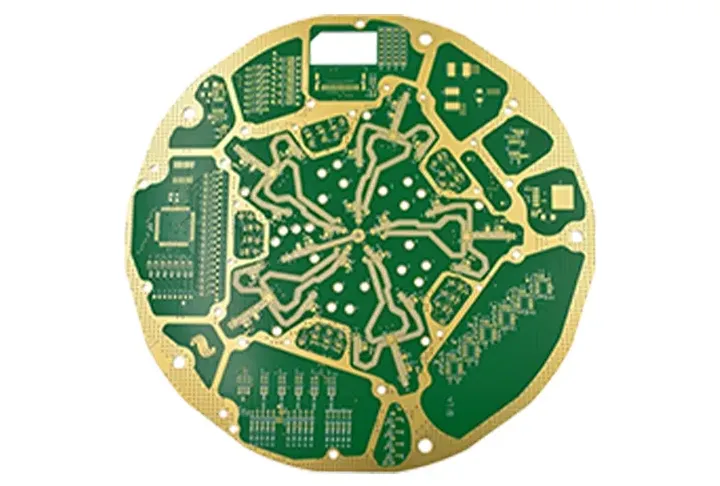
In the rapid-fire world of electronic hardware development, the gap between a messy, temporary prototype and a final product can be vast. For engineers and developers, the solderless breadboard is indispensable for initial testing, yet its mechanical instability and parasitic capacitance make it unsuitable for long-term deployment. This is where the solderable breadboard (often called a perma-proto board) becomes vital. Understanding a solderable breadboard how to use effectively allows you to migrate a verified circuit into a robust, vibration-resistant form factor without the immediate overhead of a custom PCB layout.
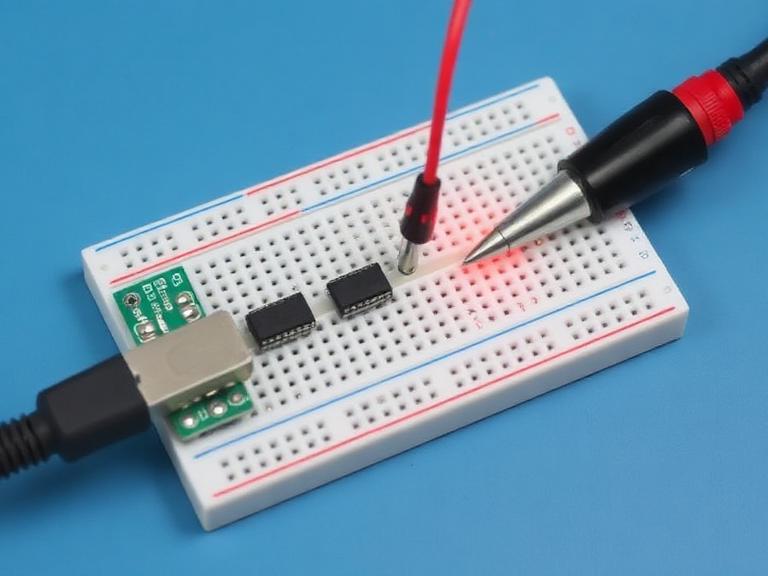
Table of Contents
From our experience at China 365PCB, over 40 percent of failures in low-volume electronic units stem from poor solderable breadboard execution. While these boards are meant to be an intermediary step, treating them with the same precision as a multi-layer production board is what separates an amateur build from a professional-grade prototype.
1. Understanding Solderable Breadboard Anatomy
The primary advantage of a solderable breadboard is its identical layout to a standard 830-point or 400-point solderless breadboard. It features two sets of five-hole columns separated by a central ravine (for DIP ICs) and power rails running along the edges. From our experience, the quality of the substrate is paramount. High-quality boards utilize FR-4 glass epoxy rather than cheaper phenolic paper (FR-1/FR-2), providing better heat resistance and mechanical strength.
We recommend inspecting the plating before you start. Professional-grade solderable boards often feature plated-through holes (PTH) with a gold or lead-free HASL finish. Plated holes provide superior solder joint integrity because the solder wicks up the barrel of the hole, creating a 360-degree mechanical bond. This is a far more reliable connection than single-sided copper pads that can easily delaminate if overheated during a solderable breadboard how to use session.
2. Pre-Assembly Planning: The Transfer Process
The most common mistake when learning a solderable breadboard how to use is diving into soldering without a component map. Because the solderable board mirrors the solderless one, you might think you can just move components one by one. However, once you solder a component, it is significantly harder to move than simply unplugging it from a spring contact.
We recommend taking a high-resolution photo of your working solderless prototype. Use a PCB design software or even a dedicated breadboard layout tool like Fritzing to map out the connections. Ensure that you have accounted for the thickness of wires and the height of taller components like electrolytic capacitors. If your design requires PCB Design Support Services later, having this initial map will make the transition to a professional EDA tool much smoother.
3. Solderable Breadboard How to Use: Step-by-Step Execution
To master a solderable breadboard how to use, follow this sequence to ensure electrical continuity and mechanical durability:
Step 1: Board Cleaning and Preparation
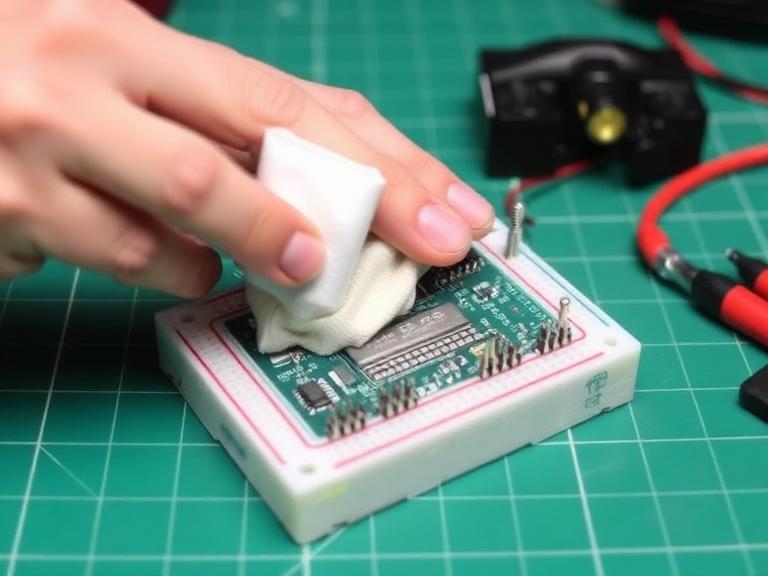
Even new boards can have oxidation or oils from manufacturing. Wipe the copper pads with 99% isopropyl alcohol. Clean pads ensure the solder flows quickly, reducing the thermal stress on the FR-4 substrate and your sensitive components.
Step 2: Low-Profile Components First
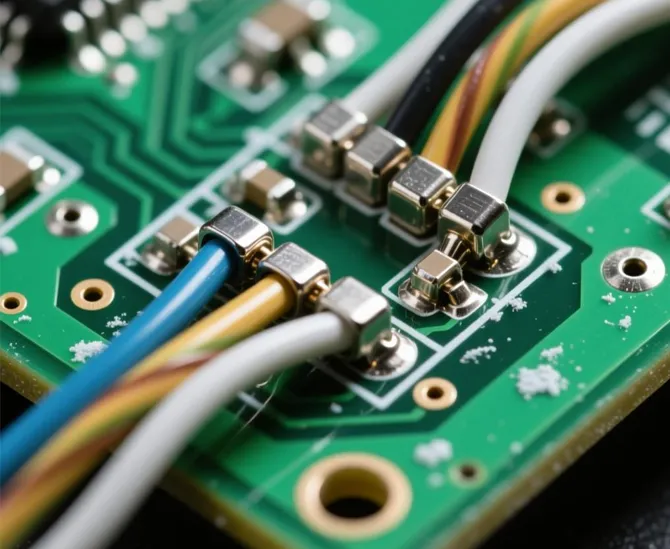
Start with the lowest profile components, typically resistors, diodes, and link wires. Place them into the board and slightly bend the leads on the underside to hold them in place. Flip the board and solder. This prevents components from falling out when you flip the board to access the traces.
Step 3: Integrated Circuits and Sockets
We recommend always using IC sockets on solderable breadboards. Soldering an IC directly is risky; the heat required for a solid joint can damage the silicon. A socket allows you to replace the IC if it fails during testing or if you need to upgrade the firmware on a microcontroller. Align the notch on the socket with your circuit diagram to maintain correct pin orientation.
Step 4: Power Rail Wiring
Connect your power rails (VCC and GND). From our experience, using solid-core 22AWG wire is best for these internal connections as it stays in place once bent. Ensure you use standard color-coding (Red for positive, Black for ground) to prevent polarity errors during later troubleshooting.
Step 5: High-Profile Components
Finish with larger components such as capacitors, transistors, and headers. If your board will be mounted in a chassis, ensure these components don't interfere with the enclosure's lid. If the height is a concern, we recommend lying capacitors flat against the board surface and securing them with a small dab of non-corrosive silicone.
4. Professional Soldering and Component Management Tips
When you are deep in the process of a solderable breadboard how to use, heat management is your biggest enemy. Unlike a mass-produced board, a prototype board is often subjected to repeated soldering and desoldering as you tweak the design.
Use a temperature-controlled soldering station set between 320°C and 350°C for lead-free solder. Apply heat to both the pad and the component lead for roughly 2 seconds before introducing the solder. The result should be a shiny, concave fillet. If the joint is dull or "blobby," you likely have a cold solder joint, which is the leading cause of intermittent circuit failure. For complex builds involving fine-pitch components, you may even consider our PCB X-Ray Inspection Service for high-reliability prototypes to ensure no internal bridges exist beneath large components.
5. Post-Solder Testing and Quality Control
Once assembly is complete, do not apply power immediately. Perform a visual inspection under magnification. Look for solder bridges—tiny splashes of solder that connect adjacent pads that should be isolated. If you are producing these boards for a small pilot run, we recommend using a PCB Actual Board Area (AOI) approach, even if done manually, to check for component orientation and polarity.
Use a digital multimeter in continuity mode to check the ground and power rails. There should be no continuity between VCC and GND. Next, check the continuity of your signal traces from the pin of the IC to the final destination on the board. Only after these passive tests pass should you apply power. For critical applications, our PCB Electrical Testing Service can be applied to ensure the substrate itself has no manufacturing defects before you even begin assembly.
6. Transitioning from Solderable Breadboards to Custom PCBs
While a solderable breadboard is excellent for a "one-off" or a proof of concept, it is not scalable. If you find yourself building more than five of the same design, or if your circuit operates at high frequencies (above 10MHz), the limitations of the breadboard layout become a liability. The long, parallel traces of a breadboard-style layout create significant parasitic inductance and crosstalk.
At this stage, you should move to a Custom PCB. A custom layout allows for optimized ground planes, controlled impedance traces, and significantly smaller footprints. China 365PCB specializes in this transition, taking your prototype and turning it into a High-Volume Production PCB. We provide PCB Functional Testing Service to ensure that the professional version of your circuit performs exactly as your prototype did, but with the reliability of industrial manufacturing.
7. Summary Comparison Table
| Feature | Solderless Breadboard | Solderable Breadboard | Custom PCB (365PCB) |
|---|
| Permanence | Temporary | Semi-Permanent | Permanent |
| Vibration Resistance | Poor | Good | Excellent |
| High-Frequency Support | Low (< 2 MHz) | Moderate (< 10 MHz) | High (GHz Range) |
| Current Capacity | Low (~500mA) | Moderate (~2-5A) | High (Customizable) |
| Production Scale | N/A (Prototyping) | 1-5 units | Unlimited (Mass Production) |
8. Frequently Asked Questions (FAQs)
Can I reuse a solderable breadboard?
Technically, yes, but we don't recommend it for professional projects. Desoldering multiple components stresses the copper pads and can lead to delamination. If you must reuse it, use a vacuum desoldering pump to ensure all solder is removed before pulling the component.
What is the best wire for a solderable breadboard how to use session?
From our experience, 22AWG solid-core tinned copper wire is the industry standard. It fits perfectly in the holes, holds its shape for neat routing, and takes solder easily. Avoid stranded wire for internal board connections as stray strands can cause short circuits.
Why is my solder not sticking to the breadboard pads?
This is usually due to oxidation or insufficient heat. Clean the board with isopropyl alcohol first. If the problem persists, ensure your soldering iron tip is clean and "tinned." If you are using lead-free solder on a cheap board, you may need a small amount of additional flux to break the surface tension.
How do I mount a solderable breadboard in an enclosure?
Most professional solderable breadboards come with M3 mounting holes in the corners. We recommend using nylon or brass standoffs to keep the underside of the board (the solder joints) from touching the enclosure, which could cause a short circuit.
9. References
Mastering a solderable breadboard how to use is a fundamental skill that bridges the gap between a concept and a physical product. By following professional preparation, soldering, and testing protocols, you ensure that your prototype is not the weak link in your development cycle. When your design is ready for the world, China 365PCB is here to provide the industry-chain manufacturing power to take your project from the bench to the global market—365 days a year.
David Li
David Li is the Technical Communications Director at China 365PCB, with over 15 years of hands-on experience in the PCB and electronics manufacturing industry. Holding a Master’s degree in Electrical Engineering, he has worked extensively in both R&D and manufacturing roles at leading multinational electronics firms in Shenzhen before joining our team.
His expertise spans high-speed digital design, advanced packaging (HDI, Flex), and automotive-grade reliability standards. David is passionate about bridging the gap between design intent and production reality—a philosophy that aligns perfectly with 365PCB’s mission to deliver seamless, rapid, and fully-integrated manufacturing solutions.
Follow David’s insights on PCB technology trends and best practices here on the 365PCB Knowledge Hub.
 English