Authored by China 365PCB, a fully self-operated, full-industry-chain manufacturing group offering complete OEM/ODM solutions. With over 15 years of experience, we manage over 100,000 square meters of self-owned production area, ensuring total quality control, full process traceability, and unmatched production flexibility for global customers.
Light Emitting Diodes have revolutionized the illumination and electronics industries, offering unparalleled energy efficiency, longevity, and compact form factors. However, the performance and lifespan of these diodes depend entirely on the foundation they are mounted upon. This is where the LED PCB board becomes critical. A LED PCB board is a highly specialized printed circuit board engineered specifically to support, power, and cool light-emitting diodes. Unlike standard circuit boards used in low-power consumer electronics, a LED PCB board must manage significant thermal loads while maintaining strict electrical isolation.
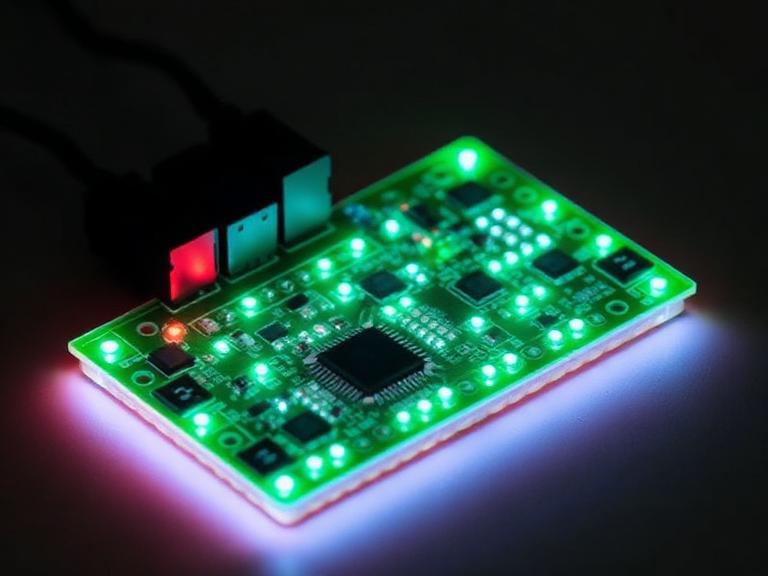
From our experience manufacturing millions of circuit boards for global clients, we understand that designing and fabricating a reliable LED PCB board requires a deep understanding of thermodynamics, material science, and precision surface-mount technology (SMT). Whether you are developing high-intensity automotive headlights, surgical lighting, or large-scale commercial illumination, selecting the correct LED PCB board architecture is paramount to your product's success. In this authoritative guide, we will explore the technical definition, material composition, thermal management strategies, and manufacturing processes associated with a high-performance LED PCB board.
1. What is a LED PCB Board?
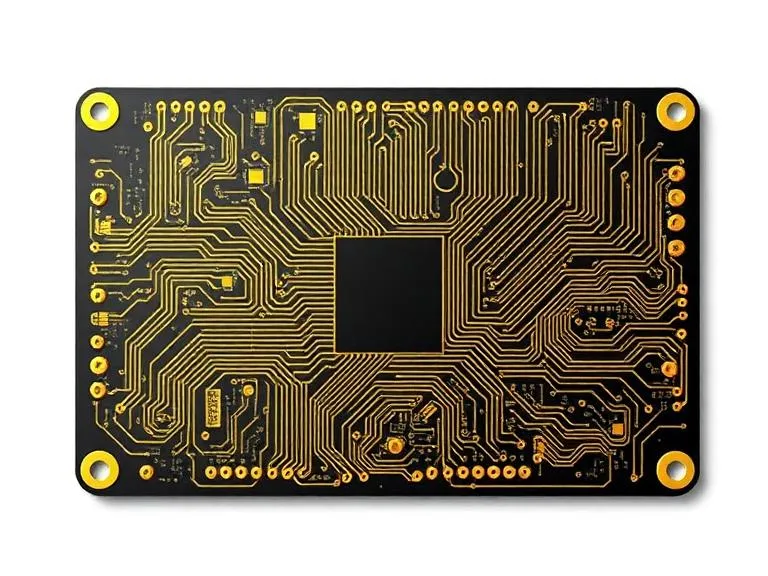
A LED PCB board is a printed circuit board that features light-emitting diodes soldered directly onto its surface. Because LEDs generate continuous light, they also generate a substantial amount of continuous heat. Standard circuit boards constructed from fiberglass-epoxy resins trap this heat, leading to rapid diode degradation. Therefore, a modern LED PCB board is explicitly designed with thermal dissipation at the forefront of its architecture.
These boards typically utilize surface-mount devices (SMD) rather than traditional through-hole components. SMD technology allows the diodes to sit flat against the LED PCB board, maximizing surface contact for optimal heat transfer. The circuit traces on a LED PCB board route the required voltage and current to each diode, ensuring uniform brightness across the entire array. We recommend utilizing a specialized LED PCB board for any lighting application exceeding a few watts of power, as the risk of thermal runaway in standard boards is unacceptably high.
2. Material Science: Core Components of a LED PCB Board
The defining characteristic of a professional-grade LED PCB board is its material composition. While standard electronics rely on FR4 (a flame-retardant fiberglass epoxy), a high-power LED PCB board requires materials with superior thermal conductivity. From our experience in advanced PCB fabrication, the choice of base material dictates the thermal performance and longevity of the lighting fixture.
Metal Core PCB (MCPCB)
For the vast majority of high-brightness applications, a Metal Core LED PCB board is the absolute industry standard. An MCPCB consists of three primary layers:
The Metal Core Base: Typically made of aluminum or copper. Aluminum is the most common choice for a LED PCB board due to its excellent balance of thermal conductivity, light weight, and cost-effectiveness. Copper offers even higher thermal conductivity but at a higher weight and cost.
The Dielectric Layer: This is the most critical layer in a Metal Core LED PCB board. It is a thin, thermally conductive but electrically insulating layer that sits between the metal base and the copper circuitry. A high-quality dielectric layer allows heat to pass from the LEDs to the metal core while preventing electrical short circuits.
The Copper Circuit Layer: This top layer contains the etched electrical traces that connect the LEDs, resistors, and driving components.
FR4 with Thermal Vias
In applications where cost is the primary constraint and the thermal load is relatively low, a standard FR4 LED PCB board can be used. However, we recommend incorporating thermal vias into the design. Thermal vias are plated through-holes strategically placed beneath the heat-generating components to channel heat away from the surface. While not as effective as a solid metal core, a properly designed FR4 LED PCB board with thermal vias can support low-to-medium power LED arrays.
3. Why Thermal Management is Critical
The efficiency and lifespan of a light-emitting diode are inversely proportional to its junction temperature. If a LED PCB board fails to dissipate heat adequately, several catastrophic failures occur. First, the luminous efficacy of the diode drops significantly, meaning it produces less light while consuming the same amount of power. Second, prolonged exposure to excessive heat causes the encapsulant material within the LED to degrade, resulting in a color shift. Finally, unchecked thermal buildup will ultimately lead to complete diode failure.
From our experience engineering advanced thermal solutions, a well-designed LED PCB board acts as a primary heat sink. The metal core rapidly draws thermal energy away from the diode junction and spreads it across the entire surface area of the board. From there, the heat can be transferred to an external aluminum heat sink or housing. We recommend rigorous thermal simulation during the design phase of any LED PCB board to ensure the dielectric layer's thermal conductivity rating (measured in W/m K) matches the application's demands.
4. Key Industrial Applications
Because lighting is ubiquitous, the demand for high-reliability LED PCB board manufacturing spans numerous global industries. At China 365PCB, our full-industry-chain capabilities allow us to tailor the LED PCB board specifications to the exact environmental and regulatory requirements of distinct sectors.
Automotive Lighting: Modern vehicles rely heavily on LEDs for headlights, taillights, and interior ambient lighting. An Automotive PCB designed for LEDs must withstand extreme vibration, moisture, and temperature fluctuations. We utilize high-grade aluminum and copper cores to ensure these LED PCB board assemblies perform flawlessly in harsh automotive environments.
Healthcare and Medical: Operating room lights and diagnostic imaging equipment require intense, flicker-free illumination with precise color rendering. A Medical PCB integrated with high-power LEDs undergoes stringent quality control and traceability protocols to guarantee absolute reliability during critical procedures.
Industrial Automation: Factories and automated warehouses utilize intense overhead lighting and machine status indicators. An Industrial Control PCB must be immune to electromagnetic interference while managing the thermal load of continuous 24/7 operation.
Telecommunications: Server racks and networking hubs utilize dense indicator arrays. A reliable Telecommunication PCB ensures that system status lights remain visible and operational without contributing excess heat to the server environment.
Commercial and Residential Illumination: The transition to smart lighting has driven massive demand for the standard LED Lighting PCB. These boards are found in streetlights, office troffers, and residential smart bulbs.
Renewable Energy: Off-grid solar streetlights combine battery management systems with high-efficiency LEDs. A customized Solar PCB requires exceptional power efficiency to maximize illumination time on limited battery reserves.
5. The Manufacturing Process: From Fabrication to SMT Assembly
Producing a defect-free LED PCB board requires precise synchronization across multiple manufacturing disciplines. China 365PCB operates as a fully self-operated manufacturing group. Because all facilities are self-owned and self-managed across our 100,000 square meters of production area, we guarantee a one-stop turnkey service from design to delivery—with no delays and no excuses.
The manufacturing of a LED PCB board begins with bare board fabrication, where the metal core, dielectric, and copper layers are laminated under immense pressure. Following fabrication, the boards move to our state-of-the-art SMT assembly lines. Here, highly automated pick-and-place machines position the LED components with microscopic accuracy. The LED PCB board then passes through a reflow soldering oven featuring precisely calibrated thermal profiles to ensure robust solder joints without thermally damaging the sensitive diodes.
Beyond standard assembly, our complete OEM/ODM solutions include online electronic component sourcing, CNC machining for custom heat sinks and housings, and complex cable harness assembly. We recommend utilizing a single-source manufacturing partner because it ensures total quality control and full process traceability across the entire lifecycle of the LED PCB board. By eliminating fragmented supply chains, we truly realize 365 days of fast manufacturing for our global customers.
6. Summary Table: LED PCB Board Specifications
To assist engineering teams in selecting the correct base material for their specific LED PCB board application, we have compiled the following technical summary.
| Base Material | Thermal Conductivity | Cost Profile | Weight | Ideal Application |
|---|
| Standard FR4 | Low (approx. 0.25 W/m K) | Highly Economical | Light | Low-power indicator lights, consumer electronics displays. |
| Aluminum Core (MCPCB) | High (1.0 to 3.0 W/m K) | Moderate | Moderate | Commercial lighting, automotive headlamps, streetlights. |
| Copper Core (MCPCB) | Extremely High (up to 400 W/m K) | Premium | Heavy | High-intensity surgical lights, advanced industrial lasers, heavy-duty automotive. |
| Flexible Polyimide | Low to Moderate | Moderate | Very Light | Curved architectural lighting, wearable technology, automotive interiors. |
7. Frequently Asked Questions (FAQs)
Why is aluminum commonly used for a LED PCB board instead of standard FR4?
Aluminum is preferred because it possesses excellent thermal conductivity. A high-power LED PCB board generates significant heat that must be moved away from the diode to prevent failure. Standard FR4 is a thermal insulator and traps heat, whereas an aluminum core acts as an integrated heat sink, drastically extending the lifespan of the LEDs.
What is the dielectric layer in a Metal Core LED PCB board?
The dielectric layer is a critical microscopic barrier placed between the metal base and the copper circuitry. Its primary function is to provide electrical isolation to prevent short circuits while maintaining high thermal conductivity so heat can efficiently pass from the copper circuit into the metal core.
Does China 365PCB offer turnkey assembly for a custom LED PCB board?
Yes, we provide fully self-operated OEM/ODM turnkey solutions. Our full-industry-chain capabilities cover everything from bare board fabrication and SMT assembly to component sourcing, CNC machining, and final product integration, ensuring complete traceability and strict quality control.
8. Authoritative References
To ensure your LED PCB board designs adhere to the highest international standards for electronics manufacturing and energy efficiency, we recommend consulting the following authoritative organizations:
David Li
David Li is the Technical Communications Director at China 365PCB, with over 15 years of hands-on experience in the PCB and electronics manufacturing industry. Holding a Master’s degree in Electrical Engineering, he has worked extensively in both R&D and manufacturing roles at leading multinational electronics firms in Shenzhen before joining our team.
His expertise spans high-speed digital design, advanced packaging (HDI, Flex), and automotive-grade reliability standards. David is passionate about bridging the gap between design intent and production reality—a philosophy that aligns perfectly with 365PCB’s mission to deliver seamless, rapid, and fully-integrated manufacturing solutions.
Follow David’s insights on PCB technology trends and best practices here on the 365PCB Knowledge Hub.
 English