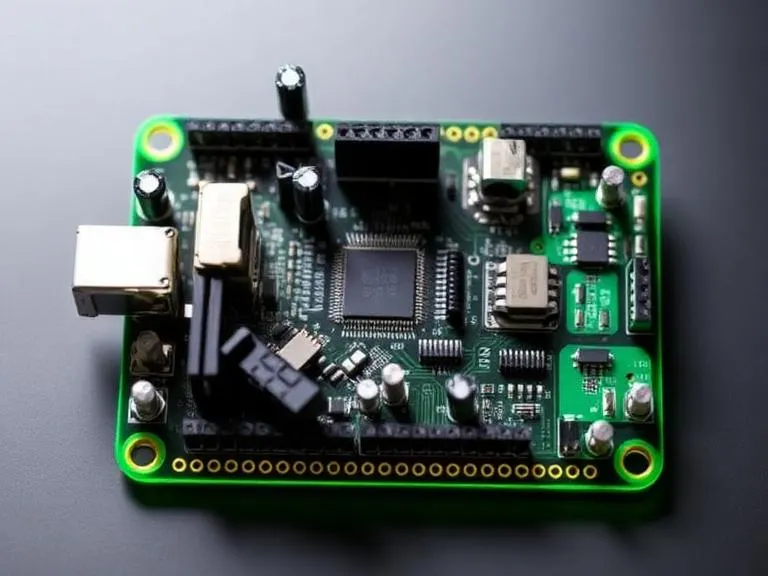
SMT circuit board assembly is the dominant electronics manufacturing process used in virtually every modern electronic device. If you are evaluating electronics production partners, launching a new product, or trying to improve manufacturing quality, understanding the SMT circuit board assembly process is essential.
From our experience working with OEM and EMS projects, the difference between a reliable product and an unreliable one often comes down to the quality of the SMT assembly process rather than the PCB itself. Even a perfectly designed board can fail if solder paste printing, component placement, or reflow soldering is poorly controlled.
Quick Answer
What is SMT circuit board assembly?
SMT circuit board assembly is the process of mounting electronic components directly onto the surface of a printed circuit board using automated production equipment.
How does it work?
The process includes solder paste printing, component placement, reflow soldering, inspection, testing, and final assembly.
Benefits
Higher production efficiency
Lower manufacturing costs
Smaller product size
Better electrical performance
High-volume automation capability
Limitations
Requires advanced equipment
Strict process control needed
Initial setup costs can be high
Who should use it?
Consumer electronics brands, industrial equipment manufacturers, automotive suppliers, telecommunications companies, and medical device manufacturers.
Who does not need it?
Very simple prototype projects using only through-hole components.
Expert Recommendation
For commercial electronics production, SMT circuit board assembly is not optional. It is the industry standard and delivers the best balance of quality, scalability, and cost efficiency.
What Is SMT Circuit Board Assembly?
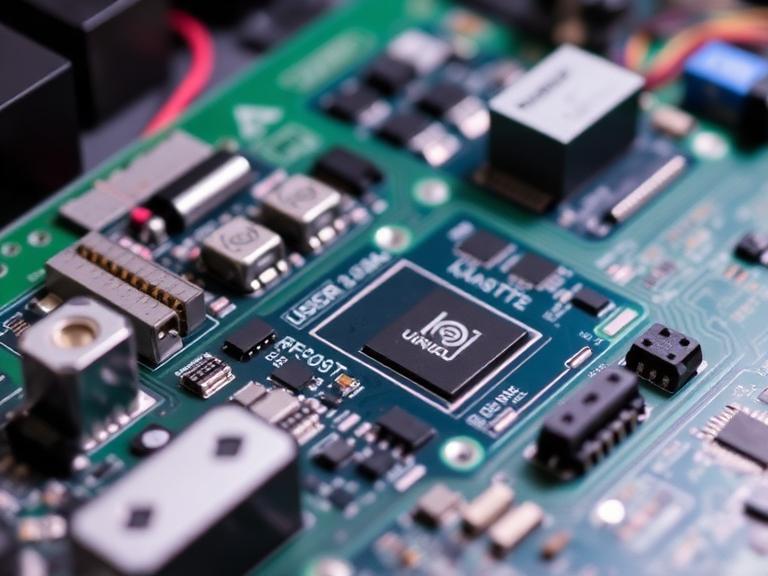
SMT stands for Surface Mount Technology. SMT circuit board assembly is the process of placing electronic components directly onto copper pads on the PCB surface rather than inserting component leads through drilled holes.
Today, nearly every smartphone, laptop, industrial controller, communication module, automotive ECU, and IoT device relies on SMT manufacturing.
In most professional situations, SMT offers superior production efficiency, higher component density, and better electrical performance than traditional through-hole assembly.
Many advanced PCB products such as High-speed PCB, FC-CSP PCB, Interposer PCB, and SiP PCB depend heavily on precision SMT assembly technology.
Quick Summary Table
| Process Stage | Main Purpose | Critical Quality Factor |
|---|
| Solder Paste Printing | Apply solder paste | Paste volume accuracy |
| SPI Inspection | Check solder deposits | Paste consistency |
| Pick and Place | Mount components | Placement accuracy |
| Reflow Soldering | Create solder joints | Temperature profile |
| AOI Inspection | Detect defects | Inspection coverage |
| Functional Testing | Verify operation | Product performance |
How SMT Circuit Board Assembly Works
The SMT circuit board assembly process converts a bare PCB into a fully functional electronic assembly through a highly automated manufacturing workflow.
Modern production lines combine robotics, vision systems, precision dispensing technology, and automated inspection systems to achieve repeatable results.
For complex applications involving IC Substrate PCB, Probe Card PCB, and Semiconductor Test PCB, manufacturing precision becomes even more critical.
Step-by-Step SMT Circuit Board Assembly Process
1. Material Preparation
The process begins with incoming inspection of PCBs, electronic components, solder paste, and assembly documentation.
Professional manufacturers verify:
2. Solder Paste Printing
A stainless steel stencil is aligned over the PCB. Solder paste is deposited onto component pads.
From our experience, solder paste printing is responsible for a significant percentage of assembly defects when process control is poor.
Even the most advanced SMT line cannot compensate for incorrect solder deposits.
3. Solder Paste Inspection (SPI)
Automated SPI equipment measures:
Paste volume
Paste height
Paste position
Paste area coverage
This early-stage inspection prevents costly downstream defects.
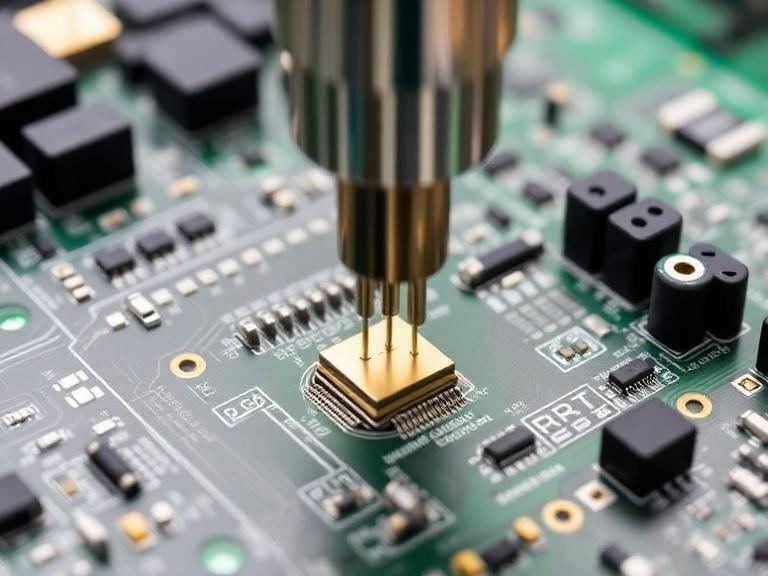
4. Component Placement
High-speed pick-and-place machines mount components onto the solder paste.
Modern equipment can place tens of thousands of components per hour with micron-level accuracy.
For high-density products such as Load Board PCB and advanced semiconductor testing assemblies, placement accuracy becomes a critical success factor.
5. Reflow Soldering
The PCB travels through a multi-zone reflow oven.
The solder paste melts and forms permanent electrical and mechanical connections.
A typical profile includes:
Preheat zone
Soak zone
Reflow zone
Cooling zone
In our testing, optimized thermal profiles dramatically improve solder joint reliability and reduce field failures.
6. Automated Optical Inspection (AOI)
AOI systems verify:
Component orientation
Missing parts
Solder bridges
Tombstoning
Polarity errors
Misalignment
7. X-Ray Inspection
For BGA, CSP, and hidden solder joints, X-ray inspection becomes necessary.
Products built on FC-CSP PCB technology often require advanced X-ray verification.
8. Functional Testing
The final stage confirms that the assembled board performs according to design specifications.
Benefits of SMT Circuit Board Assembly
Higher Production Speed
SMT assembly lines achieve production rates that are impossible with manual assembly methods.
Lower Manufacturing Cost
Automation significantly reduces labor costs.
Higher Component Density
SMT components are smaller and enable more compact product designs.
Better Electrical Performance
Shorter interconnections improve signal integrity and reduce parasitic effects.
Improved Reliability
Consistent automated assembly produces repeatable high-quality results.
Pros and Cons of SMT Circuit Board Assembly
| Pros | Cons |
|---|
| High production speed | Equipment investment is expensive |
| Lower labor cost | Requires technical expertise |
| Compact product design | Prototype setup costs exist |
| Excellent scalability | Specialized inspection equipment needed |
| Better electrical performance | Process control is critical |
SMT vs Through-Hole Assembly Comparison
| Factor | SMT Assembly | Through-Hole Assembly |
|---|
| Production Speed | Very High | Moderate |
| Automation | Excellent | Limited |
| Board Density | Very High | Lower |
| Labor Cost | Low | Higher |
| Mass Production | Ideal | Less Efficient |
| Modern Electronics | Preferred | Supplementary |
Common SMT Assembly Mistakes
Poor PCB Design for Manufacturing
Design decisions directly affect assembly success rates.
Incorrect Component Sourcing
Counterfeit or poorly stored components can create reliability problems.
Ignoring Thermal Profiles
Reflow profiles must match component requirements.
Insufficient Inspection Coverage
Skipping AOI or X-ray inspection increases defect escape rates.
Choosing Suppliers Based Only on Price
The cheapest quote frequently becomes the most expensive mistake.
From our experience, quality failures typically originate from weak process control rather than equipment limitations.
Buying Guide for SMT Assembly Services
| Evaluation Factor | What to Verify | Importance |
|---|
| Factory Ownership | Self-operated facilities | Very High |
| Equipment Capability | Modern SMT lines | Very High |
| Inspection Systems | SPI, AOI, X-ray | Critical |
| Supply Chain | Component sourcing capability | High |
| Engineering Support | DFM and NPI services | High |
| Production Scale | Capacity and flexibility | High |
For buyers evaluating manufacturing partners, obtaining a detailed PCB Instant Quote should be only the first step. Engineering capability, process control, and manufacturing ownership are often more important than unit price alone.
Why Manufacturing Integration Matters
One of the biggest trends in electronics manufacturing is vertical integration.
China 365PCB operates a fully self-operated manufacturing ecosystem covering PCB fabrication, SMT assembly, electronic component sourcing, CNC machining, cable harness production, and complete OEM/ODM services.
With more than 15 years of manufacturing experience and over 100,000 square meters of self-owned production facilities, the company provides end-to-end process control that many outsourced supply chains cannot match.
For projects involving Flexible PCB, FPC PCB, Burn in Board PCB, and advanced semiconductor applications, integrated manufacturing significantly reduces lead times and quality risks.
Who Should Use SMT Circuit Board Assembly?
Consumer electronics manufacturers
Medical device companies
Automotive electronics suppliers
Industrial automation firms
IoT developers
Telecommunications equipment manufacturers
Semiconductor testing companies
Who Does Not Need SMT Assembly?
Educational hobby projects
Low-volume manual prototypes
Simple through-hole experiments
Expert Recommendation
Our recommendation is straightforward.
If your goal is commercial production, SMT circuit board assembly should be the foundation of your manufacturing strategy. The efficiency, reliability, scalability, and quality advantages are simply too significant to ignore.
For beginners, understanding the process helps improve design decisions. For commercial users, choosing an experienced manufacturing partner with vertically integrated capabilities often provides the greatest long-term value.
In most professional situations, investing in a supplier with strong engineering resources, automated inspection systems, and complete process ownership produces better outcomes than chasing the lowest assembly price.
Bottom Line
SMT circuit board assembly is the backbone of modern electronics manufacturing. The process combines solder paste printing, automated component placement, reflow soldering, inspection, and testing into a highly efficient production workflow.
From our experience, the best manufacturing results come from companies that control the entire production chain and maintain strict quality standards at every stage.
Whether you are building industrial controllers, communication equipment, semiconductor testing hardware, medical electronics, or consumer products, mastering SMT circuit board assembly fundamentals will help you make smarter sourcing and manufacturing decisions.
FAQ
What does SMT stand for?
SMT stands for Surface Mount Technology, a method of mounting electronic components directly onto the surface of a PCB.
Why is SMT assembly preferred over through-hole assembly?
SMT offers higher production efficiency, lower costs, greater component density, and superior automation capability.
What is the most important stage in SMT assembly?
Solder paste printing is often considered one of the most critical stages because it directly affects solder joint quality.
Is AOI inspection necessary?
Yes. AOI inspection significantly reduces defect escape rates and improves production quality.
Can SMT assembly handle high-speed electronic products?
Absolutely. Modern SMT manufacturing supports high-speed PCBs, semiconductor test boards, telecommunications hardware, and advanced computing systems.
How do I choose an SMT assembly supplier?
Evaluate engineering expertise, inspection capabilities, production ownership, quality certifications, and manufacturing experience rather than focusing solely on price.
References
 English