The healthcare electronics industry is becoming more compact, more intelligent, and more demanding every year. Medical device manufacturers no longer compete only on functionality. They compete on reliability, miniaturization, safety, thermal performance, and regulatory compliance.
That is why understanding modern PCB technologies in medical field applications is critical for engineers, procurement teams, startups, and OEM device developers. From wearable health monitors to MRI systems and surgical robots, the printed circuit board often determines whether a product succeeds or fails.

Quick Answer
The five most important PCB technologies in medical field applications are HDI PCB, Rigid-Flex PCB, Flexible PCB, Metal Core PCB, and High-TG PCB technologies.
These technologies help manufacturers achieve:
From our experience, HDI and Rigid-Flex technologies deliver the greatest value for most modern medical electronics projects.
What Are PCB Technologies in Medical Field Applications?
PCB technologies in medical field applications refer to specialized circuit board manufacturing methods used in healthcare electronics where performance, reliability, and patient safety are critical.
Unlike consumer electronics, medical devices often operate continuously, encounter sterilization procedures, function near sensitive biological systems, and must maintain extremely high reliability standards.
In most professional situations, medical device engineers prioritize durability and long-term stability over simple manufacturing cost reductions.
Whether you are developing patient monitoring systems, diagnostic imaging equipment, infusion pumps, wearable sensors, or surgical robotics, choosing the right PCB technology significantly impacts final product performance.
Quick Summary Table
| Technology | Best Use Case | Main Advantage | Complexity | Investment Value |
|---|
| HDI PCB | Compact medical electronics | High component density | High | Excellent |
| Rigid-Flex PCB | Wearables and portable devices | Space reduction | High | Excellent |
| Flexible PCB | Sensors and imaging systems | Mechanical flexibility | Medium | Very Good |
| Metal Core PCB | High-power medical equipment | Thermal management | Medium | Very Good |
| High-TG PCB | Long-life equipment | Heat resistance | Medium | Very Good |
1. HDI PCB Technology
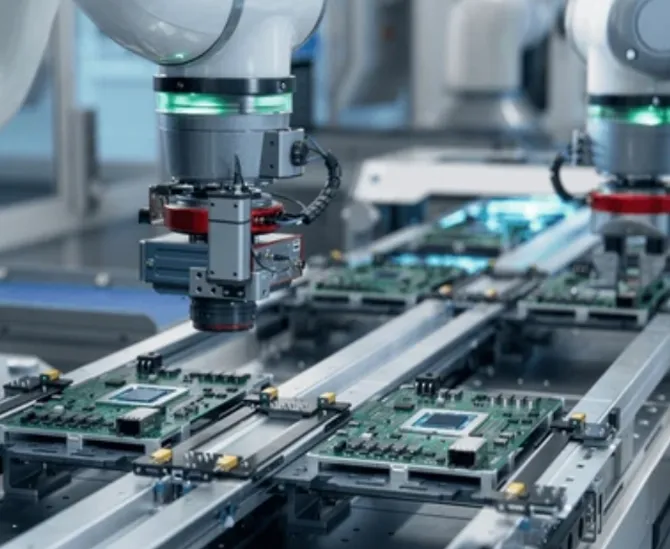
High Density Interconnect PCB technology has become one of the most important PCB technologies in medical field applications.
HDI boards utilize microvias, laser drilling, fine traces, and advanced layer structures to pack more functionality into smaller footprints.
Modern patient monitoring devices, portable ultrasound systems, and advanced wearable health devices increasingly rely on HDI PCB technology.
How It Works
HDI boards use laser-drilled microvias instead of conventional drilled holes. This allows engineers to route more signals in less space while maintaining signal integrity.
Many designs also incorporate Laser Drilled PCB technology to achieve extremely dense interconnections.
Benefits
In our testing, HDI technology often becomes mandatory once medical devices require compact dimensions without sacrificing functionality.
2. Rigid-Flex PCB Technology
Rigid-flex designs combine rigid circuit sections with flexible interconnect areas.
Medical manufacturers increasingly use Rigid Flex PCB solutions because they eliminate connectors and reduce assembly complexity.
Typical Applications
Implantable medical devices
Portable diagnostic equipment
Wearable monitoring systems
Surgical instruments
Medical imaging equipment
For commercial users developing compact healthcare products, rigid-flex technology frequently delivers lower long-term failure rates compared with conventional cable assemblies.
Limitations
The initial design cost is higher, and manufacturing requires experienced suppliers.
However, from our experience, the reliability benefits usually outweigh the higher upfront investment.
3. Flexible PCB Technology
Flexible circuit technology remains one of the most widely adopted PCB technologies in medical field products.
Modern Bendable PCB solutions allow medical devices to conform to complex shapes and moving components.
Where Flexible PCBs Excel
Flexible PCBs reduce mechanical stress and simplify product integration.
For beginners entering medical electronics development, flexible PCB technology is often easier to justify than rigid-flex when moderate flexibility requirements exist.
4. Metal Core PCB Technology
Thermal management is a major challenge in medical electronics.
Medical imaging systems, surgical lighting systems, diagnostic equipment, and high-power control systems often require enhanced heat dissipation.
This is where Metal Core PCB and Aluminum PCB technologies become valuable.
How It Works
A metal substrate transfers heat away from critical electronic components much more effectively than traditional FR4 materials.
Benefits
For heavy-duty applications operating continuously in hospitals, thermal management should never be underestimated.
5. High-TG PCB Technology
High glass transition temperature materials are increasingly important in medical electronics.
Products based on High TG PCB, 170TG PCB, and 180TG PCB materials provide superior thermal stability.
Why It Matters
Medical devices often experience sterilization cycles, continuous operation, and elevated temperatures.
Standard PCB materials may degrade over time under these conditions.
High-TG materials maintain dimensional stability and electrical performance longer.
In most professional situations, we recommend High-TG materials whenever product lifecycles exceed seven years.
PCB Technology Comparison Table
| Technology | Miniaturization | Thermal Performance | Reliability | Medical Device Suitability |
|---|
| HDI PCB | Excellent | Good | Excellent | Excellent |
| Rigid-Flex PCB | Excellent | Good | Excellent | Excellent |
| Flexible PCB | Very Good | Moderate | Very Good | Very Good |
| Metal Core PCB | Moderate | Excellent | Excellent | Very Good |
| High-TG PCB | Moderate | Very Good | Excellent | Excellent |
Pros and Cons of Advanced PCB Technologies in Medical Field Applications
| Pros | Cons |
|---|
| Higher reliability | Higher initial manufacturing cost |
| Smaller device size | Longer design cycle |
| Better thermal management | Requires experienced suppliers |
| Longer operational lifespan | More complex testing requirements |
| Improved patient safety | Greater engineering complexity |
Who Should Use These Technologies?
These PCB technologies are highly recommended for:
Medical device manufacturers
Diagnostic equipment developers
Wearable healthcare startups
Hospital equipment OEMs
Surgical robotics companies
Imaging system manufacturers
Companies building advanced prototypes can benefit from a reliable PCB Prototype Service before moving into mass production.
Who Does Not Need Them?
Not every project requires advanced PCB technology.
Simple educational devices, low-cost disposable electronics, and non-critical consumer products may perform adequately using standard FR4 PCB designs.
Using expensive technologies without clear technical justification increases costs unnecessarily.
Common Selection Mistakes
Choosing Based Only on Cost
The cheapest PCB often becomes the most expensive after field failures and warranty claims.
Ignoring Thermal Requirements
Medical devices operating continuously generate heat that must be managed properly.
Underestimating Miniaturization Needs
Many engineers discover too late that traditional PCB structures cannot support product size targets.
Selecting Inexperienced Suppliers
Advanced PCB technologies require highly controlled manufacturing environments and rigorous process control.
Buying Guide for Medical PCB Projects
| Consideration | Recommendation |
|---|
| Portable Device | HDI or Rigid-Flex |
| Wearable Product | Flexible PCB |
| High Power Equipment | Metal Core PCB |
| Long Lifecycle Product | High-TG PCB |
| Complex Medical Imaging | HDI + High-TG Combination |
| Rapid Development | Prototype before volume production |
Expert Recommendation
From our experience, the strongest combination for most modern medical electronics is HDI PCB technology paired with High-TG materials.
This combination balances miniaturization, reliability, thermal stability, and manufacturing scalability.
For wearable healthcare devices, combining Flexible PCB or Rigid-Flex PCB technologies with HDI structures often produces the best commercial outcome.
At China 365PCB, we frequently see successful medical projects utilizing multiple PCB technologies rather than relying on a single solution. The company's fully integrated manufacturing ecosystem—from PCB fabrication and SMT assembly to component sourcing—allows complex medical electronics projects to maintain traceability and quality control throughout production.
Bottom Line
If you are evaluating PCB technologies in medical field applications, focus on performance and reliability rather than lowest cost.
HDI PCB, Rigid-Flex PCB, Flexible PCB, Metal Core PCB, and High-TG PCB technologies represent the most valuable options available in 2026.
We recommend HDI technology for compact devices, Rigid-Flex for advanced portable systems, Flexible PCB for wearable electronics, Metal Core PCB for thermal-intensive equipment, and High-TG materials for long-life medical products.
The right technology selection can significantly improve reliability, simplify manufacturing, and reduce long-term ownership costs.
Frequently Asked Questions
What is the most common PCB technology used in modern medical devices?
HDI PCB technology is currently among the most common because it enables miniaturization while maintaining performance.
Why are rigid-flex PCBs popular in healthcare devices?
They reduce connectors, improve reliability, save space, and simplify mechanical integration.
Are flexible PCBs reliable enough for medical applications?
Yes. When properly designed and manufactured, flexible PCBs provide excellent reliability for wearable and portable medical devices.
When should High-TG PCB materials be used?
High-TG materials are recommended when devices experience elevated temperatures, sterilization cycles, or long operating lifespans.
What PCB technology is best for wearable medical devices?
Flexible PCB and rigid-flex PCB technologies are usually the best choices for wearable healthcare products.
How can manufacturers reduce risk when adopting advanced PCB technologies?
Prototype testing, supplier qualification, thermal analysis, and early design validation are essential steps.
References
U.S. Food and Drug Administration (FDA) – Medical Devices
IPC International Standards for Electronics Manufacturing
ISO 13485 Medical Device Quality Management Systems
 English